Dwight D. Eisenhower, a name synonymous with Allied victory in World War II, stands as a colossus in military history. His appointment as Supreme Commander of the Allied Expeditionary Force (SHAEF) in December 1943 marked a pivotal moment, placing the immense responsibility of orchestrating the liberation of Western Europe squarely on his shoulders. This was no ordinary command; it required not only strategic genius and logistical prowess but also an unparalleled ability to forge unity and maintain cohesion among a diverse coalition of nations, each with its own interests and commanders. Eisenhower’s leadership was a masterclass in diplomacy, strategic planning, and unwavering resolve, ultimately guiding the Allied forces to triumph over Nazi Germany.
Eisenhower’s path to supreme command was not a direct ascent. His early military career, while distinguished, did not immediately suggest the global leadership role he would eventually assume. He served with General John J. Pershing in World War I and later held key staff positions during the interwar years. It was his performance in the crucial period leading up to American entry into World War II, and then in the early years of the conflict, that propelled him into the international spotlight.
Early Military Career and the Crucible of War
Born in Denison, Texas, in 1890, Dwight D. Eisenhower graduated from West Point in 1915. His early military service was characterized by steady progression through the ranks, with a particular aptitude for staff work and organization. He served under General Douglas MacArthur in the Philippines, gaining valuable experience in large-scale troop movements and logistical planning. The outbreak of World War II, however, presented a vastly different and more complex global challenge.
The North African Campaign: A Testing Ground
Eisenhower’s first significant command in the European theater was as Commander-in-Chief of Allied forces in Operation Torch, the invasion of North Africa in November 1942. This campaign proved to be a baptism by fire. It was a joint operation involving American, British, and Free French forces, demanding intricate coordination and delicate political maneuvering. The initial landings encountered unexpected resistance, and the subsequent campaign against entrenched Axis forces in Tunisia was arduous and costly. However, it was during this period that Eisenhower demonstrated his ability to learn from mistakes, adapt strategies, and, crucially, manage relationships with often proud and independent-minded Allied commanders, including the formidable British Field Marshal Bernard Montgomery. The eventual success in North Africa, though hard-won, solidified his reputation as a capable and diplomatic leader.
The Sicilian and Italian Campaigns: Broadening Experience
Following North Africa, Eisenhower oversaw the Allied invasion of Sicily (Operation Husky) in July 1943, followed by the campaign in Italy. These operations further honed his skills in amphibious landings, combined arms warfare, and the complexities of fighting in mountainous terrain. While the Italian campaign proved to be a long and grinding affair, with significant strategic debates among the Allies about its ultimate value, Eisenhower’s role as the supreme commander coordinating these vast and geographically dispersed operations continued to build his experience and the trust of the Allied leadership. He demonstrated a growing understanding of the grand strategic picture, balancing immediate battlefield objectives with the overarching aims of the war effort.
Dwight D. Eisenhower, as Supreme Allied Commander during World War II, played a pivotal role in orchestrating the Allied invasion of Europe, which significantly altered the course of the war. His leadership and strategic vision are explored in detail in a related article that delves into the complexities of military command and the challenges faced during the D-Day operations. For more insights on this critical period in history, you can read the article here: Eisenhower’s Leadership in WWII.
The Weight of the World: Appointed Supreme Commander
The decision to appoint Eisenhower as Supreme Commander of the Allied Expeditionary Force was not without its debate. However, his unique combination of military acumen, political sensitivity, and proven ability to foster cooperation made him the ideal candidate to lead the momentous invasion of Normandy and the subsequent liberation of Europe.
The Chiefs of Staff and the Allied Council
The selection of a supreme commander for the European theater was a matter of intense discussion among the Allied leaders, particularly between the American and British high commands. While some American generals, like George C. Marshall, were considered, Marshall himself advocated for Eisenhower, recognizing the crucial need for a commander who could bridge the Atlantic divide and manage the diverse personalities and national interests involved. The British, while having their own highly capable commanders, ultimately conceded to Eisenhower’s appointment, acknowledging his proven ability to unite the Allied effort. This decision underscored the strategic importance of inter-Allied cooperation and the recognition that a single, authoritative voice was essential for success.
The Art of Diplomacy and Coalition Warfare
Eisenhower’s greatest strength lay in his unparalleled ability to manage the complex web of personalities and national interests within the Allied coalition. He was not a tactician in the mold of some of his subordinates; rather, his genius was in his strategic vision and his extraordinary capacity for diplomacy. He understood that military success depended on maintaining the unity of purpose among the Allies, and he employed a masterful blend of persuasion, compromise, and firm leadership to achieve this. He was adept at navigating the egos of powerful commanders, diffusing tensions, and ensuring that all felt heard and valued, even when disagreements arose. This diplomatic skill was as vital to the Allied war effort as any battlefield victory.
Operation Overlord: The Gamble for Freedom
The planning and execution of Operation Overlord, the Allied invasion of Normandy on June 6, 1944, was the defining undertaking of Eisenhower’s tenure as Supreme Commander. It was an operation of unprecedented scale and complexity, fraught with immense risk.
The Strategic Imperative: Opening a Western Front
By 1944, the Soviet Union was bearing the brunt of the fighting on the Eastern Front, inflicting heavy casualties on the German army. However, the Western Allies understood the critical need to open a second major front in Europe to relieve pressure on the Soviets and to begin the liberation of occupied Western Europe. Operation Overlord represented the culmination of years of planning and preparation, a massive commitment of resources and manpower aimed at achieving a decisive breakthrough against Hitler’s formidable Atlantic Wall defenses.
The Planning of the Invasion: D-Day’s Genesis
The logistical and strategic planning for Overlord was an immense undertaking, involving hundreds of thousands of troops, thousands of ships, and an enormous air armada. Eisenhower, working closely with his senior commanders, meticulously oversaw every aspect of the operation. This included the selection of landing beaches, the timing of the invasion, the coordination of naval gunfire and air support, and the intricate deception plans designed to mislead the Germans about the true location of the main assault. The decision on the date of the invasion, famously postponed due to unfavorable weather, highlights the critical role of meteorology and the agonizing pressure Eisenhower faced in making such a momentous choice.
The Decision to Proceed: The Weather Gamble
The weather on June 6, 1944, was far from ideal for a large-scale amphibious invasion. Eisenhower famously carried a piece of paper in his pocket, ready to take the blame if the operation failed. His decision to proceed, despite the challenging conditions, was a testament to his strategic judgment and his willingness to accept calculated risks. He understood that the window of opportunity for a successful invasion was limited, and that any further delay could compromise the element of surprise and allow the Germans to reinforce their defenses. This single decision had profound implications for the course of the war and the future of Europe.
Leading the Charge: The Allied Ground War in Europe
With the successful landing on D-Day, Eisenhower’s role shifted from supreme planner to the commander overseeing the relentless Allied advance across Western Europe. This phase was characterized by intense fighting, strategic maneuvering, and the continued need to maintain Allied unity under the pressures of combat.
The Liberation of France: From Normandy to Paris
Following the beachhead landings, the Allied forces engaged in a brutal campaign to break out of the Normandy bocage and push inland. Eisenhower’s strategic vision guided the overall direction of the offensive, aiming to trap and destroy large German formations. The subsequent liberation of Paris in August 1944 was a significant symbolic and strategic victory, invigorating the Allied cause and marking a crucial step towards the final defeat of Nazi Germany.
The Battle of the Bulge: A Test of Resilience
In December 1944, the Germans launched a surprise counteroffensive through the Ardennes forest, creating a massive bulge in the Allied lines. This desperate gamble by Hitler threatened to derail the entire Allied advance. Eisenhower’s leadership during this crisis was crucial. He swiftly redeployed Allied forces, supported by overwhelming air power, to contain and then repel the German offensive. This victory, though costly, demonstrated the resilience of the Allied forces and the effectiveness of Eisenhower’s command under extreme pressure.
The Push to the Rhine and Beyond: The Final Offensive
With the Ardennes offensive thwarted, the Allies resumed their advance towards Germany. The crossing of the Rhine River in March 1945 was a pivotal moment, allowing Allied forces to penetrate deep into the heart of Germany. Eisenhower continued to orchestrate the complex logistical and operational challenges of this final offensive, pushing relentlessly towards Berlin, even as political considerations began to influence strategic decisions regarding the post-war division of Germany.
Dwight D. Eisenhower, as the Supreme Allied Commander during World War II, played a pivotal role in orchestrating the Allied forces’ strategies and operations, which ultimately led to the defeat of Nazi Germany. His leadership and decision-making skills are often analyzed in various historical articles. For a deeper understanding of his strategies and their impact on the war, you can read a related article that explores his military tactics and their significance in shaping modern warfare. This insightful piece can be found here.
The Legacy of Supreme Command: A Symbol of Allied Unity
| Metric | Data |
|---|---|
| Full Name | Dwight David Eisenhower |
| Title | Supreme Allied Commander Europe |
| Tenure as Supreme Allied Commander | December 1950 – May 1952 |
| Role | Commander of NATO forces in Europe |
| Previous Military Rank | General of the Army (Five-star General) |
| Notable WWII Role | Supreme Commander of the Allied Expeditionary Force in Europe |
| Birth Date | October 14, 1890 |
| Death Date | March 28, 1969 |
| Presidency | 34th President of the United States (1953–1961) |
Dwight D. Eisenhower’s tenure as Supreme Commander was more than just a military assignment; it was a testament to the power of effective leadership in forging a united front against a common enemy. His legacy extends beyond the battlefield, shaping the very nature of international cooperation.
The Architect of Victory: Strategic Vision and Diplomacy
Eisenhower’s success as Supreme Commander can be attributed to his exceptional strategic vision, his meticulous planning, and, perhaps most importantly, his unparalleled diplomatic skills. He understood that military victory was only possible through the unwavering cooperation of the Allied nations. He navigated complex political landscapes, managed egos, and fostered a spirit of shared purpose that was essential for overcoming the immense challenges of the war.
The Manager of Men: Leadership and Trust
Eisenhower was a master at managing people. He surrounded himself with capable subordinates, delegated authority effectively, and fostered an environment of trust and mutual respect. He understood the importance of clear communication and consistently inspired his troops with his calm demeanor and unwavering confidence. His famous pre-D-Day speech to the troops, emphasizing the shared cause and the importance of courage, resonated deeply and galvanized their resolve.
A Symbol of Post-War Cooperation
Eisenhower’s ability to lead a diverse coalition during wartime laid the groundwork for future international cooperation. His experience in forging unity among disparate nations proved invaluable in the post-war era, influencing his own later career as President of the United States and shaping the early years of the North Atlantic Treaty Organization (NATO). He demonstrated that even the most formidable challenges could be overcome through determined leadership, strategic foresight, and a commitment to shared goals. Dwight D. Eisenhower’s command of the Allied Expeditionary Force remains a towering achievement in military history, a testament to his extraordinary leadership and the enduring power of Allied unity.
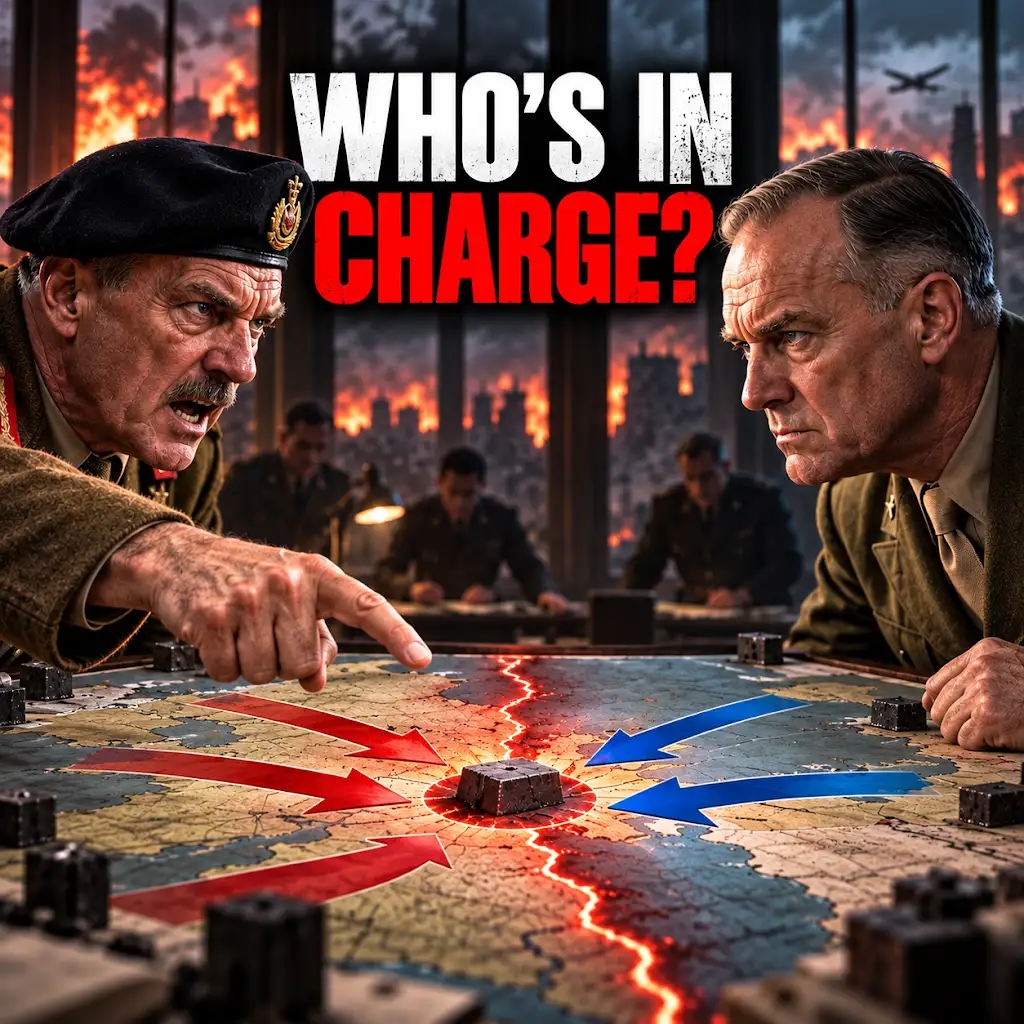
Eisenhower Gave Montgomery 2 U.S. Armies—Then He Wanted More
FAQs
1. Who was Eisenhower?
Eisenhower, also known as Dwight D. Eisenhower, was a five-star general in the United States Army during World War II and served as the Supreme Commander of the Allied Expeditionary Force in Europe.
2. What was Eisenhower’s role as Supreme Allied Commander?
As Supreme Allied Commander, Eisenhower was responsible for planning and executing the Allied invasion of Normandy on D-Day, June 6, 1944. He oversaw the coordination of Allied forces from various countries in the successful liberation of Western Europe from Nazi control.
3. What impact did Eisenhower have on World War II?
Eisenhower’s leadership as Supreme Allied Commander played a crucial role in the eventual defeat of Nazi Germany in World War II. His strategic decisions and organizational skills were instrumental in the success of the Allied forces in Europe.
4. What other positions did Eisenhower hold during his career?
After World War II, Eisenhower served as the 34th President of the United States from 1953 to 1961. Prior to that, he was the first Supreme Commander of NATO (North Atlantic Treaty Organization) and also served as the Army Chief of Staff.
5. What is Eisenhower’s legacy as Supreme Allied Commander?
Eisenhower’s leadership as Supreme Allied Commander is widely regarded as a key factor in the Allied victory in World War II. His ability to unite and lead diverse Allied forces to achieve a common goal has solidified his reputation as one of the greatest military commanders in history.