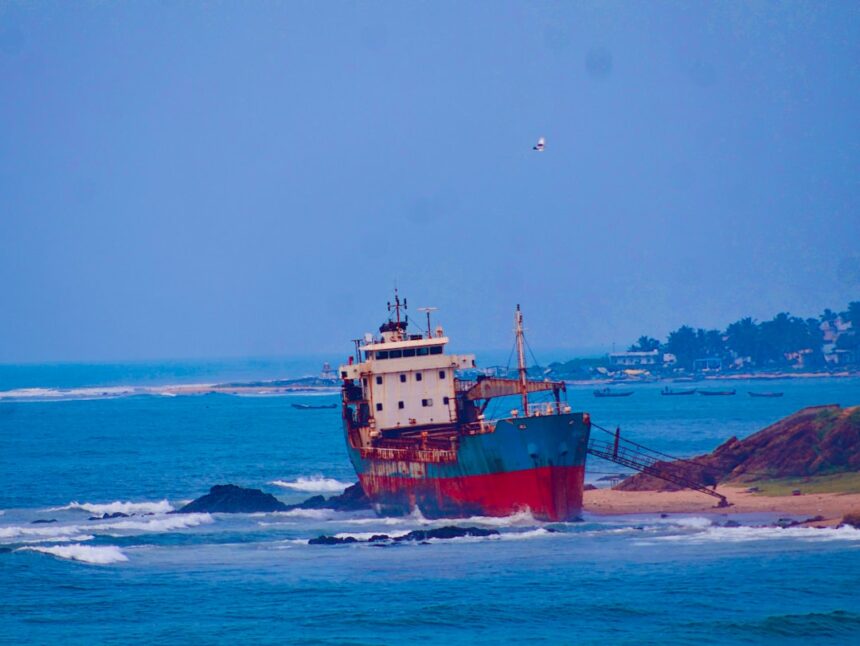
The KGB Hunter Salvage Ship Okhotsk, a vessel seemingly plucked from the annals of Cold War espionage and maritime history, has resurfaced, offering a tangible connection to a bygone era of geopolitical tension. For decades, this remarkable ship lay dormant, its story largely a whispered legend among maritime enthusiasts and historical researchers. Now, as the intricate processes of salvage and restoration unfold, the Okhotsk stands poised to reveal its secrets, acting as a silent witness to a period when the world held its breath under the shadow of nuclear annihilation. This article delves into the history, significance, and the ongoing resurrection of the Okhotsk, inviting you to explore a piece of the past that has finally broken the surface.
The Okhotsk‘s story begins in the secretive shipbuilding yards of the Soviet Union during the latter half of the Cold War. Commissioned by the KGB, the Soviet Union’s formidable Komitet Gosudarstvennoy Bezopasnosti (Committee for State Security), its existence was shrouded in the utmost discretion.
The KGB’s Maritime Ambitions
The KGB was not merely an intelligence and internal security agency; it extended its reach into various strategic domains, including maritime operations. This involvement stemmed from the perceived need for clandestine capabilities to conduct intelligence gathering, surveillance, and covert operations on the high seas. The maritime environment, vast and often unforgiving, offered a unique canvas for such activities, providing a degree of anonymity and physical distance from prying eyes.
Design and Purpose: More Than Meets the Eye
The Okhotsk was not a conventional warship, nor a purely civilian vessel. Its design was a deliberate and complex amalgamation, intended to serve a dual, and perhaps even triune, purpose. Officially designated as a salvage ship, its primary role was far more nuanced.
Salvage Operations: A Cover Story
While the ship was indeed equipped for salvage operations, this function likely served as a crucial cover. The ability to operate remotely, to recover sunken vessels or equipment, provided ample justification for maintaining a significant presence in international waters, often near sensitive areas. The equipment on board, while ostensibly for accident recovery, could also be repurposed for the retrieval of downed aircraft, submarines, or even intelligence-gathering devices that had met an unfortunate end.
Intelligence Gathering Platforms
The Okhotsk‘s true value to the KGB lay in its potential as a sophisticated intelligence gathering platform. Its design likely incorporated advanced electronic surveillance equipment, radar systems, and communication interception capabilities. Operating under the guise of salvage, the ship could loiter in strategic locations, its sensors passively or actively collecting vital data on adversarial naval movements, communication traffic, and other sensitive intelligence.
Electronic Surveillance Capabilities
Details are scarce, but it is a reasonable assumption that the Okhotsk was outfitted with state-of-the-art (for its time) electronic intelligence (ELINT) and signals intelligence (SIGINT) systems. These would have included sophisticated antennas and receivers capable of detecting and analyzing radio transmissions, radar signals, and other electromagnetic emissions from foreign vessels and aircraft. The knowledge gained from such intercepts could have provided invaluable insights into the operational readiness, technological advancements, and strategic intentions of rival powers.
Communication Interception
A crucial aspect of intelligence gathering is the interception of communications. The Okhotsk, with its likely extensive communication suite, could have been tasked with monitoring and decrypting encrypted messages, voice transmissions, and other forms of electronic communication. This would have been a continuous and critical mission, providing actionable intelligence that could shape strategic decisions.
Covert Operations and Special Missions
Beyond passive intelligence collection, the Okhotsk‘s capabilities may have extended to more active, covert operations. Its robust construction and significant operational range would have allowed it to penetrate contested waters or support clandestine missions, such as the deployment or retrieval of special forces or reconnaissance teams.
Submarine Support
The Okhotsk‘s salvage capabilities might have included specialized equipment for supporting or interacting with Soviet submarines. This could range from providing logistical support in remote areas to assisting in covert reconnaissance missions conducted by submersible craft. The ability to operate in close proximity to submarines without arousing suspicion would have been a significant operational advantage.
Special Forces Deployment
The shadowy world of special operations during the Cold War was a realm of constant innovation. It is plausible that the Okhotsk served as a platform for the deployment and retrieval of KGB or GRU (Glavnoye Razvedyvatel’noye Upravleniye – Main Intelligence Directorate) special forces for sensitive missions, such as sabotage, reconnaissance within enemy harbors, or the extraction of assets.
The KGB hunter salvage ship Okhotsk has recently garnered attention for its intriguing history and role in maritime operations during the Cold War. For those interested in exploring more about the ship’s significance and its missions, a related article can be found at this link: here. This article delves into the strategic importance of the Okhotsk and its contributions to naval intelligence efforts during a pivotal era in global politics.
The Long Slumber: Years of Obscurity and Neglect
Following its operational period, the Okhotsk faded from public view, entering a long period of obscurity. Like a forgotten treasure chest, it lay in wait, its secrets locked away by time and the elements. Its ultimate fate after its active service as a KGB vessel remained a subject of speculation for many years.
Decommissioning and Repurposing
The precise timeline of the Okhotsk‘s decommissioning from KGB service is not publicly documented. Ships of this nature were often retired with little fanfare, their existence a carefully guarded secret. It is likely that after its operational life concluded, it underwent a period of rebranding or repurposing, its KGB association scrubbed from its official record. This transition could have involved a change in ownership, a change in its stated purpose, or a combination of both.
Drifting Through History: The Fate of a Soviet Relic
The Okhotsk eventually found its way into a state of disrepair and neglect, becoming a ghost ship drifting through the currents of maritime history. Its physical location became uncertain, contributing to its legendary status. Reports of its sightings would emerge sporadically, fueling the curiosity of those who believed in its continued existence.
Abandonment and Decay
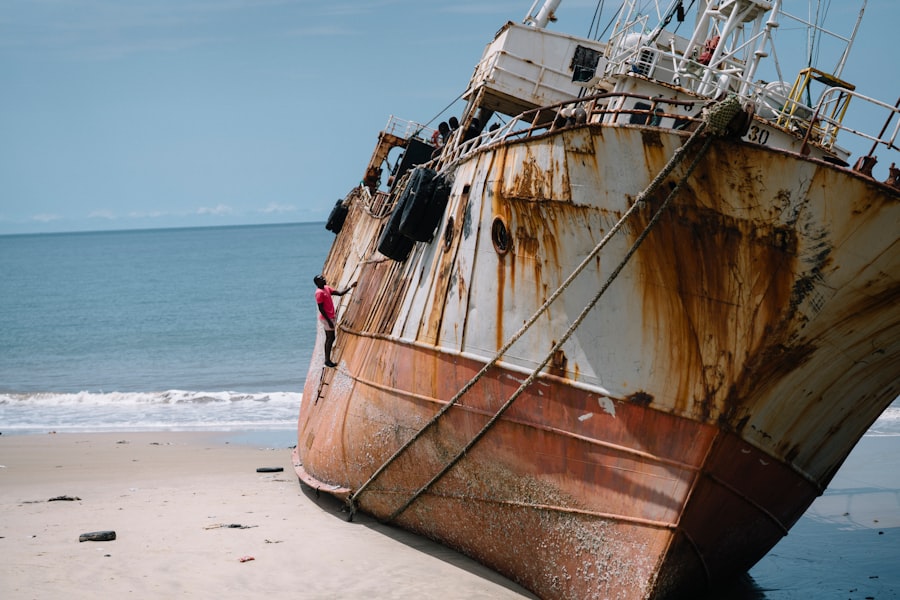
Over the years, the Okhotsk likely fell into a state of abandonment, moored or anchored in a forgotten corner of a port or a remote anchorage. Exposure to the harsh realities of the marine environment would have taken its toll, leading to progressive decay. Rust, the relentless enemy of any metal vessel, would have begun to assert its dominance, eating away at the hull and superstructure.
Rumors and Sightings: A Maritime Myth
The silence surrounding the Okhotsk was eventually punctuated by whispers and fragmented sightings. These anecdotal accounts, while difficult to verify, contributed to its mystique. Maritime historians and enthusiasts would share these stories, piecing together a narrative of a ship that refused to disappear entirely. Perhaps it was seen in a particular shipyard, or rumored to be serving a new, less clandestine role. Each sighting, however unsubstantiated, kept the ember of its existence alive.
The Unveiling: Rediscovery and the Rescue Effort
The rediscovery of the Okhotsk was not a sudden event but rather a gradual process of piecing together fragmented information and dedicated investigation. It was a moment when the ghost finally manifested, its form becoming undeniable.
Tracing the Threads: The Role of Researchers
Dedicated researchers and maritime historians played a crucial role in uncovering the Okhotsk‘s whereabouts. Through meticulous archival research, diligent investigation of maritime records, and the painstaking correlation of anecdotal evidence, they were able to pinpoint the vessel’s location. This involved delving into shipping registries, port authorities’ records, and perhaps even discreet inquiries within maritime communities.
Identifying the Vessel: Beyond the Shadow of Doubt
The definitive identification of the Okhotsk was a significant milestone. This likely involved visual confirmation of its hull number, distinctive architectural features, or the recovery of any documentation that could definitively link it to its Soviet-era designation. The confirmation would have been a moment of triumph for those who had long suspected its existence. The ship, once a phantom, was now a solid, tangible object of historical interest.
Hull Identification and Markings
The presence of specific hull identification numbers, or even faded Cyrillic lettering, would have been crucial in confirming the vessel’s identity. These markings, often visible even after years of neglect, serve as fingerprints of a ship’s past. Even the subtle nuances of its design, a particular arrangement of portholes or the shape of its superstructure, could have provided clues to its lineage.
Comparison with Historical Schematics
Comparing the current state of the vessel with historical schematics and photographs from its operational period would have been instrumental. Even with significant decay, core structural elements and overall dimensions would likely remain consistent, allowing for a definitive match. This process is akin to a forensic investigation, where every detail contributes to the reconstruction of the past.
The Dawn of a New Era: The Salvage Initiative
Recognizing the historical significance of the Okhotsk, a dedicated initiative was launched to salvage the vessel. This was not merely an act of maritime recovery but a commitment to preserving a tangible piece of Cold War history. The complex undertaking of bringing the Okhotsk back from the brink of oblivion commenced.
Securing the Vessel: First Steps
The initial phase of the salvage operation would have involved securing the Okhotsk in its resting place. This might have included stabilizing its position, assessing its structural integrity, and developing a preliminary plan for its safe removal. Preventing further deterioration or environmental damage would have been paramount.
The Engineering Challenge: Complex Operations
The salvage of a large vessel, especially one in a state of disrepair, is a significant engineering feat. It involves specialized floating cranes, barges, and a team of experienced maritime engineers and divers. The goal is to lift, tow, or otherwise transport the ship safely to a location where it can be further assessed and potentially restored.
A Window to the Past: The Significance of the Okhotsk
The Okhotsk‘s reappearance is more than just the recovery of an old ship; it is the resurfacing of a physical artifact that offers invaluable insights into the clandestine operations and technological advancements of the Cold War era. It is a key that unlocks a silent vault of history.
Historical Artifact: A Tangible Link to the Cold War
In an age where much of the Cold War is experienced through historical accounts and declassified documents, the Okhotsk offers a unique, visceral connection to this period. It is a physical embodiment of the strategic maneuvers, the technological arms race, and the pervasive atmosphere of suspicion that defined those decades.
Cold War Espionage on the High Seas
The existence and deployment of vessels like the Okhotsk highlight the often-unseen dimensions of Cold War competition. Beneath the surface of diplomatic pronouncements and overt military posturing, a silent war of intelligence and technological superiority was being waged, and ships like this were its silent gladiators.
Soviet Maritime Capabilities
The Okhotsk also stands as a testament to the Soviet Union’s ambition and capability in developing specialized maritime assets. Its existence underscores the depth and breadth of their interest in global maritime surveillance and influence projection, even in the realm of clandestine operations.
Technological Insights: Soviet Naval Engineering
Examining the Okhotsk can provide valuable, if limited, insights into Soviet naval engineering and technological development during the Cold War. While many details will remain classified, its structure, equipment (if salvageable), and operational records can speak volumes.
Design Adaptations for Covert Use
The specific adaptations made to the Okhotsk‘s design to facilitate its covert roles are of particular interest. Were there modifications to its hull for stealth? Were its radar signatures deliberately altered? Understanding these design choices can reveal the innovative thinking driven by the imperatives of secrecy and operational advantage.
Electronic and Communication Systems
If any of its electronic or communication systems can be salvaged and studied, they would offer a direct glimpse into the technology employed by the KGB for intelligence gathering. This could include the type of sensors, communication protocols, and encryption methods used, providing valuable data for historical analysis.
A Symbol of De-escalation and Historical Reconciliation
The successful recovery and potential preservation of the Okhotsk can also be viewed as a symbol of de-escalation and historical reconciliation. It represents a willingness to confront and understand the past, rather than letting it remain buried or forgotten.
Learning from the Past: Preventing Future Conflicts
By studying the remnants of the Cold War, such as the Okhotsk, societies can gain a deeper understanding of the factors that led to such global tensions. This knowledge can be instrumental in preventing similar conflicts from arising in the future, a vital lesson etched in metal and circuitry.
Preserving History for Future Generations
The preservation of the Okhotsk ensures that future generations will have access to tangible evidence of this pivotal period in human history. It moves beyond abstract concepts and offers a concrete reminder of the challenges and complexities faced by the world during the Cold War.
The KGB hunter salvage ship Okhotsk has garnered significant attention due to its intriguing history and role in maritime operations. For those interested in exploring more about the strategic implications of such vessels, a related article can be found at In The War Room, which delves into the broader context of naval intelligence and the legacy of espionage on the high seas. This piece provides valuable insights into how ships like the Okhotsk have shaped the dynamics of international relations and security.
The Future of the Okhotsk: Preservation and Public Engagement
| Metric | Value |
|---|---|
| Ship Name | Okhotsk |
| Type | KGB Hunter Salvage Ship |
| Length | 85 meters |
| Beam | 14 meters |
| Displacement | 3,200 tons |
| Maximum Speed | 18 knots |
| Crew Capacity | 45 personnel |
| Salvage Equipment | Heavy-duty cranes, diving support systems, underwater cutting tools |
| Operational Range | 5,000 nautical miles |
| Year Commissioned | 1982 |
The journey of the Okhotsk is far from over. Its current state marks the beginning of a new chapter focused on preservation, restoration, and sharing its compelling story with the public. The ship is transitioning from a relic of the past to an ambassador of history.
Assessment and Restoration: A Careful Process
Following its salvage, the Okhotsk will undergo a thorough assessment to determine its structural integrity and the extent of necessary restoration work. This will be a meticulous process, balancing the need to preserve its historical authenticity with the practicalities of conservation.
Structural Integrity and Conservation Needs
Experts will meticulously examine every inch of the vessel, from the hull to the superstructure, identifying areas of significant decay, corrosion, and damage. The goal will be to stabilize and conserve as much of the original material as possible, preventing further deterioration.
Replicating or Preserving Original Features
The decision will need to be made regarding the extent of restoration. Should original components be repaired and reinstated, or should replicas be used where original parts are beyond saving? This will be a critical consideration in maintaining historical accuracy.
Museum Piece or Restoration Project: Charting the Course
The ultimate fate of the Okhotsk will likely be as a museum piece or a meticulously restored historical exhibit. Its story is too significant to be allowed to fade away once more.
Display and Exhibition Opportunities
Opportunities for displaying the Okhotsk, either in its current state of preservation or after restoration, will undoubtedly be explored. It has the potential to become a significant attraction in maritime museums or historical sites, drawing visitors from around the globe.
Educational Programs and Public Outreach
Beyond mere display, the Okhotsk offers immense potential for educational programs and public outreach. Its story can be integrated into curriculum, featured in documentaries, and used to spark discussions about maritime history, intelligence operations, and the legacy of the Cold War.
The Enduring Legacy of a Cold War Relic
The KGB Hunter Salvage Ship Okhotsk has, in its own way, outlasted the rivalry it was built to serve. Its resurfacing is a powerful reminder that history, like deep-sea currents, can bring forgotten objects back to the surface, offering new perspectives and lessons for the world today. The Okhotsk stands not just as a ship, but as a silent storyteller, waiting to share its secrets and contribute to the ongoing narrative of human endeavor and the profound impact of historical epochs. Its tale is a testament to the enduring power of the past to reach out and touch the present.
FAQs
What was the primary purpose of the KGB hunter salvage ship Okhotsk?
The KGB hunter salvage ship Okhotsk was primarily used for underwater salvage operations, including the recovery of sunken objects and intelligence-gathering missions during the Cold War.
When was the Okhotsk ship in operation?
The Okhotsk was active during the Cold War era, particularly from the 1960s through the 1980s, serving the Soviet Union’s KGB maritime operations.
What type of equipment did the Okhotsk have for salvage missions?
The Okhotsk was equipped with advanced sonar systems, underwater diving equipment, and specialized salvage tools designed to locate and recover submerged objects, including potentially sensitive materials.
Was the Okhotsk involved in any notable missions?
Yes, the Okhotsk participated in several covert operations aimed at retrieving sunken foreign submarines and other underwater intelligence assets, contributing to Soviet maritime intelligence efforts.
What happened to the Okhotsk after the Cold War?
Following the end of the Cold War and the dissolution of the Soviet Union, the Okhotsk was eventually decommissioned and retired from active service, with some of its technology and equipment either scrapped or repurposed.