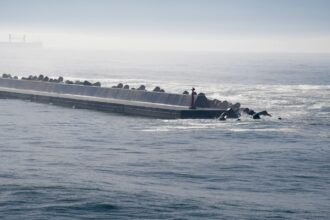
Iran occupies a pivotal geographical position in the Strait of Hormuz, a narrow waterway that serves as a critical juncture for global oil transportation. This strait connects the Persian Gulf to the Gulf of Oman and ultimately the Arabian Sea, making it one of the most significant maritime chokepoints in the world. Approximately 20% of the world’s oil supply passes through this narrow passage, underscoring Iran’s strategic importance in global energy security.
The country’s coastline along the strait extends for about 1,700 kilometers, providing it with numerous opportunities to exert influence over maritime traffic. The strategic significance of Iran’s location is further amplified by its military capabilities and regional ambitions. The Iranian government has long recognized the Strait of Hormuz as a vital asset, using its geographical position to project power and influence in the region.
This has led to a complex interplay of military posturing and diplomatic maneuvering, as Iran seeks to assert its dominance while simultaneously navigating the challenges posed by international sanctions and geopolitical rivalries. The strait’s narrowness means that any disruption can have immediate and far-reaching consequences for global oil markets, making Iran’s role in this context all the more critical.
Key Takeaways
- Iran’s control over the Strait of Hormuz gives it significant leverage over global oil shipping routes.
- Threats and past disruptions by Iran have heightened risks to the stability of oil supply from the Persian Gulf.
- International actors, including the United States, actively work to protect shipping lanes and counter Iran’s military capabilities.
- Disruptions in oil shipping through the Persian Gulf could have severe consequences for global energy markets and economies.
- Strategic measures and diplomatic efforts are essential to mitigate risks and ensure the future security of oil transit in the region.
The Impact of Iran’s Threats on Global Oil Shipping
Iran’s threats to disrupt oil shipping in the Strait of Hormuz have significant implications for global energy markets. When Iran issues warnings or engages in provocative actions, it creates an atmosphere of uncertainty that can lead to fluctuations in oil prices. Traders and investors closely monitor these developments, as even the slightest hint of instability can trigger panic selling or speculative buying.
Consequently, the mere threat of disruption can lead to increased costs for consumers and businesses worldwide, highlighting the interconnectedness of global oil markets. Moreover, the potential for actual disruptions raises concerns about supply chain vulnerabilities. Shipping companies may face increased insurance premiums or may even choose to reroute vessels to avoid the strait altogether, leading to longer transit times and higher operational costs.
Such changes can ripple through the global economy, affecting everything from fuel prices at the pump to the cost of goods transported by oil-dependent industries. As a result, Iran’s threats not only impact immediate oil supply but also have broader economic ramifications that extend far beyond the region.
Iran’s History of Disrupting Oil Shipping in the Persian Gulf
Historically, Iran has demonstrated a willingness to disrupt oil shipping in the Persian Gulf as a means of asserting its influence and responding to perceived threats. The 1980s saw significant tensions during the Iran-Iraq War, when both nations targeted each other’s oil tankers in an effort to cripple their adversaries’ economies. This period marked a notable escalation in maritime conflict, with Iran employing tactics such as mining shipping lanes and launching missile attacks on vessels.
These actions not only disrupted oil supplies but also underscored Iran’s readiness to use its naval capabilities to achieve strategic objectives. In more recent years, Iran has continued to leverage its position in the Persian Gulf to challenge international norms and assert its regional power. Incidents involving Iranian naval forces harassing commercial shipping or seizing vessels have become increasingly common.
Such actions serve as a reminder of Iran’s historical willingness to use maritime disruption as a tool of foreign policy. By threatening oil shipping routes, Iran aims to send a clear message to both regional adversaries and global powers about its capacity and resolve to protect its interests.
International Response to Iran’s Threats
The international community has responded to Iran’s threats against oil shipping with a mix of diplomatic efforts and military posturing. Countries heavily reliant on oil imports have expressed concern over potential disruptions and have called for collective action to ensure the safety of maritime routes. The United States, in particular, has taken a leading role in coordinating international responses, often deploying naval assets to the region as a deterrent against Iranian aggression.
This military presence serves not only as a protective measure for commercial shipping but also as a signal of commitment to maintaining freedom of navigation in international waters. Diplomatic efforts have also been employed to address tensions in the region. Various nations have engaged in dialogue with Iran, seeking to de-escalate tensions and promote stability in the Persian Gulf.
However, these efforts are often complicated by broader geopolitical dynamics, including ongoing disputes over Iran’s nuclear program and its support for proxy groups throughout the region. As a result, while there is a clear recognition of the need for international cooperation to safeguard oil shipping, achieving consensus on how best to address Iran’s threats remains a complex challenge.
Potential Consequences of a Disruption in Oil Shipping
| Metric | Details | Impact on Global Oil Shipping |
|---|---|---|
| Location of Threats | Strait of Hormuz | Critical chokepoint where approximately 20% of global oil passes daily |
| Percentage of Global Oil Transit | ~20% | Disruption can cause significant global oil supply shortages |
| Number of Incidents (2019-2023) | 15+ reported attacks or seizures of oil tankers | Increased risk and insurance costs for shipping companies |
| Types of Threats | Seizure of vessels, mine-laying, missile attacks, harassment by fast boats | Heightened security concerns and potential for escalation |
| Impact on Oil Prices | Price spikes of up to 10-15% following incidents | Global economic instability and increased energy costs |
| International Naval Presence | Increased patrols by US, UK, and allied navies | Higher military tensions and operational costs |
| Alternative Routes | Limited; pipelines through Turkey and UAE exist but have lower capacity | Insufficient to fully replace Strait of Hormuz transit |
A disruption in oil shipping through the Strait of Hormuz could have dire consequences for both regional and global economies. Given that a significant portion of the world’s oil supply passes through this narrow passage, any interruption could lead to immediate shortages and skyrocketing prices. Such an event would not only affect oil-exporting nations but also have cascading effects on economies worldwide, particularly those heavily reliant on imported oil.
Industries ranging from transportation to manufacturing would feel the impact, potentially leading to inflationary pressures and reduced economic growth. Furthermore, a sustained disruption could prompt countries to seek alternative energy sources or accelerate investments in renewable energy technologies. While this shift may be beneficial in the long term, it could also lead to increased volatility in energy markets as nations scramble to adapt to new realities.
The geopolitical landscape would likely shift as well, with countries reassessing their energy security strategies and alliances in response to heightened risks associated with reliance on oil from the Persian Gulf.
Iran’s Military Capabilities in the Persian Gulf
Iran possesses a range of military capabilities that enable it to exert influence over maritime activities in the Persian Gulf. The Iranian Navy operates various vessels, including fast attack boats and submarines, which are well-suited for asymmetric warfare tactics aimed at disrupting larger naval forces. Additionally, Iran has invested heavily in missile technology, allowing it to target vessels from land-based platforms or offshore installations.
This combination of naval assets and missile capabilities provides Iran with a formidable deterrent against potential adversaries. Moreover, Iran has developed a network of proxy forces throughout the region that can be mobilized to support its objectives. These groups can conduct operations that complicate maritime security and create additional challenges for international shipping.
By leveraging both conventional military assets and irregular forces, Iran has positioned itself as a significant player in regional security dynamics, capable of influencing outcomes in ways that extend beyond traditional military confrontations.
The Role of the United States in Protecting Oil Shipping in the Persian Gulf
The United States has long played a crucial role in ensuring the security of oil shipping routes in the Persian Gulf. Following several incidents involving Iranian aggression against commercial vessels, U.S. naval forces have increased their presence in the region as part of broader efforts to deter potential threats.
This military commitment includes conducting freedom-of-navigation operations and providing escort services for commercial shipping through high-risk areas. By maintaining a robust naval presence, the U.S. aims to reassure allies and partners while signaling its determination to uphold international norms regarding maritime security.
In addition to military measures, the United States has engaged diplomatically with other nations to foster cooperation on maritime security issues.
However, this involvement is not without controversy; critics argue that U.S.
actions can exacerbate tensions with Iran and contribute to an escalating cycle of confrontation. Balancing deterrence with diplomacy remains a delicate task for U.S. policymakers as they navigate complex regional dynamics.
Iran’s Motivations for Threatening Oil Shipping
Iran’s motivations for threatening oil shipping are multifaceted and rooted in both domestic and international considerations. Domestically, Iranian leaders often use threats against maritime traffic as a means of rallying nationalistic sentiments and consolidating power amid economic challenges exacerbated by sanctions. By projecting strength and resilience against perceived external threats, Iranian authorities aim to bolster their legitimacy at home while diverting attention from internal issues such as economic mismanagement or social unrest.
On an international level, Iran employs threats against oil shipping as a strategic tool to leverage negotiations with global powers. By demonstrating its capacity to disrupt vital energy supplies, Iran seeks to gain bargaining power in discussions related to its nuclear program or sanctions relief. This tactic reflects a broader strategy of using asymmetric warfare capabilities to counterbalance conventional military disadvantages faced by Iran against more powerful adversaries.
The Importance of the Persian Gulf in Global Oil Trade
The Persian Gulf is undeniably one of the most critical regions for global oil trade, serving as a hub for production and transportation of crude oil from some of the world’s largest exporters. Countries such as Saudi Arabia, Iraq, and Kuwait rely heavily on this waterway for their economic stability and growth, making it essential not only for regional prosperity but also for global energy security. The strategic importance of this region is further underscored by its vast reserves; estimates suggest that nearly 60% of the world’s proven oil reserves are located within or near the Persian Gulf.
The significance of the Persian Gulf extends beyond mere geography; it is also intertwined with global economic dynamics. Fluctuations in oil prices driven by events in this region can have profound effects on economies worldwide, influencing everything from inflation rates to currency valuations. As such, ensuring stability and security within this vital corridor is paramount for both producing nations and consuming countries alike.
Potential Strategies for Mitigating the Threat of Iran’s Disruption of Oil Shipping
To mitigate the threat posed by Iran’s potential disruption of oil shipping, several strategies can be considered by both regional actors and international stakeholders. One approach involves enhancing maritime security through increased cooperation among nations reliant on Persian Gulf shipping routes. Joint naval exercises and intelligence-sharing initiatives can bolster collective capabilities against potential Iranian aggression while fostering stronger alliances among participating nations.
Another strategy involves diversifying energy sources and reducing dependence on oil transported through the Strait of Hormuz.
Additionally, developing alternative transportation routes—such as pipelines that bypass the strait—could provide further resilience against potential disruptions.
The Future of Oil Shipping in the Persian Gulf in Light of Iran’s Threats
The future of oil shipping in the Persian Gulf remains uncertain amid ongoing tensions with Iran. As long as geopolitical rivalries persist and regional dynamics continue to evolve, threats against maritime traffic are likely to remain a reality for stakeholders involved in global energy trade. However, proactive measures aimed at enhancing security cooperation and diversifying energy sources can help mitigate risks associated with potential disruptions.
Ultimately, navigating these challenges will require a delicate balance between deterrence and diplomacy. While military presence may serve as a short-term solution for ensuring safe passage through critical waterways, long-term stability will depend on addressing underlying geopolitical issues that fuel tensions in the region. As stakeholders work towards securing their interests amidst these complexities, it is clear that vigilance will be essential for safeguarding one of the world’s most vital maritime corridors.
Iran’s ongoing threats to global oil shipping have raised significant concerns among international stakeholders, particularly as tensions in the region escalate. For a deeper understanding of the geopolitical implications and the potential impact on global oil markets, you can read more in this related article on In The War Room. The article delves into the strategic maneuvers by Iran and how they could disrupt vital shipping routes, affecting economies worldwide.
FAQs
What is the significance of Iran in global oil shipping?
Iran is strategically located along key maritime routes, including the Strait of Hormuz, through which a significant portion of the world’s oil supply is transported. This makes Iran a critical player in global oil shipping and energy security.
How does Iran threaten global oil shipping?
Iran has been involved in activities such as threatening to close the Strait of Hormuz, seizing oil tankers, and supporting proxy groups that disrupt shipping lanes. These actions can create instability and increase risks for vessels transporting oil.
What is the Strait of Hormuz and why is it important?
The Strait of Hormuz is a narrow waterway between the Persian Gulf and the Gulf of Oman. It is one of the world’s most important chokepoints for oil transit, with about 20% of global petroleum passing through it daily.
Has Iran ever closed or threatened to close the Strait of Hormuz?
Yes, Iran has periodically threatened to close the Strait of Hormuz in response to international sanctions or military tensions. While a full closure has not occurred, such threats raise concerns about potential disruptions to global oil supplies.
What impact do Iran’s actions have on global oil prices?
Tensions involving Iran and threats to shipping routes often lead to increased volatility in global oil markets. Concerns about supply disruptions can cause oil prices to rise temporarily.
How do international forces respond to threats in the region?
Countries such as the United States and members of international coalitions conduct naval patrols and escort missions to ensure the security of shipping lanes in the Persian Gulf and the Strait of Hormuz.
Are there any diplomatic efforts to reduce tensions related to oil shipping?
Yes, diplomatic negotiations, including talks on Iran’s nuclear program and regional security, aim to reduce tensions and prevent disruptions to global oil shipping.
What measures do shipping companies take to mitigate risks in the region?
Shipping companies may reroute vessels, increase security measures, or avoid high-risk areas to minimize the threat of attacks or seizures in regions affected by geopolitical tensions.
How does Iran’s oil shipping threat affect global energy security?
Disruptions or threats to key shipping routes can lead to supply shortages, price spikes, and increased uncertainty in energy markets, impacting global energy security and economic stability.
Is the threat from Iran to global oil shipping ongoing?
While the level of threat fluctuates with geopolitical developments, Iran’s strategic position and past actions mean that concerns about its impact on global oil shipping remain relevant.