The name Howard Hughes often conjures images of reclusive billionaires, eccentric behavior, and cinematic triumphs. However, beneath the glitz and glamour, and later, the profound isolation, lay a remarkable and often clandestine career driven by a powerful intellect and unwavering ambition. Hughes’s involvement with the United States government extended far beyond simple business dealings. It encompassed a complex web of classified contracts, pioneering technological advancements, and, at times, significant controversy. This article will delve into the seldom-examined world of Howard Hughes’s classified government contracts, dissecting their origins, impact, and the enduring mystique surrounding them.
Howard Hughes’s early forays into government work were a natural extension of his burgeoning aviation and film empire. His insatiable curiosity for mechanical innovation, coupled with a deep personal patriotism, propelled him into an unusual alliance with the federal government. This alliance, initially forged before World War II, would solidify during the global conflict and continue, albeit with varying degrees of success and secrecy, for decades.
Pre-War Engagements: Laying the Groundwork
Before the full-scale eruption of World War II, Hughes’s reputation as a visionary aircraft designer and manufacturer had already piqued the interest of the military. His company, Hughes Aircraft, was seen as a nimble and innovative outfit, capable of rapid prototyping and unconventional thinking – a stark contrast to some of the more established, and sometimes bureaucratic, aerospace giants. These early engagements, though not always classified, established the trust and rapport that would later facilitate more secretive projects.
World War II: The Crucible of Collaboration
The outbreak of World War II transformed the nature of Hughes’s government contracts. The urgency of wartime production and the immediate need for advanced military technology provided a fertile ground for his particular brand of audacious engineering. It was during this period that some of his most ambitious, and publicly scrutinized, projects began, often under the purview of immense national security. The war served as a dramatic accelerant, pulling Hughes and his companies deeper into the government’s strategic objectives.
Howard Hughes, the enigmatic aviation pioneer and film producer, was known not only for his groundbreaking contributions to aviation but also for his secretive government contracts during World War II. These contracts, which involved the development of advanced aircraft and technology, have sparked considerable intrigue and speculation over the years. For a deeper dive into the complexities of Hughes’ dealings and their implications, you can read a related article on this topic at In the War Room.
The Spruce Goose: A Symbol of Ambition and Controversy
Perhaps the most iconic, and infamous, of Hughes’s government-adjacent projects is the H-4 Hercules, universally known as the “Spruce Goose.” This massive flying boat, designed to transport troops and materiel across vast oceans, became a lightning rod for both admiration and derision. While the project itself wasn’t classified in the strictest sense, the enormous sums of government money poured into its development, and the national security implications of its intended purpose, certainly placed it within a realm of heightened scrutiny.
Design and Development: A Glimpse into Hughes’s Vision
The Spruce Goose was conceived out of a critical wartime need: avoiding the formidable U-boat threat in the Atlantic. Shipping losses were staggering, and a large-capacity air transporter seemed like a viable solution. Hughes envisioned an aircraft capable of carrying hundreds of troops or a significant amount of cargo, safeguarding them from the perils of submarine warfare. His engineering philosophy, often bordering on perfectionism, drove the design of an aircraft that was, in many ways, ahead of its time, despite its ultimate limited utility.
Congressional Scrutiny and Public Perception: The Weight of Expectations
The sheer scale of the Spruce Goose project, coupled with its persistent delays and cost overruns, attracted significant congressional scrutiny. Hughes himself was called to testify before a Senate committee, famously declaring, “I put the sweat of my life into this thing.” While the aircraft only flew once, for a mere 26 seconds, its existence became a powerful symbol of wartime ambition, technological daring, and, for some, government waste. It stands as a monumental testament to Hughes’s tenacity, even if its practical application was not fully realized. The public, often a fickle beast, oscillated between awe at its size and skepticism regarding its effectiveness.
Cold War Covert Operations: The Glomar Explorer and Project Azorian
As the Cold War escalated, the nature of Hughes’s classified government contracts shifted dramatically. The need for intelligence gathering and covert operations became paramount, and Hughes, with his established infrastructure and penchant for secrecy, proved to be an invaluable asset. One of the most audacious and elaborate of these projects was Project Azorian, an operation designed to recover a sunken Soviet submarine.
The Genesis of Project Azorian: A Geopolitical Chess Match
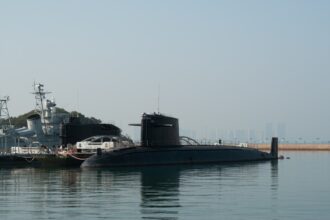
In 1968, a Soviet Golf II-class submarine, K-129, sank in the Pacific Ocean under mysterious circumstances. The United States, keen to acquire Soviet naval technology and potentially intelligence from its onboard missiles, embarked on a highly secret mission to recover the submarine. The sheer depth of the wreckage, over three miles below the surface, presented an unprecedented engineering challenge. The Central Intelligence Agency (CIA), recognizing Hughes’s unique capabilities and penchant for secrecy, approached him to construct a vessel capable of this extraordinary feat. This was no ordinary business deal; it was a high-stakes geopolitical chess match played in the silent depths of the ocean.
The Hughes Glomar Explorer: A Feat of Engineering Deception
Hughes’s company, Global Marine Development, was contracted to build the Hughes Glomar Explorer, a purpose-built deep-sea mining vessel that was, in reality, a sophisticated recovery ship. The cover story, that the ship was designed for manganese nodule mining, fooled neither the Soviets nor many seasoned intelligence analysts, but it provided a plausible deniability that was crucial for the project’s secrecy. The Glomar Explorer was a marvel of covert engineering, featuring a massive claw-like mechanism designed to lift sections of the sunken submarine. Its construction and operation were shrouded in an impressive veil of deception, a testament to the lengths both the government and Hughes were willing to go for strategic advantage.
Partial Recovery and Enduring Mystery: The Tip of the Iceberg
In 1974, the Glomar Explorer successfully recovered a portion of the K-129. While the full extent of the recovery, and the intelligence gained, remains classified to this day, it is widely believed that significant portions of the submarine, including some ballistic missiles, were brought to the surface. The operation, though partially compromised by a leak to the press, stands as one of the most ambitious and technologically advanced covert operations ever undertaken. It demonstrated Hughes’s unparalleled capacity to execute projects of immense scale and secrecy, further cementing his reputation as a unique and indispensable government contractor, a veritable ghost in the machine of international espionage.
Unseen R&D and Strategic Investments: Beyond the Headlines
While the Spruce Goose and Project Azorian captured public attention (or leaked into it), a significant portion of Hughes’s government work remained entirely out of the public eye. These were the classified research and development contracts, the strategic investments in advanced technologies, and the quiet contributions to national defense that often formed the bedrock of military superiority.
Radar Technology: The Eyes of the Warfighter
Hughes Aircraft became a dominant force in radar technology during and after World War II. Its innovations in airborne radar systems were critical for interceptors and bombers, providing them with enhanced situational awareness and target acquisition capabilities. These contracts, often highly classified, involved the development of cutting-edge electronics and the intricate integration of complex systems into military aircraft. Hughes’s personal involvement, driven by his engineering background, was often substantial in these endeavors. He was not merely a financier but a hands-on orchestrator of technological progress, carefully guiding his engineers like a maestro leading an orchestra.
Missile Systems and Space Exploration: Reaching for the Stars
Beyond radar, Hughes Aircraft played a pivotal role in the development of guided missile systems, contributing significantly to air-to-air and surface-to-air defense capabilities. These projects, often shrouded in secrecy, represented critical advancements in military technology during the Cold War. Furthermore, Hughes’s companies contributed to early space exploration efforts, developing components for satellites and spacecraft, pushing the boundaries of what was technologically possible. His ventures into space, though less publicized, were a natural progression for a man who always looked to the heavens for inspiration and innovation.
Howard Hughes, the enigmatic aviation pioneer, was known not only for his groundbreaking contributions to the aerospace industry but also for his involvement in secret government contracts during and after World War II. These contracts often blurred the lines between private enterprise and government interests, raising questions about the extent of Hughes’ influence and the implications for national security. For a deeper exploration of this intriguing topic, you can read more in this related article on the subject of Hughes’ covert dealings and their impact on the defense sector here.
The Legacy of Secrecy and Innovation
| Contract Name | Year | Agency | Purpose | Duration (Years) | Estimated Value (Millions) | Notes |
|---|---|---|---|---|---|---|
| Project Oxcart | 1959 | CIA | Development of A-12 reconnaissance aircraft | 5 | 200 | Highly classified, involved Hughes Aircraft |
| H-4 Hercules | 1942 | US Army Air Forces | Construction of large transport aircraft | 3 | 50 | Known as “Spruce Goose,” secretive military transport project |
| Electronics Systems Development | 1960 | US Air Force | Advanced radar and avionics systems | 7 | 120 | Classified avionics for stealth aircraft |
| Satellite Communications | 1970 | NSA | Secure military satellite communication systems | 10 | 180 | Top secret satellite tech development |
Howard Hughes’s classified government contracts left an indelible mark on American technological advancement and defense capabilities. His willingness to undertake daring projects, his commitment to innovation, and his legendary discretion made him a unique and powerful figure in the shadow world of government contracting.
Technological Advancements and National Security: A Dual Heritage
The technological achievements stemming from Hughes’s classified contracts were substantial. From radar systems that transformed aerial combat to the audacious recovery of a sunken Soviet submarine, his contributions demonstrably enhanced national security. These projects, often born out of necessity, pushed the boundaries of engineering and science, leaving a legacy of innovation that resonated far beyond the immediate objectives of each contract. They were seeds planted in the fertile ground of necessity, blossoming into technologies that would shape the future.
The Enigmatic Figure: Hughes’s Discreet Influence
Hughes’s reputation for secrecy, even bordering on paranoia in his later years, made him an ideal partner for classified government work. He operated with a level of discretion that few public figures could match, allowing sensitive projects to proceed with minimal public scrutiny. This enigmatic persona further fueled the mystique surrounding his government dealings, creating a narrative that was part fact, part legend. He was a silent partner, a hidden hand, guiding monumental endeavors from the shadows.
Enduring Questions and Untold Stories: The Veil Remaining
Despite the passage of time and the declassification of some government documents, much of Hughes’s involvement with classified contracts remains shrouded in mystery. The full scope of his contributions, the specific intelligence gained from projects like Azorian, and the true extent of his personal influence on national policy may never be fully revealed. This veil of secrecy, while protecting sensitive information, also perpetuates the enigmatic nature of Howard Hughes, the government contractor. It leaves us with tantalizing glimpses into a world where ambition, innovation, and national interest converged under the watchful eye of one of the 20th century’s most fascinating figures. His story, like a submerged wreckage, hints at far greater depths waiting to be explored.
WATCH NOW ▶️ SHOCKING: How The CIA Stole A Nuclear Submarine
FAQs
Who was Howard Hughes and why is he associated with secret government contracts?
Howard Hughes was an American business magnate, aviator, engineer, and film director. He is associated with secret government contracts primarily due to his work in aviation and defense industries during and after World War II, where he developed advanced aircraft and technology under classified agreements with the U.S. government.
What types of secret government contracts did Howard Hughes have?
Howard Hughes was involved in contracts related to the development and production of military aircraft, including experimental and cutting-edge designs. His company, Hughes Aircraft Company, worked on projects such as reconnaissance planes, missile systems, and radar technology, often under classified or highly confidential terms.
How did Howard Hughes’ secret contracts impact military technology?
Hughes’ secret contracts contributed significantly to advancements in military aviation and technology. His innovations helped improve aircraft performance, stealth capabilities, and surveillance technology, which enhanced the U.S. military’s strategic and tactical advantages during the Cold War era.
Were Howard Hughes’ secret government contracts publicly known during his lifetime?
Many of Howard Hughes’ government contracts were classified and not publicly disclosed during his lifetime. Details about these projects often remained secret due to national security concerns, and only became more widely known through declassified documents and historical research after his death.
What companies did Howard Hughes use to fulfill his secret government contracts?
Howard Hughes primarily used the Hughes Aircraft Company to fulfill his secret government contracts. This company was a major defense contractor that specialized in aerospace and electronics, playing a key role in developing military technology under classified government agreements.