The Cold War years were a crucible for technological and intelligence innovation, a period when shadows lengthened across the globe and every ship on the high seas held potential significance. Among these vessels, the ‘Gidrograf’ stands as a revealing testament to Soviet naval intelligence. Initially presented as a hydrographic research ship, its true purpose was far more intricate, placing it squarely at the heart of the clandestine struggle for information. This article invites the reader to delve into the history, design, and operational significance of the ‘Gidrograf,’ shedding light on a vital, yet often overlooked, component of the Soviet intelligence apparatus.
The ‘Gidrograf’ did not spring forth fully formed as an intelligence asset. Its roots lie in the post-World War II period, when the Soviet Union, like its Western adversaries, recognized the paramount importance of understanding the global maritime environment. Hydrographic research, the study and mapping of oceans, seas, and navigable waterways, was a legitimate and necessary scientific endeavor. However, within the cloaked world of intelligence, such endeavors frequently served as convenient covers for more clandestine operations.
The Need for Oceanographic Expertise
The Soviet Union’s expansive coastline and growing naval ambitions necessitated a deep understanding of oceanography. This encompassed everything from accurate charting for navigation to comprehending underwater acoustics, crucial for submarine operations and anti-submarine warfare. Ships like the ‘Gidrograf’ were ostensibly built to fulfill these scientific requirements, meticulously mapping ocean floors, analyzing water currents, and studying marine life.
The Dual-Use Dilemma
From the outset, many vessels designed for seemingly benign scientific research were, in reality, constructed with dual-use capabilities in mind. The design specifications often included features that could easily be adapted for surveillance or intelligence gathering, blurring the lines between pure research and strategic reconnaissance. The ‘Gidrograf’ exemplified this dual-use dilemma, presenting a outwardly benign facade for a more assertive intelligence agenda. Its seemingly innocuous scientific instruments could, with subtle modifications, become ears and eyes on the global stage.
The Gidrograf, a Soviet intelligence ship, played a significant role in maritime reconnaissance during the Cold War, gathering crucial data on naval activities. For a deeper understanding of the strategic implications of such vessels, you can explore the related article on intelligence operations at sea by visiting this link. This article delves into the historical context and the technological advancements that shaped naval intelligence gathering during that era.
Design and Capabilities: A Wolf in Sheep’s Clothing
To understand the ‘Gidrograf’ as an intelligence asset, one must first examine its design and the specific capabilities it possessed. While masquerading as a hydrographic survey vessel, its construction incorporated numerous features that belied its innocent designation. Each structural element and piece of equipment was a brushstroke in a master painting of deception.
External Appearance and Deceptive Markings
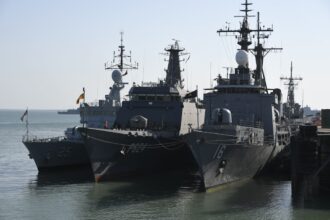
Outwardly, the ‘Gidrograf’ conformed to the typical appearance of a Soviet research vessel of its era. It featured a superstructure with various antenna masts, laboratories, and davits for deploying research equipment. Its hull bore markings identifying it as a hydrographic ship, often displaying the traditional Soviet insignia alongside the word “GIDROGRAF.” These visible elements served as a primary layer of camouflage, intended to disarm suspicion from Western observers.
Hidden Compartments and Enhanced Sensors
Beneath this scientific veneer, the ‘Gidrograf’ harbored a network of hidden compartments and specialized equipment. These often included reinforced bulkheads, isolated compartments for sensitive electronics, and dedicated spaces for intelligence analysis teams. Its true strength lay in its enhanced sensor capabilities. While hydrographic ships carried sonar for seabed mapping, the ‘Gidrograf’ operated more sophisticated acoustic sensors, capable of detecting and analyzing the acoustic signatures of foreign submarines and surface vessels. Consider these sensors as highly sensitive ears, capable of discerning whispers in the vast ocean.
Advanced Communications and SIGINT Emplacement
Beyond acoustic intelligence, the ‘Gidrograf’ was equipped with advanced communications arrays and dedicated Signals Intelligence (SIGINT) equipment. These systems were designed to intercept and analyze electronic emissions from naval vessels, aircraft, and shore-based installations. This included radar signals, radio communications, and telemetry data. The ship’s array of antennas, while appearing to be for standard navigation or weather monitoring, were in reality finely tuned instruments for harvesting electromagnetic intelligence. These antennas were not merely receiving signals; they were drawing a detailed electronic portrait of its surroundings.
Operations and Strategic Intent: Mapping the Adversary
The operational deployment of the ‘Gidrograf’ provides the clearest insight into its true strategic intent. It was not merely a passive observer; it was an active participant in the ongoing Cold War intelligence battle, its movements calculated and its presence deliberate.
Shadowing Western Naval Exercises
One of the primary objectives of the ‘Gidrograf’ was the shadowing of Western naval exercises. By positioning itself in proximity to NATO fleets, the ship could gather invaluable information on tactics, doctrine, equipment performance, and communications protocols. This included recording the acoustic signatures of new submarine classes, assessing the capabilities of anti-submarine warfare (ASW) systems, and analyzing the electronic characteristics of various weapons platforms. Imagine it as a silent, digital auditor, meticulously recording the performance of its perceived competitors.
Monitoring Strategic Waterways
The ‘Gidrograf’ also played a crucial role in monitoring strategic waterways, such as choke points like the GIUK gap (Greenland-Iceland-UK) and various straits. These deployments allowed the Soviet Union to track the movements of Western naval vessels, particularly nuclear submarines, and assess their operational readiness. Such intelligence was vital for maintaining situational awareness and informing Soviet naval planning. Its presence in these critical arteries was a constant, unsettling reminder to Western powers.
Seabed Surveying for Submarine Cables
While ostensibly conducting hydrographic surveys, the ‘Gidrograf’ also likely undertook covert missions related to seabed mapping for the purpose of locating and potentially tapping international submarine communication cables. These highly sensitive operations aimed to intercept encrypted communications between Western nations, offering a direct line into their strategic discussions and intelligence-sharing networks. The seemingly innocuous task of mapping the ocean floor thus took on a far more sinister meaning.
Unveiling and Detection: The Veil Thins
Despite the sophisticated camouflage and operational secrecy, the true nature of ships like the ‘Gidrograf’ was not entirely concealed from Western intelligence. The cat-and-mouse game of Cold War espionage meant that each side was constantly striving to unveil the other’s deceptions.
Western Intelligence Assessments
Western intelligence agencies, particularly the US Navy and allied services, were acutely aware of the dual-use nature of many Soviet “research” vessels. Through a combination of human intelligence, satellite imagery, and direct observation, they compiled extensive dossiers on ships like the ‘Gidrograf.’ They monitored its movements, analyzed its unusual antenna arrays, and tracked its behavior during sensitive naval exercises, gradually peeling back the layers of its deception.
Incidents and Near Misses
The deployment of the ‘Gidrograf’ and similar vessels inevitably led to numerous incidents and near misses at sea. These ranged from aggressive maneuvering during naval exercises to close encounters with Western warships, sometimes resulting in minor collisions or diplomatic protests. Such incidents, while potentially dangerous, often served to confirm Western suspicions about the true intentions of the Soviet vessel. These encounters were not mere accidents; they were often deliberate probes, testing the boundaries of engagement.
Photographic and Acoustic Evidence
Over time, Western intelligence amassed a wealth of photographic and acoustic evidence further substantiating the ‘Gidrograf’s’ role as an intelligence ship. Photographs might reveal unusual equipment or crew behavior, while acoustic recordings could distinguish between legitimate scientific emanations and those indicative of covert surveillance. This cumulative evidence solidified the understanding of the ‘Gidrograf’ as a dedicated intelligence platform.
The Gidrograf, a Soviet intelligence ship, played a crucial role in maritime reconnaissance during the Cold War, gathering vital information on naval activities. For a deeper understanding of the strategic significance of such vessels, you can explore a related article that discusses the broader implications of naval intelligence operations. This resource provides insights into how ships like the Gidrograf contributed to the geopolitical landscape of the time. To read more about this fascinating topic, visit this article.
The Legacy of the ‘Gidrograf’: A Blueprint for Covert Operations
| Metric | Details |
|---|---|
| Name | Gidrograf |
| Type | Soviet Intelligence Ship |
| Purpose | Signals Intelligence (SIGINT) and Electronic Surveillance |
| Operator | Soviet Navy / KGB |
| Displacement | Approx. 1,500 – 2,000 tons |
| Length | About 70-80 meters |
| Speed | Up to 15 knots |
| Operational Period | Cold War Era (1960s-1980s) |
| Primary Equipment | Radio interception antennas, electronic surveillance gear |
| Notable Missions | Monitoring NATO naval exercises and communications |
The ‘Gidrograf’ may be an artifact of a bygone era, but its legacy continues to resonate in the annals of naval intelligence. It represents a significant chapter in the history of Cold War espionage, highlighting the ingenuity and lengths to which nations would go to gain a strategic advantage.
Evolution of Intelligence Platforms
The operational experiences with vessels like the ‘Gidrograf’ directly influenced the evolution of subsequent intelligence platforms for both the Soviet Union and other nations. The lessons learned about effective camouflage, sensor integration, and operational doctrines shaped the design and deployment of future generations of SIGINT, ELINT, and acoustic intelligence ships. It was a foundational experiment, whose results informed future, more advanced iterations.
The Enduring Challenge of Deception
The story of the ‘Gidrograf’ underscores the enduring challenge of deception in intelligence operations. The effectiveness of intelligence gathering often hinges on the ability to conceal one’s true intentions, to project a benign image while pursuing clandestine objectives. This strategic artifice remains a core component of espionage to this day, a constant dance of revelation and concealment.
A Window into Cold War Mentality
Ultimately, the ‘Gidrograf’ offers a valuable window into the mentality of the Cold War. It symbolizes the pervasive suspicion, the relentless quest for information, and the constant state of readiness that defined the standoff between the Soviet bloc and the West. It reminds us that even in times of apparent peace, an unseen battle for information was ceaselessly waged, often on the tranquil surface of the open ocean. The ‘Gidrograf’ was not just a ship; it was a silent, steel-hulled warrior in that endless, hidden conflict.

WATCH NOW ▶️ SHOCKING: How The CIA Stole A Nuclear Submarine
FAQs
What was the primary purpose of the Gidrograf Soviet intelligence ship?
The Gidrograf was a Soviet intelligence ship primarily used for gathering electronic and signal intelligence during the Cold War. It was equipped with advanced surveillance and communication interception equipment.
When was the Gidrograf intelligence ship in operation?
The Gidrograf operated mainly during the Cold War era, particularly from the 1960s through the 1980s, serving as a key asset in Soviet naval intelligence operations.
What type of equipment did the Gidrograf carry?
The ship was outfitted with sophisticated electronic surveillance gear, including radio signal interceptors, radar detection systems, and communication jamming devices designed to monitor and analyze NATO and other foreign military communications.
Where did the Gidrograf typically operate?
The Gidrograf usually operated in international waters near NATO naval bases and strategic maritime routes, including the North Atlantic, the Mediterranean Sea, and other areas of geopolitical interest to the Soviet Union.
What happened to the Gidrograf after the Cold War?
Following the end of the Cold War and the dissolution of the Soviet Union, many intelligence ships like the Gidrograf were decommissioned, repurposed, or scrapped as Russia restructured its naval and intelligence capabilities.