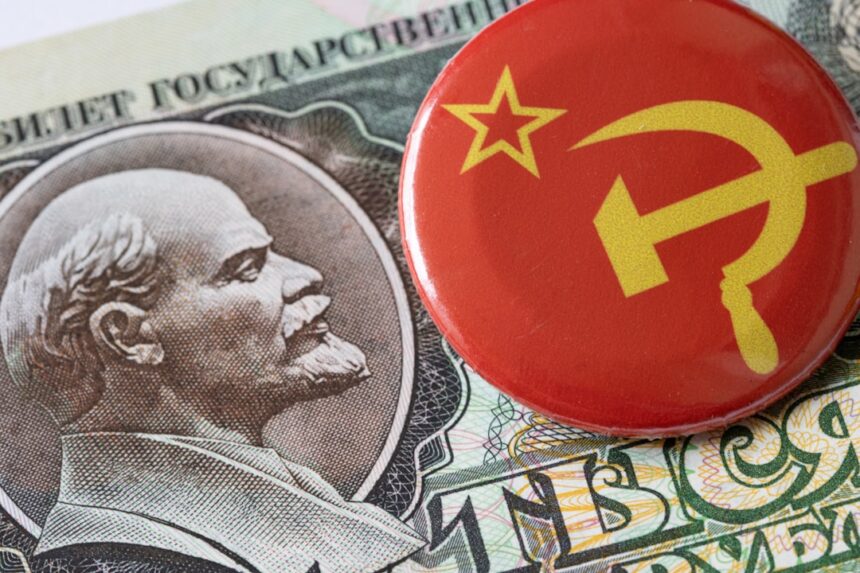
The collapse of the Soviet Union in 1991 marked a pivotal moment in world history, signaling the end of an era characterized by ideological confrontation and geopolitical tension. This monumental event not only reshaped the political landscape of Eastern Europe but also reverberated across the globe, influencing international relations and economic policies for decades to come. The disintegration of the Soviet state was not an isolated incident; rather, it was the culmination of a series of complex factors that had been brewing for years.
Understanding the multifaceted nature of this collapse requires a deep dive into its historical, economic, political, and social dimensions. As the world watched the Soviet Union unravel, it became evident that the implications of this collapse extended far beyond the borders of the former superpower. The dissolution of the USSR led to the emergence of fifteen independent republics, each grappling with its own identity and governance challenges.
The aftermath of this seismic shift continues to influence contemporary geopolitics, as nations navigate the legacies of Soviet rule and the quest for stability in a rapidly changing world.
Key Takeaways
- The Soviet collapse was a complex event influenced by economic, political, social, and international factors.
- The historical background of the Soviet Union, including its formation and key events, shaped the country’s trajectory towards collapse.
- Economic factors such as inefficiency, stagnation, and dependence on oil prices played a significant role in the Soviet collapse.
- Political factors, including leadership changes, ideological rigidity, and nationalist movements, contributed to the disintegration of the Soviet Union.
- Social factors and public sentiment, such as growing dissatisfaction and desire for independence, were pivotal in the collapse of the Soviet Union.
Historical background of the Soviet Union
The Soviet Union was established in 1922 following the Russian Revolution, which overthrew the Tsarist regime and led to the rise of the Bolsheviks under Vladimir Lenin. This new socialist state aimed to create a classless society through state control of the economy and suppression of dissent. Over the decades, the USSR expanded its influence, becoming a superpower after World War II and engaging in a protracted Cold War with the United States.
The historical narrative of the Soviet Union is marked by significant events such as Stalin’s purges, the Cuban Missile Crisis, and the space race, all of which contributed to its complex identity on the world stage. Throughout its existence, the Soviet Union faced numerous challenges, including economic stagnation, political repression, and ethnic tensions among its diverse population. The centralized planning model that initially spurred industrial growth eventually became a hindrance, leading to inefficiencies and shortages.
By the 1980s, under Mikhail Gorbachev’s leadership, attempts at reform through policies like glasnost (openness) and perestroika (restructuring) were introduced. However, these reforms inadvertently accelerated the disintegration process rather than stabilizing the state.
Economic factors leading to the collapse
The economic landscape of the Soviet Union was fraught with challenges that ultimately contributed to its downfall. Centralized planning, while initially effective in mobilizing resources for rapid industrialization, became increasingly inefficient over time. The lack of market mechanisms stifled innovation and led to widespread shortages of consumer goods.
As citizens faced long lines for basic necessities, discontent grew, revealing cracks in the facade of a seemingly robust economy. Moreover, the arms race with the United States drained significant resources from the Soviet economy. The military-industrial complex consumed a substantial portion of national output, diverting funds from essential sectors such as healthcare and education.
As global oil prices plummeted in the 1980s, the Soviet economy—heavily reliant on oil exports—faced severe fiscal strain. This economic turmoil eroded public confidence in the government and fueled calls for reform, setting the stage for further instability.
Political factors contributing to the collapse
| Political Factors | Contributions to Collapse |
|---|---|
| Lack of political stability | Increased uncertainty and risk for investors |
| Corruption | Undermined public trust and misallocation of resources |
| Political unrest | Disruption of economic activities and investment |
| Weak governance | Ineffective policy implementation and decision-making |
The political landscape of the Soviet Union was characterized by authoritarianism and a lack of democratic processes. The Communist Party maintained strict control over all aspects of life, suppressing dissent and limiting political pluralism. As Gorbachev attempted to implement reforms aimed at democratization, he inadvertently unleashed forces that challenged the very foundation of Soviet authority.
The introduction of greater political freedoms led to a surge in nationalist movements within various republics, as ethnic groups sought autonomy or independence from Moscow’s control. Additionally, corruption and bureaucratic inefficiencies plagued the political system. The disconnect between party officials and ordinary citizens fostered widespread cynicism towards leadership.
As public trust eroded, calls for greater transparency and accountability intensified. The inability of the Communist Party to adapt to changing circumstances ultimately weakened its grip on power, paving the way for a fragmented political landscape that contributed to the collapse.
Social factors and public sentiment during the collapse
Public sentiment during the final years of the Soviet Union was marked by a growing sense of disillusionment and frustration. Citizens who had once been indoctrinated with ideals of socialism began to question the legitimacy of their government as economic hardships mounted. The promise of a better life under communism seemed increasingly hollow as people faced daily struggles for basic necessities.
This pervasive dissatisfaction fueled protests and movements advocating for change across various republics. The rise of civil society organizations and independent media played a crucial role in shaping public opinion during this tumultuous period. Activists began to challenge state narratives and demand greater freedoms, leading to a burgeoning sense of national identity among various ethnic groups.
As these movements gained momentum, they further eroded support for the central government and highlighted the deep-seated grievances that had long been suppressed under authoritarian rule.
The role of international relations in the Soviet collapse

International relations played a significant role in shaping the trajectory of the Soviet Union’s collapse. The Cold War rivalry with the United States not only defined Soviet foreign policy but also placed immense pressure on its economy. The arms race drained resources that could have been allocated to domestic needs, exacerbating internal issues.
Additionally, diplomatic failures and military engagements in Afghanistan further strained both financial resources and public support for government policies. The changing dynamics of global politics also influenced perceptions of communism as an ideology. The fall of communist regimes in Eastern Europe during 1989 served as a catalyst for change within the Soviet Union itself.
As countries like Poland and Hungary transitioned towards democracy, they inspired similar movements within Soviet republics. The international community’s shifting attitudes towards democracy and human rights created an environment where calls for reform resonated more strongly than ever before.
Impact of the Soviet collapse on Eastern European countries
The collapse of the Soviet Union had profound implications for Eastern European countries that had been under its influence or direct control. With the dissolution of Soviet authority, nations such as Poland, Hungary, and Czechoslovakia seized the opportunity to pursue democratic reforms and market-oriented economic policies. This transition was not without challenges; however, it marked a significant departure from decades of authoritarian rule.
The newfound independence allowed these countries to redefine their identities on both regional and global stages. Many sought integration with Western institutions such as NATO and the European Union, viewing membership as a means to secure their sovereignty and promote stability. The shift towards democracy also fostered greater cooperation among former adversaries, leading to a reconfiguration of alliances that would shape European politics for years to come.
Consequences of the Soviet collapse on global geopolitics
The geopolitical landscape underwent a seismic shift following the collapse of the Soviet Union. The end of bipolarity ushered in an era characterized by unipolarity dominated by the United States, which emerged as the sole superpower on the global stage. This transition altered international relations dynamics, leading to new alliances and conflicts as nations navigated their positions in a rapidly changing world.
The power vacuum left by Moscow’s withdrawal created opportunities for both cooperation and conflict among neighboring states. As new geopolitical realities took shape, global powers had to reassess their strategies in response to emerging threats and opportunities in this post-Soviet landscape.
Lessons learned from the Soviet collapse
The collapse of the Soviet Union offers valuable lessons for contemporary policymakers and scholars alike. One key takeaway is the importance of adaptability in governance; rigid political systems that fail to respond to societal needs are prone to instability. The inability of Soviet leadership to embrace reform ultimately led to its downfall, highlighting that responsiveness to public sentiment is crucial for maintaining legitimacy.
Additionally, economic diversification emerges as another critical lesson from this historical event. Overreliance on specific sectors can create vulnerabilities that threaten national stability. The Soviet experience underscores the necessity for balanced economic development that prioritizes innovation and resilience against external shocks.
The legacy of the Soviet collapse in modern geopolitics
The legacy of the Soviet collapse continues to shape modern geopolitics in profound ways. The emergence of new nation-states has led to ongoing debates about national identity, sovereignty, and regional cooperation in Eastern Europe and Central Asia. Former Soviet republics grapple with their historical ties while striving for independence and self-determination in an increasingly interconnected world.
Moreover, Russia’s resurgence under Vladimir Putin has reignited discussions about imperial ambitions and regional influence reminiscent of Soviet-era policies. The annexation of Crimea in 2014 and ongoing conflicts in Ukraine highlight how historical legacies can resurface in contemporary geopolitical conflicts, complicating efforts toward stability and cooperation.
Future implications of the Soviet collapse for global stability
As nations continue to navigate their post-Soviet trajectories, understanding the implications of this historical event remains crucial for global stability. The interplay between nationalism, regional conflicts, and international relations will shape future dynamics in Eastern Europe and beyond.
In conclusion, while significant progress has been made since 1991, echoes of the Soviet collapse persist in contemporary geopolitics. The lessons learned from this monumental event serve as reminders that history is not merely a series of past events but an ongoing narrative that shapes present realities and future possibilities on a global scale.
The geopolitical analysis of the Soviet collapse has been a topic of extensive study, shedding light on the complex factors that led to the disintegration of one of the world’s superpowers. For a deeper understanding of the implications of this historical event, you can explore a related article on the subject at In The War Room, which provides insightful commentary and analysis on the geopolitical landscape that emerged in the aftermath of the Soviet Union’s fall.
WATCH THIS! The War That Secretly Bankrupted An Empire: How Afghanistan Destroyed the USSR
FAQs
What factors led to the collapse of the Soviet Union?
The collapse of the Soviet Union was influenced by a combination of internal and external factors, including economic stagnation, political repression, nationalist movements in the republics, and the arms race with the United States.
How did the collapse of the Soviet Union impact global geopolitics?
The collapse of the Soviet Union led to a significant shift in global geopolitics, with the end of the Cold War and the emergence of the United States as the world’s sole superpower. It also resulted in the independence of several former Soviet republics and the reconfiguration of alliances and power dynamics in the international system.
What were the geopolitical implications of the Soviet collapse for Eastern Europe?
The collapse of the Soviet Union had significant geopolitical implications for Eastern Europe, leading to the end of communist rule in countries such as Poland, Hungary, and Czechoslovakia. It also paved the way for these countries to join Western institutions such as NATO and the European Union.
How did the collapse of the Soviet Union impact Russia’s geopolitical position?
The collapse of the Soviet Union had a profound impact on Russia’s geopolitical position, leading to the loss of its status as a global superpower and the fragmentation of its former empire. It also resulted in the emergence of new geopolitical challenges and opportunities for Russia in the post-Soviet era.