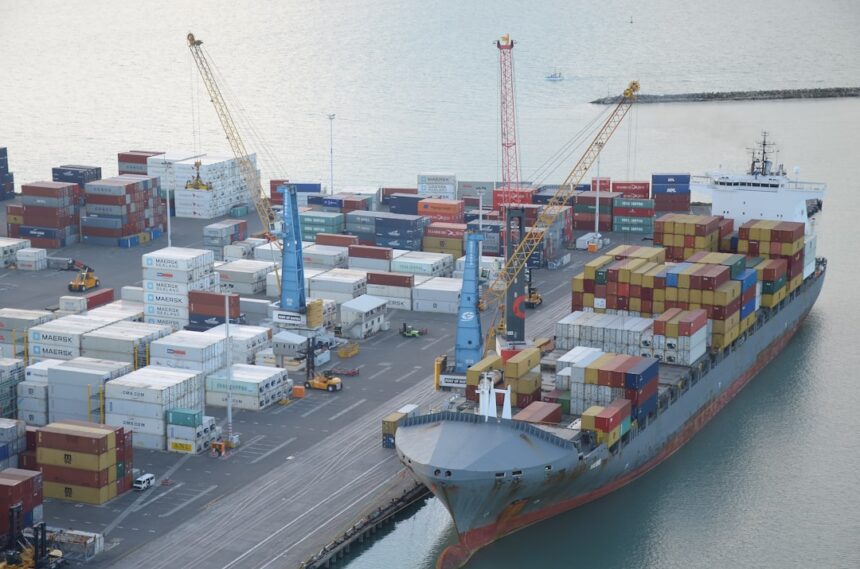
Export control, a complex web of regulations designed to safeguard national security and promote foreign policy objectives, often presents a stark contrast when examining its application to seemingly dissimilar commodities like software and steel. While both fall under governmental oversight, the nature of the items, their dissemination, and the underlying risks associated with them necessitate distinct approaches to control. Understanding these differences is crucial for businesses operating in a globalized economy, as navigating these regulations can be as intricate as charting a course through uncharted waters.
The fundamental distinction between software and steel, from an export control perspective, lies in their very essence. Steel, a product of heavy industry, is a tangible material, a physical commodity that can be seen, touched, and, crucially, intercepted. Software, conversely, is intangible data, a set of instructions that can traverse fiber optic cables, satellite transmissions, and even the airwaves with unparalleled speed and stealth. This inherent difference shapes the challenges and methodologies of export control.
Steel: The Shepherd’s Flock
Controlling the export of steel often resembles the tending of a flock of sheep. The movement of each individual sheep, or in this case, each shipment of steel, can be tracked, documented, and, if necessary, intercepted.
Physical Manifestation and Physical Controls
Steel products, from raw ingots to finished components, possess a physical form. This allows for the implementation of physical controls at points of export and import. Customs agencies, port authorities, and border patrols are the shepherds of this trade, equipped to inspect manifests, verify quantities, and ensure compliance with licensing requirements. The process is generally clear-cut: a shipment of steel needs a permit, the permit should match the shipment, and the authorities can physically verify this match.
Policy Objectives and Commodity Classification
The policy objectives behind controlling steel exports are often tied to economic stability, preventing the proliferation of materials that could be used in weapons programs (though less directly than other dual-use items), or ensuring fair trade practices by preventing dumping. Steel is categorized under various harmonized system (HS) codes, which facilitate its classification and the application of specific regulations. These classifications are typically well-established and understood within the international trade community.
Software: The Whispering Wind
Controlling software, however, is akin to trying to bottle the wind. Its ability to replicate, transmit, and evolve at an exponential pace presents a unique set of challenges for regulators.
Digital Nature and Global Reach
Software exists as code, a collection of binary zeroes and ones. It can be copied infinitely without degradation, transmitted globally in milliseconds, and integrated into products and systems with relative ease. This digital nature makes traditional, physical interdiction methods largely ineffective. The border for software is not a physical checkpoint, but a network node, a digital gateway.
Dual-Use Nature and Evolving Threats
Many software exports, particularly those with cryptographic capabilities or advanced functionalities, are considered “dual-use” items. This means they can have legitimate civilian applications but also possess the potential to be misused for nefarious purposes, such as facilitating espionage, cyberattacks, or the development of weapons of mass destruction. The threat landscape is constantly evolving, with new vulnerabilities discovered and new capabilities developed at a dizzying speed.
In the ongoing discussion about export control regimes, a recent article highlights the contrasting approaches taken towards software and steel exports. While software is often subject to stringent regulations due to its potential dual-use applications, the steel industry faces different challenges related to trade policies and tariffs. For a deeper understanding of these dynamics, you can read more in the article available at In the War Room.
Regulatory Frameworks: Building the Dam
The regulatory frameworks governing the export of software and steel, while sharing common overarching goals, differ significantly in their detail and implementation. The controls for each are designed to address the specific vulnerabilities and risks associated with their respective natures.
Steel Export Controls: The Traditional Gatekeepers
Export controls on steel have historically been more straightforward, focusing on trade barriers, tariffs, and licensing for specific types of steel with strategic applications.
Licensing and Documentation: The Paper Trail
For steel, export licenses are typically required based on the type of steel, its intended destination, and its end-use. This involves detailed paperwork, proving that the steel is not destined for embargoed countries or for prohibited applications. The process is largely driven by tangible documentation that accompanies each shipment.
International Agreements and Trade Organizations
International agreements and trade organizations play a significant role in shaping steel export policies. Organizations like the World Trade Organization (WTO) set guidelines for trade practices, while bilateral agreements can impose quotas or restrictions on certain steel products. These frameworks provide a structured, albeit sometimes contentious, environment for managing global steel trade.
Software Export Controls: The Digital Sentinels
Software export controls are a much more dynamic and complex beast, constantly adapting to new technologies and evolving threats.
Classification and Encryption: The Code Breakers
Classifying software for export control purposes is a significant challenge. Regulations often focus on the strength of encryption algorithms, the intended use of the software, and its potential to be used in developing or disseminating weapons technologies. This requires a deep understanding of computer science and cybersecurity. The definition of “cryptographic capabilities” itself can become a moving target, subject to interpretation and technological advancement.
Catch-All Provisions and Due Diligence: The Prudent Navigator
Given the difficulty of anticipating all potential misuses of software, many export control regimes include “catch-all” provisions. These provisions allow authorities to deny export licenses for items that are not explicitly listed but which pose a risk to national security or foreign policy. This places a significant burden of due diligence on exporters, requiring them to thoroughly vet their customers and the intended end-use of their software. Imagine a ship captain not only needing a manifest for every barrel of oil but also having to investigate the destination of every grain of sand on board, just in case.
The Risks and Consequences: Navigating the Storm
The potential consequences of failing to comply with export control regulations are substantial for both software and steel, but the nature of the risks and the pathways to violation differ.
Steel: The Blunt Instrument
Miscontrolling steel exports can lead to economic repercussions, such as trade disputes and sanctions, and in rarer cases, the diversion of materials for unsanctioned military buildup.
Economic Sanctions and Penalties: The Financial Storm
Violations related to steel exports can result in significant fines, penalties, and the revocation of export privileges. For businesses, this can mean substantial financial losses and damage to their reputation. Trade wars, fueled by concerns over dumped steel, are a prime example of how uncontrolled steel trade can lead to broader economic instability.
Diversion and Proliferation: The Crumbling Defense
While less common than with other dual-use items, steel can be diverted for purposes that undermine national security. For instance, certain high-strength steels could, in theory, be used in the construction of sophisticated weaponry. Tracking and controlling this diversion is a crucial, albeit challenging, aspect of maintaining global security.
Software: The Invisible Weapon
The risks associated with uncontrolled software exports are often more insidious, focusing on cyber warfare, espionage, and the erosion of democratic institutions.
Cyberattacks and Espionage: The Digital Sabotage
The uncontrolled export of sophisticated software, particularly that with advanced cybersecurity features or vulnerabilities, can empower hostile actors to launch devastating cyberattacks, steal sensitive information, and disrupt critical infrastructure. This is the digital equivalent of handing an enemy a master key to your most secure facilities.
Undermining National Security and Foreign Policy: The Shifting Sands
Software can be used to influence elections, spread disinformation, and sow discord within allied nations, directly undermining U.S. foreign policy objectives. The ability of foreign entities to acquire and deploy advanced surveillance or propaganda software can have profound geopolitical consequences, acting like a silent, invisible invasion.
Enforcement Mechanisms: The Watchful Eyes
The methods employed for enforcing export control regulations reflect the fundamental differences between software and steel.
Steel: The Visible Hand
Enforcement for steel exports relies heavily on physical inspections, audits of trade records, and intelligence gathering at border crossings and shipping ports.
Customs and Border Protection: The Gatekeepers of the Realm
Customs and border protection agencies are instrumental in enforcing steel export controls. They are empowered to inspect shipments, verify declarations, and detain or seize goods that are not in compliance with regulations.
Financial Investigations and Audits: Following the Money Trail
Law enforcement agencies may conduct financial investigations to trace the flow of money associated with steel transactions, looking for evidence of illicit diversion or evasion of sanctions. Audits of company records provide a paper trail to verify compliance.
Software: The Digital Bloodhounds
Enforcing software export controls requires a sophisticated understanding of technology, network forensics, and intelligence gathering within the digital realm.
Cybersecurity Agencies and Intelligence Services: The Digital Detectives
Agencies like the FBI and various intelligence services play a critical role in identifying and disrupting illicit software transfers. They employ advanced digital forensics techniques to track down malicious actors and investigate cyber threats.
Proactive Monitoring and Threat Intelligence: Anticipating the Ambush
Rather than solely relying on interdiction, enforcement agencies increasingly focus on proactive monitoring of online activities and gathering threat intelligence to anticipate potential violations. This involves understanding the tactics, techniques, and procedures of adversaries and developing countermeasures.
In the ongoing discussion about export control regimes, the contrasting approaches to software and steel have garnered significant attention. While software exports are often subject to stringent regulations due to national security concerns, the steel industry faces a different set of challenges related to trade tariffs and international competition. For a deeper understanding of these dynamics, you can explore a related article that delves into the nuances of these export controls and their implications for global trade. This insightful piece can be found here.
Challenges and Future Directions: Charting the Uncharted Seas
| Export Control Regime | Software | Steel |
|---|---|---|
| Wassenaar Arrangement | Highly controlled; encryption software often requires licenses | Moderate controls; dual-use steel products may require licenses |
| EAR (Export Administration Regulations – US) | Classified under ECCN 5D; strong controls on encryption and technology transfer | Generally EAR99; low control unless specialized steel with military use |
| ITAR (International Traffic in Arms Regulations – US) | Controls on defense-related software; licenses required for military applications | Steel used in defense articles controlled; requires licenses |
| EU Dual-Use Regulation | Controls on software with encryption or military use; license requirements apply | Steel generally not controlled unless for military end-use |
| Control Focus | Technology transfer, encryption, military applications | Material composition, end-use, military applications |
| Typical Licensing Requirement | High frequency for encryption and military software | Low to moderate; depends on steel type and end-use |
The evolving nature of technology and global trade presents ongoing challenges for effective export control of both software and steel, necessitating continuous adaptation and innovation.
Software: The Ever-Moving Target
The rapid pace of software development, the rise of open-source initiatives, and the increasing sophistication of cyber threats make controlling software exports a constant race against time.
Rapid Technological Advancement: The Accelerating Current
New programming languages, emerging artificial intelligence capabilities, and the proliferation of cloud-based services mean that export control regulations must constantly be updated to remain relevant. Deciding what constitutes “classified” software in the age of AI-generated code is a profound challenge.
Global Collaboration and Information Sharing: Building Bridges Across Oceans
Effective software export control requires robust international cooperation and information sharing among governments. The decentralized nature of the internet means that no single nation can effectively control the global flow of software on its own. This is akin to forming a global coast guard to patrol the vast digital oceans.
Steel: The Shifting Trade Winds
While perhaps less dynamic than software, steel export control also faces challenges related to global supply chain complexities, the emergence of new production centers, and the use of loopholes in trade agreements.
Supply Chain Transparency: Illuminating the Shadowy Depths
Ensuring transparency throughout complex global supply chains is crucial to prevent the diversion of steel. Tracing the origin and intended destination of steel products through multiple intermediaries can be a daunting task.
Addressing Protectionism and Trade Wars: Navigating the Turbulent Waters
The use of export controls, or the threat thereof, can also be a tool in broader trade disputes, leading to protectionist measures that can disrupt legitimate commerce and create economic instability. Balancing national security concerns with the need for open and fair trade remains a perpetual tightrope walk.
FAQs
What are export control regimes?
Export control regimes are international agreements or frameworks that regulate the export of certain goods, technologies, and software to prevent their misuse, particularly in military or dual-use applications. They aim to enhance global security by controlling sensitive items.
How do export controls differ between software and steel?
Export controls on software often focus on encryption, cybersecurity, and dual-use technologies, whereas steel is typically controlled based on its potential military applications, strategic importance, or economic impact. Software controls tend to be more complex due to intangible nature and rapid innovation.
Which international regimes govern the export of software and steel?
Software exports are commonly regulated under regimes like the Wassenaar Arrangement, which covers dual-use technologies including certain software. Steel exports may be subject to trade regulations and sanctions but are less frequently controlled under specific export control regimes compared to software.
Why is software more heavily regulated under export control regimes than steel?
Software, especially encryption and dual-use technologies, can have significant security implications if misused, such as enabling cyberattacks or military advancements. Steel, while important, is a physical commodity with fewer direct security risks, leading to generally lighter export controls.
How do companies ensure compliance with export control regimes for software and steel?
Companies must classify their products correctly, understand applicable regulations, obtain necessary licenses, and implement internal compliance programs. For software, this includes assessing encryption strength and end-user restrictions, while for steel, it involves monitoring trade restrictions and embargoes.