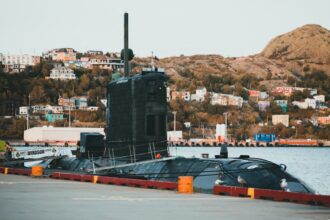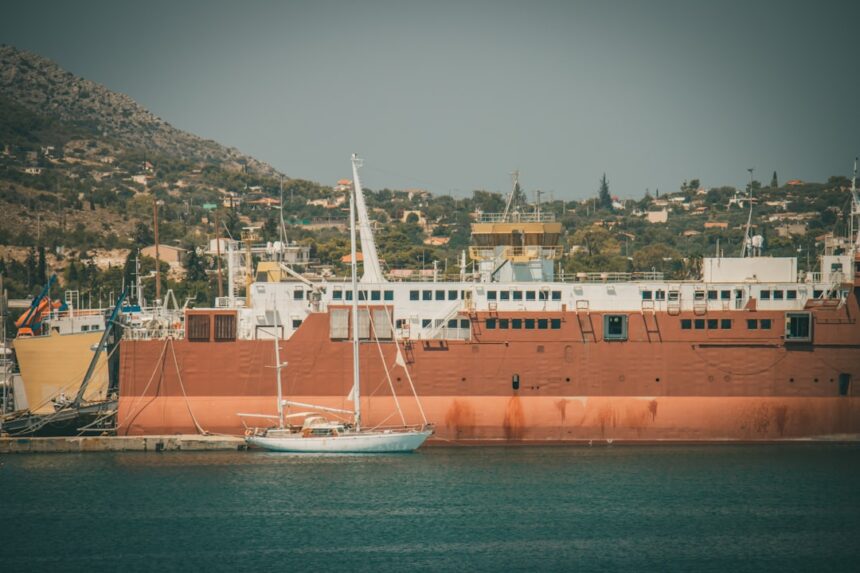
The Glomar Explorer was a deep-sea drilling vessel constructed in the early 1970s for Project Azorian, a classified CIA operation. Built by Global Marine Inc. under contract with Howard Hughes’ Summa Corporation, the ship served as cover for the mission to recover the Soviet submarine K-129, which sank in the North Pacific Ocean in March 1968.
The vessel measured 618 feet in length and featured specialized equipment for deep-ocean operations, including a heavy-lift system capable of operating at depths exceeding 16,000 feet. The ship’s central well contained a pipe string and capture vehicle designed to retrieve objects from the seafloor. Construction began in 1971 at Sun Shipbuilding and Dry Dock Company in Pennsylvania, with the project publicly presented as a commercial deep-sea mining venture.
In July 1974, the Glomar Explorer conducted its recovery operation approximately 1,560 miles northwest of Hawaii. The mission successfully retrieved a section of the K-129 submarine, though structural failure during the lift prevented recovery of the entire vessel.
Following the mission’s completion, the vessel was transferred to the U.S. Navy and later converted for legitimate deep-sea drilling operations.
Key Takeaways
- Glomar Explorer played a pivotal role in advancing deep-sea exploration technology and oceanographic research.
- The vessel was equipped with cutting-edge equipment enabling detailed exploration of the ocean floor.
- It contributed significantly to marine science through discoveries and offshore oil and gas exploration.
- Deep-sea exploration aboard Glomar Explorer involved considerable challenges and risks for the crew.
- The ship’s legacy includes fostering collaborations and promoting environmental conservation in marine research.
The Technology and Equipment on Board
The technological innovations aboard the Glomar Explorer were groundbreaking for their time and played a crucial role in its deep-sea operations. The ship was equipped with advanced sonar systems that allowed for precise mapping of the ocean floor, enabling the crew to locate submerged objects with remarkable accuracy. Additionally, the vessel featured dynamic positioning systems that ensured stability during recovery operations, even in turbulent waters.
This combination of technology made the Glomar Explorer a formidable tool for underwater exploration. One of the most notable pieces of equipment on board was the aforementioned “claw,” a sophisticated recovery device designed to grasp large objects from great depths. This mechanism was engineered to operate at depths exceeding 16,000 feet, showcasing the vessel’s capability to engage in deep-sea recovery missions.
Furthermore, the ship housed laboratories and living quarters that facilitated extended missions, allowing scientists and crew members to conduct research and analysis while at sea. The integration of such advanced technology not only enhanced the ship’s operational efficiency but also set new standards for future marine exploration endeavors.
Exploring the Ocean Floor
The exploration of the ocean floor has long captivated scientists and adventurers alike, and the Glomar Explorer played a pivotal role in this quest for knowledge. With its state-of-the-art equipment, the vessel ventured into uncharted territories of the deep sea, revealing insights into underwater geology and marine ecosystems. The ship’s missions were not solely focused on recovery; they also included extensive mapping and surveying of oceanic features, contributing to a better understanding of the Earth’s underwater landscapes.
During its operational years, the Glomar Explorer traversed various oceanic regions, collecting data that would prove invaluable to oceanographers and geologists. The information gathered during these expeditions helped to illuminate aspects of plate tectonics, underwater volcanic activity, and sedimentation processes. By exploring these depths, the Glomar Explorer not only fulfilled its original mission but also opened new avenues for scientific inquiry, inspiring future generations of researchers to delve deeper into the mysteries of the ocean.
Discoveries and Contributions to Oceanography
The contributions of the Glomar Explorer to oceanography extend far beyond its initial mission. The data collected during its expeditions provided critical insights into marine biology, geology, and environmental science. For instance, studies conducted aboard the vessel revealed previously unknown species of marine life and contributed to a greater understanding of biodiversity in deep-sea ecosystems.
These discoveries underscored the importance of preserving these fragile environments amid growing concerns about human impact on ocean health. Moreover, the technological advancements pioneered by the Glomar Explorer laid the groundwork for subsequent deep-sea exploration missions. The methodologies developed during its operations have been adopted and refined by modern research vessels, enabling scientists to conduct more sophisticated studies of underwater phenomena.
As a result, the legacy of the Glomar Explorer continues to influence contemporary oceanographic research, fostering a deeper appreciation for the complexities of marine environments.
Challenges and Risks of Deep Sea Exploration
| Metric | Value | Unit |
|---|---|---|
| Ship Name | Glomar Explorer | – |
| Type | Deep-sea drilling ship / Recovery vessel | – |
| Length | 168 | meters |
| Beam (Width) | 23 | meters |
| Draft | 8.5 | meters |
| Displacement | 21,000 | tons |
| Propulsion | Diesel-electric engines | – |
| Speed | 15 | knots |
| Built Year | 1974 | – |
| Purpose | Project Azorian – Recovery of sunken Soviet submarine | – |
| Recovery Depth Capability | 5,000 | meters |
Deep-sea exploration is inherently fraught with challenges and risks that can pose significant threats to both equipment and personnel. The extreme conditions found at great depths—such as high pressure, low temperatures, and complete darkness—demand specialized technology and training. The Glomar Explorer faced numerous obstacles during its missions, including equipment malfunctions and unpredictable weather patterns that could jeopardize operations.
Additionally, safety concerns for crew members were paramount during deep-sea missions. The potential for accidents or emergencies required rigorous safety protocols and contingency plans. Despite these challenges, the crew aboard the Glomar Explorer demonstrated remarkable resilience and adaptability, often working under intense pressure to achieve their objectives.
Their experiences highlighted not only the dangers associated with deep-sea exploration but also the importance of thorough preparation and innovative problem-solving in overcoming these hurdles.
The Role of Glomar Explorer in Offshore Oil and Gas Exploration
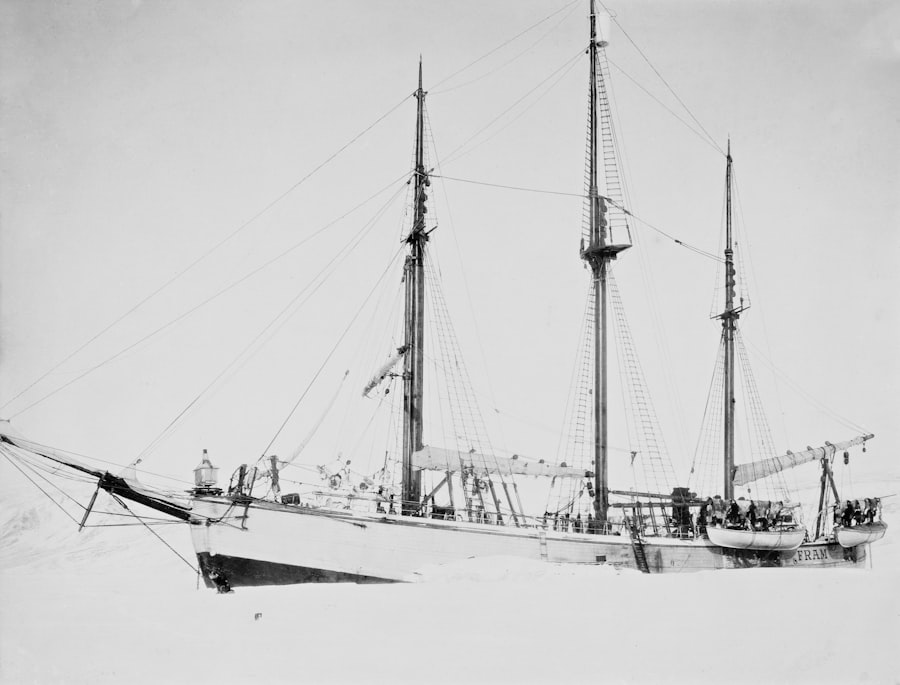
In addition to its initial covert mission, the Glomar Explorer played a significant role in offshore oil and gas exploration during its operational years. The vessel’s advanced technology made it an ideal platform for conducting geological surveys and assessing potential drilling sites. As energy demands grew in the 1970s and beyond, companies began to recognize the value of utilizing such specialized vessels for resource extraction.
The ship’s capabilities allowed it to assist in identifying oil reserves beneath the ocean floor, contributing to increased production in offshore drilling operations. This shift towards utilizing advanced marine technology marked a turning point in how energy companies approached resource exploration.
Environmental Impact and Conservation Efforts
While the Glomar Explorer made significant contributions to marine science and resource exploration, it also raised important questions about environmental impact and conservation efforts. The extraction of oil and gas from offshore sites can have detrimental effects on marine ecosystems, leading to habitat destruction and pollution. As awareness of these issues grew, so did calls for more sustainable practices in offshore exploration.
In response to these concerns, various organizations began advocating for responsible resource management and conservation initiatives. The legacy of the Glomar Explorer serves as a reminder of the delicate balance between scientific advancement and environmental stewardship. As researchers continue to explore the depths of our oceans, there is an increasing emphasis on minimizing human impact and protecting vulnerable marine habitats for future generations.
The Crew and Life on Board
Life aboard the Glomar Explorer was characterized by a unique blend of camaraderie and professionalism among crew members. Operating in an environment that demanded teamwork and collaboration, individuals from diverse backgrounds came together to achieve common goals. The crew included scientists, engineers, technicians, and support staff who all played vital roles in ensuring successful missions.
Daily life on board involved a rigorous schedule filled with research activities, equipment maintenance, and safety drills. Crew members often faced long hours at sea, requiring them to adapt to life away from home for extended periods. Despite these challenges, many found fulfillment in their work, driven by a shared passion for exploration and discovery.
The bonds formed among crew members often lasted long after their time aboard the vessel ended, creating a lasting sense of community within the field of marine science.
Future of Deep Sea Exploration with Glomar Explorer
As technology continues to advance at an unprecedented pace, the future of deep-sea exploration holds exciting possibilities for vessels like the Glomar Explorer. Innovations in robotics, artificial intelligence, and remote sensing are poised to revolutionize how researchers study underwater environments. While the original Glomar Explorer may no longer be operational, its legacy inspires ongoing efforts to push the boundaries of what is possible in marine exploration.
Future missions will likely focus on addressing pressing global challenges such as climate change, ocean health, and biodiversity conservation. By leveraging lessons learned from past expeditions aboard vessels like the Glomar Explorer, scientists can develop more effective strategies for studying and protecting our oceans. The spirit of exploration embodied by this iconic vessel will undoubtedly continue to influence future generations as they seek to unlock the secrets hidden beneath the waves.
Collaborations and Partnerships in Ocean Research
Collaboration has become increasingly important in ocean research as scientists recognize that complex challenges require interdisciplinary approaches. The legacy of the Glomar Explorer serves as a reminder of how partnerships can enhance our understanding of marine environments. By fostering collaborations between academic institutions, government agencies, and private organizations, researchers can pool resources and expertise to tackle pressing issues facing our oceans.
These partnerships have led to groundbreaking initiatives aimed at advancing marine science while promoting sustainable practices. Joint expeditions that combine cutting-edge technology with diverse scientific perspectives are paving the way for innovative discoveries that benefit both humanity and marine ecosystems. As researchers continue to build upon the foundation laid by vessels like the Glomar Explorer, collaborative efforts will play a crucial role in shaping the future of ocean exploration.
The Legacy of Glomar Explorer in Marine Science
The legacy of the Glomar Explorer extends far beyond its initial mission; it has become an enduring symbol of innovation in marine science. Its contributions to deep-sea exploration have paved the way for advancements in technology and methodology that continue to influence contemporary research efforts. By pushing boundaries and challenging conventional thinking about underwater exploration, this iconic vessel has inspired generations of scientists to pursue their passions.
As we look toward the future of ocean exploration, it is essential to remember the lessons learned from past endeavors like those undertaken by the Glomar Explorer. The vessel’s story serves as a testament to human ingenuity and determination in unraveling nature’s mysteries while highlighting our responsibility to protect fragile marine ecosystems. In honoring this legacy, researchers can continue to explore new frontiers while advocating for sustainable practices that ensure healthy oceans for generations to come.
The Glomar Explorer, a ship shrouded in mystery and intrigue, was primarily designed for deep-sea mining but gained notoriety for its involvement in covert operations during the Cold War. For those interested in exploring more about the historical context and operations of such unique vessels, you can read a related article on the topic at