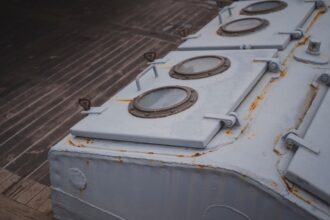
One of the most enigmatic and strategically vital branches of any modern military is its submarine force. For the United States Navy, this silent service has long been a cornerstone of its global power projection and a crucial element in maintaining strategic deterrence. Behind the sleek hulls that glide through the ocean’s inscrutable depths lies a complex web of research, development, and engineering dedicated to enhancing the capabilities and survivability of its submarine forces. This article delves into the US Navy’s Submergence Systems Project, exploring the multifaceted efforts to push the boundaries of what is possible beneath the waves.
The Submergence Systems Project, while not a singular, monolithic entity with a neat bureaucratic label accessible to the public, represents the collective and ongoing endeavor within the US Navy to advance every aspect of submariner operations. It encompasses everything from the fundamental mechanics of buoyancy and propulsion to the cutting-edge sonar and communication technologies that allow submarines to operate effectively and undetected. Imagine it as a vast, hidden network of scientific minds and engineering prowess, constantly seeking to better harness the ocean’s embrace – a realm that offers both unparalleled concealment and formidable challenges. This project is a continuous effort, adapting to evolving threats and technological advancements, ensuring that the submarine force remains a potent and relevant asset.
The very essence of a submarine is its hull, the pressure vessel that allows it to withstand the crushing forces of the deep. The Submergence Systems Project dedicates significant resources to understanding and improving hull design, recognizing that its integrity is paramount to mission success and crew safety. The hull is not merely a shell; it is the submarine’s very skeleton, providing the structural backbone against the immense pressures of the ocean.
Advanced Materials Science
A significant focus within the project is the exploration and implementation of advanced materials. Traditional steel alloys have served submarines well for decades, but the drive for deeper dives, increased stealth, and enhanced structural resilience necessitates looking beyond conventional options. Researchers are investigating materials with higher strength-to-weight ratios, improved corrosion resistance, and greater fatigue life.
High-Strength Steels and Titanium Alloys
The development of specialized, high-yield steels remains a critical area. These materials allow for thinner hull sections while maintaining or even exceeding the pressure resistance of thicker, conventional steel. This translates directly into reduced submarine weight, enabling greater payload capacity or improved maneuverability. Furthermore, the exploration of titanium alloys, while historically challenging and expensive to work with, offers exceptional strength and a natural resistance to saltwater corrosion. The subtle nuances of how these metals behave under extreme stress are meticulously charted and analyzed.
Composite Materials for Future Designs
Looking further ahead, the project is investigating the potential of composite materials. While not yet widely implemented in primary pressure hulls due to concerns about long-term durability and fracture toughness under cyclic loading, composites offer inherent advantages. Their lighter weight could dramatically alter submarine design paradigms. Research into advanced resin systems, fiber layups, and manufacturing techniques is ongoing to address the challenges of creating a composite structure capable of withstanding the extreme pressures of deep submergence. The metaphor of weaving a fabric of immense strength, article by article, begins to capture the complexity of this endeavor.
Hydrodynamics and Maneuverability
Beyond mere structural integrity, the efficiency with which a submarine moves through the water is a crucial aspect of its operational capability. The Submergence Systems Project invests heavily in optimizing the hydrodynamic profiles of submarines. This is akin to sculpting the very shape of water to flow around the vessel with minimal resistance.
Hull Shaping and Fin Design
Subtle refinements to hull form, nacelle design, and the shape and placement of control surfaces (fins and rudders) can lead to significant improvements in speed, endurance, and maneuverability. Computational Fluid Dynamics (CFD) plays a pivotal role here, allowing engineers to simulate water flow and predict how various design iterations will perform. These simulations are the virtual workshops where countless hull shapes are tested and refined.
Noise Reduction through Hydrodynamics
A submarine’s ability to remain undetected is its most potent weapon. Hydrodynamic design significantly contributes to this stealth. Smoother hull surfaces, optimized flow around appendages, and precisely shaped fins all work to minimize the generation of turbulent flow, which is a primary source of acoustic noise. The project aims to create hulls that are as quiet as a whisper in a storm, allowing submarines to blend into the ambient ocean soundscape.
The US Navy’s deep submergence systems project has garnered significant attention due to its implications for underwater exploration and national security. For a more in-depth analysis of the advancements in submersible technology and their strategic importance, you can read the related article available at this link. This article explores the latest developments in deep-sea capabilities and their potential applications in various military operations.
The Silent Watch: Sonar and Sensors
Once submerged, a submarine’s eyes and ears become its sonar and sensor systems. The Submergence Systems Project is at the forefront of developing increasingly sophisticated technologies to detect, classify, and track targets in the complex acoustical environment of the ocean. This is the realm where the submarine transitions from being a passive observer to an active participant in its environment, albeit a hidden one.
Passive Sonar Systems
The cornerstone of submarine stealth is passive sonar, which listens for the sounds emitted by other vessels. The Submergence Systems Project continuously innovates in this area, seeking to improve the sensitivity and analytical capabilities of these systems.
Advanced Array Technologies
The development of advanced sonar arrays, both hull-mounted and towed, is a continuous pursuit. These arrays are designed to capture faint acoustic signals from vast distances. Innovations in transducer technology, signal processing algorithms, and array geometry are key to achieving higher signal-to-noise ratios. Imagine these arrays as incredibly sensitive ears, meticulously picking out the faintest heartbeat in a crowded room, but on a scale spanning miles of ocean.
Signal Processing and Artificial Intelligence
The sheer volume of acoustic data gathered is immense. The project heavily invests in sophisticated signal processing techniques and the integration of artificial intelligence (AI) and machine learning (ML). These technologies are crucial for filtering out ambient noise, identifying specific acoustic signatures of different vessel types, and distinguishing friend from foe. AI is becoming the intelligent interpreter, deciphering the complex symphony of ocean sounds.
Active Sonar Systems
While passive sonar is the primary tool for stealth, active sonar remains a vital capability for certain operational scenarios, such as mine avoidance or navigating in challenging environments. The Submergence Systems Project balances the need for stealth with the tactical requirements for active sensing.
Low-Probability of Intercept (LPI) Sonar
Developing active sonar systems that are difficult for adversaries to detect is a significant challenge. The project explores techniques such as frequency hopping, spread spectrum modulation, and directional pinging to create “low-probability of intercept” (LPI) sonar. These are like speaking in a language that only the intended recipient can understand, with a voice so soft it’s barely audible.
Multi-Static and Bistatic Sonar Concepts
Future developments may see the increased use of multi-static and bistatic sonar. In these approaches, separate transmit and receive arrays can be employed, potentially allowing for a more distributed and less detectable active sensing capability. This expands the operational envelope of active sonar while mitigating some of its inherent stealth drawbacks.
The Power Within: Propulsion and Energy Systems
The ability of a submarine to operate for extended periods, often in remote locations, hinges on its propulsion and energy systems. The Submergence Systems Project is a crucial driver of innovation in this area, pushing for greater efficiency, extended endurance, and reduced acoustic signatures. The submarine’s power plant is its beating heart, dictating its endurance and its stealth.
Nuclear Propulsion Advantages
For most of its modern submarine fleet, the US Navy relies on nuclear propulsion. The project continuously refines nuclear reactor designs for submarines, focusing on increased fuel efficiency, enhanced safety, and reduced maintenance requirements. The benefits are immense: virtually unlimited range and endurance, allowing submarines to remain on station for months at a time without surfacing.
Reactor Core Design and Fuel Cycles
Research into advanced reactor core designs and longer fuel cycles allows for extended operational periods between refueling. This reduces the logistical footprint and increases the overall availability of submarine assets. The goal is to create reactors that are more reliable, efficient, and require less intervention.
Thermal and Acoustic Signature Management
While nuclear reactors offer significant advantages, managing their thermal and acoustic signatures is crucial for maintaining stealth. The project investigates advanced cooling systems and acoustic insulation techniques to minimize the detectability of reactor operations. This is about making the most powerful engine as quiet and as cool as possible.
Non-Nuclear Propulsion Advancements
While nuclear power dominates the larger attack and ballistic missile submarines, the project also explores advancements in non-nuclear propulsion for smaller or specialized underwater vehicles. This includes battery technology, fuel cells, and hybrid systems.
Advanced Battery Technologies
The development of high-energy-density batteries is an ongoing area of research. These could power smaller unmanned underwater vehicles (UUVs) or provide silent, low-power propulsion for conventional submarines for extended periods. Innovations in lithium-ion and next-generation battery chemistries are critical here. A more powerful battery is like a more capacious fuel tank, allowing for longer journeys without stopping.
Fuel Cell Technology
Fuel cells offer a promising avenue for silent and efficient power generation. The project explores the integration of fuel cells with various oxidant storage methods to provide extended submerged endurance for underwater platforms. This technology promises cleaner and quieter operation compared to traditional combustion engines.
The Unseen Network: Communications and Data Transfer
Operating a submarine in the vast underwater environment presents immense challenges for communication. The Submergence Systems Project is dedicated to developing robust and secure methods for submarines to communicate with command centers and other assets, often through layers of water that attenuate electromagnetic signals. This is the submarine’s lifeline, ensuring it remains connected to the world above, even when hidden deep within it.
Extremely Low Frequency (ELF) and Very Low Frequency (VLF) Communications
For strategic communication, the US Navy has historically utilized Extremely Low Frequency (ELF) and Very Low Frequency (VLF) radio waves. These frequencies can penetrate seawater to a certain depth, allowing submarines to receive critical messages without surfacing. The project continues to refine these systems and explore their limitations.
Antenna Design and Deployment
The effectiveness of ELF/VLF communication is heavily dependent on antenna size. The project investigates innovative antenna designs and deployment methods that can provide sufficient radiating power without compromising stealth or operational flexibility. Imagine the challenge of creating an antenna that is both incredibly long and yet practically invisible.
Message Formatting and Encryption
Ensuring the security and integrity of communications is paramount. The project develops advanced encryption algorithms and secure message formatting protocols for all submarine communication channels. This is about speaking in codes that only allies can understand, and messages that are unreadable to adversaries.
Underwater Acoustic Communications
For communication between submarines or between submarines and UUVs, underwater acoustic modems are employed. The Submergence Systems Project is working to improve the range, data rate, and reliability of these systems.
Signal Processing for Acoustic Channels
The underwater acoustic channel is notoriously noisy and prone to multipath interference. Advanced signal processing algorithms are essential for extracting meaningful data from acoustic transmissions. This is about finding a clear voice amidst the crashing waves of background noise.
Autonomous Underwater Vehicle (AUV) Networking
As the use of AUVs becomes more prevalent, the ability for these vehicles to communicate with each other and with submarines is increasingly important. The project explores concepts for localized acoustic networks that enable collaborative operations.
The US Navy’s deep submergence systems project has garnered significant attention due to its implications for underwater exploration and national security. A related article that delves into the advancements in submersible technology and its strategic importance can be found on In The War Room. This piece highlights the innovative designs and capabilities of modern submarines, showcasing how they enhance the Navy’s operational effectiveness. For more insights, you can read the full article here.
The Future Beneath: Unmanned Systems and Autonomy
| Project Name | System Type | Max Depth (meters) | Operational Period | Primary Use | Notable Features |
|---|---|---|---|---|---|
| Alvin | Manned Submersible | 4500 | 1964 – Present | Scientific Research, Deep Sea Exploration | Three-person crew, modular design |
| Sea Cliff | Manned Submersible | 6100 | 1971 – 1998 | Deep Ocean Research | Pressure hull made of titanium |
| NR-1 | Deep Submergence Nuclear Submarine | 1500 | 1969 – 2008 | Research, Recovery, Surveillance | Nuclear powered, unique maneuverability |
| DSV Turtle | Manned Submersible | 3000 | 1968 – 1986 | Underwater Research and Rescue | Two-person crew, rescue capabilities |
| Deep Submergence Rescue Vehicle (DSRV) | Rescue Submersible | 6100 | 1970s – Present | Submarine Rescue Operations | Rapid deployment, can dock with disabled subs |
The Submergence Systems Project is not just about improving existing manned submarines; it is also about shaping the future of underwater operations through the development of unmanned systems and increased levels of autonomy. These systems are akin to specialized tools, designed for specific tasks, extending the reach and capabilities of the submarine force.
Unmanned Underwater Vehicles (UUVs)
UUVs, ranging from small reconnaissance drones to large autonomous underwater cargo carriers, are becoming increasingly important. The project focuses on enhancing their endurance, sensor payloads, and navigational capabilities.
Swarming and Collaborative Operations
The concept of UUV swarming, where multiple vehicles coordinate their actions, offers significant tactical advantages. The project explores the algorithms and communication protocols required for effective UUV swarming. This is about creating a coordinated ballet of underwater robots, each with a specific role.
Long-Endurance UUVs for Persistent Surveillance
The development of UUVs capable of long-duration, persistent surveillance is a key objective. This requires advancements in battery technology, efficient propulsion, and autonomous navigation. These vehicles are the silent sentinels of the deep.
Enhanced Autonomy for Manned Submarines
Beyond unmanned systems, the project also aims to increase the level of autonomy for manned submarines. This can involve advanced automated decision-making for certain tactical situations, reduced crew workload, and more efficient operational management.
AI-Powered Tactical Assistants
The integration of AI-powered tactical assistants could help submarine commanders by processing vast amounts of sensor data and suggesting optimal courses of action. These are like having an incredibly knowledgeable co-pilot, analyzing data and offering insights.
Predictive Maintenance and Diagnostics
Autonomy also extends to the operational management of the submarine itself. Predictive maintenance systems, utilizing AI to monitor equipment health and forecast potential failures, can significantly improve reliability and reduce downtime. This is about the submarine knowing its own health better than anyone else.
In conclusion, the US Navy’s Submergence Systems Project is a testament to the relentless pursuit of excellence in one of the most challenging operational environments conceived. It is a sprawling, dynamic enterprise that continuously pushes the boundaries of engineering, materials science, and computational power. From the fundamental integrity of the hull to the sophisticated algorithms that govern underwater communication, every facet of submarine operation is meticulously examined and improved. This ongoing endeavor ensures that the silent service remains a decisive and enduring force, capable of projecting power and maintaining security in the dark, vast expanse of the world’s oceans. The project is not merely about building better submarines; it is about understanding and mastering the secrets of the deep, a commitment that underpins national security in an ever-evolving global landscape.
WATCH NOW ▶️ The CIA’s Impossible Mission To Steal A Nuclear Submarine
FAQs
What is the US Navy Deep Submergence Systems Project?
The US Navy Deep Submergence Systems Project is a program focused on developing and operating advanced underwater vehicles and technologies capable of deep-sea exploration, research, and military missions. These systems are designed to operate at extreme ocean depths beyond the reach of conventional submarines.
What types of vehicles are included in the Deep Submergence Systems?
The project includes various types of deep-diving submersibles such as manned submersibles, remotely operated vehicles (ROVs), and autonomous underwater vehicles (AUVs). Examples include the Alvin submersible and the unmanned deep-sea vehicles used for reconnaissance and salvage operations.
What are the primary missions of the Deep Submergence Systems?
The primary missions include underwater research, oceanographic data collection, search and recovery operations, submarine rescue, and covert military activities. These systems enable the Navy to explore and operate in deep ocean environments that are otherwise inaccessible.
How deep can the US Navy’s deep submergence vehicles operate?
Many of the Navy’s deep submergence vehicles can operate at depths exceeding 6,000 meters (approximately 20,000 feet). Some specialized vehicles are capable of reaching the ocean’s deepest points, such as the Challenger Deep in the Mariana Trench.
Why is the Deep Submergence Systems Project important for national security?
The project enhances the Navy’s ability to conduct undersea warfare, gather intelligence, and perform search and rescue missions in deep ocean environments. It also supports technological advancements that maintain the United States’ strategic advantage in underwater operations and maritime security.