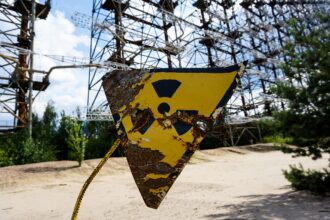
The Cold War (1947-1991) represented a prolonged period of geopolitical rivalry between the Soviet Union and the United States that fundamentally transformed global military strategy. During this era, air combat doctrine underwent substantial development, becoming an essential element of national defense planning for both superpowers and their allies.
Air combat doctrine during the Cold War experienced continuous adaptation driven by shifting geopolitical circumstances, technological innovations, and operational experience from regional conflicts including the Korean War (1950-1953), Vietnam War (1955-1975), and various proxy conflicts. The strategic concepts and tactical approaches established during this period formed the foundation for contemporary air warfare methodologies and continue to influence current military aviation practices. The development of Cold War air combat doctrine encompassed several key areas: interceptor aircraft designed for homeland defense, strategic bomber operations for nuclear deterrence, tactical air support for ground forces, and air superiority fighters for contested airspace.
These doctrinal elements reflected the complex strategic requirements of maintaining credible deterrence while preparing for potential conventional and nuclear conflicts across multiple theaters of operation.
Key Takeaways
- Cold War air combat doctrine evolved through advancements in technology, including air-to-air missiles and electronic warfare.
- Early tactics focused on dogfighting, but shifted with the introduction of guided missiles and radar systems.
- The Vietnam War significantly influenced air combat strategies, highlighting the need for adaptability and integrated operations.
- Integration of air and ground forces became crucial for effective combat operations during the Cold War.
- The legacy of Cold War air combat doctrine continues to shape modern air warfare tactics and technology development.
Early Cold War Air Combat Tactics and Strategies
In the immediate aftermath of World War II, both the United States and the Soviet Union began to reassess their air combat strategies in light of new geopolitical realities. The early Cold War period saw a focus on strategic bombing and air superiority as primary objectives. The United States, leveraging its experience from World War II, emphasized the importance of long-range bombers capable of delivering nuclear payloads.
This approach was rooted in the belief that air power could serve as a deterrent against potential adversaries, thereby preventing conflict through the threat of overwhelming force. Conversely, the Soviet Union adopted a different perspective, prioritizing the development of a robust air defense system to protect its territory from potential American bombers. This led to the establishment of extensive radar networks and the deployment of interceptor aircraft designed to engage enemy bombers before they could reach their targets.
The contrasting strategies reflected the broader ideological divide between the two superpowers, with each side seeking to leverage its strengths while countering perceived threats from the other. Learn about the fascinating story of a Soviet radar engineer espionage Cold War operation that changed history.
Role of Technology in Shaping Cold War Air Combat Doctrine

Technological advancements played a pivotal role in shaping Cold War air combat doctrine. The introduction of jet propulsion revolutionized aerial warfare, allowing for faster and more agile aircraft that could engage in high-speed dogfights. This shift necessitated a reevaluation of tactics, as pilots had to adapt to new flight characteristics and engagement ranges.
The development of radar technology also transformed air combat, enabling better detection and tracking of enemy aircraft, which in turn influenced engagement strategies. Moreover, advancements in avionics and weaponry further refined air combat doctrine. The introduction of guided missiles changed the dynamics of aerial engagements, allowing pilots to engage targets at greater distances with increased accuracy.
This technological evolution prompted military strategists to rethink traditional dogfighting tactics, as reliance on guns became less practical in an era dominated by missile technology. As both superpowers raced to innovate, the interplay between technology and doctrine became a defining feature of Cold War air combat.
Evolution of Air-to-Air Missiles and their Impact on Air Combat Doctrine
The development of air-to-air missiles marked a significant turning point in Cold War air combat doctrine. Early missile systems, such as the AIM-7 Sparrow and the R-3S, were designed to enhance the capabilities of fighter aircraft by providing them with stand-off engagement options. These missiles allowed pilots to engage enemy aircraft from a distance, reducing the risks associated with close-range dogfighting.
As missile technology advanced, so too did the complexity of air combat tactics. The introduction of beyond-visual-range (BVR) missiles fundamentally altered engagement paradigms. Pilots were no longer required to visually identify targets before engaging them; instead, they could rely on radar systems and missile guidance technology to strike from afar.
This shift necessitated new training protocols and tactics focused on situational awareness and coordination among units. The emphasis on BVR engagements also underscored the importance of electronic warfare capabilities, as jamming and countermeasures became critical components of successful air combat operations.
Development of Fighter Aircraft and their Influence on Air Combat Doctrine
| Period | Doctrine Focus | Key Technologies | Notable Aircraft | Combat Tactics | Strategic Impact |
|---|---|---|---|---|---|
| Late 1940s – Early 1950s | Transition from propeller to jet-powered fighters | Early jet engines, radar targeting | F-86 Sabre, MiG-15 | High-speed dogfighting, jet vs. jet engagements | Shifted air combat to supersonic speeds, emphasis on pilot training |
| Mid 1950s – 1960s | Introduction of missile technology and beyond visual range (BVR) combat | Air-to-air missiles (AIM-7 Sparrow, K-13), radar-guided systems | F-4 Phantom II, MiG-21 | Missile engagements, reduced reliance on guns, radar lock-on tactics | Increased engagement ranges, but revealed limitations of early missile tech |
| 1970s | Reintroduction of dogfighting and maneuverability emphasis | Improved missiles, helmet-mounted sights, pulse-Doppler radar | F-15 Eagle, MiG-23 | Combined missile and gun tactics, energy maneuverability theory | Balanced missile use with close-range combat, improved kill ratios |
| 1980s | Stealth and electronic warfare integration | Stealth technology, advanced ECM, AWACS support | F-117 Nighthawk, Su-27 | Survivability through low observability, networked combat | Shifted doctrine towards first-look, first-shot advantage |
| Late 1980s – Early 1990s | Multi-role capabilities and precision engagement | Precision-guided munitions, advanced avionics | F-16 Fighting Falcon, MiG-29 | Flexible mission profiles, integration of air-to-ground and air-to-air roles | Enhanced operational versatility, reduced reliance on specialized aircraft |
The evolution of fighter aircraft during the Cold War was instrumental in shaping air combat doctrine. As both superpowers invested heavily in developing advanced fighters, competition drove innovation in design and performance.
Meanwhile, the Soviet Union developed formidable fighters like the MiG-21 and MiG-29, which emphasized maneuverability and close-combat capabilities. These advancements influenced tactical approaches to air combat. The U.S.
focus on multi-role fighters capable of engaging in various mission profiles led to a more flexible approach to air operations. In contrast, Soviet doctrine emphasized massed formations and coordinated attacks, reflecting their strategic priorities. The interplay between these differing philosophies resulted in a rich tapestry of aerial tactics that defined Cold War engagements, with each side continually adapting to counter the other’s strengths.
The Role of Electronic Warfare in Cold War Air Combat Doctrine

Electronic warfare emerged as a critical component of Cold War air combat doctrine, reflecting the increasing reliance on technology in military operations. As radar systems became more sophisticated, so too did efforts to counter them through jamming and deception techniques. Both superpowers recognized that control of the electromagnetic spectrum could significantly influence the outcome of aerial engagements.
The integration of electronic warfare capabilities into air combat doctrine allowed for more nuanced strategies that extended beyond traditional kinetic engagements. Aircraft equipped with electronic countermeasures could disrupt enemy radar systems, providing a tactical advantage during missions. Additionally, dedicated electronic warfare platforms were developed to support frontline fighters by suppressing enemy defenses and enhancing situational awareness for pilots.
This evolution underscored the importance of information dominance in modern warfare, shaping how air forces approached combat scenarios throughout the Cold War.
Adaptation of Air Combat Doctrine to Changing Geopolitical Realities
As geopolitical realities shifted throughout the Cold War, so too did air combat doctrine. The emergence of new threats, such as regional conflicts and asymmetric warfare, prompted military strategists to reassess their approaches to aerial engagements. The doctrine evolved from a primary focus on large-scale confrontations between superpowers to encompass a broader range of scenarios that included counterinsurgency operations and peacekeeping missions.
This adaptation required a reevaluation of training programs and operational concepts within air forces. Pilots were trained not only for traditional dogfighting but also for conducting precision strikes against ground targets and supporting ground forces in joint operations. The ability to operate effectively in diverse environments became paramount as air forces sought to remain relevant in an ever-changing global landscape.
The Influence of Vietnam War on Cold War Air Combat Doctrine
The Vietnam War served as a crucible for testing Cold War air combat doctrine, revealing both strengths and weaknesses in existing strategies. U.S. forces faced unexpected challenges against North Vietnamese fighters who employed guerrilla tactics and utilized their knowledge of local terrain to their advantage.
The conflict highlighted the limitations of relying solely on advanced technology without considering the complexities of asymmetric warfare. Lessons learned from Vietnam prompted significant changes in U.S. air combat doctrine.
The need for improved situational awareness led to an emphasis on intelligence gathering and reconnaissance capabilities. Additionally, the experiences gained during this conflict underscored the importance of integrating air power with ground operations, fostering closer coordination between different branches of the military. These adaptations would influence future conflicts and shape how air forces approached combat scenarios in subsequent decades.
Integration of Air and Ground Forces in Cold War Air Combat Doctrine
The integration of air and ground forces became increasingly important during the Cold War as military strategists recognized that effective coordination could enhance overall operational effectiveness. Joint operations allowed for more comprehensive approaches to conflict, enabling air power to support ground troops while simultaneously providing critical intelligence and reconnaissance capabilities. This integration was particularly evident during conflicts such as the Gulf War, where precision strikes from aircraft played a crucial role in supporting ground offensives.
The development of close air support tactics emphasized collaboration between pilots and ground commanders, ensuring that air power was employed effectively in conjunction with ground maneuvers. This shift towards joint operations reflected a broader understanding that modern warfare required a holistic approach that leveraged all available resources.
The Legacy of Cold War Air Combat Doctrine in Modern Air Warfare
The legacy of Cold War air combat doctrine continues to resonate in modern air warfare strategies. Many principles established during this era remain relevant today, particularly regarding the integration of advanced technologies into military operations. The emphasis on precision strikes, situational awareness, and joint operations has become foundational elements in contemporary military doctrine.
Furthermore, lessons learned from Cold War engagements have informed current approaches to countering asymmetric threats and conducting operations in complex environments. The evolution of unmanned aerial vehicles (UAVs) and advanced sensor technologies reflects an ongoing commitment to innovation within air forces worldwide. As nations adapt to new challenges in an increasingly interconnected world, the principles established during the Cold War will undoubtedly continue to shape future air combat strategies.
Lessons Learned from the Evolution of Cold War Air Combat Doctrine
The evolution of Cold War air combat doctrine offers valuable lessons for contemporary military strategists and policymakers. The interplay between technology, tactics, and geopolitical realities underscores the importance of adaptability in military planning. As nations face new challenges in an ever-changing global landscape, understanding historical precedents can inform future decisions regarding air power employment.
Moreover, the integration of diverse capabilities—ranging from electronic warfare to joint operations—remains crucial for success in modern conflicts. By learning from past experiences and adapting strategies accordingly, military forces can enhance their effectiveness in addressing contemporary threats while remaining prepared for future challenges on the horizon. Ultimately, the legacy of Cold War air combat doctrine serves as a reminder that innovation and adaptability are essential components of successful military strategy in any era.
The evolution of air combat doctrine during the Cold War was significantly influenced by technological advancements and strategic shifts between superpowers. A comprehensive analysis of this topic can be found in the article on air combat strategies, which explores how these developments shaped military tactics and operations. For more in-depth insights, you can read the article [here](https://www.inthewarroom.com/sample-page/).
WATCH THIS! 🕵️ HE CHOSE BETRAYAL—And His Wife Paid the Price | The Billion Dollar Spy
FAQs
What was the primary focus of Cold War air combat doctrine?
The primary focus of Cold War air combat doctrine was to develop strategies and tactics that could effectively counter the threat posed by opposing air forces, particularly in the context of nuclear deterrence, strategic bombing, and air superiority.
How did technological advancements influence Cold War air combat doctrine?
Technological advancements such as jet engines, guided missiles, radar, and electronic warfare significantly influenced Cold War air combat doctrine by enabling faster, more precise, and longer-range engagements, which shifted tactics from traditional dogfighting to beyond-visual-range missile combat.
What role did nuclear weapons play in the evolution of air combat doctrine during the Cold War?
Nuclear weapons played a critical role by emphasizing the need for strategic bombers capable of delivering nuclear payloads, as well as the development of air defense systems and interceptor aircraft designed to protect against nuclear strikes.
How did the introduction of jet aircraft change air combat strategies in the Cold War?
The introduction of jet aircraft increased speeds and altitudes at which combat occurred, necessitating new tactics such as high-speed intercepts, the use of radar-guided missiles, and changes in formation flying to maximize effectiveness and survivability.
What was the significance of air superiority in Cold War doctrine?
Air superiority was considered essential for successful military operations, as controlling the skies allowed for unimpeded strategic bombing, reconnaissance, and support for ground forces, making it a central objective in air combat doctrine.
How did the Cold War air combat doctrine address the threat of surface-to-air missiles (SAMs)?
The doctrine evolved to include electronic countermeasures, suppression of enemy air defenses (SEAD) missions, and tactics to evade or neutralize SAM threats, reflecting the growing importance of integrated air defense systems.
Did Cold War air combat doctrine differ between NATO and Warsaw Pact forces?
Yes, while both sides emphasized air superiority and strategic bombing, NATO focused more on flexible response and technological superiority, whereas Warsaw Pact doctrine often emphasized massed formations and integrated air defense networks.
How did training and simulation contribute to the evolution of air combat doctrine during the Cold War?
Advanced training programs and flight simulators allowed pilots to practice complex tactics and adapt to new technologies, which helped refine air combat doctrine and improve pilot readiness for various combat scenarios.
What impact did the Vietnam War have on Cold War air combat doctrine?
The Vietnam War exposed limitations in existing air combat tactics and technology, leading to revisions in doctrine that emphasized maneuverability, pilot training, and the development of more effective air-to-air missiles and electronic warfare techniques.
How did Cold War air combat doctrine prepare for potential conflicts involving nuclear and conventional warfare?
The doctrine integrated strategies for both nuclear strike missions and conventional air combat, ensuring that air forces could operate effectively across a spectrum of conflict scenarios, from limited engagements to full-scale nuclear war.