
The MiG-25 “Foxbat” entered Soviet service in 1970, generating significant concern within Western intelligence and military circles. Its high speed and altitude capabilities, evidenced by record-breaking flights, led to initial assessments that it was a formidable air superiority fighter. This perception, often referred to as the “Foxbat Myth,” suggested that the MiG-25 posed an existential threat to NATO air power, particularly the nascent F-15 Eagle program. This article examines the technological and political factors that contributed to this myth and details how developmental insights and real-world encounters ultimately demonstrated the F-15’s operational superiority.
The MiG-25’s development began in the late 1950s in response to perceived threats from high-altitude, supersonic reconnaissance aircraft and bombers, such as the B-70 Valkyrie and SR-71 Blackbird. The Soviet Union sought an interceptor capable of confronting these advanced Western platforms.
Early Intelligence and Misinterpretation
Initial Western intelligence on the MiG-25 was largely based on photographs and limited observations. The sheer size of the aircraft, its large wings, and powerful engines led to assumptions about its maneuverability and combat capabilities.
- Belbek Airport Sighting (1967): The first public appearance of the MiG-25 prototypes at Domodedovo Air Show in 1967 showcased an aircraft unlike anything the West had seen. Analysts, lacking detailed specifications, inferred remarkable agility from its external appearance.
- Record-Breaking Flights: Between 1965 and 1978, the MiG-25 set numerous world records for speed and altitude. These achievements, widely publicized by the Soviet Union, underscored its extraordinary performance envelope. For instance, in 1977, a MiG-25 set an absolute altitude record of 37,650 meters (123,520 ft) for a jet aircraft. These public demonstrations, while impressive, did not reveal the aircraft’s critical design limitations in air-to-air combat.
- “Super-Fighter” Speculation: Analysts debated whether the MiG-25 was a dedicated interceptor or a multi-role fighter with dogfighting capabilities. The absence of concrete data fueled anxieties that it possessed both raw speed and combat agility, framing it as a direct counter to emerging Western fighter designs.
The F-X Program and the F-15’s Rationale
The perceived threat of the MiG-25 directly influenced the United States Air Force (USAF) F-X program, which aimed to develop a new air superiority fighter.
- Necessity for a Counter-Weapon: The Foxbat myth served as a powerful impetus for the rapid development of the F-15 Eagle. The USAF insisted on an aircraft with superior acceleration, maneuverability, and radar capabilities to effectively counter the perceived MiG-25 threat.
- “Not a Pound for Air-to-Ground”: The F-15 was deliberately designed as a pure air superiority fighter, shedding any multi-role aspirations to maximize its performance against aerial adversaries. This singular focus reflected the urgency to address the perceived air-to-air gap.
- Emphasis on Beyond Visual Range (BVR) Combat: The F-15’s AN/APG-63 radar and AIM-7 Sparrow missiles were critical components designed to engage and destroy targets at long ranges, before the enemy could close for a dogfight. This BVR emphasis was a direct strategic response to the assumed speed and altitude advantages of the Foxbat.
The F-15 Eagle has long been celebrated for its unmatched air superiority, effectively dispelling the myth surrounding the MiG-25 Foxbat’s capabilities. An insightful article that delves into this topic is available at this link, where it explores the technological advancements and tactical advantages that the F-15 brought to the battlefield, ultimately proving its dominance over the Foxbat in various engagements. This analysis not only highlights the performance metrics of both aircraft but also examines the strategic implications of their encounters during the Cold War era.
Unveiling the Foxbat’s Limitations
The mystique surrounding the MiG-25 began to unravel as more detailed intelligence emerged and, critically, after a defection provided direct insights. Its impressive speed and altitude were achieved at significant costs to other critical performance parameters.
Structural and Material Constraints
Contrary to initial Western assumptions, the MiG-25 was not an advanced, lightweight alloy marvel. Its design, necessitated by the extreme thermal stresses of high-speed flight, relied on more conventional and robust materials.
- Steel Construction: A significant portion of the MiG-25’s airframe was constructed from nickel-steel alloy, not titanium or advanced aluminum alloys. While strong and heat-resistant, this made the aircraft heavy. Roughly 80% steel, 11% aluminum alloys, and 8% titanium, the structural composition dictated its intrinsic weight.
- Welded Airframe: Much of the airframe assembly relied on welding rather than conventional riveting, a method chosen for its strength in high-temperature environments. This construction method, while robust, was labor-intensive and contributed to the aircraft’s overall weight and complexity.
- Maneuverability Restrictions: The substantial weight and robust construction, while enabling high speeds, severely limited the MiG-25’s sustained turn performance and maneuverability at combat speeds. Its airframe was rated for a maximum load factor of only 4.5 Gs, which, while later increased to 6.5 Gs in emergency, was significantly lower than contemporary Western fighters. This meant that while it could perform high-speed passes, it was not designed for sustained, high-G dogfighting.
The Belenko Defection (1976)
Lieutenant Viktor Belenko’s defection to Japan with a fully functional MiG-25P provided Western analysts with an unprecedented opportunity to meticulously examine the aircraft. This event was a turning point in debunking the Foxbat myth.
- Direct Examination: The complete disassembly and analysis of Belenko’s MiG-25P by American and Japanese experts revealed its true capabilities and, more importantly, its significant limitations.
- Radar Vulnerabilities: The aircraft’s Sapfir-25 radar, while powerful, was found to be vulnerable to ground clutter and relatively unsophisticated compared to Western designs. Its look-down capability was rudimentary, and its electronic counter-countermeasures (ECCM) were considered primitive. It also had limited detection range against low-flying targets.
- Engine Performance and Endurance Issues: The massive Tumansky R-15(B)-300 engines, while providing immense thrust for acceleration and speed, were exceptionally fuel-thirsty at supersonic speeds. This dramatically limited the aircraft’s combat endurance and operational range when performing at its top performance envelope. Furthermore, exceeding Mach 2.8 was deemed risky due to engine over-stressing, contrary to initial Western fears of Mach 3+ sustained flight.
- Limited Weapons Loadout: The MiG-25 was designed to carry four R-40 (AA-6 “Acrid”) air-to-air missiles. While large and powerful, these missiles were radar-guided and heat-seeking variants, primarily designed for large, relatively unmaneuverable targets. Their effectiveness against agile fighters was questionable.
The F-15 Eagle: A Different Philosophy
The F-15’s design philosophy, unlike the MiG-25’s, prioritized sustained maneuverability, advanced avionics, and a flexible weapons platform over sheer top speed. This difference in conception proved decisive.
“Energy Maneuverability” (EM) Theory
The F-15’s development was heavily influenced by John Boyd’s Energy Maneuverability (EM) theory, which emphasized the importance of sustained turn rate, instantaneous turn rate, and rapid acceleration in air combat.
- Sustained Performance: The F-15 was designed for “controlled energy,” meaning it could perform high-G maneuvers without rapidly bleeding off airspeed or altitude. Its powerful Pratt & Whitney F100 engines and high wing loading allowed for exceptional sustained turn performance, a critical advantage in a dogfight.
- Instantaneous Turn Rate: The F-15 could rapidly change its heading, making it difficult for an adversary to track or evade. This agility was directly opposed to the Foxbat’s limited maneuverability.
- High Power-to-Weight Ratio: The F-15 maintained a high thrust-to-weight ratio even with full fuel and weapons, ensuring brisk acceleration and climb performance throughout its flight envelope.
Advanced Avionics and Radar
The F-15’s avionics suite provided superior situational awareness and engagement capabilities, a stark contrast to the MiG-25’s simpler systems.
- AN/APG-63 Radar: This pulse-Doppler radar offered excellent look-down/shoot-down capabilities, allowing the F-15 to detect and track targets against ground clutter. Its advanced processing and ECCM capabilities made it highly resistant to jamming, providing a significant edge in electronic warfare. This was a critical advantage against an aircraft whose primary weapon, the R-40, relied heavily on its own less sophisticated radar.
- Head-Up Display (HUD): The F-15 was one of the first fighters to integrate a modern HUD, providing pilots with critical flight and weapon aiming information directly in their line of sight, reducing head-down time and enhancing situational awareness.
- Integrated Cockpit Design: The F-15’s cockpit was designed for pilot efficiency, with ergonomic controls and displays that minimized workload and maximized combat effectiveness.
Operational Encounters and the F-15’s Dominance
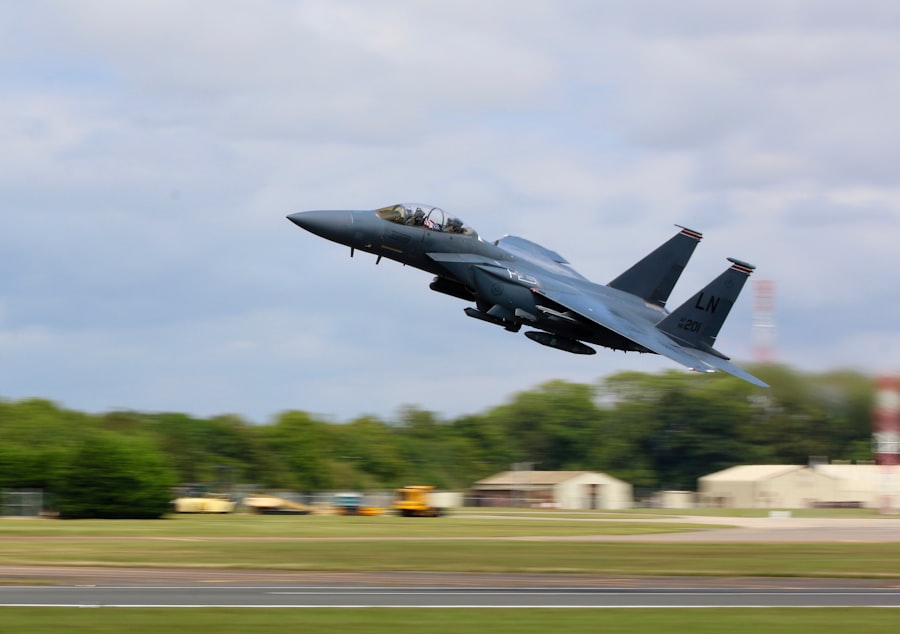
The true measure of an aircraft’s capability lies in its operational performance. While direct combat between F-15s and MiG-25s was rare, numerous encounters indirectly validated the F-15’s air superiority.
Cold War Probes and Intercepts
Throughout the Cold War, F-15s regularly intercepted Soviet and Warsaw Pact aircraft, demonstrating their effectiveness as interceptors and projecting air dominance. While “Foxbat” intercepts were limited due to geographic separation, the F-15’s performance against other Soviet types provided confidence in its design principles.
- Confidence Building: The F-15’s proven ability to track, intercept, and successfully simulate engagements with adversary aircraft reinforced its reputation and quieted lingering doubts inspired by the Foxbat myth. These exercises, though simulated, highlighted the F-15’s radar superiority and maneuverability.
The Gulf War (1991) and Beyond
The 1991 Gulf War provided the most extensive real-world test for the F-15 Eagle against various Iraqi aircraft, including several MiG-25s. The results unequivocally demonstrated the F-15’s air superiority.
- F-15’s Air-to-Air Record: During Operation Desert Storm, F-15C Eagles achieved 36 kills against Iraqi aircraft, including five MiG-25s. These engagements highlighted the F-15’s BVR capabilities and its overwhelming advantage in close-range combat.
- First MiG-25 Kill: On January 17, 1991, an F-15C from the 58th Tactical Fighter Squadron, piloted by Captain Robert E. Graeter, engaged and destroyed an Iraqi MiG-25 with an AIM-7M Sparrow missile. This was a significant early victory, directly challenging the notion of the Foxbat’s invincibility.
- Subsequent Engagements: Other F-15 pilots, such as Captain Steve W. Tate and Lieutenant Colonel Cesar Rodriguez, achieved further kills against MiG-25s. These engagements consistently showed the F-15’s ability to gain and maintain positional advantage, delivering decisive blows. The F-15 pilots successfully countered the MiG-25’s speed advantage by employing superior tactics, advanced radar, and more effective missiles. The Foxbats often attempted hit-and-run tactics, but the F-15s were able to detect them at long range and respond effectively.
- Asymmetric Warfare: The engagements were not contests between equals; rather, they showcased the F-15’s integrated dominance. The advanced radar allowed F-15 pilots to detect MiG-25s well before the Iraqi pilots were aware of the F-15’s presence. This “first sight, first shot” capability, combined with superior missile technology, effectively negated the MiG-25’s high-speed advantage.
The F-15 Eagle has long been celebrated for its exceptional performance and capabilities, effectively dispelling the myth surrounding the Soviet MiG-25 Foxbat. This legendary air superiority fighter showcased its prowess in various engagements, proving that it could outmaneuver and outmatch the Foxbat in critical scenarios. For a deeper understanding of how the F-15 Eagle triumphed over the Foxbat myth, you can explore a related article that delves into the technical comparisons and historical context of these iconic aircraft. To read more about this fascinating topic, visit this article.
The End of the Myth
| Metric | F-15 Eagle | MiG-25 Foxbat | Notes |
|---|---|---|---|
| Top Speed | Mach 2.5+ | Mach 2.83 | Foxbat is faster, but speed not always decisive in combat |
| Combat Maneuverability | High agility with advanced fly-by-wire controls | Limited maneuverability due to design for speed and altitude | F-15’s agility gave it an edge in dogfights |
| Radar Range | Over 100 miles (AN/APG-63 radar) | Approximately 60 miles | F-15 had superior detection and tracking capabilities |
| Weapons Systems | Advanced AIM-7 Sparrow, AIM-9 Sidewinder, and later AIM-120 AMRAAM | Primarily R-40 missiles with less advanced guidance | F-15’s weapons were more accurate and versatile |
| Operational Ceiling | 65,000 feet | 80,000 feet | Foxbat could fly higher but less relevant in typical combat |
| Combat Record | Over 100 air-to-air kills with no losses in air combat | No confirmed kills against F-15s | F-15’s combat success disproved Foxbat superiority myth |
The collective revelations from the Belenko defection and, more definitively, the operational performances in real combat theaters decisively debunked the Foxbat myth. The MiG-25, while a technological achievement for its time in terms of speed and altitude, was ultimately a specialized interceptor with critical limitations in the broader air combat arena.
Reassessment of Capabilities
Post-Cold War analysis confirmed that the MiG-25 was an effective high-speed interceptor against targets like strategic bombers and reconnaissance aircraft flying predictable profiles. However, its inadequacies as a multi-role fighter or even a highly maneuverable air superiority fighter were stark. Its large radar cross-section, limited maneuverability, basic avionics, and high fuel consumption at peak performance made it vulnerable to more sophisticated adversaries.
F-15’s Enduring Legacy
The F-15 Eagle, designed from the outset to be an air superiority fighter, proved its mettle. Its combination of powerful engines, advanced radar, superior maneuverability, and effective weapons systems established it as one of the most dominant air superiority fighters in aviation history. The “Foxbat Myth” served as a powerful catalyst for its creation, but the F-15’s own intrinsic capabilities rendered the myth obsolete, solidifying its place as a triumph of aerospace engineering and strategic foresight. The F-15’s enduring combat record, virtually unblemished by losses in air-to-air combat, stands as a testament to its design philosophy and operational effectiveness, truly prevailing over the initial fears instilled by the enigmatic Foxbat.

WATCH NOW ▶️ STOP: The $100 Billion Titanium Myth Exposed
FAQs
What is the F-15 Eagle?
The F-15 Eagle is a twin-engine, all-weather tactical fighter aircraft developed by McDonnell Douglas (now Boeing) for the United States Air Force. It was designed to gain and maintain air superiority in aerial combat.
What is the Foxbat, and why is it significant?
The Foxbat is the NATO reporting name for the Soviet MiG-25, a high-speed interceptor and reconnaissance aircraft developed during the Cold War. It was known for its impressive speed and altitude capabilities, which led to various myths about its combat performance.
What is the myth about the F-15 Eagle and the Foxbat?
The myth suggests that the MiG-25 Foxbat was superior to the F-15 Eagle in aerial combat, often exaggerating the Foxbat’s capabilities and downplaying the F-15’s performance. This misconception arose from limited information and Cold War-era propaganda.
How did the F-15 Eagle actually outperform the Foxbat?
The F-15 Eagle was designed with advanced avionics, superior maneuverability, and better weapons systems, allowing it to effectively engage and defeat the MiG-25 in combat scenarios. The F-15’s agility and radar capabilities gave it a significant advantage over the Foxbat.
Why is it important to debunk the F-15 vs. Foxbat myth?
Debunking this myth helps provide an accurate understanding of military aviation history and technology. It highlights the true capabilities of the F-15 Eagle and corrects misconceptions that can distort perceptions of air combat effectiveness during the Cold War era.