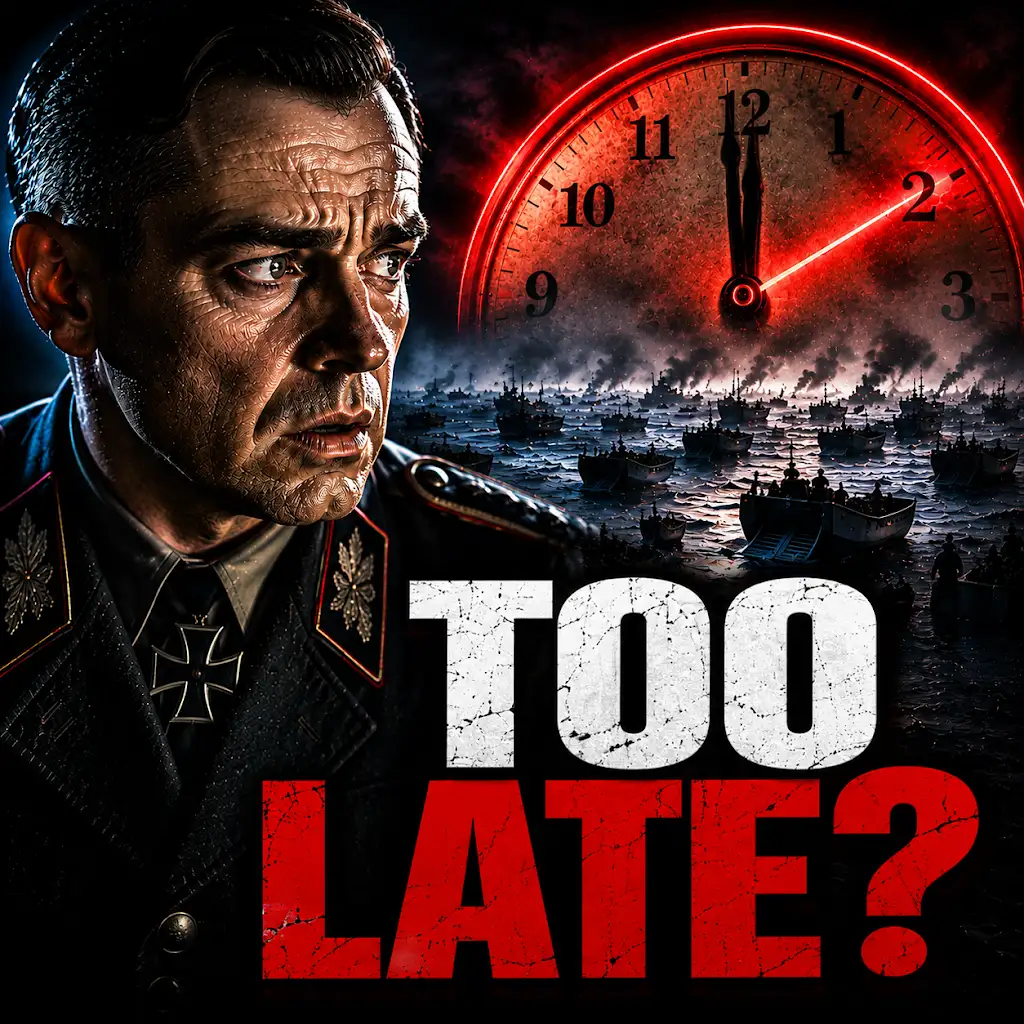
The flickering gas lamps of Berlin cast long shadows on the worn maps spread across the table. Marshal Gerd von Rundstedt, his brow furrowed, traced a finger along the coast of Normandy. The intelligence reports were a confusing tapestry of Allied troop movements, aerial reconnaissance, and whispers from the occupied territories. For the German High Command, understanding the true intent behind the escalating Allied activity was an agonizing and critical puzzle. The sheer scale of the preparations suggested an invasion, but where, when, and with what force remained shrouded in uncertainty. This uncertainty, diligently cultivated by the Allies, was the very bedrock of Operation Fortitude, a masterful deception that would shape the outcome of D-Day.
The German military machine, honed by years of conflict, prided itself on its intelligence gathering capabilities. However, as the spring of 1944 wore on, a pervasive sense of apprehension settled over their assessment of the Western Front. The Allies, while undeniably preparing for something significant, had succeeded in creating a fog of war that played directly into their hands. German analysts were faced with a deluge of information, much of it contradictory, and the sheer volume made it difficult to discern the signal from the noise.
The Elusive “Fünfte Kolonne”
A significant challenge for German intelligence was the persistent belief in a “Fünfte Kolonne,” or Fifth Column, operating within Allied territory. This belief, fueled by propaganda and a desire to find internal weaknesses, led them to overemphasize the potential for sabotage and internal disruption as a means of delaying or weakening an invasion. They suspected that any overt preparations for invasion would be detected and disrupted by these supposed underground networks, thus missing the larger, coordinated efforts underway. This focus on internal threats diverted resources and attention from analyzing the observable military build-up.
The Burden of Expertise: Overthinking Allied Intentions
The German command staff, comprised of experienced and intelligent officers, often found themselves overthinking the Allied strategy. They assumed the Allies would employ the same meticulous planning and calculated risks that had characterized their own operations in the past. This led to a tendency to anticipate elaborate feints and diversions, rather than a straightforward, albeit heavily disguised, main thrust. The Allies, on the other hand, understood the German penchant for anticipating complex stratagems and therefore kept their true intentions deceptively simple.
The Eastern Front’s Magnetic Pull
Throughout the critical months leading up to D-Day, the Eastern Front remained the primary focus of the German military. The colossal struggle against the Soviet Union consumed the vast majority of their resources, manpower, and strategic attention. This constant drain meant that even when intelligence suggested significant activity on the Western Front, it was often viewed through the lens of its potential impact on the Eastern theater. The perceived threat of a decisive Allied invasion in the West was, in their minds, secondary to the existential threat posed by the Red Army.
Operation Fortitude: The Masterpiece of Misdirection
Operation Fortitude was not a single deception, but a meticulously orchestrated campaign of misinformation designed to convince the German High Command that the main Allied invasion would occur elsewhere, and at a different time. It involved a complex interplay of fake armies, radio traffic, and carefully leaked information, all aimed at creating a convincing illusion. The success of Fortitude was so profound that it is still studied today as a prime example of strategic deception in warfare.
Fortitude North: The Scottish Specter
One of the most effective components of Operation Fortitude was “Fortitude North.” This element of the deception focused on creating the illusion of an impending Allied invasion of Norway. German intelligence observed significant troop movements and logistical build-ups in Scotland, which were strategically channeled to appear as preparations for an assault on Norway.
The Phantom Army of Dunnerdale
The most audacious aspect of Fortitude North was the creation of the fictional “First U.S. Army Group” (FUSAG), allegedly stationed in Scotland and preparing to invade Norway. This phantom army was equipped with inflatable tanks, wooden artillery, and an extensive network of dummy airfields. Allied agents actively fed information about FUSAG’s supposed readiness to German intelligence, ensuring that the Germans believed a significant threat was materializing in the north. The objective was to tie down German reserves and attention in Norway, preventing them from reinforcing Normandy.
Radio Waves of Deception
A crucial element of Fortitude North involved extensive radio traffic. Allied operators simulated the communications of a large army group preparing for an invasion, complete with troop movements, supply requests, and operational briefings. This radio traffic was carefully crafted to appear authentic and was strategically broadcast in a way that German intercepts would pick it up. The sheer volume and apparent authenticity of this simulated communication reinforced the illusion of a genuine military operation.
Fortitude South: The Calais Charade
While Fortitude North aimed to draw German attention away to the north, “Fortitude South” was designed to convince the Germans that the main invasion would target the Pas-de-Calais. This region, closer to Britain and offering the shortest sea crossing, was a logical invasion point, making it the most plausible target for the Allies. The deception here was designed to exploit this natural assumption.
General Patton’s Ghostly Command
The centerpiece of Fortitude South was the creation of the highly publicized “First U.S. Army Group” (FUSAG), commanded by the flamboyant and well-known General George S. Patton. Patton, a master of battlefield rhetoric, was deliberately kept in Britain, leading a force that was largely composed of shadow units and inflatable equipment. His presence and the extensive media coverage surrounding his “command” created an undeniable impression of a massive army poised for invasion in the Dover Straits.
The Art of the Feint: Diversions and False Flags
Fortitude South involved a series of carefully orchestrated feints and diversions. These included the bombing of specific targets in the Pas-de-Calais region, creating the impression of preparatory bombardment for an invasion. Dummy landing craft were positioned in ports facing the Pas-de-Calais, and Allied agents spread rumors of imminent invasion plans in that sector. The goal was to make the Pas-de-Calais the most convincing and therefore the most heavily defended location in the eyes of the German High Command.
The Role of Double Agents and Misinformation
The success of Operation Fortitude relied heavily on the skillful manipulation of double agents and the deliberate dissemination of misleading information. The Allies were able to turn German spies into valuable assets, feeding them carefully curated “secrets” that served to reinforce the deception.
“Garbo”: The Maestro of Lies
One of the most critical figures in the Allied deception was the Spanish double agent Juan Pujol Garcia, codenamed “Garbo.” Garbo was able to convince the Germans of his loyalty and, through a complex network of sub-agents and fabricated stories, became a vital conduit for misinformation. He fed the German Abwehr (military intelligence) detailed reports about FUSAG, its strength, its objectives, and its readiness, all while being meticulously controlled by the British. His reports consistently pointed towards an invasion in the Pas-de-Calais, reinforcing the deception.
The “Branded” Agents
The Allies also meticulously managed their network of double agents, ensuring that each agent appeared to be working independently and with genuine access to information. This created a layered effect, where the German intelligence services received corroborating “evidence” from multiple sources, making it appear more credible. The Allies even “branded” some of their agents, ensuring they had consistent stories and backgrounds that were difficult for the Germans to verify or refute.
The Art of the Leak: Controlled Information Flow
The controlled leaking of information played a crucial role in Fortitude. Allied intelligence would intentionally allow certain pieces of information to fall into German hands, always ensuring that this information served the larger deceptive objective. This could involve “accidentally” losing documents or allowing agents to “overhear” conversations, all designed to steer German thinking in the desired direction.
The German Response: A Divided Command
The German High Command, despite its formidable reputation, struggled to effectively interpret the flood of intelligence and counter the Allied deception. The sheer scale of the Allied preparations, combined with the effectiveness of Fortitude, created a deep rift in their strategic thinking.
The Fear of the “Hauptschlag”
The German military was acutely aware of the potential for a decisive Allied invasion, the “Hauptschlag” (main blow). However, their inability to pinpoint the exact location and timing of this blow led to a paralyzing indecision. They dispersed their forces, fearing a main thrust in any given sector, thus diluting their defensive capabilities. The deception ensured that the most logical landing zones, particularly Normandy, remained relatively less defended than they would have been without Fortitude.
The Rhineland’s Unwasted Strength
A significant victory for the deception was the convincing of the German High Command that the Allied invasion would be a massive, overwhelming force. This led them to believe that the reserves held in the rear, particularly those in the Rhineland, would be crucial to repelling the invasion and launching a counterattack. This belief ensured that these vital reserves were not immediately dispatched to Normandy in the critical initial hours of the invasion, allowing the Allied beachheads to consolidate.
The Lingering Question of Pas-de-Calais
Even after the landings in Normandy, a significant portion of the German command remained convinced that the main invasion was yet to come in the Pas-de-Calais. This belief persisted for days, even weeks, after D-Day, leading to a hesitant and uncoordinated German response. This lingering doubt, a direct consequence of Fortitude, was instrumental in the Allies’ ability to establish and expand their foothold in Normandy.
The Aftermath: A Legacy of Deception
The success of Operation Fortitude on D-Day was not just a tactical victory; it was a strategic masterpiece that significantly influenced the course of the Second World War. The German command’s inability to discern the true location of the invasion had profound consequences for their defensive strategy and ultimately contributed to the Allied success in establishing a decisive beachhead.
The Cost of Misplaced Reserves
The German commitment of forces to the Pas-de-Calais and other decoy locations meant that Normandy, the actual invasion site, was not as heavily defended as it could have been. The reserves that might have been used to push the Allies back into the sea were instead held in readiness for a phantom invasion. This misallocation of critical resources proved to be a devastating strategic error.
The Psychological Impact on German Command
Beyond the logistical implications, the deception had a significant psychological impact on the German High Command. The realization that they had been so thoroughly fooled eroded their confidence and created an atmosphere of distrust and uncertainty. This undermined their ability to make quick and decisive decisions in the face of the unfolding crisis.
A Lesson in Modern Warfare
The legacy of Operation Fortitude extends far beyond the beaches of Normandy. It stands as a timeless testament to the power of deception in warfare. Military strategists continue to study its intricate planning and execution, recognizing its enduring relevance in shaping the outcome of conflicts through psychological manipulation and the careful crafting of a fabricated reality. The ghost armies, the whispered rumors, and the carefully crafted radio signals of Fortitude ultimately paved the way for the liberation of Europe.