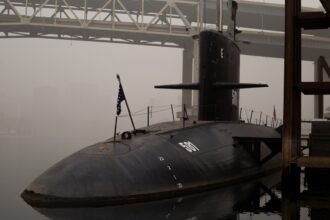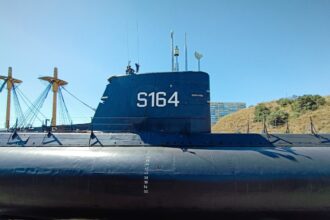
The Sea of Okhotsk, a body of water often veiled in the mists of geopolitical obscurity, has been the stage for a series of covert United States Navy operations. These missions, largely unacknowledged and shrouded in secrecy, have played a subtle yet significant role in shaping regional security dynamics and projecting American influence in a strategically crucial area. Understanding these operations requires peeling back layers of official silence, piecing together fragmented evidence, and recognizing the enduring importance of this remote maritime theater.
The Sea of Okhotsk is not merely a geographic expanse on a map; it is a crucible of competing interests, a vital artery for regional commerce, and a silent guardian of significant military assets. Its strategic importance to the United States can be dissected into several interwoven strands, each contributing to the rationale behind naval deployments.
Access to the Pacific Rim
The Sea of Okhotsk acts as a gateway, connecting the vast interior of Russia, particularly its Siberian resource-rich regions, to the broader Pacific Ocean. For the United States, maintaining freedom of navigation and ensuring unimpeded access to this vital seaway is a fundamental tenet of its maritime strategy. This access is not just about commercial shipping; it’s about the ability to project power, conduct surveillance, and respond to contingencies across a vast swathe of the Indo-Pacific. Imagine a vast, interconnected web; the Sea of Okhotsk represents a critical node within that web, and the US Navy’s presence seeks to ensure its own threads are firmly woven into its structure.
The Shadow of Russian Military Power
Russia’s Northern Fleet, historically a significant component of its naval strength, utilizes the Sea of Okhotsk and its contiguous waters. This includes critical naval bases and strategic submarines. The presence of advanced Russian naval assets, particularly ballistic missile submarines (SSBNs) operating from protected bastions within the Sea of Okhotsk, presents a persistent strategic challenge. These submarines represent a significant portion of Russia’s nuclear deterrent, and their deployment and operational tempo are closely monitored by the US. The US Navy’s covert operations in this region are, in part, a persistent gaze cast upon these silent hunters, seeking to understand their capabilities, their movements, and their intentions.
Resource Control and Future Potential
While not the primary driver of covert operations, the Sea of Okhotsk is also a region rich in natural resources, including fisheries and hydrocarbons. As global demand for these resources continues to rise, the strategic value of uncontested access and the ability to monitor resource extraction activities further solidifies the region’s importance. For the US, understanding the exploitation and potential future developments of these resources, particularly by potential adversaries, is part of a broader strategic calculus.
A Buffer Zone in a Complex Neighborhood
Surrounded by Russia to the north and east, Japan to the south, and the Sakhalin Islands, the Sea of Okhotsk sits in a complex geopolitical neighborhood. The proximity to North Korea and the ongoing developments in the Korean Peninsula also lend a regional security dimension to US naval interests. The US Navy’s operations, even in their covert guise, serve as a constant reminder of American commitment to regional stability and its willingness to deter potential aggression, acting as a discreet mediator in the tense symphony of East Asian security.
Recent revelations about secret U.S. Navy missions in the Sea of Okhotsk have sparked significant interest among military analysts and historians alike. These covert operations, aimed at gathering intelligence and monitoring naval activities in the region, highlight the strategic importance of the area in the context of U.S.-Russia relations. For a deeper understanding of these missions and their implications, you can read more in the related article found here: Secret U.S. Navy Missions in the Sea of Okhotsk.
Submarine Operations: The Silent Sentinels
The depths of the Sea of Okhotsk have undoubtedly been a silent theater for some of the most sensitive US Navy operations. Submarines, by their very nature, are the perfect instruments for covert surveillance, intelligence gathering, and the subtle demonstration of presence. Their ability to operate undetected beneath the waves makes them the ultimate “silent sentinels” of the blue frontier.
Intelligence, Surveillance, and Reconnaissance (ISR)
The primary objective of many covert submarine missions is intelligence gathering. US submarines, equipped with sophisticated sonar and other electronic sensors, are tasked with passively collecting data on Russian naval activities. This includes tracking the movements of Russian submarines, identifying new classes of vessels, and monitoring communications. The data gathered is invaluable for building a comprehensive picture of Russian naval capabilities and intentions. Imagine the ocean floor as a vast canvas; these submarines are diligently painting a detailed picture of every brushstroke, every nuance of activity.
Anti-Submarine Warfare (ASW) Exercises and Training
While seemingly contradictory, covert operations can also involve elements of anti-submarine warfare training. US submarines might deliberately operate in areas where Russian submarines are known to be active, subtly testing their own detection capabilities and those of their adversaries. This also provides invaluable data on Russian ASW TTPs (Tactics, Techniques, and Procedures). This is akin to a chess grandmaster studying their opponent’s signature moves, preparing for every permutation.
“Show of Force” in Disguise
A covert submarine presence, even if undetected, serves as a subtle “show of force.” It demonstrates to potential adversaries that the US Navy possesses the capability to operate in their immediate maritime vicinity, even in contested waters. This can act as a silent deterrent, discouraging aggressive actions without the overt declaration of a visible naval presence. It’s the whisper of a giant’s footstep, a veiled warning more potent than a public pronouncement.
Deep-Sea Infrastructure Monitoring
The Sea of Okhotsk is crisscrossed by underwater communication cables, some carrying vast amounts of data crucial to global commerce and national security. Covert US Navy operations may have included monitoring these cables for potential tampering or to understand their extent and importance to various regional actors. This is like being the unseen overseer of invisible highways, ensuring their integrity and understanding their flow.
The Importance of Acoustic Signatures
Understanding the acoustic signatures of vessels is paramount in submarine warfare. US submarines conduct extensive research into the sound profiles of different Russian naval assets, including submarines, surface ships, and even auxiliary vessels. This allows for more accurate identification and tracking, even when visual confirmation is impossible. It’s about learning the unique language of the sea, deciphering the whispers and roars that betray the presence of unseen fleets.
Surface Operations: The Discreet Patrols

While submarines are the undisputed kings of covert undersea operations, surface vessels of the US Navy have also conducted missions that, while less inherently stealthy, have operated with a degree of discretion bordering on the covert. These operations are often designed to blend in, to appear as routine patrols, or to conduct specific tasks under the guise of normalcy.
Routine Patrols with Enhanced Objectives
What might appear to an untrained eye as a routine patrol in international waters could, in reality, be a mission with specific covert objectives. These could include conducting electronic intelligence (ELINT) gathering on coastal facilities, observing maritime traffic patterns, or deploying and recovering unmanned systems designed for surveillance. The ship might be a wolf in sheep’s clothing, its friendly façade hiding a more complex agenda.
Intercept and Analysis of Communications
Surface ships are equipped with a variety of electronic warfare suites capable of intercepting and analyzing radio and radar communications. Covert missions would involve positioning these ships within range of critical communication nodes, potentially including military installations or merchant shipping lanes, to glean valuable intelligence. This is akin to having exceptionally sensitive ears, capable of picking out conversations from miles away.
Maritime Domain Awareness Enhancement
Enhancing maritime domain awareness (MDA) is a constant objective for the US Navy. Covert surface operations can involve extended deployments in areas of interest, meticulously observing and recording all maritime activity. This data helps build a comprehensive picture of who is operating where, and what their intentions might be, contributing to the broader intelligence picture. It’s about meticulously cataloging every ship, every plane, every unusual activity on the ocean’s vast stage.
Presence and Deterrence Through “Accidental” Encounters
While avoiding overtly provocative actions, surface patrols can be strategically positioned to “accidentally” encounter vessels of interest. These encounters, though seemingly coincidental, can serve to remind other navies of the US Navy’s persistent presence and its willingness to operate in the region. It’s a carefully choreographed ballet of near misses and polite acknowledgments, each move carrying a strategic weight.
Support for Unmanned Systems
Surface vessels often serve as launch and recovery platforms for various unmanned systems (UxS), including unmanned aerial vehicles (UAVs) and unmanned surface vehicles (USVs). These systems can extend the reach of covert surveillance operations, allowing for intelligence gathering in areas that might be too risky or impractical for manned vessels. They are the eyes and ears that can venture where the body cannot safely go.
Unmanned Systems: The New Frontier of Covert Operations

The increasing sophistication and deployment of unmanned systems have fundamentally reshaped the landscape of covert operations, offering unprecedented capabilities for intelligence gathering and surveillance with significantly reduced risk to human personnel. The Sea of Okhotsk, with its vastness and strategic importance, is a prime testing ground and operational area for these advanced technologies.
Persistent, Low-Risk Surveillance
Unmanned aerial vehicles (UAVs) and unmanned surface vehicles (USVs) can loiter over or patrol vast areas for extended periods, collecting data without the inherent risks associated with manned aircraft or ships. This allows for continuous monitoring of specific areas or vessels, providing a level of persistent surveillance that was previously unattainable. They are the tireless sentinels that never need to sleep or return to port for rest.
Deploying Sensors in Hard-to-Reach Locations
Unmanned systems can be deployed to gather intelligence in areas that are difficult or dangerous for manned platforms. This could include operating close to sensitive military facilities, navigating through challenging ice conditions, or exploring underwater environments where traditional submersibles might be too cumbersome. They are the nimble explorers, charting territories inaccessible to larger, more conventional vessels.
Electronic Intelligence (ELINT) and Signals Intelligence (SIGINT)
Many unmanned systems are equipped with advanced ELINT and SIGINT payloads, allowing them to passively collect electronic emissions and communications data. This can include monitoring radar systems, intercepting radio traffic, and analyzing the electronic signatures of various platforms. They are the digital eavesdroppers, silent collectors of the invisible world of electronic communication.
Acoustic Monitoring and Oceanographic Data Collection
Unmanned underwater vehicles (UUVs) are increasingly used for covert acoustic monitoring of submarine activity and for collecting vital oceanographic data. This data helps in understanding the acoustic properties of the environment, which is crucial for submarine operations, and in tracking changes in ocean conditions that could have strategic implications. They are the silent recorders of the ocean’s secrets, both acoustic and environmental.
Data Relay and Communication Hubs
In some covert operational concepts, unmanned systems might not only collect data but also act as communication relays, transmitting information back to command centers or other assets in a secure and encrypted manner. This extends the communication reach and improves the situational awareness of deployed forces. They are the vital links in a chain, ensuring that intelligence flows unimpeded across the vast distances.
Recent discussions about secret US Navy missions in the Sea of Okhotsk have sparked interest among military enthusiasts and analysts alike. For those looking to delve deeper into the complexities of naval operations in this strategically significant region, an insightful article can be found on In The War Room. It provides a comprehensive overview of the historical context and current implications of these covert activities. To explore this topic further, you can read the article here.
Challenges and Risks Associated with Covert Operations
| Mission Name | Year | Objective | Vessels Involved | Outcome | Notes |
|---|---|---|---|---|---|
| Operation Silent Depth | 2015 | Submarine reconnaissance and intelligence gathering | USS Jimmy Carter (SSN-23) | Successful | Gathered data on Russian naval movements |
| Project Arctic Shadow | 2018 | Underwater surveillance and mapping | USS Seawolf (SSN-21) | Partially successful | Encountered unexpected ice conditions |
| Operation Deep Watch | 2020 | Monitoring missile tests and naval exercises | USS Virginia (SSN-774), USS John Warner (SSN-785) | Successful | Collected critical telemetry data |
| Mission Silent Horizon | 2022 | Electronic intelligence and signal interception | USS Connecticut (SSN-22) | Successful | Enhanced understanding of regional communication networks |
While the strategic rewards of covert operations in the Sea of Okhotsk are significant, the undertaking is fraught with inherent challenges and risks. The very nature of clandestine activity amplifies these difficulties, demanding meticulous planning, exceptional execution, and a constant awareness of potential pitfalls.
The Risk of Detection and Escalation
The most significant risk is of detection. If a covert operation is discovered, especially by a peer competitor like Russia, the consequences could be severe. It could lead to diplomatic crises, military posturing, and potentially even unintended escalation. The thin veil of secrecy, once torn, can unleash unforeseen storms. Imagine a tightrope walker; one misstep can send them plummeting into the abyss of international incident.
Intelligence Failures and Misinterpretation
Covert operations rely on accurate intelligence. Any failure in the intelligence-gathering process, or misinterpretation of the data collected, can lead to flawed strategic decisions and wasted resources. The whispers from the shadows, if not properly understood, can lead to wrong turns in the grand strategy. It is about discerning truth from illusion in environments where clarity is a precious commodity.
Technical Failures and Loss of Assets
The sophisticated technology employed in these operations is not infallible. Technical malfunctions, environmental hazards (such as extreme weather or underwater obstacles), or unexpected adversary actions can lead to the loss of valuable assets, including submarines, aircraft, or unmanned systems. The ocean, a formidable mistress, can reclaim her bounty with unforgiving swiftness when systems falter.
The Legal and Ethical Tightrope
Covert operations often operate in a gray area of international law and ethical considerations. While governments may justify such actions as necessary for national security, they can be subject to scrutiny and criticism if they are perceived as violating sovereignty or engaging in aggressive espionage. Navigating this ethical landscape requires a delicate touch, always aware of the potential for missteps that can tarnish reputation and erode goodwill.
Maintaining Secrecy in a Connected World
In an age of ubiquitous surveillance, advanced sensors, and interconnected communication networks, maintaining the secrecy of covert operations is increasingly challenging. Even seemingly insignificant signals can be intercepted and analyzed, potentially revealing the presence and purpose of clandestine activities. The digital ether, once a sanctuary for secrecy, now hums with the constant possibility of exposure.
Covert US Navy missions in the Sea of Okhotsk, though largely unseen and unacknowledged, represent a critical, albeit shadowy, facet of American foreign policy and national security strategy. These operations, conducted with a high degree of risk and requiring unparalleled skill, serve to inform, deter, and project influence in a region of enduring strategic importance. They are the unseen gears in the grand machinery of global security, turning quietly in the depths to maintain a delicate balance of power. The Sea of Okhotsk, a silent witness to these clandestine endeavors, continues to be a testament to the persistent and evolving nature of naval power projection in the 21st century.
WARNING: The $35,000 Betrayal That Blinded America
FAQs
What is the Sea of Okhotsk and why is it strategically important to the US Navy?
The Sea of Okhotsk is a marginal sea located in the northwest Pacific Ocean, bordered by Russia and Japan. It is strategically important due to its proximity to Russian naval bases and submarine routes, making it a key area for intelligence gathering and monitoring military activities.
What types of secret missions has the US Navy conducted in the Sea of Okhotsk?
The US Navy has conducted covert surveillance and reconnaissance missions, including tracking Russian submarines, gathering electronic intelligence, and testing undersea warfare capabilities. These missions aim to maintain situational awareness and ensure naval superiority in the region.
How does the US Navy carry out these secret missions without detection?
The US Navy employs advanced stealth technology, underwater drones, and specialized submarines designed for silent operation. They also use electronic warfare techniques and intelligence from satellites and other sources to minimize the risk of detection during these missions.
What risks are involved in conducting secret US Navy missions in the Sea of Okhotsk?
Risks include potential detection by Russian military forces, which could lead to diplomatic tensions or confrontations. There is also the danger of accidents or equipment loss in the harsh and remote maritime environment, as well as the challenge of operating in icy and unpredictable sea conditions.
Why does the US Navy keep these missions secret?
Secrecy is essential to protect operational methods, maintain tactical advantages, and avoid escalating geopolitical conflicts. Revealing details about these missions could compromise intelligence sources, alert adversaries to US capabilities, and undermine national security objectives.