The strategic doctrines of nuclear deterrence, forged in the crucible of the Cold War, are undergoing a profound and dangerous transformation. For decades, the concept of Mutually Assured Destruction (MAD) served as a grim governor on superpower conflict, a Damoclesian sword hanging over humanity, preventing large-scale warfare through the certainty of unthinkable retaliation. This equilibrium, precarious though it was, underpinned an era of uneasy peace. However, a confluence of technological advancements, shifting geopolitical alignments, and evolving military strategies suggests that this long-standing mechanism is now demonstrably broken, or at the very least, severely compromised. The implications of this shift are nothing short of catastrophic, potentially ushering in an era of heightened nuclear risk unseen since the Cuban Missile Crisis.
To understand the current predicament, it is essential to revisit the core principles that underpinned Cold War nuclear deterrence. This involved not just the possession of nuclear weapons, but the clear communication of their destructive power and the unwavering resolve to use them if vital national interests were threatened.
Mutually Assured Destruction (MAD)
The cornerstone of Cold War deterrence was the concept of MAD. This doctrine posited that a full-scale use of nuclear weapons by two opposing sides would result in the complete annihilation of both the attacker and the defender. The understanding that any first strike would inevitably lead to a devastating counter-strike, rendering victory meaningless, acted as a powerful disincentive. The logic was stark: if launching nuclear weapons meant suicide, then no rational actor would initiate such an exchange. This created a paradoxical stability, a “peace through terror.”
Second-Strike Capability
A crucial component of MAD was the development and maintenance of a robust second-strike capability. This meant that even if one side launched a surprise nuclear attack, the other side would still possess enough surviving nuclear forces to retaliate with devastating effect. This redundancy was achieved through a diversified nuclear triad – intercontinental ballistic missiles (ICBMs) in hardened silos, submarine-launched ballistic missiles (SLBMs), and strategic bombers. The invulnerability of SLBMs, hidden beneath the oceans, was particularly important in guaranteeing this retaliatory power.
Nuclear Triad and the “Bomber Gap”
The nuclear triad was a complex and expensive undertaking, but it was deemed essential for ensuring survivability and flexibility. The “bomber gap” scare of the 1950s, though largely unfounded, highlighted the intense focus on maintaining numerical and technological superiority in delivery systems. This arms race, fueled by fear and suspicion, paradoxically contributed to deterrence by ensuring that neither side could credibly hope to disarm the other in a first strike.
The concept of nuclear deterrence during the Cold War has been a subject of extensive analysis and debate, particularly in light of its implications for global security. A related article that delves into the complexities of this topic can be found at this link. It explores how the strategies employed by superpowers during this tense period shaped international relations and the ongoing discourse surrounding nuclear weapons today.
The Erosion of Deterrence: New Technologies and Doctrines
The simplistic, albeit terrifying, equations of Cold War deterrence are being undermined by a new generation of technologies and a re-evaluation of military strategies. These developments are chipping away at the certainty of retaliation and introducing new avenues for escalation.
Precision-Guided Conventional Weapons
The proliferation of highly accurate, long-range conventional weapons blurs the lines between conventional and nuclear conflict. A conventional strike against an adversary’s command and control centers or nuclear launch facilities could be perceived as a preparatory step for a nuclear attack. This raises the risk of a “use it or lose it” dilemma, where a nation feels pressured to launch its nuclear weapons in response to a conventional assault, fearing that its ability to retaliate would otherwise be neutralized. This is akin to removing the firebreak between a forest fire and a nuclear reactor, making an accidental meltdown more likely.
Hypersonic Missiles and Reduced Warning Times
The development of hypersonic missiles, capable of traveling at speeds exceeding Mach 5 and executing unpredictable maneuvers, significantly compresses decision-making timelines. These weapons can reach targets in minutes, drastically reducing the warning time available for an adversary to assess an incoming attack and formulate a response. This acceleration of the battlefield introduces a dangerous element of uncertainty and increases the probability of miscalculation or accidental launch due to automated responses. The stopwatch of survival is being wound down to mere seconds.
Cyber Warfare and Command and Control Vulnerabilities
Cyber warfare introduces a new and insidious threat to nuclear deterrence. Attacks on an adversary’s nuclear command and control systems could disrupt communications, disable early warning systems, or even compromise the integrity of launch protocols. The ability to “blind” or “deafen” an opponent in a crisis creates an immense destabilizing pressure. A successful cyberattack could lead to a perceived disarming strike, prompting a nuclear response even without a physical attack. The digital battlefield has the potential to trigger a nuclear war without a single bullet being fired.
Artificial Intelligence and Autonomous Weapons
The integration of artificial intelligence into military decision-making and the development of autonomous weapons systems raise profound ethical and strategic questions regarding nuclear deterrence. If AI algorithms are tasked with identifying threats and recommending or even initiating retaliatory strikes, the human element of deliberation and restraint could be significantly diminished. The potential for machine errors or biases to trigger a nuclear exchange is a terrifying prospect, removing the last vestiges of human sanity from the nuclear equation.
Resurfacing Nuclear Threats: A Multipolar World
The Cold War was characterized by a relatively stable, bipolar nuclear dynamic. Today, the nuclear landscape is far more complex, with a growing number of nuclear-armed states and regional rivalries adding new layers of instability.
Horizontal Proliferation and Regional Flashpoints
The spread of nuclear weapons to additional states, especially in regions marked by enduring geopolitical tensions, significantly increases the risk of nuclear conflict. Nations like India, Pakistan, Israel, and North Korea possess nuclear arsenals, and the potential for these weapons to be used in localized conflicts is a persistent concern. A regional nuclear exchange, even if limited in scope, could have devastating global consequences and potentially trigger a wider conflict involving major powers. The dominoes of nuclear conflict are no longer neatly confined to two superpowers.
Tactical Nuclear Weapons and Escalation Ladder
The renewed emphasis on tactical or “battlefield” nuclear weapons by some nuclear powers is particularly alarming. These smaller-yield weapons are intended for use in conventional military operations, raising the dangerous prospect of a “limited” nuclear war. The belief that a nuclear exchange can be controlled and confined is a perilous illusion. Once the nuclear threshold is crossed, the escalation ladder becomes incredibly steep and difficult to descend, potentially leading to an all-out strategic exchange. The firebreak protecting humanity from nuclear winter is being systematically dismantled.
Lack of Arms Control Treaties
Many of the arms control treaties that helped manage Cold War nuclear competition have either expired or been abandoned. The absence of robust agreements to limit the development and deployment of nuclear weapons, missile defense systems, and conventional arms creates an environment of unchecked competition and mistrust. This vacuum in arms control makes it harder to predict an adversary’s capabilities and intentions, increasing the chance of miscalculation in a crisis. The guardrails against uncontrolled nuclear proliferation are rusting away.
The Disconnect Between Perception and Reality
Perhaps one of the most dangerous aspects of the current situation is the widespread public complacency regarding the threat of nuclear war. For many, nuclear conflict belongs to the realm of history books, a relic of a bygone era. This disconnect between the stark reality of evolving nuclear doctrines and public perception creates a critical vulnerability.
Fading Memory of Hiroshima and Nagasaki
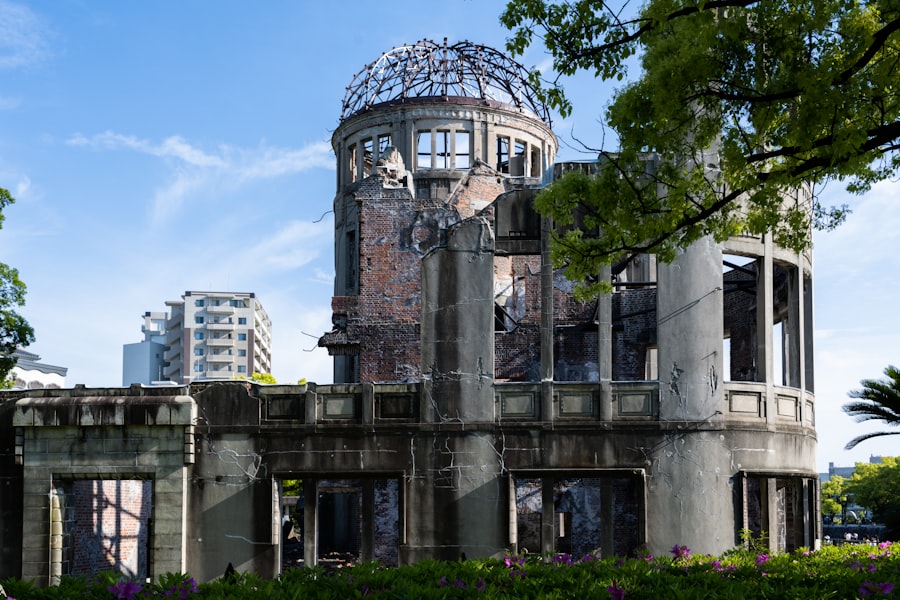
The horrors of Hiroshima and Nagasaki, once vivid warnings etched into the global consciousness, are fading from collective memory. For generations born after the Cold War, the concept of nuclear annihilation can seem abstract, distant, and even fictional. This diminished appreciation for the catastrophic consequences of nuclear weapon use makes society less vigilant and less demanding of its leaders to prioritize nuclear disarmament and risk reduction. The scars of nuclear war are being forgotten, making their reappearance more likely.
“Nuclear Fatigue”
A phenomenon often referred to as “nuclear fatigue” contributes to this complacency. The constant, background threat of nuclear war, sustained over decades, can lead to desensitization and a reluctance to engage with such an uncomfortable topic. People understandably focus on more immediate and tangible concerns, allowing the long-term, existential threat of nuclear war to recede into the shadows. This collective shrug of indifference is a dangerous luxury in a world teetering on the precipice of renewed nuclear risk.
Misinformation and Propaganda
The proliferation of misinformation and propaganda campaigns further complicates the public’s understanding of nuclear threats. Narratives downplaying the dangers of nuclear war, promoting the idea of “winnable” nuclear conflicts, or even outright denying the existence of strategic arsenals contribute to a distorted perception of reality. This manipulation of information makes it harder for citizens to hold their governments accountable and advocate for responsible nuclear policies. The fog of disinformation obscures the clear and present danger.
The concept of nuclear deterrence during the Cold War has been a topic of extensive analysis, especially in light of recent geopolitical tensions that echo those historical conflicts. An insightful article that delves into the complexities of this subject can be found on In The War Room, where the implications of nuclear strategy are examined in depth. For those interested in exploring how these strategies have evolved and their relevance today, you can read more about it in this related article. Understanding the past can provide valuable lessons for current and future international relations.
The Imperative for Reassessment and Action
| Metric | Cold War Period | Post-Cold War Period | Notes |
|---|---|---|---|
| Number of Nuclear Warheads | Approx. 70,000 (peak in late 1980s) | Approx. 13,000 (as of early 2020s) | Significant reduction due to arms control treaties |
| Major Nuclear Powers | USA, USSR | USA, Russia, China, UK, France, India, Pakistan, North Korea | More countries possess nuclear weapons post-Cold War |
| Deterrence Strategy | Mutually Assured Destruction (MAD) | Shift towards limited deterrence and missile defense | Emergence of new doctrines and technologies |
| Incidents of Nuclear Brinkmanship | High (e.g., Cuban Missile Crisis 1962) | Lower but persistent (e.g., tensions with North Korea) | Cold War deterrence occasionally broken by crises |
| Arms Control Agreements | SALT I & II, INF Treaty | New START, Treaty on the Prohibition of Nuclear Weapons (not signed by all) | Some treaties have collapsed or been abandoned |
| Risk of Nuclear Conflict | High during crises | Moderate but evolving with new threats | Deterrence sometimes challenged by regional conflicts |
The breaking of Cold War nuclear deterrence demands an urgent re-evaluation of international security architectures and a renewed commitment to nuclear risk reduction. The trajectory we are currently on is unsustainable and leads to an increasingly perilous future.
Renewed Dialogue and Transparency
Re-establishing robust lines of communication and diplomatic dialogue between nuclear-armed states is paramount. Reducing opacity around nuclear doctrines, capabilities, and intentions can help de-escalate tensions and rebuild trust. Transparency measures, such as data exchanges and mutual inspections, however difficult to achieve in the current geopolitical climate, are essential for preventing miscalculation. We must rebuild the bridges of communication before the chasm of mistrust becomes unbridgeable.
Reinvigorated Arms Control Mechanisms
The international community must urgently work towards reinvigorating and establishing new arms control mechanisms. This includes negotiations on limiting the development of novel nuclear weapons, hypersonic missiles, and offensive cyber capabilities specifically targeting nuclear infrastructure. Comprehensive test ban treaties and non-proliferation agreements need to be strengthened and universally adhered to. The framework of global security needs to be shored up before it collapses entirely.
Public Awareness and Education
Educating the public about the true dangers of nuclear weapons and the breakdown of deterrence is crucial. Governments, educational institutions, and civil society organizations must work together to foster a renewed understanding of the catastrophic consequences of nuclear war. Informed citizens are more likely to demand responsible action from their leaders and support initiatives aimed at reducing nuclear risk. The silence surrounding nuclear threats must be broken, replaced by an informed and resolute voice.
De-risking Nuclear Postures
Nuclear-armed states should collectively explore ways to de-risk their nuclear postures, moving away from “launch-on-warning” doctrines towards more deliberate and less hair-trigger responses. Reducing the operational readiness of nuclear arsenals and implementing “no-first-use” policies, where credible, could significantly reduce the risk of accidental or preemptive nuclear war. The hair-trigger of global annihilation needs to be disarmed.
In conclusion, the comfortable illusion of Cold War nuclear deterrence is shattered. The intricate web of assumptions and retaliatory certainties that once prevented global conflict is unraveling due to technological advancements, evolving doctrines, and a more complex nuclear landscape. This is not merely an academic exercise, but a stark warning. The reader must understand that the threat of nuclear war is no longer a historical footnote, but a present and growing danger. The call to action is clear: the international community must acknowledge this dangerous shift and undertake concerted efforts to rebuild a stable and secure nuclear order, lest we stumble into a future defined by a tragic and irreversible miscalculation. The clock of doomsday is ticking louder, and humanity’s collective inaction is only accelerating its pace.
FAQs
What was nuclear deterrence during the Cold War?
Nuclear deterrence during the Cold War was a strategy aimed at preventing nuclear conflict between the United States and the Soviet Union by maintaining a credible threat of massive retaliation. Both superpowers possessed enough nuclear weapons to guarantee mutual destruction, which discouraged either side from initiating a nuclear attack.
How did nuclear deterrence contribute to Cold War stability?
Nuclear deterrence contributed to Cold War stability by creating a balance of power known as Mutually Assured Destruction (MAD). This balance made the cost of nuclear war unacceptably high for both sides, reducing the likelihood of direct military confrontation between the US and the USSR.
What factors led to the perception that Cold War nuclear deterrence was broken?
The perception that Cold War nuclear deterrence was broken arose from several factors, including the development of new missile technologies, the proliferation of nuclear weapons to other countries, incidents of miscommunication or accidents, and the emergence of asymmetric threats that challenged traditional deterrence models.
What were some key incidents that challenged Cold War nuclear deterrence?
Key incidents that challenged Cold War nuclear deterrence included the Cuban Missile Crisis in 1962, which brought the US and USSR close to nuclear war, as well as various false alarms and near-miss events caused by technical errors or misinterpretations of intelligence.
How has the concept of nuclear deterrence evolved since the Cold War?
Since the Cold War, nuclear deterrence has evolved to address new geopolitical realities, including the rise of new nuclear states, advances in missile defense systems, and concerns about terrorism. Modern deterrence strategies often incorporate a mix of diplomatic efforts, arms control agreements, and technological innovations to maintain strategic stability.