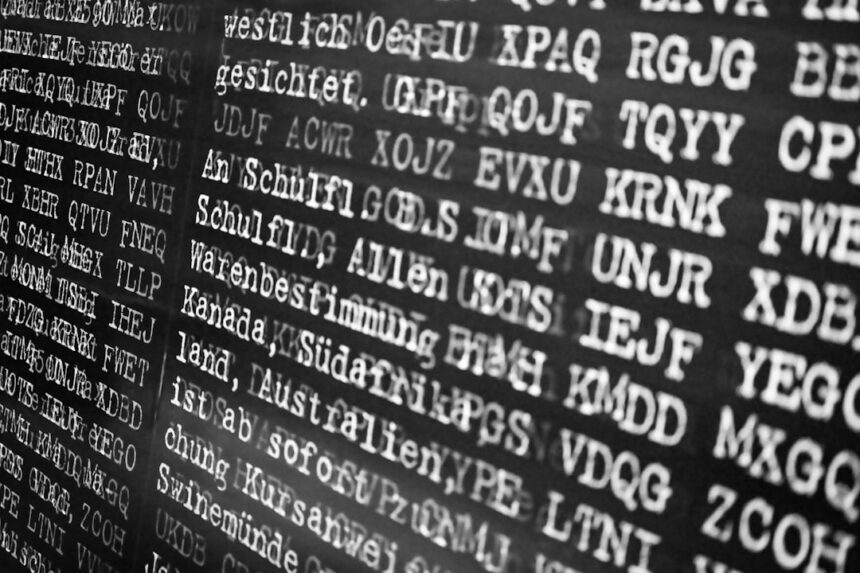
Throughout military history, code breakers have significantly influenced the outcomes of conflicts. By deciphering encrypted messages, they have provided intelligence that affected battle strategies and war results. From ancient simple ciphers to modern complex algorithms, code breaking has been a fundamental component of military operations.
This capability has frequently determined whether forces achieved victory or defeat. The contributions of code breakers have often remained classified, with their work only becoming publicly known years or decades after conflicts ended. Their responsibilities encompassed both decrypting enemy communications and developing secure communication systems for their own forces.
This dual function demonstrates code breaking’s role as both a defensive and offensive military capability. As military technology advanced, code-breaking methods and techniques became increasingly sophisticated and strategically important.
Key Takeaways
- Code breaking has played a crucial role in shaping military strategies and outcomes throughout history.
- Techniques evolved from manual ciphers to advanced machine-based cryptanalysis, exemplified by the Enigma machine.
- Notable code breakers significantly influenced major conflicts, including World Wars I and II, altering the course of history.
- Code breaking remained a critical intelligence tool during the Cold War, highlighting the ongoing battle of wits between superpowers.
- Modern warfare continues to rely on cryptography, raising important ethical and legal questions while facing new technological challenges.
The Evolution of Code Breaking Techniques
The evolution of code breaking techniques reflects the broader advancements in communication and technology throughout history. In ancient civilizations, simple substitution ciphers were common, where letters were replaced with others to obscure messages. As societies grew more sophisticated, so did their methods of encryption.
The introduction of polyalphabetic ciphers in the Renaissance period marked a significant leap forward, allowing for more complex encoding that was harder to crack. With the advent of the telegraph and later radio communications, the need for more advanced code breaking techniques became apparent. The 20th century saw the rise of mechanical devices designed specifically for encryption and decryption, such as the famous Enigma machine used by the Germans during World War
Learn about the incredible leadership of Admiral Nimitz during World War II.
Famous Code Breakers and Their Contributions
Throughout history, several individuals have emerged as legendary figures in the field of code breaking, each contributing significantly to military intelligence. One such figure is Alan Turing, a British mathematician and logician whose work during World War II was instrumental in breaking the Enigma code. Turing’s innovative approach to problem-solving and his development of early computing machines laid the groundwork for modern computer science while simultaneously providing crucial intelligence that helped shorten the war.
Another notable code breaker is Elizebeth Friedman, an American cryptanalyst who made significant contributions during both World Wars. Her work in breaking codes used by smugglers and enemy agents not only aided national security but also showcased the importance of women in intelligence roles during a time when their contributions were often overlooked. These individuals exemplify how code breakers have not only shaped military outcomes but have also influenced broader societal changes through their groundbreaking work.
The Impact of Code Breaking on World War I
World War I marked a turning point in the use of code breaking as a strategic military tool. The war saw an unprecedented reliance on communication technologies, which necessitated advanced encryption methods to protect sensitive information. Code breaking efforts during this time were crucial in intercepting enemy messages and gaining insights into troop movements and strategies.
The British Government Code and Cypher School at Bletchley Park became a hub for cryptanalysis, where skilled code breakers worked tirelessly to decipher German communications. The impact of these efforts was profound; successful interceptions allowed Allied forces to anticipate enemy actions and respond accordingly. For instance, the ability to decode German messages led to significant victories at critical junctures in the war.
However, despite these successes, the field of code breaking was still in its infancy, and many opportunities were missed due to a lack of resources and coordination among intelligence agencies. Nevertheless, World War I laid the groundwork for future advancements in cryptanalysis that would be fully realized in subsequent conflicts.
Code Breaking in World War II: Turning the Tide of the War
| Metric | Details |
|---|---|
| Key Codebreaking Events | Breaking of Enigma (WWII), Navajo Code Talkers (WWII), Zimmermann Telegram (WWI) |
| Impact on War Outcomes | Shortened WWII by an estimated 2-4 years, prevented surprise attacks, enabled strategic advantages |
| Notable Codebreakers | Alan Turing, Marian Rejewski, Elizebeth Friedman, William Friedman |
| Technological Advances | Development of early computers (Colossus), cryptanalysis techniques, signal intelligence (SIGINT) |
| Casualty Reduction | Estimated millions of lives saved due to intercepted communications and strategic forewarning |
| Post-War Influence | Foundation for modern cryptography, intelligence agencies (NSA, GCHQ), cybersecurity |
World War II represented a watershed moment for code breaking, as it became an integral part of military strategy on both sides of the conflict. The sheer scale of communication and the complexity of codes used by nations necessitated a more organized and systematic approach to cryptanalysis. The Allies’ success in breaking the Enigma code is perhaps one of the most celebrated achievements in this regard.
The work done at Bletchley Park not only provided invaluable intelligence but also significantly contributed to the eventual defeat of Nazi Germany. The ramifications of successful code breaking during World War II extended beyond immediate military victories; they also had lasting effects on post-war geopolitics. The intelligence gathered through decrypted messages informed strategic decisions that shaped the course of the war, from D-Day planning to naval engagements in the Pacific theater.
The ability to anticipate enemy movements and intentions gave Allied forces a decisive edge, demonstrating how critical code breaking had become in modern warfare.
The Enigma Machine: A Game-Changer in Code Breaking
The Enigma machine stands as one of the most iconic symbols of cryptography and code breaking in history. Developed by German engineer Arthur Scherbius in the early 1920s, this electromechanical device was designed to encrypt messages using a complex system of rotors and plugboards that created an astronomical number of possible combinations. Initially used for commercial purposes, it was soon adopted by the German military for secure communications during World War
The challenge posed by the Enigma machine was immense; its complexity made it seem nearly unbreakable at first glance. However, through a combination of mathematical ingenuity and collaborative efforts among brilliant minds like Alan Turing and his colleagues at Bletchley Park, Allied cryptanalysts were able to crack its codes. This breakthrough not only provided critical insights into German operations but also underscored the importance of technological innovation in warfare.
The success against Enigma demonstrated that even the most sophisticated encryption could be overcome with determination and intellect.
Code Breaking in the Cold War: A Battle of Wits
The Cold War ushered in a new era of espionage and intelligence gathering, where code breaking continued to play a vital role in national security. As tensions between superpowers escalated, so did efforts to intercept and decipher communications from rival nations. The development of more advanced encryption methods necessitated equally sophisticated countermeasures from intelligence agencies around the world.
During this period, organizations like the National Security Agency (NSA) in the United States became central players in code breaking efforts. Their work involved not only deciphering foreign communications but also developing new technologies for secure communication within their own ranks. The Cold War’s emphasis on secrecy and surveillance led to an ongoing battle of wits between intelligence agencies, with each side striving to outmaneuver the other through superior cryptographic techniques.
The Influence of Code Breaking on Modern Warfare
In contemporary warfare, code breaking remains a critical component of military strategy and national security. With advancements in technology, including digital communications and cyber warfare capabilities, the landscape has shifted dramatically since earlier conflicts. Modern militaries rely on sophisticated algorithms and artificial intelligence to analyze vast amounts of data for potential threats while simultaneously developing robust encryption methods to protect their own communications.
The influence of code breaking extends beyond traditional military applications; it now encompasses cybersecurity measures aimed at protecting sensitive information from adversaries.
This evolution reflects a broader understanding that information dominance is essential for success in modern conflicts.
Ethical and Legal Considerations in Code Breaking
As with any powerful tool, code breaking raises important ethical and legal considerations that must be navigated carefully. The balance between national security interests and individual privacy rights is a contentious issue that has gained prominence in recent years. While governments argue that intercepting communications is necessary for protecting citizens from threats, critics raise concerns about potential abuses of power and violations of civil liberties.
International law also plays a role in shaping how nations approach code breaking activities. Treaties and agreements governing espionage and intelligence gathering establish frameworks within which countries operate. However, these laws can be ambiguous or outdated in light of rapid technological advancements, leading to ongoing debates about what constitutes acceptable practices in code breaking.
The Future of Code Breaking: Challenges and Opportunities
Looking ahead, the future of code breaking presents both challenges and opportunities as technology continues to evolve at an unprecedented pace. Quantum computing poses a significant threat to traditional encryption methods, potentially rendering many existing codes obsolete overnight. This reality necessitates ongoing research into new cryptographic techniques that can withstand emerging threats while ensuring secure communication channels.
At the same time, advancements in artificial intelligence offer exciting possibilities for enhancing code breaking capabilities. Machine learning algorithms can analyze patterns within encrypted data more efficiently than ever before, potentially leading to breakthroughs that were previously unimaginable. As nations invest heavily in these technologies, competition among intelligence agencies will likely intensify, driving innovation while raising ethical questions about privacy and surveillance.
The Legacy of Code Breakers in Shaping the Course of History
The legacy of code breakers is woven into the very fabric of history itself; their contributions have shaped not only military outcomes but also societal norms surrounding communication and security. From ancient civilizations to modern democracies, the art of deciphering codes has evolved alongside humanity’s quest for knowledge and understanding. As we reflect on their impact, it becomes clear that code breakers are not merely unsung heroes hidden behind layers of secrecy; they are pioneers who have pushed boundaries and challenged conventions throughout history.
Their work continues to resonate today as nations grapple with complex issues related to security, privacy, and technological advancement—reminding us that behind every encrypted message lies a story waiting to be uncovered.
The role of code breakers in changing the course of warfare cannot be overstated, as they played a crucial part in deciphering enemy communications and strategies. For a deeper understanding of this fascinating topic, you can read more in the article available at this link. This article delves into the historical significance of code breaking and its impact on various conflicts throughout history.
WATCH THIS! 🎖️ The Battle of Midway: How Codebreakers Won the Pacific War
FAQs
What role did code breakers play in changing warfare?
Code breakers significantly impacted warfare by intercepting and deciphering enemy communications, which provided critical intelligence. This allowed military forces to anticipate enemy movements, disrupt plans, and gain strategic advantages, ultimately altering the course of battles and wars.
When did code breaking become a crucial part of military strategy?
Code breaking became especially crucial during World War I and World War II, when the use of encrypted communications increased dramatically. The success of code breakers in these conflicts demonstrated the importance of signals intelligence in modern warfare.
What are some famous examples of code breaking in war?
Famous examples include the breaking of the German Enigma code by Allied cryptanalysts during World War II, which helped the Allies win the Battle of the Atlantic. Another example is the cracking of Japanese codes, such as the Purple cipher, which contributed to the success of the Battle of Midway.
How did code breaking affect the outcome of World War II?
Code breaking provided the Allies with vital information about Axis plans and troop movements. This intelligence allowed for more effective military strategies, reduced casualties, and hastened the end of the war. The ability to read encrypted messages was a key factor in several Allied victories.
What technologies or methods were used in code breaking during wartime?
Code breakers used a combination of linguistic skills, mathematical analysis, pattern recognition, and early computing machines like the Bombe and Colossus. These tools helped decrypt complex codes and ciphers that were otherwise impossible to solve manually.
Did code breaking have any ethical or legal implications during war?
While code breaking was generally accepted as a legitimate form of intelligence gathering during war, it raised ethical questions about privacy and espionage. However, in the context of total war, such activities were considered necessary for national security and military success.
How has code breaking influenced modern military and intelligence operations?
Code breaking laid the foundation for modern signals intelligence (SIGINT) and cybersecurity efforts. Today, advanced cryptanalysis and electronic surveillance continue to play a vital role in national defense, counterterrorism, and intelligence gathering.