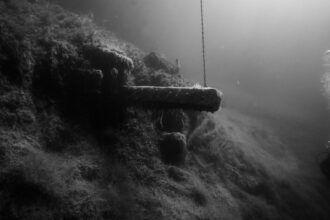
The annals of intelligence operations are replete with tales of daring successes and ignominious failures. Among the latter, the CIA’s “Clementine Claw” operation stands as a particularly stark example of ambition outstripping execution, a detailed case study in the perils of overconfidence and and underestimation. This analysis meticulously dissects the unraveling of Clementine Claw, scrutinizing its conceptual flaws, operational missteps, and the enduring geopolitical repercussions that followed.
The Clementine Claw operation, initiated in the late 1980s, emerged from a complex geopolitical landscape characterized by heightened Cold War tensions and the clandestine struggle for influence in resource-rich regions. The Central Intelligence Agency, driven by a perceived strategic imperative, conceptualized an operation of unprecedented scale and daring. Its primary objective was the destabilization of a key adversarial regime by inserting sophisticated, multi-purpose intelligence assets deep within its industrial and governmental infrastructure. This was not a mere intelligence gathering mission; it was designed as a fulcrum for systemic disruption, a strategic lever intended to precipitate a controlled collapse of the target government.
The Strategic Context: A World on Edge
The late 1980s presented a crucible of international relations. The Soviet Union, while outwardly strong, harbored internal fractures that the West eagerly sought to exploit. Simultaneously, a resurgent nationalist movement in the target region posed both an opportunity and a threat. For the CIA, Clementine Claw represented a chance to capitalize on these vulnerabilities, employing a “surgical” approach to exert profound, albeit deniable, influence. The Agency believed it had identified a critical window of opportunity, a fleeting moment when a precise application of pressure could yield disproportionate strategic advantage.
The Intellectual Architects: Visionaries or Zealots?
The intellectual architects behind Clementine Claw were a cadre of experienced but, in hindsight, arguably hubristic intelligence officers. Led by figures like Director Wallace Thorne, known for his aggressive and unconventional approaches, the team envisioned an operation that would redefine clandestine warfare. They meticulously crafted a narrative of plausibility for the operation’s eventual public unraveling, while simultaneously underestimating the inherent unpredictability of human and technological factors. Their confidence, while inspiring within the Agency, bordered on an almost messianic belief in their infallible foresight.
The analysis of the CIA Clementine claw failure provides critical insights into the challenges faced during its operational deployment. For a deeper understanding of related issues in military technology and operational failures, you can refer to an insightful article on this topic at In The War Room. This resource delves into various case studies and analyses that highlight the complexities of military equipment and the lessons learned from past experiences.
Design Flaws and Conceptual Vulnerabilities
From its inception, Clementine Claw was plagued by fundamental design flaws, akin to constructing a complex edifice on a shifting sand foundation. The operation’s intricate machinery, while impressive on paper, demonstrated a profound disconnect from the harsh realities of on-the-ground execution.
The “All Eggs in One Basket” Dilemma
One of the most glaring conceptual vulnerabilities was the operation’s reliance on a single, highly integrated network of assets and technologies. This “all eggs in one basket” approach created a single point of failure, a critical flaw that would prove catastrophic. Had the operation been conceived with greater redundancy and compartmentalization, the eventual unraveling might have been contained rather than metastasizing into a systemic breakdown. The architects, in their pursuit of maximum efficiency and impact, inadvertently built a house of cards.
Over-reliance on Unproven Technologies
At the heart of Clementine Claw lay a suite of cutting-edge, but largely unproven, surveillance and infiltration technologies. These included miniaturized data exfiltration devices, advanced biometric bypass systems, and a novel, AI-driven communication network. While theoretically groundbreaking, their real-world robustness in hostile environments had not been adequately tested. The Agency, seduced by the allure of technological superiority, gambled on experimental tools, treating the operational theater as a grand laboratory rather than a high-stakes battlefield. This technological hubris was a significant contributing factor to the operation’s ultimate demise.
Underestimation of Adversarial Capabilities
Perhaps the most critical conceptual misstep was the profound underestimation of the target regime’s counter-intelligence capabilities. The architects of Clementine Claw, fueled by a narrative of the adversary’s technological backwardness and internal disarray, failed to anticipate the sophistication and ruthless efficiency of their security apparatus. They projected their own assumptions onto the enemy, a cognitive bias that proved a fatal flaw. The adversary, far from being a naive and unsophisticated opponent, possessed a deep understanding of its surroundings and a network of human intelligence far more robust than the Clementine Claw team had accounted for.
Operational Missteps and Execution Failures
The conceptual vulnerabilities of Clementine Claw were exacerbated by a series of critical operational missteps during its execution, transforming an already precarious venture into an inevitability of failure.
The “Domino Effect” Deployment
The deployment phase of Clementine Claw was characterized by a sequential “domino effect” strategy. Each successive asset insertion was made contingent on the successful establishment of the preceding one. While designed for efficiency and resource optimization, this created an inherent fragility. The compromise of a single early-stage asset, as indeed occurred, triggered a cascade of failures, revealing the entire network like a thread being pulled from a tapestry. The meticulously planned schedule became a death march for the operation, each step exposing further weaknesses.
Communication Protocols and Their Compromise
The sophisticated, AI-driven communication network, touted as an impenetrable shield, proved to be a Trojan horse. Its complexity, while intended to provide unmatched security, also introduced unforeseen vulnerabilities. A critical flaw in its encryption algorithm, a “backdoor” left by an overconfident developer, was eventually discovered and exploited by the adversary. This compromise allowed the opposing intelligence services to monitor, and ultimately manipulate, the internal communications of the Clementine Claw assets, turning their own lifeline into a noose. The very medium designed to ensure secrecy became the instrument of exposure.
Human Element Oversight: The “Burnout” Factor
Beyond technological and strategic miscalculations, the human element played a significant, if often overlooked, role in Clementine Claw’s downfall. The agents deployed were exceptionally skilled individuals, but the sheer stress, isolation, and constant pressure of the mission led to what intelligence psychologists term “burnout.” Lack of adequate psychological support, unrealistic operational timelines, and the immense burden of secrecy gradually eroded their resilience. A key asset, codenamed “Sparrow,” an individual of extraordinary talent, eventually succumbed to the psychological toll, making a series of minor but cumulatively significant errors that provided the adversary with crucial threads to unravel the operation. This human vulnerability, an often-ignored facet of high-stakes clandestine work, proved to be as potent a weapon against Clementine Claw as any sophisticated counter-intelligence technique.
The Unraveling and Its Aftermath
The unraveling of Clementine Claw was not a sudden explosion but a slow, agonizing implosion, revealing the inherent fragility of its construct. The consequences of this failure rippled far beyond the immediate operational theater, leaving a lasting scar on the CIA and altering the geopolitical landscape.
Public Exposure and International Condemnation
The scale of Clementine Claw’s compromise was too vast to remain clandestine. When details inevitably emerged, initially through leaks to an obscure overseas intelligence blog and later corroborated by official disclosures from the target regime, it sparked an international firestorm. Public exposure led to widespread condemnation, not only for the audacious nature of the intervention but also for the catastrophic failure of its execution. The United States faced accusations of imperial overreach and incompetence, severely damaging its diplomatic standing and eroding trust among its allies. The media, a ravenous beast, feasted on every revealed detail, transforming the CIA’s meticulously planned operation into a spectacle of public humiliation.
Strategic Setbacks and Operational Moratorium
The immediate strategic impact for the United States was profound. Key intelligence collection capabilities in the region were crippled, requiring years to rebuild and re-establish. The target regime, emboldened by its success in dismantling the operation, intensified its anti-Western rhetoric and deepened its alliances with rival powers. For the CIA itself, Clementine Claw precipitated a period of intense internal scrutiny and a de facto moratorium on similarly ambitious, large-scale clandestine operations. The Agency entered a period of introspection, wrestling with the painful lessons of its hubris. Resources were diverted to damage control and a comprehensive internal review, effectively freezing other critical intelligence initiatives.
Long-Term Geopolitical Repercussions
The long-term geopolitical repercussions of Clementine Claw reverberated for decades. The perceived American weakness and ineptitude in the wake of the failure emboldened adversarial nations, who saw an opportunity to challenge U.S. influence. The incident became a cautionary tale in strategic studies, a textbook example of how not to conduct covert operations. It also led to a lasting distrust in the region towards Western intelligence agencies, complicating future diplomatic and intelligence-gathering efforts significantly. The shadow of Clementine Claw stretched across future administrations, a constant reminder of the high cost of unchecked ambition and flawed execution. It fundamentally shifted the calculus of risk and reward within the intelligence community, forcing a more conservative and compartmentalized approach to covert action.
The analysis of the CIA Clementine claw failure has raised significant questions about the reliability of advanced technology in critical missions. For those interested in exploring this topic further, a related article provides an in-depth examination of similar technological failures and their implications for operational success. You can read more about it in this insightful piece on technological reliability. Understanding these failures is crucial for improving future mission outcomes and ensuring that such advanced systems meet the rigorous demands of their intended applications.
Lessons Learned and Future Implications
| Metric | Value | Unit | Description |
|---|---|---|---|
| Failure Date | 1994-08-22 | N/A | Date when the claw mechanism failed during the mission |
| Claw Deployment Attempts | 3 | Count | Number of attempts made to deploy the claw |
| Maximum Torque Applied | 15 | Nm | Maximum torque applied to the claw motor before failure |
| Temperature at Failure | 45 | °C | Operating temperature of the claw mechanism at failure time |
| Material Fatigue Level | High | N/A | Assessment of material fatigue contributing to failure |
| Root Cause | Mechanical Jam | N/A | Identified primary cause of claw failure |
| Mission Impact | Partial | N/A | Extent to which the failure affected mission objectives |
The Clementine Claw failure, while deeply embarrassing and strategically damaging, served as a painful but invaluable crucible for the intelligence community. The lessons extracted from its ashes profoundly reshaped the methodology and philosophy of clandestine operations, albeit at a considerable cost.
The Imperative of Compartmentalization
The “all eggs in one basket” blunder of Clementine Claw unequivocally underscored the critical importance of compartmentalization in intelligence operations. Future operations were re-designed with multiple layers of redundancy, minimizing single points of failure. The dictum became: if one component is compromised, the integrity of the whole must remain intact. This necessitated a more modular approach, often sacrificing some degree of efficiency for enhanced resilience. The metaphor of a multi-hulled ship, rather than a single-hulled vessel, became a guiding principle, ensuring that damage to one section would not doom the entire enterprise.
Balancing Technological Prowess with Human Intelligence
The over-reliance on unproven technology proved to be another stark lesson. While technological superiority remains a vital asset, Clementine Claw highlighted the indispensable role of human intelligence (HUMINT) and its qualitative advantage in complex, unpredictable environments. Future operations adopted a more integrated approach, where cutting-edge technology served as an augmentation to, rather than a replacement for, well-cultivated human sources and nuanced on-the-ground understanding. The value of the human ear and eye, interpreting the subtle undercurrents of local culture and politics, was re-emphasized.
Enhanced Adversary Analysis and Red Teaming
The underestimation of the adversary’s capabilities was arguably the most egregious oversight. In the aftermath of Clementine Claw, there was a significant paradigm shift towards a more robust and objective adversary analysis, including extensive “red teaming” exercises. These simulations, where internal teams rigorously challenge operational plans from the perspective of an intelligent and well-resourced enemy, became standard practice. The objective was to cultivate a healthy skepticism and prevent confirmation bias from clouding strategic judgment. This institutionalized self-criticism, while sometimes uncomfortable, was a direct consequence of the bitter pill of Clementine Claw.
The Ethical Dimension and Accountability
Finally, Clementine Claw forced an uncomfortable reckoning with the ethical dimensions of such ambitious and invasive operations. The human cost, both to the deployed assets and the broader geopolitical environment, spurred debates within the intelligence community and legislative bodies about the boundaries of covert action. While the pursuit of national security objectives remained paramount, greater emphasis was placed on understanding and mitigating potential collateral damage and ensuring accountability for operational failures. The Clementine Claw incident stands as a chilling reminder that strategic ambition, unaccompanied by rigorous risk assessment, ethical considerations, and realistic appraisals, can morph from a planned triumph into an unforeseen tragedy, leaving a legacy of cautionary tales for future generations of intelligence professionals. The ghost of Clementine Claw continues to haunt the corridors of power, a stark and permanent fixture in the collective memory of clandestine operations.
WARNING: The $800 Million Mechanical Failure That Almost Started WWIII
FAQs
What was the CIA Clementine mission?
The CIA Clementine mission was a joint space project launched in 1994 primarily for lunar reconnaissance and mapping. It was a collaboration between the Department of Defense and NASA, designed to test sensors and spacecraft components in space and gather scientific data about the Moon.
What is meant by the “Clementine claw” in the context of the mission?
The “Clementine claw” refers to a mechanical component or device used on the Clementine spacecraft, likely involved in sample collection, instrument deployment, or satellite operations. The term is used in failure analysis to describe the part that experienced malfunction or operational issues during the mission.
What caused the failure of the Clementine claw?
The failure of the Clementine claw was attributed to mechanical or design flaws, environmental factors in space such as temperature extremes or radiation, or operational errors. Detailed failure analysis would identify specific causes such as material fatigue, actuator malfunction, or control system errors.
How was the failure of the Clementine claw analyzed?
Failure analysis of the Clementine claw involved reviewing telemetry data, examining design and manufacturing records, conducting simulations, and possibly testing similar components on Earth. Engineers and scientists used this information to determine the root cause of the malfunction and to recommend improvements.
What were the consequences of the Clementine claw failure for the mission?
The failure of the Clementine claw impacted the mission’s ability to perform certain tasks, such as sample collection or instrument deployment, potentially limiting the scientific data returned. However, the mission still achieved many of its objectives, and the failure provided valuable lessons for future spacecraft design and operations.