
China’s pursuit of naval modernization is a complex and multifaceted endeavor, and a crucial yet often overlooked element of this transformation lies in the advancement of its propeller technology. While headlines often focus on the imposing hulls of aircraft carriers and the sophistication of missile systems, the silent hum of a highly efficient, low-signature propeller is the unsung hero beneath the waterline, empowering the People’s Liberation Army Navy (PLAN) with enhanced stealth, speed, and endurance. This technology, often developed with significant investment and a methodical approach, acts like the hidden veins and arteries of the PLAN’s growing fleet, enabling its operational reach and effectiveness.
The propeller, a deceptively simple device on the surface, is the primary means by which a naval vessel generates thrust and moves through the water. For submarines, in particular, its performance is paramount. A noisy propeller screams a ship’s location to enemy sonar, negating the very essence of its stealth. Conversely, a silent, efficient propeller allows a submarine to remain undetected for longer periods, increasing its survivability and its offensive capabilities. Think of it as a hunter stalking its prey in the night; the less sound it makes, the closer it can get before being discovered. For surface combatants, propeller efficiency translates directly into greater operational range and sustained speed, allowing them to project power further and respond more rapidly to evolving threats. Propeller design impacts fuel consumption, a significant factor in the logistic chain of any modern navy.
The Acoustic Signature: A Submarine’s Best Friend or Worst Enemy
The battle for the subsurface domain is largely a battle of senses, with sonar being the primary tool for detection. Acoustic signatures, the unique sound profiles generated by a vessel, are critical. Propellers, with their rotating blades, are inherently a source of noise. This noise can range from the low-frequency “cavitation” – the formation and collapse of vapor bubbles – to the more distinct blade passing frequencies. Minimizing this acoustic signature is a cornerstone of modern submarine design.
Cavitation Suppression: The Constant Pursuit of Silence
Cavitation is a particularly challenging acoustical problem. It occurs when the pressure on the propeller blade drops below the vapor pressure of the water, leading to bubble formation. When these bubbles collapse, they create shockwaves, generating noise. China’s research and development in this area have focused on advanced propeller blade geometries, materials, and hydrodynamic designs that aim to reduce the localized pressure drops that trigger cavitation. This is akin to smoothing out a rough patch in the waterway to allow for more silent passage.
Blade Design and Hydrodynamics: Sculpting the Water for Stealth
The shape, number, and pitch of propeller blades are meticulously engineered. China’s naval engineers have invested heavily in computational fluid dynamics (CFD) to model and optimize propeller designs. This involves simulating water flow around intricate blade contours to identify and mitigate areas of turbulence and inefficiency, which can contribute to noise. The goal is to create a propeller that “slices” through the water with minimal disturbance, leaving a whisper instead of a roar.
Efficiency and Endurance: Fueling the PLAN’s Extended Reach
Beyond stealth, propeller efficiency directly impacts a vessel’s operational range. A more efficient propeller requires less energy to achieve a given speed, meaning less fuel is consumed. This translates to longer deployments, increased time on station, and a reduced reliance on vulnerable refueling operations. For a navy like the PLAN, with ambitions of operating far from its shores, this extended endurance is a critical strategic advantage. It allows its ships and submarines to be persistent presences in distant waters, a stark contrast to the limitations of earlier generations of naval power.
Power Transmission and Gearing: The Seamless Link
The propeller is the final output of a vessel’s propulsion system. The efficiency of the power transmission from the engine to the propeller shaft is also crucial. China has been advancing its technology in gearboxes and shaft lines, aiming to minimize mechanical losses and vibrations that can be transmitted to the hull and, consequently, radiate as acoustic noise. A well-matched power train ensures that the propeller receives consistent, smooth power, optimizing its performance.
Material Science and Durability: Building for the Long Haul
The materials used in propeller construction are also vital. Advanced alloys and composite materials are being explored to reduce weight, increase strength, and improve corrosion resistance, all of which contribute to long-term efficiency and durability. A propeller that can withstand the harsh marine environment for extended periods without degradation is essential for maintaining optimal performance over the lifespan of a vessel.
China’s naval modernization efforts have garnered significant attention, particularly with advancements in silent propeller technology that enhance stealth capabilities. This development is crucial for the People’s Liberation Army Navy (PLAN) as it seeks to expand its operational reach while minimizing detection by adversaries. For a deeper understanding of these advancements and their implications for global maritime security, you can read the related article on naval strategies and technologies at In the War Room.
The Evolution of Chinese Propeller Technology: From Imitation to Innovation
China’s journey in propeller technology is a story of focused acquisition, adaptation, and increasingly, indigenous innovation. Initially, the PLAN, like many emerging navies, relied on licensed production or reverse-engineering of foreign designs. However, the strategic imperative of self-sufficiency has driven a significant push towards independent research and development, transforming the PLAN’s propeller capabilities from a supporting element to a distinct area of strength.
Early Stages: Learning the Ropes and Acquiring Expertise
In the initial phases of its naval modernization, China sought to acquire advanced propeller technology from established naval powers. This involved technological transfer agreements, the study of foreign ship designs, and the recruitment of engineers with expertise in the field. This period was characterized by a strong emphasis on understanding the fundamental principles and replicating successful designs. It was like a student meticulously studying the works of masters before attempting their own creations.
Reverse Engineering and Licensed Production: Building the Foundation
Access to foreign designs, whether through purchase, licensing, or less formal means, provided China with a tangible blueprint for advanced propeller systems. This allowed for the rapid understanding of complex geometries and manufacturing techniques, accelerating the learning curve. Licensed production enabled the PLAN to build vessels equipped with proven propeller technology.
Parametric Design and Modeling: Understanding the Fundamentals
The study of foreign designs also led to a deeper understanding of parametric design principles. This involves identifying the key parameters that influence propeller performance, such as blade area ratio, skew, and rake. By understanding these relationships, Chinese engineers could begin to adapt and modify existing designs to suit their specific needs and hull forms.
The Era of Indigenous Development: Customization and Optimization
As China’s industrial and technological base matured, the focus shifted towards indigenous development. The PLAN began to commission the design and manufacture of propellers tailored to its specific platforms, taking into account unique operational requirements and emerging threat environments. This is where the true sophistication began to blossom.
National Key Laboratories and Research Institutes: Fostering Innovation
Significant investment has been channeled into national key laboratories and research institutes dedicated to marine propulsion. These institutions serve as hubs for theoretical research, material science advancements, and advanced testing facilities, including towing tanks and cavitation tunnels. These facilities are the crucibles where new propeller concepts are forged and validated.
Computational Fluid Dynamics (CFD) for Advanced Design: Digital Sculpting
The widespread adoption of advanced CFD software has revolutionized propeller design. Chinese engineers can now simulate water flow and predict propeller performance with unprecedented accuracy, allowing for rapid iteration and optimization of complex geometries. This digital sculpting approach significantly reduces the need for extensive and costly physical prototyping.
Export and International Collaboration: A Sign of Maturity
While the primary focus remains on the PLAN, China’s advancements in propeller technology are also finding their way into the export market. The development of advanced, cost-effective propeller solutions for a range of vessels, from commercial shipping to smaller naval craft, is a testament to the maturity of the industry and a potential source of foreign exchange. This outward reach signals a growing confidence in their own technological prowess.
Key Technological Advancements in Chinese Propeller Design
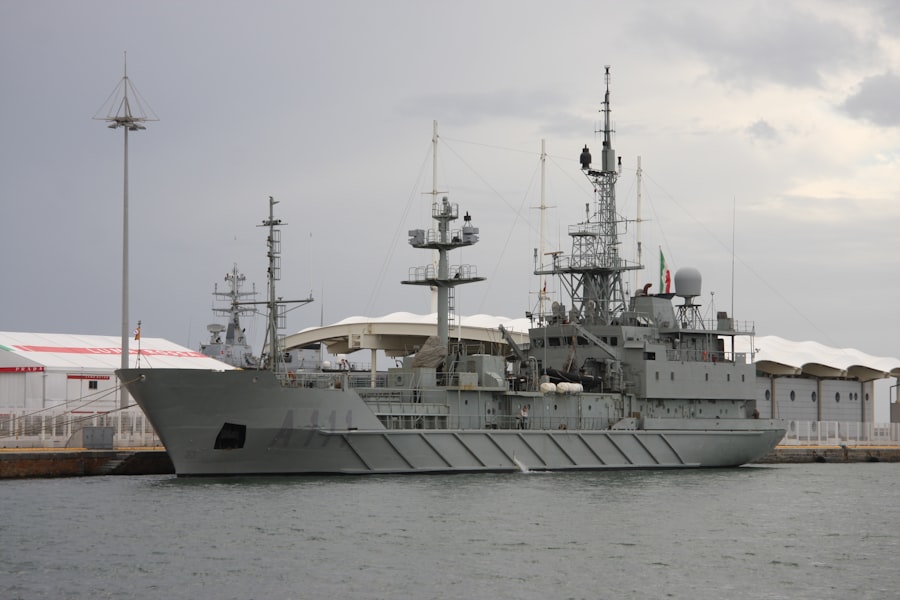
China’s focus on propeller technology has yielded several key advancements, particularly in areas critical for naval operations. These developments are not merely incremental improvements but represent significant steps towards achieving superior performance and reduced signatures.
Advanced Blade Geometries: Beyond the Basic Four
Modern Chinese propeller designs often feature more complex blade geometries than traditional designs. This includes increased blade skew, which helps to reduce noise and vibration by distributing the shaft power more evenly across the rotation. Blade rake, the angle of the blades relative to the hub, is also carefully optimized.
Variable Chord and Camber Distribution: Tailoring the Flow
Chinese engineers are exploring variable chord and camber distribution along the blade’s span. This allows for fine-tuning the flow characteristics and optimizing performance across a wider range of operating conditions, enhancing efficiency and reducing cavitation at different speeds.
Winglets and Other Boundary Layer Control Devices: Fine-Tuning the Hydrodynamics
Similar to aircraft wings, some advanced propeller designs may incorporate features like winglets or other boundary layer control devices. These aim to manage the flow of water around the blades, reducing drag and further suppressing noise generation. This is a sophisticated approach to making the propeller work “smarter” with the water.
Noise Reduction Technologies: The Silent Art of Subsurface Warfare
Reducing noise is a paramount objective, especially for submarines. China has made significant strides in this area through a combination of design and material choices.
Elastomeric Coatings and Damping Materials: Absorbing the Sound
The application of elastomeric coatings or other damping materials to propeller blades or the surrounding hull can help to absorb and dissipate vibrations, thereby reducing the radiated acoustic signature. This is akin to adding soundproofing to a room to reduce noise leakage.
Hydro-Acoustic Modeling and Verification: Measuring the Stealth
Sophisticated hydro-acoustic modeling is employed to predict and analyze the noise generated by propellers. This is complemented by extensive testing in specialized anechoic tanks or ocean environments to verify the effectiveness of noise reduction measures. This meticulous verification process ensures that the intended stealth is actually achieved.
Highly Skewed and Controllable Pitch Propellers: Adaptability and Performance
Highly skewed propellers are a common feature in advanced naval designs due to their inherent noise reduction benefits. China’s advancements also extend to controllable pitch propeller (CPP) technology. CPPs allow the blade pitch to be adjusted, enabling the vessel to operate more efficiently at various speeds and under different load conditions, a significant advantage for combatants.
The Impact on the PLAN’s Operational Capabilities
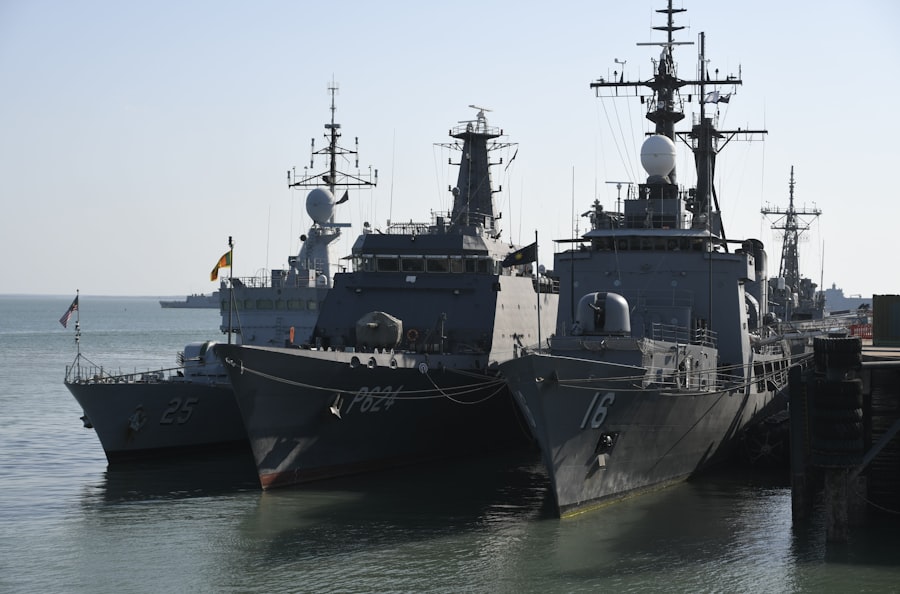
The advancements in China’s propeller technology have a direct and tangible impact on the PLAN’s operational capabilities across its diverse fleet. These improvements empower the navy to conduct a wider range of missions with greater effectiveness and survivability.
Submarine Force Enhancement: The Ghost in the Machine
For China’s growing submarine force, improved propeller technology is mission-critical. Silent submarines are elusive submarines, able to operate undetected in contested waters, conduct intelligence gathering, and pose a significant threat to enemy surface fleets. The ability to remain submerged and unseen for extended periods significantly increases a submarine’s strategic value.
Extended Patrols and Persistent Presence: Unseen Sentinels
Quieter and more efficient propellers enable submarines to undertake longer patrols and maintain a persistent presence in strategically important areas. This allows for more effective surveillance and the ability to respond rapidly to unfolding situations. They become a constant, unseen threat lurking beneath the waves.
Enhanced Anti-Submarine Warfare (ASW) Counter-Capabilities: The Hunter Becomes the Hunted
A quieter submarine is harder to find, making it a formidable adversary to enemy ASW forces. Conversely, if a Chinese submarine is suspected of operating in an area, the difficulty in locating it can force adversaries to expend significant resources on ASW operations, diverting them from other tasks. It can turn the hunter into the hunted.
Surface Fleet Modernization: Speed, Endurance, and Reach
On the surface, propeller advancements contribute to a more capable and versatile PLAN. Modern frigates, destroyers, and even aircraft carriers benefit from increased speed, improved fuel efficiency, and reduced operational noise.
Extended Operational Range and Power Projection: Reaching Further and Staying Longer
More efficient propellers mean that PLAN surface vessels can operate further from their home ports for longer durations. This is crucial for projecting power into distant maritime regions and maintaining a sustained presence in international waters. Their reach extends like the sinews of a powerful, expanding body.
Improved Maneuverability and Responsiveness: Agile Warriors
Optimized propeller designs can also contribute to improved maneuverability. This allows surface combatants to react more swiftly to threats, conduct complex tactical evolutions, and maintain offensive or defensive positions more effectively. They become more nimble as well as powerful.
China’s naval modernization efforts have increasingly focused on enhancing stealth capabilities, particularly through the development of silent propellers for submarines. These advancements aim to reduce noise levels, making it harder for adversaries to detect Chinese vessels. For a deeper understanding of the implications of these technologies on regional security dynamics, you can explore a related article that discusses the broader context of China’s naval strategies and innovations. This insightful piece can be found here.
Future Trajectories and Challenges
| Metric | Details |
|---|---|
| Propeller Type | Advanced Silent/Low-Noise Propellers |
| Material | High-strength composite alloys |
| Noise Reduction | Up to 20-30% reduction compared to conventional propellers |
| Application | Submarines and surface warships |
| Impact on Stealth | Significantly lowers acoustic signature, enhancing stealth capabilities |
| Deployment Year | Since early 2010s, with ongoing improvements |
| Key Platforms | Type 094 SSBN, Type 093 SSN, Type 055 destroyers |
| Manufacturing Location | Domestic Chinese naval shipyards and specialized propeller factories |
| Research & Development | Collaborations between naval research institutes and universities |
While China has made significant strides in propeller technology, the pursuit of naval superiority is an ongoing race. Several future trajectories and challenges will continue to shape the evolution of this critical field.
Towards Ultra-Quiet Propulsion Systems: The Ultimate Stealth
The ultimate goal for submarine propulsion remains the achievement of near-total silence. This will likely involve further research into advanced materials, novel propeller designs, and potentially even propulsion systems that move away from traditional propellers altogether.
Novel Propeller Concepts: Exploring New Frontiers
Research is ongoing into concepts such as pump-jet propulsors, which enclose the propeller within a duct, offering potential noise reduction and improved efficiency. Other radical concepts might explore bio-mimetic propulsion, drawing inspiration from marine life.
Integration with Other Stealth Technologies: A Symphony of Silence
Propeller advancements will need to be integrated seamlessly with other stealth technologies, such as advanced hull coatings, quiet machinery, and sophisticated sonar quieting systems. The true symphony of silence will be achieved when all elements work in concert.
The Role of Artificial Intelligence and Big Data: Smarter Designs
The application of artificial intelligence (AI) and big data analytics will play an increasingly vital role in optimizing propeller design and performance. AI can analyze vast datasets from simulations and real-world testing to identify novel design solutions and predict potential issues with greater accuracy.
AI-Driven Design Optimization: The Algorithmic Sculptor
AI algorithms can explore a vast design space, iterating through countless variations to discover optimal propeller geometries that human engineers might overlook. This accelerates the design process and pushes the boundaries of performance.
Predictive Maintenance and Performance Monitoring: Proactive Upkeep
AI can also be used for predictive maintenance, analyzing sensor data to anticipate potential propeller failures or performance degradation. This allows for proactive servicing, minimizing downtime and ensuring consistent operational readiness.
Global Competition and Technological Race: The Constant Strive
The advancements in Chinese propeller technology do not occur in a vacuum. Other major naval powers are also investing heavily in this area, creating a dynamic and competitive landscape.
International Benchmarking and Reverse Engineering: Learning from Successes and Failures
Naval powers will continue to benchmark their technologies against competitors, seeking to understand and potentially counter advancements. This involves both formal intelligence gathering and informal observation of capabilities.
The Constant Arms Race in Subsurface Technology: A Never-Ending Pursuit
The development of quiet submarines and the technologies that enable them are central to the ongoing naval arms race. China’s progress in propeller technology is a significant factor in this dynamic, prompting continuous innovation and investment from its rivals. The silent hum beneath the waves is a key battlefield for technological supremacy.
FAQs
What are silent propellers in naval technology?
Silent propellers are specially designed ship propellers that reduce noise generated by the vessel’s movement through water. They help minimize acoustic signatures, making naval ships harder to detect by sonar and other underwater listening devices.
Why is China focusing on silent propellers in its naval modernization?
China is incorporating silent propeller technology to enhance the stealth capabilities of its naval fleet. By reducing underwater noise, Chinese warships and submarines can operate more covertly, improving their effectiveness in surveillance, reconnaissance, and combat operations.
How do silent propellers contribute to naval stealth?
Silent propellers reduce cavitation and mechanical noise, which are primary sources of underwater sound. Lower noise levels make it more difficult for enemy sonar systems to detect and track naval vessels, thereby increasing the ship’s survivability and tactical advantage.
Are silent propellers unique to China’s navy?
No, silent propeller technology is used by many advanced navies worldwide, including the United States, Russia, and European countries. China’s adoption of this technology reflects its efforts to modernize and compete with other leading naval powers.
What impact does silent propeller technology have on naval operations?
Silent propellers improve the stealth and operational effectiveness of naval vessels by allowing them to approach targets or conduct missions with a lower risk of detection. This capability is crucial for submarines and surface ships engaged in intelligence gathering, special operations, and combat scenarios.