The Cold War, a period marked by geopolitical tension between the Soviet Union and the United States, saw a significant escalation in military capabilities, particularly in naval warfare. One of the most pressing concerns for Western powers was the growing threat posed by Soviet submarines. These vessels, designed for stealth and equipped with advanced weaponry, represented a formidable challenge to naval supremacy.
The Soviet Union invested heavily in its submarine fleet, developing a range of submarines that could operate undetected in the vast oceans, thereby posing a direct threat to U.S. naval forces and maritime interests. As tensions escalated, the need for effective detection and countermeasures became paramount.
The United States and its allies recognized that the ability to track and neutralize Soviet submarines was crucial for maintaining a strategic advantage. This led to an arms race not only in submarine technology but also in detection methods. The Cold War era was characterized by a relentless pursuit of technological superiority, with both sides striving to outmaneuver each other in the underwater domain.
The stakes were high, as the potential for nuclear conflict loomed large, making the detection of enemy submarines a matter of national security.
Key Takeaways
- The Cold War spurred significant advancements in submarine detection due to the Soviet threat.
- Technologies like sonar, satellites, and underwater acoustic sensors have greatly enhanced detection capabilities.
- Innovations such as unmanned underwater vehicles and magnetic anomaly detection have improved underwater surveillance.
- Signal processing, thermal imaging, and artificial intelligence are transforming the accuracy and efficiency of submarine detection.
- Future developments in detection technology will have critical implications for national security and defense strategies.
Advancements in Sonar Technology
In response to the submarine threat, significant advancements in sonar technology emerged during the Cold War. Sonar, which stands for Sound Navigation and Ranging, became a critical tool for naval forces seeking to detect and track submarines. Early sonar systems relied on simple echo-location techniques, but as the Cold War progressed, these systems evolved into sophisticated arrays capable of detecting even the quietest submarines.
The development of active and passive sonar systems allowed naval forces to enhance their underwater surveillance capabilities dramatically. Active sonar systems emit sound waves and listen for echoes that bounce back from objects in the water, providing information about their location and movement. Conversely, passive sonar systems listen for sounds generated by submarines themselves, such as engine noise or propeller cavitation.
The combination of these technologies allowed for a more comprehensive understanding of underwater environments.
The Role of Satellites in Submarine Detection
As the Cold War progressed, satellites emerged as a vital component in the detection of submarines. The ability to monitor vast oceanic expanses from space provided military strategists with unprecedented situational awareness. Satellites equipped with various sensors could detect surface ships and monitor submarine activity through changes in ocean temperature and salinity.
This capability allowed for early warning systems that could alert naval forces to potential threats before they became imminent. Moreover, satellite technology facilitated the integration of data from multiple sources, enhancing overall situational awareness. By combining satellite imagery with sonar data and intelligence reports, military analysts could create a more comprehensive picture of submarine movements.
This multi-faceted approach to detection proved invaluable during the Cold War, as it allowed for more effective planning and response strategies against potential submarine incursions.
Underwater Acoustic Sensors and Their Impact
Underwater acoustic sensors played a pivotal role in enhancing submarine detection capabilities during the Cold War and beyond. These sensors are designed to detect sound waves traveling through water, making them essential for monitoring submarine activity. The deployment of arrays of underwater acoustic sensors, often referred to as “listening posts,” allowed navies to create extensive surveillance networks across critical maritime regions.
The impact of these sensors was profound. They enabled continuous monitoring of strategic waterways and provided real-time data on submarine movements. This capability not only improved detection rates but also enhanced response times for naval forces.
As technology advanced, these sensors became increasingly sophisticated, capable of filtering out background noise and focusing on specific frequencies associated with submarine operations. This evolution marked a significant leap forward in underwater surveillance, allowing navies to maintain a strategic edge over potential adversaries.
The Development of Unmanned Underwater Vehicles
| Metric | Description | Value/Details |
|---|---|---|
| Detection Range | Typical sonar detection range for Soviet submarines | Up to 20 nautical miles (active sonar) |
| Sonar Frequency | Frequency range used in passive sonar systems | Low frequency (100 Hz to 1 kHz) |
| Number of SOSUS Arrays | Number of underwater hydrophone arrays deployed by the US | Over 25 arrays globally |
| Detection Probability | Estimated probability of detecting a Soviet submarine in monitored areas | Approximately 70-85% |
| Average Tracking Duration | Average time US forces could track a detected Soviet submarine | Several hours to days |
| Number of Aircraft Used | Number of P-3 Orion maritime patrol aircraft used for detection missions | Over 100 in active service during Cold War |
| Signal Processing Speed | Time taken to analyze sonar data and identify submarine signatures | Seconds to minutes with advanced computers |
| Submarine Noise Level | Typical noise level of Soviet submarines in decibels (dB) | Approximately 120-140 dB re 1 μPa at 1 meter |
The development of unmanned underwater vehicles (UUVs) represented another significant advancement in submarine detection technology. These autonomous or remotely operated vehicles are designed to perform various tasks, including reconnaissance, surveillance, and mine detection. UUVs can operate in environments that may be too dangerous or inaccessible for manned submarines or surface vessels, making them invaluable assets in modern naval operations.
UUVs equipped with advanced sensors can gather data on underwater conditions and detect submarines with remarkable precision. Their ability to operate silently and autonomously allows them to conduct prolonged missions without risking human lives. As technology continues to evolve, UUVs are becoming increasingly capable, incorporating artificial intelligence and machine learning algorithms that enhance their decision-making processes.
This development not only improves their effectiveness in detecting submarines but also expands their potential applications in various maritime operations.
The Use of Magnetic Anomaly Detection in Submarine Detection
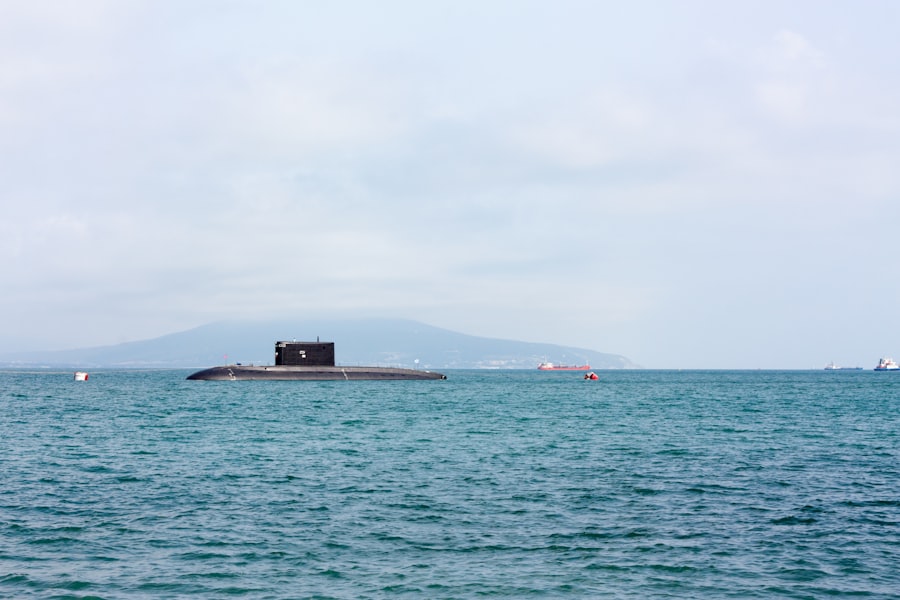
Magnetic anomaly detection (MAD) is another critical technique employed in submarine detection efforts. This method relies on detecting variations in the Earth’s magnetic field caused by large metallic objects, such as submarines. MAD systems are typically mounted on aircraft or surface vessels and can identify submarines even when they are submerged at significant depths.
The effectiveness of MAD lies in its ability to complement other detection methods. While sonar may struggle to detect quiet submarines operating at great depths, MAD can provide valuable information about their presence based on magnetic signatures. This dual approach enhances overall detection capabilities and allows naval forces to maintain a comprehensive understanding of underwater threats.
As MAD technology continues to advance, its integration with other detection systems promises to further improve the accuracy and reliability of submarine detection efforts.
The Impact of Signal Processing on Submarine Detection
Signal processing has revolutionized submarine detection by enabling more sophisticated analysis of data collected from various sensors. As sonar systems and other detection technologies generate vast amounts of data, advanced signal processing techniques are essential for extracting meaningful information from this noise. These techniques involve filtering, analyzing, and interpreting signals to identify patterns indicative of submarine activity.
The impact of signal processing on submarine detection cannot be overstated. Enhanced algorithms allow for better discrimination between background noise and actual submarine signatures, improving detection rates significantly. Additionally, machine learning techniques are increasingly being applied to signal processing, enabling systems to learn from past detections and adapt to new threats dynamically.
This evolution represents a significant leap forward in underwater surveillance capabilities, allowing naval forces to respond more effectively to emerging challenges.
Advancements in Thermal Imaging and Infrared Technology
Thermal imaging and infrared technology have also played a crucial role in enhancing submarine detection capabilities. These technologies allow for the identification of heat signatures emitted by submarines or their exhaust plumes when they surface or operate near the surface. By detecting temperature variations in the water or air above the ocean’s surface, naval forces can gain valuable insights into submarine movements.
The integration of thermal imaging with other detection methods provides a multi-layered approach to submarine surveillance. For instance, while sonar may provide information about a submarine’s location underwater, thermal imaging can confirm its presence when it surfaces or approaches the surface for operations such as launching missiles or conducting reconnaissance missions. As thermal imaging technology continues to advance, its effectiveness in detecting submarines is expected to improve further, enhancing overall maritime security.
The Role of Artificial Intelligence in Submarine Detection
Artificial intelligence (AI) is increasingly becoming a game-changer in submarine detection technology. By leveraging machine learning algorithms and data analytics, AI can process vast amounts of information from various sensors more efficiently than human operators alone. This capability allows for real-time analysis of underwater environments and enhances decision-making processes regarding potential threats.
AI-driven systems can identify patterns in data that may indicate submarine activity, improving detection rates while reducing false positives. Furthermore, AI can adapt to changing conditions and learn from previous encounters with submarines, continuously refining its algorithms for better accuracy over time.
The Future of Submarine Detection Technology
The future of submarine detection technology promises exciting advancements driven by ongoing research and development efforts across various fields. Innovations such as quantum sensing may revolutionize how submarines are detected by providing unprecedented sensitivity to changes in environmental conditions associated with submerged vessels. Additionally, advancements in materials science could lead to the development of new sensors that are lighter, more durable, and capable of operating at greater depths.
Moreover, as global tensions continue to evolve, so too will the strategies employed by navies worldwide. The integration of emerging technologies such as blockchain for secure data sharing among allied forces could enhance collaborative efforts in submarine detection and response strategies. As nations invest in next-generation technologies, the landscape of underwater warfare will undoubtedly change, necessitating continuous adaptation by military forces.
Implications for National Security and Defense
The implications of advancements in submarine detection technology extend far beyond military strategy; they have profound consequences for national security and defense policies worldwide. As nations develop more sophisticated means of detecting submarines, the balance of power at sea may shift dramatically. Countries that invest heavily in these technologies may gain strategic advantages over their adversaries, potentially altering geopolitical dynamics.
Furthermore, enhanced submarine detection capabilities can deter potential aggressors from engaging in hostile actions against nations with robust maritime defenses. The ability to monitor underwater activities effectively contributes to regional stability and security by providing early warning systems that can prevent conflicts before they escalate into open warfare. As nations navigate an increasingly complex global landscape marked by shifting alliances and emerging threats, the role of submarine detection technology will remain critical in safeguarding national interests and ensuring maritime security for years to come.
During the Cold War, the United States developed various sophisticated methods to detect Soviet submarines, which posed a significant threat to national security. One insightful article that delves into the intricacies of these detection techniques is available at this link. It explores the technological advancements and strategies employed by the U.S. Navy to monitor submarine activity, highlighting the importance of intelligence and surveillance in maintaining maritime security.
WATCH THIS! 🎖️ The Silent Underwater Network That Doomed Every Soviet Submarine
FAQs
How did America initially detect Soviet submarines during the Cold War?
The United States initially detected Soviet submarines using a combination of sonar systems, maritime patrol aircraft, and underwater listening devices known as hydrophones. These methods allowed the U.S. Navy to monitor Soviet submarine movements and maintain strategic awareness.
What role did the SOSUS system play in detecting Soviet submarines?
The Sound Surveillance System (SOSUS) was a network of underwater hydrophone arrays deployed by the U.S. Navy along key oceanic chokepoints. SOSUS was instrumental in detecting and tracking Soviet submarines by capturing their acoustic signatures over long distances.
Were satellites used to detect Soviet submarines?
Yes, reconnaissance satellites equipped with radar and infrared sensors were used to detect Soviet submarine activity, particularly when submarines surfaced or operated near the ocean surface. However, satellites were primarily supplementary to underwater detection methods.
How did maritime patrol aircraft contribute to submarine detection?
Maritime patrol aircraft, such as the P-3 Orion, were equipped with sonar buoys, magnetic anomaly detectors (MAD), and radar systems. These aircraft could cover vast ocean areas, deploy sonobuoys, and detect submarines by their magnetic and acoustic signatures.
What technological advancements improved submarine detection over time?
Advancements included improved sonar technology, quieter and more sensitive hydrophones, enhanced signal processing, and the integration of multiple detection platforms. Additionally, the development of nuclear-powered submarines and quieter propulsion systems by both sides led to continuous improvements in detection capabilities.
Did human intelligence play a role in detecting Soviet submarines?
Yes, human intelligence (HUMINT), including espionage and intercepted communications, complemented technical detection methods by providing information on Soviet submarine deployments, capabilities, and operational patterns.
How effective was America’s submarine detection during the Cold War?
America’s submarine detection efforts were highly effective in maintaining strategic deterrence and situational awareness. While not foolproof, the combination of SOSUS, patrol aircraft, satellites, and intelligence allowed the U.S. to track Soviet submarines and respond to potential threats.