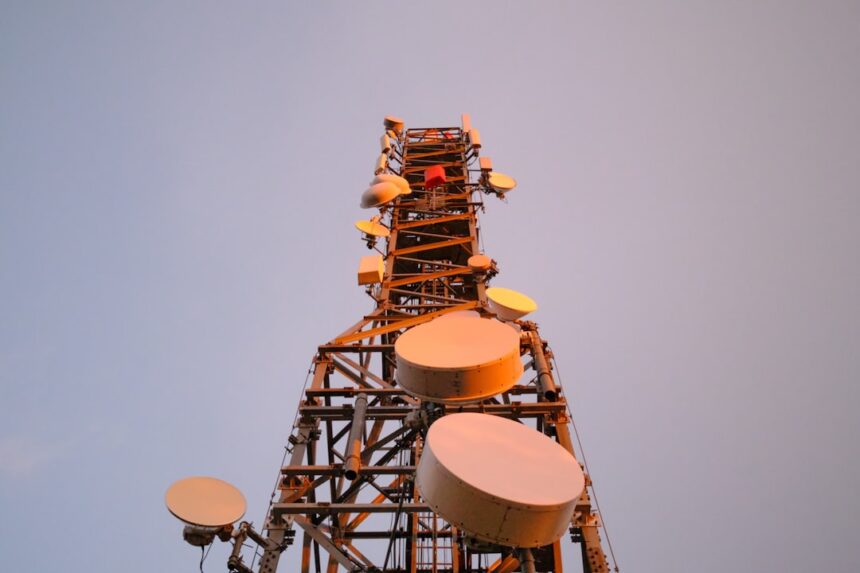
The field of telecommunications, a constant driver of societal and economic evolution, has been shaped by numerous research institutions and their dedicated scientists. Among these, the Telecommunications Research Establishment (TRE) at Malvern, a facility with a rich legacy, stands out for its significant contributions that have laid crucial groundwork for advancements witnessed and yet to come. While often overshadowed by more recent, high-profile undertakings, the research conducted at TRE Malvern during its operational years instilled fundamental principles and pioneered technologies that continue to underpin modern communication systems. This article will delve into the multifaceted research conducted at TRE Malvern, exploring its impact across various domains of telecommunications and highlighting its enduring relevance.
The Genesis of Advanced Radar and its Telecommunication Implications
The initial impetus for TRE Malvern’s establishment was deeply rooted in the urgent need for advanced radar technology during the Second World War. However, the scientific expertise cultivated and the technological breakthroughs achieved in radar quickly transcended its primary military application, yielding substantial benefits for the nascent field of telecommunications.
Early Radar Systems and Signal Processing
- Pulse Compression Techniques: TRE Malvern researchers were instrumental in developing techniques that significantly improved the range and resolution of radar systems. Concepts like pulse compression, which involved transmitting a longer pulse and then compressing it upon reception, allowed for greater energy to be transmitted while maintaining fine range resolution. This principle, though developed for radar, has direct analogies in modern digital telecommunications, particularly in spread spectrum techniques and impulse radio, where efficient use of the spectral bandwidth is paramount. The efficient encoding and decoding of information within a signal, a core tenet of radar signal processing, directly informs the development of robust channel coding and modulation schemes in telecommunications.
- Doppler Effect Applications: The understanding and exploitation of the Doppler effect in radar, for distinguishing moving targets from stationary clutter, also found echoes in telecommunications. While not directly applied to voice transmission in the early days, the principles of analyzing frequency shifts laid the groundwork for future applications in areas like frequency-hopping spread spectrum communication systems, where rapid changes in carrier frequency are used for security and interference mitigation. The ability to perceive and separate signals based on their relative motion or spectral characteristics, honed in radar, is a fundamental skill in the complex radio frequency environment of modern wireless communication.
- Synthetic Aperture Radar (SAR) Concepts: Although SAR is primarily an imaging radar technique, the underlying principles of synthesizing a larger antenna aperture through motion and signal processing have influenced sophisticated telecommunications antenna array designs. The ability to achieve higher spatial resolution through computational methods, a hallmark of SAR, can be seen as a precursor to advanced beamforming and MIMO (Multiple-Input Multiple-Output) technologies in wireless communications, where multiple antennas are used to improve data rates and signal quality.
The Evolution of Microwave Technology
The war effort necessitated rapid advancements in microwave technology, an area where TRE Malvern played a pivotal role. This focus on microwaves had a profound and lasting impact on telecommunications, particularly in the development of high-speed, point-to-point communication links.
- Magnetron and Klystron Development: TRE Malvern was at the forefront of developing and refining microwave vacuum tube devices like the magnetron and klystron. These devices were essential for generating high-power microwave signals for radar. Their subsequent development and miniaturization paved the way for their application in microwave communication transmitters, enabling the transmission of larger bandwidth signals over long distances. This was a significant leap from the slower, lower-bandwidth voice-centric systems of the era.
- Waveguide and Microwave Circuitry: The practical implementation of microwave systems required the development of specialized components like waveguides and microwave circuits. TRE Malvern’s researchers made significant contributions to understanding the propagation of electromagnetic waves within waveguides and designing efficient microwave components such as filters, couplers, and mixers. This foundational knowledge became indispensable for the design of microwave radio relay systems that formed the backbone of long-distance telecommunications for decades. The principles of signal propagation and impedance matching within these guided structures remain critical in the design of high-frequency components for modern wireless devices.
- Frequency Allocation and Spectrum Management: The rapid expansion of microwave usage, driven by radar and early communication needs, highlighted the growing importance of efficient frequency allocation and spectrum management. While not a direct research output in the form of a specific device, the practical challenges encountered by TRE Malvern researchers in working with the limited and often congested microwave spectrum contributed to the growing awareness of the need for regulatory frameworks and organized spectrum utilization, principles that are still central to telecommunications policy.
The Telecommunications Research Establishment (TRE) in Malvern has been at the forefront of innovative communication technologies, significantly contributing to advancements in the field. For those interested in exploring more about the impact of telecommunications research on modern technology, you can read a related article that delves into various projects and their implications for the industry. Check it out here: Telecommunications Research Insights.
Pioneering Digital Signal Processing for Communication
While much of TRE Malvern’s early work was analog, the institution recognized the transformative potential of digital technologies. Its researchers began to explore the application of digital signal processing (DSP) techniques, which would revolutionize telecommunications, moving it away from purely analog methods towards the digital age.
The Transition from Analog to Digital
- Early Concepts in Digital Modulation: TRE Malvern’s researchers were among the early proponents of digital modulation techniques. While the full implementation of these concepts awaited more powerful digital hardware, the theoretical investigations into encoding information into discrete digital samples and transmitting them as a series of binary pulses were groundbreaking. This laid the conceptual foundation for digital radio, digital telephony, and eventually, the internet.
- Pulse Code Modulation (PCM) Investigations: The exploration of Pulse Code Modulation (PCM), a fundamental technique for digitally encoding analog signals, was a significant undertaking. While other institutions also contributed to PCM’s development, TRE Malvern’s research played a role in understanding its efficiency and error-correction potential. PCM was critical for digitizing voice signals, enabling clearer calls, multiplexing of multiple calls onto a single line, and paving the way for digital switches and networks. The principles of sampling, quantization, and coding were meticulously studied.
- Development of Digital Filters and Algorithms: The need to process digital signals efficiently spurred research into digital filters and algorithms. TRE Malvern’s scientists investigated various methods for filtering out noise and extracting desired information from digital waveforms. These early digital signal processing techniques, though rudimentary by today’s standards, represented a critical step towards developing the sophisticated algorithms and architectures that are now ubiquitous in mobile phones, computers, and virtually all digital communication devices. The mathematical underpinnings of these algorithms are still foundational.
Error Detection and Correction in Digital Streams
- Coding Theory for Reliable Transmission: The inherent susceptibility of digital signals to errors during transmission was a major concern. TRE Malvern’s researchers delved into the principles of coding theory, investigating methods to add redundant information to digital data in a structured way, allowing for the detection and even correction of errors at the receiver. This fundamental work in error correction codes (ECC) is absolutely vital for reliable digital communication, from satellite links to mobile phone calls and data transfers. Without effective ECC, digital communication would be prone to constant disruptions.
- Parity Checks and Hamming Codes: Early investigations likely included fundamental error detection mechanisms like parity checks and potentially explored the beginnings of more sophisticated error-correcting codes, possibly influencing the understanding and early development of codes like Hamming codes, which are capable of correcting single-bit errors. The ability to ensure data integrity in the face of noisy channels is a cornerstone of robust communication systems.
Advancing Antenna Technology and Radio Propagation
Effective telecommunications relies on the efficient transmission and reception of electromagnetic waves, making antenna technology and understanding radio propagation absolutely critical. TRE Malvern’s research in these areas provided essential insights and developed novel solutions that benefited numerous communication systems.
Novel Antenna Designs for Diverse Applications
- Broadband and Directional Antennas: The diverse needs of radar and communications led to the development of a range of antenna designs. TRE Malvern researchers explored the creation of broadband antennas capable of operating over a wide range of frequencies and directional antennas for focused transmission and reception, essential for point-to-point links and minimizing interference. This work influenced the design of antennas for early microwave relays and other radio communication systems.
- Phased Array Antennas: The exploration of phased array antennas, where the direction of the radio beam can be electronically steered by altering the phase of signals feeding individual antenna elements, was a significant area of research with implications for both radar and future communication systems. This technology allows for rapid beam switching without physically moving the antenna, a capability that is now fundamental in modern radar and increasingly important for beamforming in advanced wireless networks like 5G and beyond.
- Antenna Miniaturization and Integration: As telecommunications systems became more complex and began to move towards smaller form factors, the challenges of antenna miniaturization and integration became paramount. TRE Malvern’s researchers would have been involved in studying the trade-offs between antenna size, performance, and the impact of surrounding circuitry, contributing to the ongoing effort to design antennas that are both effective and compact.
Understanding and Mitigating Propagation Effects
- Atmospheric Effects on Radio Waves: The reliable transmission of radio waves is heavily influenced by atmospheric conditions. TRE Malvern’s researchers conducted studies on how factors like rain, fog, and ionospheric conditions affect radio signal propagation at various frequencies. This understanding was crucial for designing robust communication systems that could maintain performance under diverse environmental challenges, particularly for long-distance microwave links.
- Multipath Propagation and Fading: In terrestrial and mobile communication, radio waves can bounce off obstacles, creating multiple signal paths arriving at the receiver at different times and phases. This phenomenon, known as multipath propagation, can lead to signal fading and distortion. TRE Malvern’s research into understanding and mitigating the effects of multipath propagation would have contributed to the development of techniques for improving signal quality in challenging environments, a problem that remains central to wireless communication design.
- Interference Analysis and Mitigation: As more radio systems came into operation, managing interference between them became a critical issue. TRE Malvern’s research would have included analyzing sources of radio interference and developing strategies to mitigate its impact. This could involve designing antennas with improved directivity, developing filtering techniques, or contributing to the understanding of spectrum sharing principles.
The Evolution of Secure Communication Systems
Security and resilience in communication were always implicitly or explicitly important, especially given TRE Malvern’s wartime origins. This led to research that laid foundations for modern secure telecommunications.
Cryptography and Secure Transmission Protocols
- Early Research into Encryption Algorithms: While detailed public information on TRE Malvern’s specific cryptographic research might be limited due to national security considerations, it is highly probable that the institution was involved in developing and analyzing encryption algorithms for secure communication. The need to protect sensitive information during wartime would have driven significant efforts in this area, contributing to the broader understanding of cipher design and cryptanalysis.
- Secure Network Design Principles: Beyond individual encryption methods, TRE Malvern researchers likely explored fundamental principles for designing secure communication networks. This could encompass aspects like authentication, access control, and the design of communication channels that are resistant to eavesdropping and jamming, laying the intellectual groundwork for secure network architectures.
Jamming Resistance and Resilience
- Techniques for Counteracting Jamming: The ability of communication systems to withstand intentional jamming was a critical requirement for military applications and has direct relevance to commercial telecommunications, particularly in congested or contested radio environments. TRE Malvern’s research likely explored techniques such as frequency hopping, spread spectrum, and robust signal processing to maintain communication links even in the presence of deliberate interference.
- Redundancy and Diversity in Communication Links: Building resilience into communication systems was another key focus. This would involve researching the use of redundant communication paths and diversity techniques (e.g., spatial or frequency diversity) to ensure that if one communication link is disrupted by interference or fading, others can maintain connectivity. These principles are still fundamental to modern resilient communication architectures.
The Telecommunications Research Establishment (TRE) in Malvern has been at the forefront of advancements in communication technologies, contributing significantly to both military and civilian applications. For those interested in exploring the broader implications of these developments, a related article can be found at In the War Room, which discusses the strategic importance of telecommunications in modern warfare. This resource provides valuable insights into how innovations at TRE are shaping the future of communication systems.
Legacy and Enduring Influence on Modern Telecommunications
The research conducted at TRE Malvern, though originating in a different technological era, has left an indelible mark on the field of telecommunications. Its contributions are not always explicitly credited in modern consumer devices but are woven into the fabric of the underlying technologies and scientific principles.
The Foundation for Digital Communication Infrastructure
- Digital Switching and Network Architectures: The early investigations into digital signal processing and pulse code modulation directly paved the way for the development of digital telephone exchanges and the core infrastructure of the public switched telephone network (PSTN) that underpinned global voice communication for decades. This digitized voice was more robust, clearer, and allowed for efficient multiplexing.
- Fiber Optics and High-Speed Data Transmission: While TRE Malvern’s primary focus was radio frequency, the understanding of signal processing, error correction, and efficient data encoding gained through their work is transferable and foundational to the principles of high-speed data transmission, including those used in fiber optic communication systems that now form the backbone of the internet and modern data networks. The efficiency of data packing and error management is a common thread.
The Evolution of Wireless Technologies
- Mobile Communication Precursors: The research into microwave technology, antenna design, and signal propagation at TRE Malvern provided essential building blocks for the development of early microwave point-to-point communication systems, which served as precursors to the cellular infrastructure that makes mobile communication possible today. The principles of signal transmission and reception over the airwaves were deeply explored.
- Spectrum Efficiency and Advanced Modulation: The ongoing challenge of achieving higher spectrum efficiency in wireless communication has its roots in the early research at TRE Malvern into optimizing signal transmission and reception. The drive to transmit more data over limited radio frequencies, a constant pursuit, benefits from the foundational understanding of signal integrity and coding developed by such institutions.
The Ethos of Scientific Inquiry and Innovation
- A Culture of Rigorous Research: Perhaps the most enduring legacy of TRE Malvern is the culture of rigorous scientific inquiry and innovation it fostered. The institution attracted and nurtured some of the brightest minds in physics, engineering, and mathematics, pushing the boundaries of scientific understanding and technological development. This ethos continues to inspire research institutions worldwide.
- Interdisciplinary Collaboration: The complex challenges tackled at TRE Malvern necessitated interdisciplinary collaboration, bringing together experts from diverse fields. This collaborative approach is increasingly recognized as essential for tackling the complex, interconnected challenges of modern telecommunications research and development. The ability to combine different scientific perspectives is crucial for breakthrough innovation.
In conclusion, the Telecommunications Research Establishment at Malvern, through its extensive and groundbreaking work, has made a profound and lasting contribution to the advancement of telecommunications. From the foundational principles of radar that influenced signal processing and microwave technology, to its early forays into digital communication and secure systems, TRE Malvern’s research has undeniably shaped the communication landscape we experience today and continues to inform the innovations of tomorrow. Its legacy is not just in the technologies developed, but in the scientific spirit and the foundational knowledge that it imparted, ensuring its influence will be felt for generations to come.
FAQs
What is the Telecommunications Research Establishment (TRE) Malvern?
The Telecommunications Research Establishment (TRE) Malvern was a British research and development organization that focused on telecommunications and radar technology. It was established in 1942 and played a crucial role in developing radar technology during World War II.
What were the main areas of research at TRE Malvern?
TRE Malvern conducted research in various areas related to telecommunications and radar technology, including antenna design, signal processing, radio frequency technology, and electronic warfare.
What were some notable achievements of TRE Malvern?
TRE Malvern made significant contributions to the development of radar technology, including the development of advanced radar systems for military use. It also played a key role in the development of electronic countermeasures to disrupt enemy radar systems.
When did TRE Malvern cease its operations?
TRE Malvern ceased its operations in 2003 when it was merged with other research establishments to form the Defence Science and Technology Laboratory (DSTL), which continues to conduct research in various defense-related areas.
What is the legacy of TRE Malvern?
The legacy of TRE Malvern includes its pioneering work in radar and telecommunications technology, which has had a lasting impact on the field of defense and civilian telecommunications. Many of the technologies and techniques developed at TRE Malvern continue to be used in modern radar and telecommunications systems.