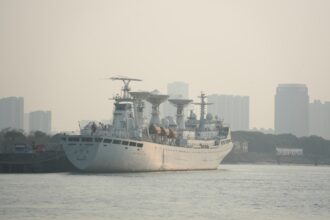
The Glomar Explorer, a remarkable vessel in the realm of offshore operations, is renowned for its sophisticated Dynamic Positioning System (DPS). This cutting-edge technology allows the ship to maintain its position and heading with exceptional precision, even in challenging marine environments. The DPS is not merely a tool; it represents a significant leap forward in maritime engineering, enabling the Glomar Explorer to perform complex tasks such as deep-sea drilling and underwater construction with unparalleled accuracy.
As the demand for offshore resources continues to grow, the importance of such advanced systems becomes increasingly evident. Dynamic positioning systems have transformed the way vessels operate in open waters. By utilizing a combination of GPS, gyroscopes, and thrusters, the Glomar Explorer can autonomously adjust its position in real-time, ensuring that it remains stable and secure during operations.
The introduction of DPS on the Glomar Explorer not only enhances operational efficiency but also sets a new standard for safety and reliability in offshore endeavors.
Key Takeaways
- Glomar Explorer pioneered advanced dynamic positioning technology to enhance offshore operational efficiency and safety.
- Dynamic positioning systems allow vessels to maintain precise location without anchors, crucial for complex offshore tasks.
- The technology significantly reduces environmental impact by minimizing seabed disturbance and fuel consumption.
- Continuous innovations address challenges like system reliability and integration with emerging offshore technologies.
- Future advancements in dynamic positioning promise greater automation and improved operational capabilities for offshore exploration.
The Evolution of Offshore Operations
Offshore operations have undergone a remarkable transformation over the decades, evolving from rudimentary techniques to highly sophisticated methodologies. In the early days of offshore drilling, operations were largely manual and heavily reliant on human skill and experience. Vessels were anchored using traditional mooring systems, which often proved inadequate in the face of strong currents and adverse weather conditions.
As the industry expanded and the quest for oil and gas intensified, the need for more reliable and efficient methods became apparent. The introduction of dynamic positioning systems marked a pivotal moment in this evolution. By allowing vessels to maintain their position without anchoring, DPS technology revolutionized offshore operations.
This advancement enabled companies to explore deeper waters and more challenging environments than ever before. The Glomar Explorer stands as a testament to this evolution, showcasing how technological innovations have reshaped the landscape of offshore exploration and production.
Understanding Dynamic Positioning Systems
Dynamic Positioning Systems are intricate networks of hardware and software designed to control a vessel’s position automatically. At their core, these systems rely on a combination of sensors, including GPS receivers, wind sensors, and motion reference units, to gather real-time data about the vessel’s surroundings. This information is processed by sophisticated algorithms that calculate the necessary adjustments to keep the vessel stable and on course.
The operation of a DPS involves multiple thrusters strategically placed around the vessel. These thrusters can be activated independently or in unison to counteract external forces such as wind, waves, and currents. The ability to respond instantaneously to changing conditions is what sets dynamic positioning apart from traditional anchoring methods.
For vessels like the Glomar Explorer, this means that they can conduct operations with remarkable precision, whether it be drilling for oil or conducting underwater surveys.
The Benefits of Dynamic Positioning for Offshore Operations
| Benefit | Description | Metric/Impact |
|---|---|---|
| Increased Operational Safety | Maintains vessel position automatically, reducing risk of collisions and accidents. | Reduction in incidents by up to 30% |
| Enhanced Precision | Allows for precise positioning over subsea installations without anchors. | Positioning accuracy within 1-3 meters |
| Improved Efficiency | Reduces downtime by enabling faster repositioning and continuous operations. | Up to 20% increase in operational uptime |
| Environmental Protection | Eliminates need for anchoring, minimizing seabed disturbance. | Zero anchor-related seabed damage |
| Cost Savings | Reduces need for support vessels and anchor handling equipment. | Operational cost reduction by approximately 15% |
| Adaptability to Harsh Conditions | Maintains position in rough seas and strong currents. | Operational capability in sea states up to 6 meters wave height |
The advantages of dynamic positioning systems are manifold, particularly in the context of offshore operations. One of the most significant benefits is enhanced operational efficiency. By eliminating the need for anchoring, vessels can reposition themselves quickly and easily as conditions change.
This flexibility allows for continuous operations without the downtime associated with traditional mooring methods. Moreover, dynamic positioning contributes to improved safety standards in offshore environments. The ability to maintain a stable position reduces the risk of accidents caused by drifting or losing control of the vessel.
This is especially critical during complex operations such as drilling or installing subsea equipment, where even minor deviations can lead to catastrophic consequences. The Glomar Explorer’s DPS exemplifies how modern technology can mitigate risks and enhance safety protocols in challenging maritime conditions.
Glomar Explorer’s Advanced Dynamic Positioning Technology
The Glomar Explorer is equipped with one of the most advanced dynamic positioning systems available today. Its DPS integrates state-of-the-art technology that allows for seamless operation in various marine environments. The system’s architecture includes multiple redundancies to ensure reliability; should one component fail, others can take over without compromising performance.
Additionally, the Glomar Explorer’s DPS is designed to adapt to different operational scenarios. Whether conducting deep-sea drilling or performing maintenance on underwater structures, the system can be calibrated to meet specific requirements. This versatility not only enhances operational capabilities but also positions the Glomar Explorer as a leader in offshore technology.
How Glomar Explorer’s Dynamic Positioning System Improves Efficiency
Efficiency is paramount in offshore operations, where time is often equated with money. The Glomar Explorer’s dynamic positioning system significantly enhances operational efficiency by allowing for rapid repositioning and continuous work cycles. Unlike traditional anchoring methods that require time-consuming setup and adjustments, DPS enables immediate responses to environmental changes.
Furthermore, the precision offered by dynamic positioning minimizes wasted resources. For instance, when drilling for oil or gas, maintaining an exact position over a wellhead is crucial for maximizing extraction efficiency. The Glomar Explorer’s DPS ensures that drilling operations can proceed without interruption or misalignment, ultimately leading to increased productivity and reduced operational costs.
Enhancing Safety with Dynamic Positioning
Safety is a critical concern in offshore operations, where unpredictable weather and challenging sea conditions can pose significant risks. The Glomar Explorer’s dynamic positioning system plays a vital role in enhancing safety protocols by providing real-time data and control over vessel positioning. This capability allows operators to make informed decisions quickly, reducing the likelihood of accidents.
Moreover, the system’s ability to maintain stability during adverse conditions minimizes the risk of capsizing or drifting off course. In high-stakes environments such as deep-sea drilling or underwater construction, even minor deviations can have severe consequences. By ensuring that the vessel remains securely positioned, the Glomar Explorer’s DPS contributes to a safer working environment for crew members and equipment alike.
The Environmental Impact of Dynamic Positioning
As environmental concerns continue to rise globally, the offshore industry faces increasing scrutiny regarding its ecological footprint. The Glomar Explorer’s dynamic positioning system offers several environmental benefits that align with sustainable practices. By reducing reliance on anchoring methods that can disturb marine ecosystems, DPS technology minimizes habitat disruption during operations.
Additionally, dynamic positioning allows for more precise placement of equipment and operations, reducing the likelihood of spills or accidents that could harm marine life. The ability to maintain a stable position also means that vessels can operate more efficiently, leading to lower fuel consumption and reduced emissions. In an era where environmental responsibility is paramount, the Glomar Explorer’s DPS exemplifies how technology can support sustainable offshore practices.
Challenges and Innovations in Dynamic Positioning for Offshore Operations
Despite its many advantages, dynamic positioning technology is not without challenges. One significant issue is the reliance on satellite signals for navigation; adverse weather conditions or geographical obstructions can disrupt these signals, potentially compromising vessel positioning. To address this challenge, ongoing innovations are being developed to enhance redundancy and improve signal reliability.
Furthermore, as offshore operations become more complex and demanding, there is a continuous need for advancements in dynamic positioning systems. Research into artificial intelligence and machine learning is paving the way for smarter systems that can predict environmental changes and adjust positioning strategies accordingly. The Glomar Explorer remains at the forefront of these innovations, continually adapting its DPS to meet the evolving needs of offshore operations.
The Future of Dynamic Positioning Technology
The future of dynamic positioning technology looks promising as advancements continue to emerge at a rapid pace. With increasing demands for offshore resources and heightened environmental awareness, there is a growing emphasis on developing more efficient and sustainable systems. Innovations such as autonomous vessels equipped with advanced DPS are on the horizon, potentially revolutionizing how offshore operations are conducted.
Moreover, integrating renewable energy sources into dynamic positioning systems could further enhance their sustainability profile. As industries strive for greener practices, technologies that reduce carbon footprints while maintaining operational efficiency will become increasingly vital. The Glomar Explorer is well-positioned to lead this charge into a future where dynamic positioning technology plays an integral role in responsible offshore exploration.
Advancing Offshore Operations with Glomar Explorer’s Dynamic Positioning System
In conclusion, the Glomar Explorer’s dynamic positioning system represents a significant advancement in offshore operations, combining cutting-edge technology with practical applications that enhance efficiency, safety, and environmental responsibility. As the industry continues to evolve, the importance of such systems will only grow, paving the way for more sustainable practices in resource extraction. The journey of dynamic positioning technology has been marked by innovation and adaptation, with vessels like the Glomar Explorer at the forefront of this transformation.
As challenges arise and new opportunities emerge, it is clear that dynamic positioning will remain a cornerstone of successful offshore operations for years to come.
The Glomar Explorer, a remarkable vessel known for its dynamic positioning system, played a significant role in deep-sea exploration and recovery operations. For a deeper understanding of the technological advancements in maritime operations, you can read more about related innovations in the field in this article: Innovations in Maritime Technology.
WATCH THIS! The CIA’s Secret Mission to Recover a Nuclear Submarine: Project Azorian
FAQs
What is the Dynamic Positioning System on the Glomar Explorer?
The Dynamic Positioning System (DPS) on the Glomar Explorer is a computer-controlled system that automatically maintains the vessel’s position and heading by using its own propellers and thrusters. This allows the ship to stay precisely in place without anchoring, even in challenging sea conditions.
Why was the Dynamic Positioning System important for the Glomar Explorer?
The DPS was crucial for the Glomar Explorer because the ship was designed for deep-sea recovery operations, such as lifting objects from the ocean floor. Maintaining a stable position over a specific spot was essential to successfully carry out these complex underwater tasks.
How does the Dynamic Positioning System work on the Glomar Explorer?
The system uses inputs from various sensors, including GPS, gyrocompasses, and motion sensors, to determine the vessel’s exact position and heading. It then automatically adjusts the ship’s thrusters and propellers to counteract wind, waves, and currents, keeping the vessel steady.
When was the Dynamic Positioning System implemented on the Glomar Explorer?
The Glomar Explorer was built in the early 1970s with one of the first advanced Dynamic Positioning Systems installed, making it one of the pioneering vessels to use this technology for deep-sea operations.
What types of thrusters does the Glomar Explorer use for dynamic positioning?
The Glomar Explorer is equipped with multiple azimuth thrusters and bow thrusters that can rotate 360 degrees, providing precise maneuverability and control necessary for dynamic positioning.
What are the advantages of using a Dynamic Positioning System on a vessel like the Glomar Explorer?
The DPS allows the vessel to maintain a fixed position without anchoring, which is especially useful in deep waters where anchoring is impractical. It enhances operational safety, efficiency, and precision during underwater recovery and drilling operations.
Is the Dynamic Positioning System on the Glomar Explorer still in use today?
The Glomar Explorer was retired from active service decades ago, and while its original DPS was state-of-the-art at the time, modern vessels now use more advanced dynamic positioning technologies. However, the Glomar Explorer remains a significant milestone in the development of DPS technology.
Who developed the Dynamic Positioning System for the Glomar Explorer?
The Dynamic Positioning System on the Glomar Explorer was developed by engineers specializing in marine technology and control systems, incorporating early computer control technology to meet the ship’s unique operational requirements.