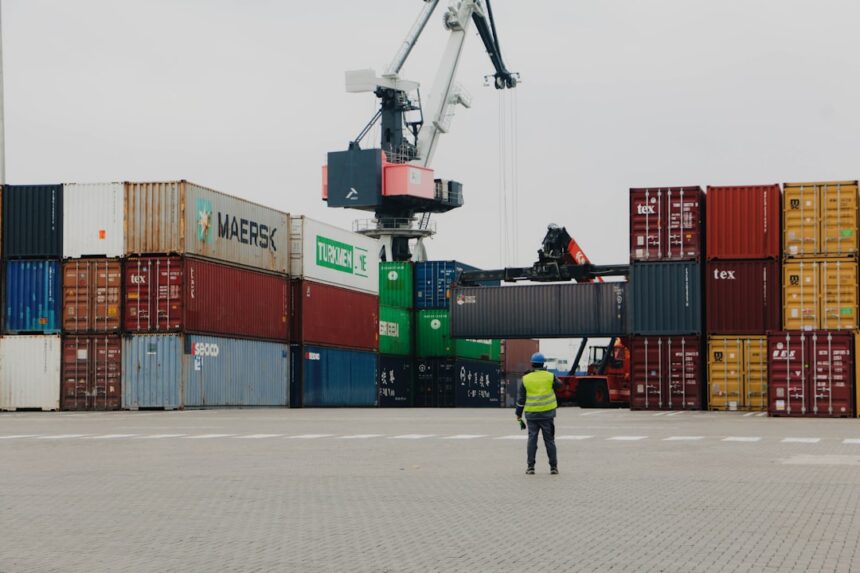
You are at the forefront of maritime law enforcement, tasked with a mission that grows increasingly complex by the day. The vastness of the oceans, the sheer volume of global trade, and the ever-evolving nature of illicit activities present continuous challenges. Your efforts to secure our waterways, combat smuggling, intercept illegal goods, and ensure compliance with international regulations are critical. However, traditional methods of detection and verification can be time-consuming, resource-intensive, and sometimes, simply insufficient to keep pace with sophisticated criminal enterprises. This is where you stand to benefit significantly from technological advancements, and among them, Cargo DNA technology emerges as a transformative tool poised to revolutionize your approach to maritime law enforcement.
Understanding the Core of Cargo DNA Technology
To effectively leverage this innovation, you must first grasp its fundamental principles. Cargo DNA is not about individual living organisms; rather, it refers to unique, synthetically created markers that are inherently undetectable to the human eye or standard scanning equipment. These markers act as invisible fingerprints, indelibly linked to specific shipments.
The Composition and Application of Synthetic Markers
- Custom Creation: You can envision these markers as microscopic particles, often inert and composed of materials like polymers or inorganic compounds. Their key characteristic is their individuality. Each batch of markers can be designed with a specific sequence or combination of elements, creating a unique signature that is statistically improbable to occur naturally or to be replicated by accidental means. This meticulous design process allows for the generation of a virtually infinite number of distinct identifiers.
- Invisible Identification: These markers are engineered to be invisible under normal conditions. They do not alter the visible properties of the cargo they are attached to – no color changes, no odor, no texture alteration. This stealth is crucial for maintaining the integrity of shipments and avoiding detection by those seeking to circumvent scrutiny.
- Secure Authentication: The unique signature of each marker is meticulously logged and secured in a database. This database acts as the ultimate verification system. When a shipment is tagged, its associated Cargo DNA marker and all relevant details – origin, destination, contents, shipper, receiver, and any other pertinent information – are recorded.
The Mechanism of Tagging and Tracking
- Discreet Application: The application of Cargo DNA markers is designed to be discreet and integrated into the supply chain process. They can be incorporated into packing materials, applied directly to shipping containers, or even integrated into cargo itself in a way that is not readily apparent. The process is often automated, minimizing human intervention and potential for error or tampering.
- Detection and Verification: At checkpoints, during inspections, or through aerial or maritime surveillance, specialized detection equipment can be deployed. This equipment is designed to identify the unique spectral or chemical properties of the Cargo DNA markers. Upon detection, the marker can be scanned, and its unique identifier retrieved from the secure database.
- Data Retrieval and Analysis: The scanned identifier acts as a key to unlock a wealth of information about the specific shipment. You can immediately access its complete manifest, origin, destination, and any associated risk assessments or flagged alerts. This rapid access to verified information is a significant departure from traditional investigative methods.
Cargo DNA technology is becoming increasingly significant in maritime law enforcement, offering innovative solutions for tracking and verifying the authenticity of cargo shipments. A related article that delves deeper into this topic can be found at this link, where it discusses the implications of Cargo DNA technology on security measures and its potential to combat smuggling and fraud in the shipping industry. This advancement not only enhances the efficiency of cargo inspections but also strengthens the overall integrity of maritime trade.
Enhancing Maritime Border Security
Your role in securing maritime borders is paramount. The scale of operations, the constant flow of vessels, and the potential for sophisticated smuggling operations require advanced tools. Cargo DNA technology offers a powerful new layer of defense.
Interdicting Illicit Cargo at Sea
- Real-time Identification of Suspicious Vessels: Imagine a scenario where your patrol vessels can scan incoming cargo or containers from a distance. Detection of a Cargo DNA marker associated with a flagged shipment – perhaps one that has been reported stolen, is carrying prohibited items, or originates from a high-risk area – can trigger immediate suspicion and targeted inspection. This moves you from a reactive to a proactive stance.
- Deterrence and Prevention: The knowledge that cargo can be invisibly tagged and its true provenance easily verified can act as a significant deterrent to smugglers. Knowing that their illicit activities are much more likely to be discovered can lead to a reduction in attempted offenses.
- Minimizing False Positives: By providing a direct, verifiable link to the shipment’s provenance, Cargo DNA technology can help distinguish legitimate cargo from suspicious activities. This can reduce the time and resources spent on inspecting containers that are ultimately found to be compliant, allowing you to focus your efforts more effectively.
Securing Ports and Terminals
- Streamlining Inspections: Within the bustling environment of a port, the ability to quickly and accurately verify the identity and origin of cargo is invaluable. You can direct your inspection teams to containers exhibiting specific Cargo DNA markers, or conversely, to those where a marker is expected but absent, indicating potential tampering.
- Combating Contraband and Illegal Materials: Whether it’s weapons, narcotics, counterfeit goods, or even hazardous materials, the ability to trace their origin and destination with such precision directly hinders their movement. If a specific shipment of illicit goods is tagged with a unique Cargo DNA marker, and that marker is detected in a port, you can immediately initiate a thorough investigation.
- Preventing Transshipment of Contraband: Criminals often attempt to obscure the origin of illegal goods by transshipping them through multiple ports. Cargo DNA technology, by providing an immutable link to the initial origin, can effectively break this chain of deception. You can verify the declared origin of a shipment and compare it to the Cargo DNA record, immediately highlighting any discrepancies.
Streamlining Supply Chain Transparency and Traceability
The global nature of maritime trade necessitates a system that can keep pace with the complexity. Traditional paper-based documentation is prone to forgery and errors. Cargo DNA offers a digital, verifiable, and immutable layer of transparency.
Verifying Cargo Authenticity
- Combating Counterfeiting and Product Piracy: For high-value goods, luxury items, or critical components, counterfeit versions can flood the market, undermining legitimate businesses and potentially posing risks to consumers. A unique Cargo DNA marker can definitively prove the authenticity of a product, linking it directly to its authorized manufacturer.
- Ensuring Product Integrity: For sensitive goods like pharmaceuticals, food products, or chemicals, ensuring that they have not been tampered with, diluted, or exposed to harmful substances during transit is critical. Cargo DNA markers can be used to verify that the cargo has remained untouched and that its integrity has been maintained throughout the journey.
- Facilitating Recalls and Investigations: In the unfortunate event of a product defect or contamination, rapid identification of affected batches is crucial. Cargo DNA technology allows for swift tracing of the specific shipments and products involved, enabling targeted recalls and minimizing potential harm.
Building Trust in the Global Trade Network
- Legitimizing Trade Routes: By providing a robust and verifiable system of cargo identification, Cargo DNA technology can contribute to greater trust in established trade routes. This can encourage greater international cooperation and facilitate smoother commercial operations.
- Supporting International Agreements: Compliance with international trade agreements and sanctions often requires meticulous documentation and verification. Cargo DNA provides an objective, data-driven method to ensure adherence to these regulations.
- Enhancing Risk Management for Insurers and Financiers: Businesses involved in maritime trade, including insurers and financiers, rely on accurate information about cargo. The transparency offered by Cargo DNA can significantly improve risk assessment and reduce potential financial losses.
Improving Investigations and Evidence Gathering
Your investigative work often hinges on the ability to gather irrefutable evidence. Traditional methods can be labor-intensive and may not always yield conclusive results. Cargo DNA technology provides a new dimension to your investigative capabilities.
Identifying and Apprehending Perpetrators
- Linking Cargo to Criminal Operations: When illicit cargo is discovered, and it is tagged with a Cargo DNA marker, your investigation can quickly pivot to identifying the associated entity or individual whose marker designation is linked to that shipment. This can provide a direct lead to the source of the illegal activity.
- Establishing a Chain of Custody: In legal proceedings, a clear and unbroken chain of custody for evidence is essential. Cargo DNA provides an immutable digital record of a shipment’s journey and its verification points, strengthening the presentation of evidence.
- Facilitating International Cooperation in Investigations: When international criminal networks are involved, cross-border investigations can be complex. Cargo DNA, when adopted globally, can create a common language for tracing illicit shipments across different jurisdictions, simplifying collaboration between law enforcement agencies.
Disrupting Smuggling Networks
- Targeting Key Nodes in the Supply Chain: By successfully tracing tagged illicit cargo back to specific points of origin or distribution, you can identify and disrupt key nodes within smuggling networks. This can involve targeting warehouses, intermediary distributors, or even the individuals responsible for tagging or untagging shipments.
- Uncovering Concealed Smuggling Methods: Sophisticated smugglers often go to great lengths to conceal their activities. The invisible nature of Cargo DNA markers means that even if external packaging is altered or replaced, the underlying marker can remain, providing a crucial link to the original shipment.
- Gathering Intelligence for Future Operations: Each successful interdiction and tracing event contributes to a growing intelligence database. This data can inform future risk assessments, resource allocation, and the development of more targeted interdiction strategies.
Cargo DNA technology is emerging as a pivotal tool in maritime law enforcement, enhancing the ability to trace and identify illicit cargo. This innovative approach not only aids in combating smuggling but also strengthens the overall security of maritime operations. For further insights into the implications of such technologies in maritime security, you can explore a related article on the topic at In the War Room, which discusses the broader context of technological advancements in law enforcement.
The Future of Maritime Law Enforcement with Cargo DNA
The integration of Cargo DNA technology into your operations is not a distant possibility; it is an ongoing evolution. Embracing this innovation will position you at the cutting edge of maritime security and law enforcement.
Challenges and Considerations for Adoption
- Standardization and Interoperability: For the full benefits of Cargo DNA to be realized, you will need to advocate for and work towards international standards for marker design, database management, and detection protocols. This will ensure that information can be shared seamlessly across different agencies and countries.
- Cost and Infrastructure Investment: The development and deployment of specialized detection equipment and secure database systems will require significant investment. Your efforts will involve securing the necessary funding and developing the infrastructure to support this technology.
- Training and Human Capital Development: Your personnel will require comprehensive training on the principles of Cargo DNA, the operation of detection equipment, and the interpretation of data. Investing in human capital development is as crucial as investing in the technology itself.
The Path Forward: Collaboration and Innovation
- Public-Private Partnerships: The development and implementation of Cargo DNA technology is likely to involve close collaboration between government agencies and private sector companies specializing in materials science, biotechnology, and data security. Exploring these partnerships will be essential.
- Continuous Research and Development: The technology is still evolving. You will need to stay abreast of advancements in marker design, detection sensitivity, and data analytics to ensure your capabilities remain at the forefront. Encouraging ongoing research and development will be critical.
- Global Adoption and Information Sharing: The true power of Cargo DNA lies in its global applicability. You have a crucial role in advocating for its adoption by other nations and in fostering secure platforms for information sharing to combat transnational criminal activity.
By embracing Cargo DNA technology, you are not simply adopting a new tool; you are fundamentally transforming your approach to maritime law enforcement. You are moving towards a future where suspicion can be replaced by verified data, where evasive tactics are rendered obsolete by invisible identifiers, and where the security of our oceans is bolstered by an unprecedented level of transparency and accountability. Your commitment to leveraging these advancements will be instrumental in maintaining the integrity of global trade and safeguarding our maritime domain.
FAQs
What is cargo DNA technology in maritime law enforcement?
Cargo DNA technology in maritime law enforcement refers to the use of DNA analysis to identify and track illegal goods, such as drugs or wildlife products, that are being transported by sea. This technology allows law enforcement agencies to gather evidence and prosecute those involved in illegal trafficking.
How does cargo DNA technology work in maritime law enforcement?
Cargo DNA technology works by collecting samples from the cargo being transported and analyzing the DNA of the goods. This analysis can help determine the origin of the goods, as well as provide evidence of illegal trafficking activities. The technology can also be used to verify the authenticity of legal goods, such as seafood or timber, to prevent fraud and ensure compliance with regulations.
What are the benefits of using cargo DNA technology in maritime law enforcement?
The use of cargo DNA technology in maritime law enforcement provides several benefits, including the ability to accurately identify and track illegal goods, gather evidence for prosecution, and deter criminal activities. This technology also helps to protect endangered species and prevent the illegal trade of wildlife products, contributing to conservation efforts.
Are there any limitations to cargo DNA technology in maritime law enforcement?
While cargo DNA technology is a valuable tool for law enforcement, it does have limitations. For example, the technology may be costly to implement and require specialized training for personnel. Additionally, the effectiveness of the technology may be impacted by factors such as the condition of the cargo or the presence of contaminants.
How is cargo DNA technology regulated in maritime law enforcement?
The use of cargo DNA technology in maritime law enforcement is regulated by international and national laws, as well as industry standards and guidelines. These regulations govern the collection, analysis, and use of DNA data, as well as the protection of privacy and the rights of individuals and businesses involved in maritime trade. Compliance with these regulations is essential to ensure the ethical and legal use of cargo DNA technology.