Dynamic positioning (DP) ship technology, a sophisticated system enabling vessels to maintain a precise position and heading automatically using their own thrusters and propellers, has undergone substantial advancements since its inception. This technology is critical for a diverse range of offshore operations, including oil and gas exploration, subsea construction, cable laying, and scientific research. The evolution of DP systems can be likened to the transformation of a rudimentary compass to a global satellite navigation system – a journey from basic courseholding to intricate spatial control.
The foundational element of any DP system is its control architecture, the brain that processes data and commands the thrusters. The initial iterations of DP systems relied on relatively simple proportional-integral-derivative (PID) control loops. While effective for maintaining a general position, these systems lacked the sophistication to handle complex environmental forces or dynamic operational requirements.
Early PID Implementations
First-generation DP systems primarily utilized PID controllers. These controllers calculated an output based on the error between the desired and actual position and heading. The proportional term addressed the current error, the integral term accounted for past errors, and the derivative term anticipated future errors. This approach, while fundamental, exhibited limitations in scenarios involving rapidly changing sea states or significant current variations. Imagine a rower constantly adjusting their stroke based on an immediate visual cue of drifting; this is analogous to a basic PID in a steady environment.
Transition to Kalmin Filtering and State Estimation
A major leap forward occurred with the integration of Kalman filtering. This recursive algorithm, introduced in the 1960s, allows for the estimation of the true state of a system (e.g., vessel position, velocity, and environmental disturbances) from a series of inaccurate and uncertain measurements. By combining sensor data with a mathematical model of the vessel’s dynamics, Kalman filters provide a more accurate and smoothed estimate of the vessel’s position and velocity, significantly improving the stability and responsiveness of the DP system. This is akin to a seasoned navigator using multiple instruments and their understanding of ocean currents to pinpoint their exact location, even in foggy conditions.
Advanced Model-Predictive Control (MPC)
More recently, Model-Predictive Control (MPC) has gained prominence in high-end DP systems. MPC works by predicting the vessel’s future behavior based on a dynamic model and optimizing control actions over a prediction horizon. This allows the system to proactively anticipate environmental changes and vessel responses, leading to smoother and more energy-efficient operations. MPC can also incorporate operational constraints (e.g., thruster limits, power availability) directly into its optimization problem, further enhancing its capabilities. Consider a chess master planning several moves ahead, not just reacting to the immediate play; MPC operates with a similar foresight.
Artificial Intelligence and Machine Learning Integration
The integration of artificial intelligence (AI) and machine learning (ML) is an emerging trend. These technologies can optimize thruster allocation, predict power consumption, and even adapt to novel environmental conditions by learning from historical data. For instance, ML algorithms can identify patterns in wave spectra and vessel responses to fine-tune thruster commands, leading to reduced fuel consumption and wear on propulsion systems. This represents a shift from explicit rule-based control to adaptive, data-driven optimization.
Dynamic positioning (DP) technology has revolutionized maritime operations, allowing vessels to maintain their position and heading using automated systems. For a deeper understanding of the historical development of this innovative technology, you can explore the article titled “The Evolution of Dynamic Positioning Systems” available at In The War Room. This article provides insights into the milestones and advancements that have shaped the DP systems we rely on today, highlighting their significance in various marine applications.
Enhancements in Sensor Technology and Redundancy
The accuracy and reliability of a DP system are fundamentally dependent on the quality and robustness of its sensor suite. Over the decades, significant improvements have been made in all aspects of position reference systems (PRS), heading references, and environmental sensors.
Global Navigation Satellite Systems (GNSS) Advancements
Global Navigation Satellite Systems (GNSS), including GPS, GLONASS, Galileo, and BeiDou, form the backbone of modern DP PRS. Dual-frequency receivers and differential GNSS (DGNSS) corrections, such as those provided by real-time kinematic (RTK) and precise point positioning (PPP) services, have dramatically improved positional accuracy from meters to mere centimeters. The implementation of multiple independent GNSS receivers provides crucial redundancy, mitigating the risk of single-point failure. Imagine navigating a complex path with not just one, but several highly accurate maps constantly triangulating your position.
Acoustic Position Reference Systems (APRS) Evolution
Acoustic Position Reference Systems (APRS), such as hydro-acoustic position reference (HPR) and ultra-short baseline (USBL) systems, remain vital, especially for subsea operations where GNSS signals are unavailable. Advancements include wider operational envelopes, improved rejection of acoustic noise, and the ability to track multiple transponders simultaneously. These systems act as an underwater beacon, guiding the vessel with precision where satellite signals cannot penetrate.
Inertial Navigation Systems (INS) Integration
Inertial Navigation Systems (INS), consisting of accelerometers and gyroscopes, provide continuous position and attitude information independently of external references. When integrated with GNSS (GNSS-INS hybrid systems), they offer highly stable and accurate motion data, crucial for maintaining heading and reducing the impact of short-term GNSS outages. This integration creates a robust system that can maintain accurate positioning even if external references are momentarily compromised, much like a steady hand guiding a pen across a page even as the table subtly shifts.
Environmental Sensing Enhancements
Accurate measurement of environmental forces is paramount for effective DP. Modern systems incorporate high-resolution wind sensors, current profilers (e.g., acoustic Doppler current profilers – ADCPs), and wave radars. These sensors provide real-time data on wind speed and direction, current velocity and profile, and wave height and period, allowing the DP system to proactively compensate for environmental disturbances. Without accurate environmental data, a DP system would be akin to driving in a blizzard without windshield wipers or headlights.
Redundancy and Reliability Standards
The industry has embraced rigorous redundancy requirements, particularly for vessels operating in critical or hazardous environments. DP systems are classified into different equipment classes (e.g., DP Class 1, 2, 3) based on their redundancy levels. This involves independent power generation, distribution, thruster units, and control systems, ensuring that a single failure does not compromise the vessel’s ability to maintain position. This layering of backup systems provides a safety net, like multiple parachutes in an emergency.
Advancements in Thruster and Propulsion Systems
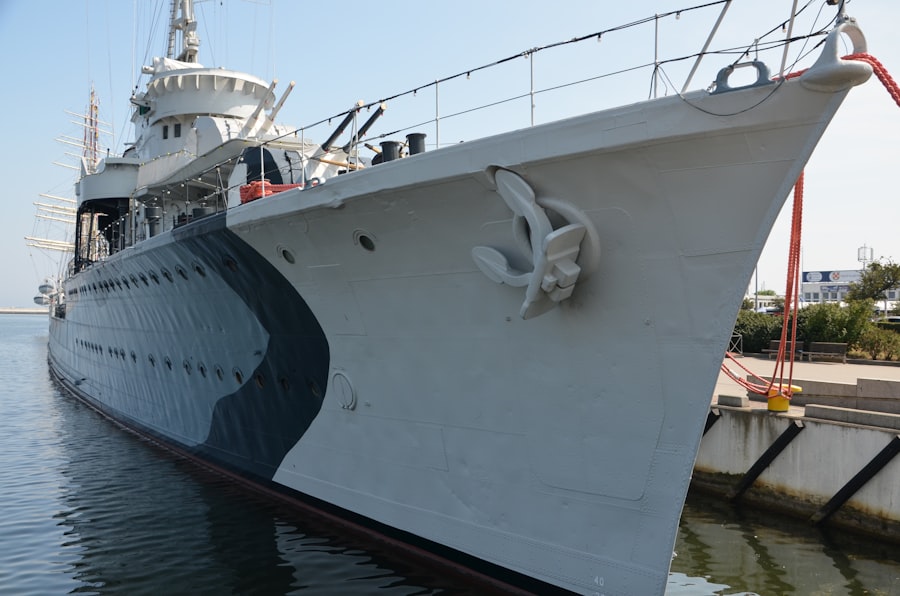
The physical components that provide the force to keep a vessel on station – the thrusters and propellers – have also seen significant technological evolution, contributing to enhanced efficiency, maneuverability, and reliability.
Azimuth Thrusters and Propeller Design
Traditional fixed-pitch propellers are giving way to more sophisticated azimuth thrusters, which can be rotated 360 degrees around a vertical axis. This allows for vectorial thrust in any direction, providing superior maneuverability and eliminating the need for a rudder. Advances in propeller design, including ducted propellers and contra-rotating propellers, optimize thrust production and reduce cavitation, leading to higher efficiency and reduced noise and vibration. This is analogous to replacing multiple fixed nozzles with a single, highly articulate jet.
Electric and Hybrid Propulsion Systems
The shift towards electric and hybrid propulsion systems is a major trend. Diesel-electric power plants provide flexible power distribution to thrusters and other shipboard systems, allowing for optimized engine loading and reduced fuel consumption. Hybrid systems, incorporating batteries, can provide instantaneous power for rapid thruster response and also allow for peak shaving and silent operations. Such systems offer a “power on demand” capability, enhancing the responsiveness and fuel efficiency of DP operations.
Condition Monitoring and Predictive Maintenance
Modern thruster systems are equipped with advanced condition monitoring sensors that continuously track performance parameters such as vibration, temperature, and bearing wear. This data is fed into predictive maintenance algorithms, allowing operators to anticipate potential failures and schedule maintenance proactively, minimizing downtime and optimizing operational costs. This proactive approach is akin to a doctor monitoring vital signs to prevent illness rather than merely treating symptoms.
Integration with Ship Management Systems
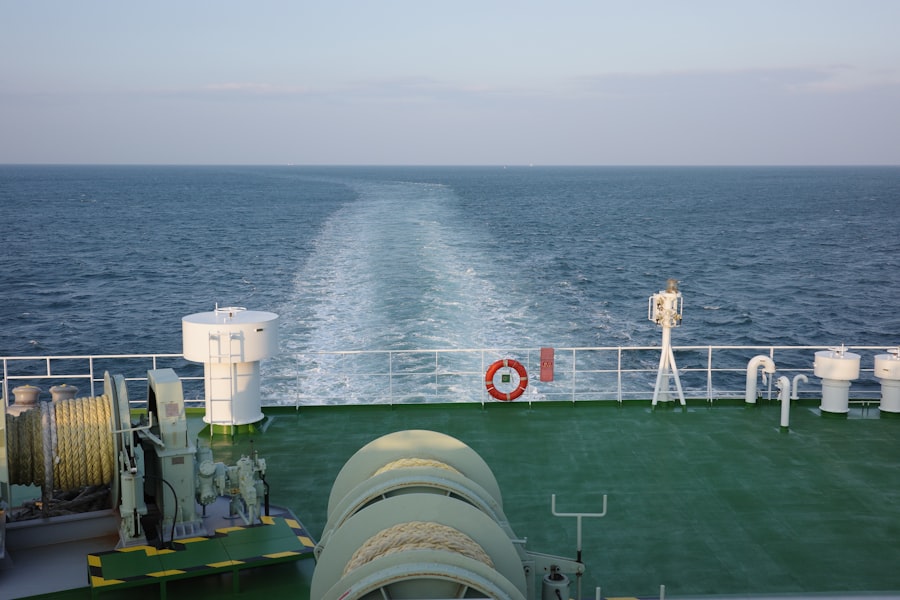
The effectiveness of a DP system is amplified when it is seamlessly integrated with other critical ship management systems. This convergence leads to holistic operational control and improved decision-making.
Integrated Bridge Systems (IBS)
Modern DP systems are often integrated into comprehensive Integrated Bridge Systems (IBS). This provides a single, unified interface for navigation, communication, and dynamic positioning, reducing operator workload and improving situational awareness. The DP console becomes an integral part of the bridge, providing operators with a complete picture of the vessel’s status and surrounding environment. This creates a central command center, much like a control tower overseeing all aspects of airport operations.
Power Management Systems (PMS)
Close integration with the vessel’s Power Management System (PMS) is critical. The PMS optimizes the distribution of electrical power to thrusters, main engines, and auxiliary systems, ensuring sufficient power is always available for DP operations while minimizing fuel consumption. In the event of a power anomaly, the PMS can take proactive measures to shed non-essential loads, safeguarding the core DP functionality. Think of a sophisticated electrical grid, intelligently allocating power to essential services while preparing for contingencies.
Data Logging and Performance Analysis
Advanced DP systems are equipped with extensive data logging capabilities, recording environmental conditions, vessel responses, thruster commands, and power consumption. This data is invaluable for post-mission analysis, allowing operators and engineers to identify areas for improvement in operational procedures, system tuning, and maintenance planning. This continuous feedback loop drives incremental improvements, refining the system over time like a craftsman perfecting their technique.
Dynamic positioning ship technology has evolved significantly since its inception, playing a crucial role in modern maritime operations. For those interested in a deeper exploration of this fascinating subject, a related article can be found at this link, which delves into the historical advancements and applications of dynamic positioning systems in various marine environments. Understanding the history of this technology not only highlights its importance but also showcases the innovations that have shaped the shipping industry today.
Future Trends and Challenges
| Year | Milestone | Description | Key Development |
|---|---|---|---|
| 1961 | Concept Introduction | Dynamic Positioning (DP) concept first introduced by the US Navy for station-keeping of ships. | Basic DP principles established |
| 1966 | First DP System Installed | First commercial DP system installed on the drilling vessel “CUSS I”. | Use of thrusters and sensors for position control |
| 1970s | Advancements in Control Systems | Introduction of computer-based control systems improving DP accuracy and reliability. | Digital control algorithms developed |
| 1980s | DP Classifications Established | Classification societies define DP system classes (Class 1, 2, and 3) based on redundancy and reliability. | Standardization of DP safety levels |
| 1990s | Integration with GPS | Integration of GPS technology enhances position reference accuracy. | Improved positioning precision |
| 2000s | Enhanced Sensor Fusion | Use of multiple sensors (gyrocompasses, wind sensors, motion reference units) for robust DP operation. | Increased system reliability and fault tolerance |
| 2010s | Automation and Remote Operation | Advances in automation allow for semi-autonomous and remote DP operations. | Reduced human intervention |
| 2020s | AI and Machine Learning Integration | Emerging use of AI to optimize DP system performance and predictive maintenance. | Enhanced operational efficiency and safety |
The trajectory of DP technology continues to point towards increased autonomy, enhanced safety, and greater environmental efficiency. However, several challenges must be addressed.
Autonomous Operations
The long-term vision for DP technology includes a higher degree of autonomy. While fully autonomous DP vessels are not yet commonplace, advancements in AI and robotics are paving the way for systems that can operate with minimal human intervention, especially in routine or predictable conditions. This would free up human operators to focus on more complex decision-making and oversight. Imagine a self-driving car, but on the open ocean, managing its own positioning with unparalleled precision.
Cyber Security
As DP systems become more integrated and reliant on digital networks, cybersecurity emerges as a critical challenge. Protecting these systems from external threats, such as hacking or malware, is paramount to prevent catastrophic failures and ensure safe operations. This demands robust cybersecurity protocols and continuous vigilance. A vessel’s DP system is its digital anchor; its integrity is non-negotiable.
Remote Operations and Digital Twins
The development of remote operation centers and “digital twins” is gaining momentum. A digital twin is a virtual replica of a physical DP system, allowing for simulation, testing, and optimization in a virtual environment. This can facilitate remote monitoring, troubleshooting, and even remote control of DP operations, reducing the need for personnel on board. This creates a virtual sandbox where scenarios can be tested and solutions found before deployment in the real world.
Environmental Regulations and Sustainability
Increasingly stringent environmental regulations are driving the demand for more fuel-efficient and lower-emission DP systems. This includes the adoption of alternative fuels, advanced battery technologies, and further optimization of thruster allocation algorithms to minimize energy consumption. The drive towards sustainability is transforming DP technology from a pure positioning tool to an environmentally conscious operational system.
In conclusion, dynamic positioning ship technology has traversed a remarkable evolutionary path, driven by continuous innovation in control systems, sensor technology, propulsion, and system integration. From its humble beginnings as a basic position-holding mechanism, it has transformed into a sophisticated, highly redundant, and increasingly intelligent system critical for a vast array of offshore activities. The ongoing advancements, particularly in AI, autonomy, and cybersecurity, promise an even more capable and resilient future for DP operations, making the vast, dynamic canvas of the ocean a more predictable and accessible workspace.
STOP: The Fake Mining Ship That Almost Started WW3
FAQs
What is dynamic positioning technology in ships?
Dynamic positioning (DP) technology is a computer-controlled system used on ships and vessels to automatically maintain their position and heading by using their own propellers and thrusters. This allows the vessel to stay stationary or move precisely without anchoring, even in challenging sea conditions.
When was dynamic positioning technology first developed?
Dynamic positioning technology was first developed in the 1960s. The initial systems were created to support offshore drilling operations, where maintaining a vessel’s position over a wellhead was critical.
Who were the pioneers in the development of dynamic positioning systems?
The development of dynamic positioning systems involved several key contributors, including engineers from companies like Kongsberg and the Norwegian company Marin Teknikk. Early research and development were also supported by offshore oil companies seeking better station-keeping solutions.
How has dynamic positioning technology evolved over time?
Since its inception, dynamic positioning technology has evolved significantly. Early systems were relatively simple and relied on manual input, while modern DP systems use advanced sensors, GPS, and computer algorithms to provide highly accurate and automated control. Improvements in thruster design and integration with other ship systems have also enhanced performance.
What are the main applications of dynamic positioning technology today?
Today, dynamic positioning technology is widely used in offshore oil and gas exploration, subsea construction, diving support, cable laying, and scientific research vessels. It enables these vessels to operate safely and efficiently in deep water and harsh environments where anchoring is impractical or impossible.