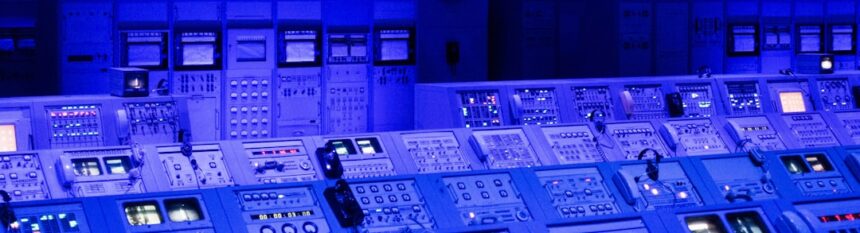
The Cold War, a period of geopolitical tension between the United States and the Soviet Union and their respective allies, was characterized by an arms race, proxy wars, and an intense intelligence struggle. A cornerstone of this intelligence contest was the interception and decryption of enemy communications, a field that saw immense technological innovation. The ability to listen in on the adversary’s plans, capabilities, and intentions provided a critical advantage, often shaping strategic decisions and preventing direct conflict. This article explores the significant advancements in signal interception technology that emerged during this era, detailing the methods, tools, and their overarching impact.
The practice of listening to enemy communications predates the Cold War, but the post-World War II environment, with its rapid advancements in electronics and the ideological division of the world, amplified its importance. Early signal intelligence (SIGINT) efforts were often rudimentary but laid the groundwork for the sophisticated systems that would follow.
From Radio Operators to Direction Finding
Initially, signal interception largely relied on skilled radio operators tuning into enemy frequencies. These operators, often proficient in multiple languages, would transcribe messages, which were then analyzed for intelligence value.
- Human Element: The quality of early SIGINT was heavily dependent on the individual operator’s skill, hearing, and linguistic abilities. This was a critical bottleneck that technological advancements sought to overcome.
- Direction Finding (DF) Systems: While not directly intercepting content, early DF systems were vital in pinpointing the location of enemy transmitters. By triangulating signals received from multiple stations, intelligence services could determine the origin of broadcasts, providing valuable insights into enemy unit deployments and movements. This capability, though simple in concept, offered a foundational layer of intelligence gathering.
The Impact of Analog Computing
The nascent field of analog computing played a significant role in processing intercepted signals. These machines, while cumbersome by modern standards, could perform calculations necessary for signal analysis, frequency hopping pattern detection, and decryption attempts. They represented a crucial step towards automating aspects of signal intelligence.
- Early Cryptanalysis: Analog computers, paired with human expertise, assisted in breaking simple ciphers. This often involved statistical analysis of letter frequencies and pattern recognition, tasks that were laborious and time-consuming when performed manually.
- Spectrum Analysis: Early analog spectrum analyzers allowed intelligence agencies to visualize the frequency content of intercepted signals, helping to identify modulation types and potential hidden channels. This was akin to seeing the invisible soundscape of enemy communications.
During the Cold War, signal intercept technology played a crucial role in intelligence gathering and military strategy, allowing nations to monitor communications and gain insights into enemy operations. For a deeper understanding of the advancements in this field and their implications, you can read the article on Cold War espionage techniques at In The War Room. This resource provides a comprehensive overview of how signal intercept technology evolved and its impact on the geopolitical landscape during this tense period in history.
The Age of Sophisticated Airborne and Seaborne Platforms
As the Cold War progressed, the need to intercept signals from deeper within enemy territory or from inaccessible maritime regions led to the development of specialized platforms. These platforms, equipped with ever more powerful interception gear, became the eyes and ears of intelligence agencies.
Aerial Reconnaissance: The U-2 and Beyond
High-altitude reconnaissance aircraft, such as the U-2, were not only used for photographic intelligence but also carried sophisticated SIGINT packages. These aircraft could fly beyond the reach of early air defenses, allowing them to gather intelligence from deep inside Soviet airspace.
- U-2 SIGINT Missions: While famous for its photographic capabilities, the U-2 also carried sensors designed to intercept radar emissions, telemetry from missile tests, and radio communications. The sheer altitude allowed for a wide operational footprint.
- RC-135 and EC-121: Later in the Cold War, dedicated SIGINT aircraft like the RC-135 “Rivet Joint” and the EC-121 “Warning Star” became pivotal. These aircraft, essentially flying intelligence gathering stations, were packed with arrays of antennas and dedicated intelligence analysts. They could monitor vast swathes of electromagnetic spectrum, acting as aerial vacuums for enemy signals. The development of these platforms marked a shift from opportunistic interception to systematic, continuous monitoring.
Naval Intelligence Gathering: Submarines and Surface Vessels
The vastness of the oceans presented both a challenge and an opportunity for SIGINT. Submarines and specially equipped surface vessels were deployed to intercept signals emanating from coastal installations, naval vessels, and even submerged communication cables.
- “Spy Ships”: Converted fishing trawlers or purpose-built surveillance ships, often disguised as meteorological or oceanographic research vessels, would loiter near enemy coastlines. These ships were equipped with parabolic antennas, arrays of receivers, and sophisticated recording equipment. The USS Pueblo incident, involving the capture of an American spy ship by North Korea, underscores the inherent risks and strategic importance of these operations.
- Submarine Cable Tapping: One of the most audacious SIGINT operations involved tapping into underwater communication cables. Operation Ivy Bells, a joint US Navy and NSA operation, saw submarines secretly attach listening devices to Soviet undersea cables in the Sea of Okhotsk. This was akin to placing a secret ear directly onto the enemy’s main telephone line.
The Digital Revolution and Automated Analysis

The advent of digital technology fundamentally transformed SIGINT, moving it from a largely manual and analog process to an automated, high-volume operation. This was a paradigm shift, allowing for the processing of unprecedented amounts of intercepted data.
The Rise of Computers in Cryptanalysis
Digital computers allowed for brute-force attacks on ciphers, the rapid analysis of complex cryptographic patterns, and the management of vast databases of intercepted communications. This marked a departure from the more intuitive, human-centric methods of earlier cryptanalysis.
- Electronic Frontier: The ability of computers to perform millions of calculations per second allowed intelligence agencies to tackle increasingly complex encryption schemes. This created an ongoing cat-and-mouse game between cryptographers and cryptanalysts.
- Pattern Recognition Algorithms: Computers were programmed with algorithms to identify recurring patterns in encrypted messages, even if the content remained unreadable. This helped in identifying the specific encryption systems being used, providing clues for focused decryption efforts.
Automation of Data Collection and Storage
Digital technology facilitated the automatic collection, categorization, and storage of intercepted signals. Instead of relying on manual transcription, digital recorders could capture vast quantities of data, which could then be sifted through by specialized software.
- Database Management: The sheer volume of intercepted communications necessitated advanced database management systems. These systems allowed for efficient indexing, retrieval, and cross-referencing of intelligence, transforming raw data into actionable insights.
- Real-time Analysis: Digital systems enabled near real-time analysis of intercepted signals, crucial for tracking dynamic situations like military exercises or missile launches. This was a critical leap from the delayed intelligence gathering of the analog era.
Overcoming Obstacles: Jamming, Stealth, and Countermeasures

The intelligence struggle was not a one-sided affair. As one side developed new interception techniques, the other innovated in countermeasures to protect its communications. This constant technological arms race fueled further advancements in SIGINT.
Electronic Countermeasures (ECM)
Nations developed sophisticated electronic countermeasures (ECM) to disrupt or degrade enemy SIGINT efforts. This included jamming enemy receivers, employing frequency hopping, and using spread spectrum techniques to make signals harder to detect and intercept.
- Jamming Techniques: High-power transmitters were used to flood enemy listening devices with noise, effectively blinding their electronic ears. This was an ongoing battle between the power of interceptors and the power of jammers.
- Frequency Hopping Spread Spectrum (FHSS): This technique involved rapidly changing the transmission frequency across a wide band, making it extremely difficult for an interceptor tuned to a single frequency to reliably capture the entire message. It was like trying to catch a highly agile, invisible bird.
- Direct Sequence Spread Spectrum (DSSS): DSSS spread a signal over a much wider frequency band than necessary, making it appear as low-power noise to a casual observer. Only a receiver knowing the specific spreading code could decipher the actual message, an advanced form of electronic camouflage.
Stealth Technology and Low Probability of Intercept (LPI)
Concurrent with developed SIGINT, efforts were made to design communication systems with Low Probability of Intercept (LPI). This meant designing signals that were intrinsically difficult for an adversary to detect, let alone intercept and decrypt.
- Adaptive Beamforming: Antennas could be designed to focus their energy into very narrow beams, directly at the intended receiver, rather than broadcasting widely. This reduced the ‘spillage’ of signals that an eavesdropper could pick up.
- Burst Transmissions: Transmitting messages in very short, high-speed bursts significantly reduced the time available for an interceptor to detect and capture the signal reliably. It was like a lightning flash of information, gone before an eye could truly focus on it.
During the Cold War, signal intercept technology played a crucial role in intelligence gathering and military strategy. The advancements in this field not only shaped the tactics used by both the United States and the Soviet Union but also laid the groundwork for modern surveillance techniques. For a deeper understanding of how these technologies evolved and their impact on global politics, you can explore a related article that discusses the intricacies of Cold War espionage at this link.
The Legacy of Cold War SIGINT: Modern Applications and Future Directions
| Technology | Purpose | Key Features | Notable Usage | Time Period |
|---|---|---|---|---|
| ECHELON | Global signals intelligence (SIGINT) interception | Satellite interception, automated keyword filtering, global network | Intercepting Soviet communications and diplomatic messages | 1960s – Present |
| Operation Ivy Bells | Undersea cable tapping for Soviet naval communications | Submarine-deployed tapping devices, covert operations | Intercepting Soviet Navy underwater communications | 1970s – 1980s |
| AN/FLR-9 “Elephant Cage” | High-frequency direction finding (HFDF) | Large circular antenna arrays, triangulation of signals | Tracking Soviet missile tests and military transmissions | 1960s – 1990s |
| VENONA Project | Decryption of Soviet encrypted messages | Cryptanalysis of one-time pad ciphers, codebreaking | Exposing Soviet espionage in the US | 1940s – 1980s |
| U-2 Spy Plane | High-altitude reconnaissance and signal interception | High altitude flight, photographic and electronic surveillance | Gathering intelligence on Soviet missile sites and radar | 1950s – 1960s |
The technological advancements forged in the crucible of the Cold War left an indelible mark on the field of SIGINT, influencing modern intelligence gathering and everyday technologies.
From Battlefields to Browsers: Pervasive Surveillance
Many of the foundational principles and technologies developed for Cold War SIGINT have found their way into contemporary surveillance practices. The ability to automatically scan, analyze, and store vast amounts of electronic data is a direct descendant of Cold War innovations.
- Global Interception Networks: The infrastructure developed for global SIGINT during the Cold War, such as the ECHELON system, laid the groundwork for today’s widespread digital interception networks.
- Data Mining and AI: Modern intelligence agencies leverage advanced data mining techniques and artificial intelligence algorithms, direct successors to the computerized cryptanalysis and pattern recognition systems of the Cold War, to extract intelligence from the enormous volumes of digital communications generated daily.
Enduring Principles and Evolving Challenges
While the technology has evolved dramatically, the fundamental principles of SIGINT – the interception, analysis, and exploitation of electronic signals – remain constant. However, new challenges have emerged, particularly with the proliferation of end-to-end encryption and the complexity of modern communication networks.
- Quantum Computing Threat: The potential advent of quantum computing poses a significant future challenge to modern encryption standards. Just as digital computers revolutionized Cold War cryptanalysis, quantum computers could potentially break many of today’s most robust encryption algorithms.
- The Internet of Things (IoT): The massive expansion of IoT devices creates an unprecedented surface area for potential signal interception, but also an overwhelming volume of data to sift through. This presents both a challenge and an opportunity for future SIGINT development.
In conclusion, the Cold War was a fertile ground for innovation in signal interception technology. From rudimentary radio operators and direction-finding systems to sophisticated airborne platforms, digital cryptanalysis, and early attempts at stealth communications, each advancement was a response to the evolving intelligence landscape. These developments not only shaped the outcome of the Cold War but also laid the technological and methodological foundations for modern intelligence gathering, demonstrating how a protracted geopolitical struggle can serve as a powerful engine for technological progress. One might consider these advancements as the invisible battleground where the future of information warfare was first sculpted, a silent testament to human ingenuity in the face of geopolitical tension.
WATCH NOW ▶️ SHOCKING: Why the Seafloor Went Silent
FAQs
What was the primary purpose of signal intercept technology during the Cold War?
Signal intercept technology was used to monitor, collect, and analyze communications and electronic signals from adversaries to gather intelligence and gain strategic advantages.
Which countries were most involved in developing Cold War signal intercept technology?
The United States and the Soviet Union were the primary developers and users of signal intercept technology during the Cold War, although other countries like the United Kingdom and East Germany also played significant roles.
What types of signals were intercepted during the Cold War?
Intercepted signals included radio communications, telephone conversations, radar emissions, and encrypted messages transmitted via various electronic means.
How did signal intercept technology impact Cold War espionage?
Signal intercept technology greatly enhanced espionage capabilities by allowing intelligence agencies to eavesdrop on enemy communications, decode secret messages, and anticipate military or political moves.
What were some key technologies used in Cold War signal interception?
Key technologies included high-frequency radio receivers, satellite reconnaissance systems, cryptographic machines, and advanced antennas designed to capture and analyze electronic signals from long distances.