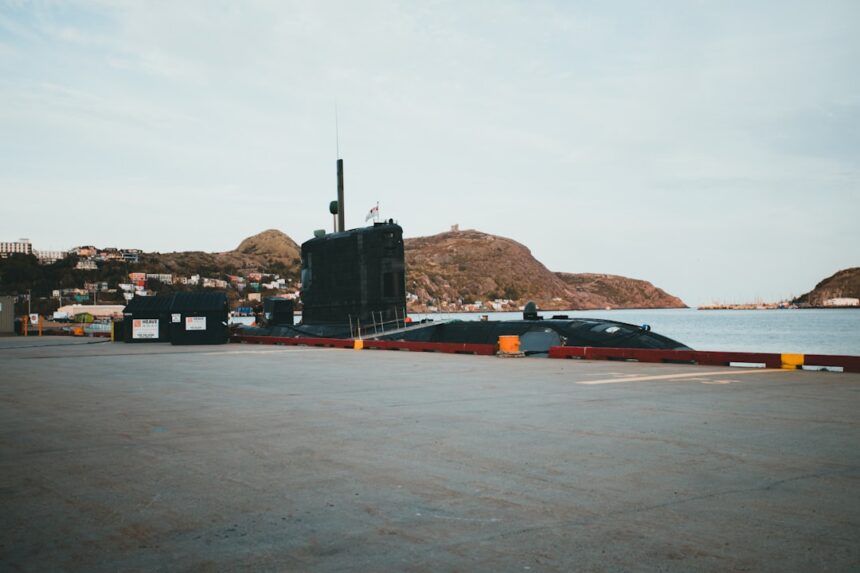
Submarine stealth technology represents a critical component of modern naval warfare, enabling submarines to operate undetected in hostile waters. This technology encompasses a range of innovations designed to minimize the acoustic, electromagnetic, and thermal signatures of submarines, allowing them to evade detection by enemy forces. The ability to remain hidden while gathering intelligence or launching strategic strikes has transformed the role of submarines in military operations, making them indispensable assets for naval powers around the globe.
As nations continue to invest in advanced stealth capabilities, the dynamics of maritime conflict are evolving, underscoring the importance of these underwater vessels. The essence of submarine stealth lies in its multifaceted approach to concealment. By employing advanced materials, innovative design principles, and cutting-edge technology, submarines can significantly reduce their visibility to sonar and radar systems.
This stealth capability not only enhances the survivability of submarines but also provides a strategic advantage in both offensive and defensive operations. As the geopolitical landscape shifts and threats become more complex, the development and refinement of submarine stealth technology remain at the forefront of naval strategy.
Key Takeaways
- Submarine stealth technology is crucial for modern naval warfare, enhancing covert operations and survivability.
- The U.S. has a long history of pioneering advancements in reducing acoustic signatures and noise from submarines.
- Innovations include advanced coatings, materials, propulsion systems, and integration of sophisticated sonar and sensor technologies.
- Artificial intelligence and secure communication systems play an increasing role in improving stealth capabilities.
- Future challenges involve evolving threats and maintaining global security balance through continued technological development.
History of American Submarine Stealth Technology
The evolution of American submarine stealth technology can be traced back to the early 20th century, with significant advancements occurring during World War
The United States recognized the potential of submarines as a formidable weapon against enemy shipping and naval forces. Early designs focused primarily on improving speed and firepower; however, as the war progressed, the need for stealth became increasingly apparent. The introduction of sound-dampening materials and hull designs aimed at reducing noise emissions marked the beginning of a new era in submarine warfare.
In the decades that followed, particularly during the Cold War, American submarine technology underwent a dramatic transformation. The development of nuclear-powered submarines allowed for longer missions and greater operational flexibility. Concurrently, advancements in stealth technology became paramount as the U.S.
Navy sought to counter the growing threat posed by Soviet submarines. Innovations such as anechoic coatings—specialized materials designed to absorb sound—were implemented to minimize acoustic signatures. This period laid the groundwork for modern stealth capabilities, establishing a legacy that continues to influence submarine design and strategy today.
The Importance of Submarine Stealth in Modern Warfare
In contemporary military operations, submarine stealth is not merely an advantage; it is a necessity. The ability to operate undetected allows submarines to gather intelligence, conduct surveillance, and launch precision strikes without revealing their position. This capability is particularly crucial in an era where adversaries are increasingly equipped with advanced detection systems.
The stealthy nature of submarines enables them to penetrate enemy defenses and carry out missions that would be impossible for surface vessels or aircraft.
The mere presence of stealthy submarines in strategic locations can dissuade potential aggressors from engaging in hostile actions.
By maintaining a fleet of stealth-capable submarines, nations can project power and influence while safeguarding their interests without resorting to overt military displays. This strategic ambiguity complicates an adversary’s decision-making process, as they must consider the potential consequences of engaging with an unseen threat lurking beneath the waves.
Advancements in Acoustic Signature Reduction
| Metric | Value | Description |
|---|---|---|
| Acoustic Signature | Below 100 dB | Noise level measured in decibels, indicating stealth capability |
| Hull Coating | Anechoic Tiles | Special rubber tiles that absorb sonar waves to reduce detection |
| Propulsion Type | Pump-Jet Propulsor | Reduces cavitation noise compared to traditional propellers |
| Operational Depth | Up to 800 meters | Maximum depth for stealth operations |
| Speed (Silent Mode) | 20 knots | Speed while maintaining low noise for stealth |
| Sonar Absorption | High | Effectiveness of materials and design in absorbing sonar signals |
| Noise Reduction Systems | Active and Passive | Technologies used to minimize noise emissions |
One of the most significant areas of focus in submarine stealth technology is the reduction of acoustic signatures. Submarines generate noise through various sources, including machinery, propellers, and hull vibrations. To counteract this, engineers have developed a range of techniques aimed at minimizing these sounds.
For instance, modern submarines utilize advanced propulsion systems that operate more quietly than their predecessors, significantly reducing their overall noise profile. Additionally, the implementation of anechoic coatings has revolutionized acoustic signature reduction. These specialized materials are applied to submarine hulls to absorb sound waves rather than reflecting them back into the water.
This innovation has proven effective in making submarines less detectable by enemy sonar systems. Furthermore, advancements in hull design—such as streamlined shapes and noise-dampening features—have contributed to quieter operations, allowing submarines to navigate more discreetly through contested waters.
Development of Advanced Coating and Materials for Stealth

The quest for enhanced stealth capabilities has driven significant research into advanced coatings and materials for submarines. These innovations are designed not only to reduce acoustic signatures but also to minimize radar and thermal signatures. For example, radar-absorbing materials (RAM) have been developed to diminish a submarine’s visibility to enemy radar systems.
By incorporating these materials into their design, modern submarines can operate with a lower risk of detection from aerial surveillance. In addition to radar-absorbing materials, thermal insulation technologies have been refined to reduce heat emissions from submarine systems. This is particularly important for maintaining stealth during operations in warmer waters where thermal detection methods may be employed by adversaries.
The integration of these advanced materials into submarine construction represents a significant leap forward in stealth technology, allowing for greater operational flexibility and survivability in hostile environments.
Integration of Advanced Sonar and Sensor Technology
The integration of advanced sonar and sensor technology is another critical aspect of modern submarine stealth capabilities. While reducing a submarine’s own signatures is essential for evasion, enhancing its ability to detect threats is equally important. Modern submarines are equipped with sophisticated sonar systems that utilize advanced algorithms and signal processing techniques to identify and track enemy vessels while remaining undetected themselves.
These sonar systems often employ multi-frequency capabilities, allowing submarines to adapt their detection methods based on environmental conditions and specific mission requirements. Additionally, advancements in passive sonar technology enable submarines to listen for sounds generated by enemy vessels without emitting any detectable signals themselves. This dual approach—minimizing one’s own signatures while maximizing detection capabilities—ensures that submarines can operate effectively in contested waters while maintaining their stealth advantage.
Advancements in Propulsion Systems for Reduced Noise
The evolution of propulsion systems has played a pivotal role in enhancing submarine stealth capabilities. Traditional diesel-electric propulsion systems have been largely supplanted by nuclear propulsion in many modern submarines, offering significant advantages in terms of endurance and speed. However, even within nuclear-powered submarines, there is a continuous push for quieter operation.
Recent advancements have focused on developing more efficient and quieter propulsion technologies. For instance, new designs for propellers aim to reduce cavitation—a phenomenon that generates noise as bubbles collapse around the propeller blades—thereby minimizing underwater sound emissions. Additionally, innovations such as pump-jet propulsion systems have emerged as alternatives to traditional propellers, providing quieter operation while maintaining high levels of maneuverability.
Utilization of Advanced Communication and Data Encryption
In an age where information warfare is increasingly prevalent, secure communication is paramount for maintaining submarine stealth. Advanced communication systems equipped with robust encryption protocols ensure that sensitive data transmitted between submarines and command centers remains secure from interception by adversaries. This capability allows submarines to share real-time intelligence without compromising their operational security.
Moreover, advancements in satellite communication technology have enabled submarines to maintain connectivity even while submerged at significant depths. This capability enhances situational awareness and allows for timely decision-making during critical missions. By integrating secure communication systems with advanced data encryption techniques, modern submarines can operate effectively while preserving their stealth advantage against potential threats.
The Role of Artificial Intelligence in Submarine Stealth
Artificial intelligence (AI) is increasingly becoming a game-changer in various fields, including military applications such as submarine warfare. AI technologies are being integrated into submarine systems to enhance decision-making processes and improve operational efficiency. For instance, AI algorithms can analyze vast amounts of data from sonar systems in real-time, identifying potential threats more quickly than human operators could.
Furthermore, AI can optimize mission planning by simulating various scenarios based on environmental conditions and enemy movements. This predictive capability allows submarines to adjust their tactics dynamically while remaining undetected. As AI continues to evolve, its role in enhancing submarine stealth will likely expand, providing commanders with unprecedented insights into complex maritime environments.
Future Trends and Challenges in Submarine Stealth Technology
Looking ahead, several trends are likely to shape the future of submarine stealth technology. One significant trend is the increasing emphasis on unmanned underwater vehicles (UUVs) that can complement manned submarines in various missions. These UUVs can be deployed for reconnaissance or surveillance tasks while remaining undetected themselves, further enhancing overall operational capabilities.
However, challenges remain as adversaries develop countermeasures against existing stealth technologies. The proliferation of advanced sonar systems and underwater drones poses new threats that require continuous innovation in submarine design and technology. Additionally, as nations invest heavily in their naval capabilities, maintaining a technological edge will be crucial for ensuring effective deterrence and operational success.
Implications of American Submarine Stealth Technology on Global Security
The advancements in American submarine stealth technology have far-reaching implications for global security dynamics. As the United States continues to enhance its underwater capabilities, it sets a benchmark for other nations seeking similar advancements. This competitive environment can lead to an arms race in naval technologies as countries strive to develop their own stealth capabilities.
Moreover, the strategic deployment of stealthy submarines can influence geopolitical relationships and power balances across regions. Nations equipped with advanced submarine fleets may project power more effectively while deterring potential adversaries from aggressive actions. As such, American submarine stealth technology not only shapes military strategies but also plays a pivotal role in defining international relations and security frameworks in an increasingly complex world.
In conclusion, submarine stealth technology stands at the intersection of innovation and strategy within modern naval warfare. As nations continue to invest in advancements across various domains—from acoustic signature reduction to artificial intelligence—the importance of maintaining a technological edge cannot be overstated. The implications of these developments extend beyond military applications; they shape global security dynamics and influence geopolitical relationships on a broader scale.
American submarines have long been at the forefront of naval stealth technology, allowing them to operate undetected in hostile waters. For a deeper understanding of the advancements in submarine stealth capabilities, you can read more in this related article on In The War Room. This resource provides insights into the latest innovations and strategies that enhance the stealth features of modern submarines, ensuring they remain a critical asset in national defense.
FAQs
What is American submarine stealth technology?
American submarine stealth technology refers to the various methods and innovations used by the United States Navy to reduce the detectability of its submarines. This includes noise reduction, advanced hull designs, sound-absorbing materials, and electronic countermeasures to evade sonar and other detection systems.
Why is stealth important for American submarines?
Stealth is crucial for American submarines because it allows them to operate undetected in hostile environments, conduct surveillance, gather intelligence, and carry out strategic missions without being detected by enemy forces. Maintaining stealth enhances their survivability and effectiveness in naval warfare.
How do American submarines reduce noise to maintain stealth?
American submarines use several noise reduction techniques, including special propeller designs to minimize cavitation, sound-isolating mounts for machinery, anechoic coatings on the hull to absorb sonar waves, and advanced quieting technologies in the engine and propulsion systems to reduce mechanical noise.
What materials are used to enhance the stealth of American submarines?
Materials such as anechoic tiles, which are rubber-like coatings that absorb sonar signals, are commonly used on American submarines. Additionally, sound-dampening materials inside the submarine help reduce internal noise, contributing to overall stealth capabilities.
Are American submarines equipped with electronic countermeasures for stealth?
Yes, American submarines are equipped with electronic countermeasures that can jam or deceive enemy sonar and radar systems. These systems help to mask the submarine’s presence and protect it from detection and targeting.
How does hull design contribute to the stealth of American submarines?
The hull design of American submarines is streamlined to reduce hydrodynamic noise and minimize sonar reflections. Special shapes and coatings help scatter or absorb sonar waves, making the submarine harder to detect.
What role does propulsion play in submarine stealth?
Propulsion systems in American submarines are designed to operate quietly. Nuclear-powered submarines use advanced reactors and pump-jet propulsors that generate less noise compared to traditional propellers, significantly enhancing stealth.
Can American submarine stealth technology be detected or countered?
While American submarines are highly stealthy, advances in anti-submarine warfare technologies, such as improved sonar, magnetic anomaly detectors, and underwater drones, continually challenge submarine stealth. However, the U.S. Navy continuously upgrades its stealth technologies to maintain an advantage.
Are all American submarines equally stealthy?
No, stealth capabilities vary among different classes of American submarines. Newer classes, such as the Virginia-class, incorporate the latest stealth technologies, making them quieter and harder to detect than older classes like the Los Angeles-class.
How does stealth impact the strategic role of American submarines?
Stealth enables American submarines to perform critical strategic roles such as nuclear deterrence, intelligence gathering, special operations support, and precision strikes. Their ability to remain undetected ensures they can operate effectively in contested areas and maintain a credible deterrent posture.