Submarine tracking techniques have evolved significantly over the decades, driven by the need for enhanced maritime security and strategic military operations. As nations increasingly recognize the importance of undersea capabilities, the ability to detect and monitor submarines has become paramount. The stealthy nature of submarines, combined with their strategic value, poses unique challenges for naval forces worldwide.
Consequently, a variety of sophisticated technologies and methodologies have been developed to ensure effective tracking and monitoring of these elusive vessels. The significance of submarine tracking extends beyond military applications; it encompasses environmental monitoring, resource management, and even scientific research. As submarines can operate undetected for extended periods, their movements can impact marine ecosystems and international waters.
Therefore, understanding and improving submarine tracking techniques is essential not only for national defense but also for maintaining the balance of marine environments and ensuring safe navigation in global waters.
Key Takeaways
- Sonar and satellite technologies are fundamental tools for effective submarine tracking and undersea security.
- Advanced communication systems and unmanned underwater vehicles enhance real-time surveillance capabilities.
- Artificial intelligence integration improves detection accuracy and data analysis in submarine tracking.
- International collaboration is crucial to overcoming challenges and expanding tracking coverage.
- Ongoing technological advancements promise significant improvements in future submarine tracking methods.
Sonar Technology and its Role in Submarine Tracking
Sonar technology has long been a cornerstone of submarine tracking efforts. Utilizing sound propagation in water, sonar systems can detect and locate submarines by emitting sound waves and analyzing the echoes that return. This technology can be broadly categorized into two types: active sonar, which sends out sound pulses and listens for their reflections, and passive sonar, which simply listens for sounds emitted by submarines.
Each type has its advantages and limitations, making them suitable for different operational scenarios. Active sonar is particularly effective in shallow waters where sound waves can bounce off the seabed, providing detailed information about the underwater environment. However, its use can also reveal the position of the detecting vessel, making it less favorable in stealth operations.
On the other hand, passive sonar systems are invaluable for long-range detection and tracking, as they can pick up the faint sounds generated by a submarine’s engines or propellers without disclosing their own location. The integration of advanced signal processing algorithms has further enhanced the capabilities of sonar technology, allowing for more accurate identification and classification of underwater objects.
Satellite Surveillance for Undersea Security
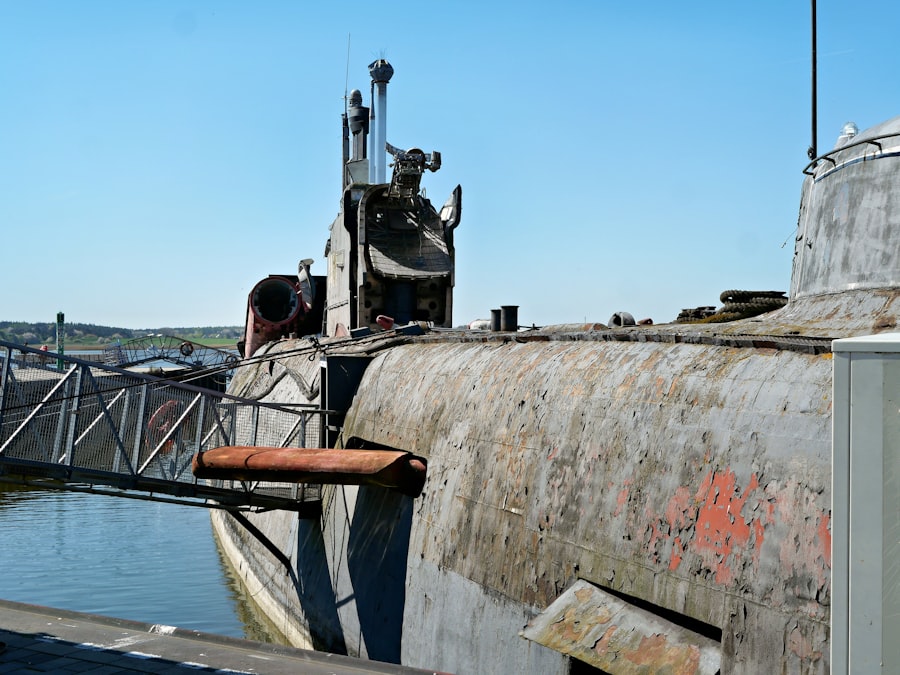
In recent years, satellite surveillance has emerged as a critical component of undersea security strategies. While traditional methods focus on surface detection, satellites provide a broader perspective by monitoring vast oceanic expanses from above. Equipped with advanced imaging technologies, satellites can detect changes in sea surface temperatures, wave patterns, and even oil slicks that may indicate submarine activity beneath the waves.
The ability to track submarines from space offers several advantages.
This capability is particularly useful in monitoring strategic chokepoints or areas of heightened military activity.
Moreover, satellite data can be integrated with other intelligence sources to create a comprehensive picture of maritime operations, enhancing situational awareness for naval forces.
Advanced Communication Systems for Submarine Tracking
Effective communication systems are vital for successful submarine tracking operations. Submarines often operate at great depths where traditional radio communications are ineffective. To address this challenge, advanced communication technologies have been developed to facilitate reliable data exchange between submarines and command centers.
One notable advancement in this area is the use of underwater acoustic modems that allow for data transmission through sound waves. These modems enable submarines to send and receive information while remaining submerged, thus preserving their stealth capabilities.
Additionally, advancements in satellite communication have allowed submarines to surface briefly to establish secure connections with command centers, ensuring that they remain informed about operational directives while minimizing exposure to detection.
Utilizing Unmanned Underwater Vehicles for Surveillance
| Tracking Method | Description | Advantages | Limitations | Typical Use Case |
|---|---|---|---|---|
| Passive Sonar | Listening for sounds emitted by submarines, such as engine noise or propeller cavitation. | Stealthy, does not reveal own position; effective at detecting noise signatures. | Limited range; effectiveness reduced by quiet submarines and ocean noise. | Naval vessels and fixed underwater arrays for submarine detection. |
| Active Sonar | Emitting sound pulses and listening for echoes reflected from submarines. | Can detect quiet submarines; provides range and bearing information. | Reveals own position; limited by sound absorption and ocean conditions. | Anti-submarine warfare and search operations. |
| Magnetic Anomaly Detection (MAD) | Detecting disturbances in Earth’s magnetic field caused by a submarine’s metal hull. | Effective at close range; useful for final localization. | Short detection range; requires low altitude or underwater platforms. | Used by maritime patrol aircraft and helicopters. |
| Satellite Surveillance | Using satellites to detect submarines via surface disturbances, thermal signatures, or wake patterns. | Wide area coverage; can detect surfaced or shallow submarines. | Limited by weather, sea state, and submarine depth; less effective for deep subs. | Strategic monitoring and intelligence gathering. |
| Underwater Acoustic Sensor Networks | Deploying networks of hydrophones to monitor underwater sound over large areas. | Continuous monitoring; can triangulate submarine positions. | High installation and maintenance costs; limited by ocean noise. | Fixed defense perimeters and ocean surveillance. |
| Infrared Detection | Detecting heat signatures from submarine exhaust or disturbances on the water surface. | Can detect submarines near surface; useful in certain environmental conditions. | Limited range; affected by weather and sea conditions. | Airborne patrols and reconnaissance missions. |
Unmanned Underwater Vehicles (UUVs) have revolutionized submarine tracking by providing an additional layer of surveillance capabilities. These autonomous or remotely operated vehicles can be deployed to gather intelligence in areas that may be too dangerous or inaccessible for manned vessels. UUVs are equipped with various sensors, including sonar systems and cameras, enabling them to conduct detailed reconnaissance missions.
The versatility of UUVs allows them to perform a range of tasks, from mapping the ocean floor to monitoring submarine activity in real-time. Their ability to operate silently and autonomously makes them ideal for covert operations. Furthermore, UUVs can be deployed in swarms, enhancing their effectiveness by covering larger areas simultaneously and providing a more comprehensive understanding of underwater environments.
Integration of Artificial Intelligence in Submarine Tracking
The integration of artificial intelligence (AI) into submarine tracking techniques represents a significant leap forward in maritime security. AI algorithms can analyze vast amounts of data collected from various sources—such as sonar readings, satellite imagery, and UUV reports—to identify patterns and anomalies that may indicate submarine activity. This capability allows naval forces to respond more swiftly and effectively to potential threats.
Moreover, AI can enhance predictive modeling by simulating various scenarios based on historical data and current conditions. This predictive capability enables naval strategists to anticipate submarine movements and adjust their tactics accordingly. As AI technology continues to advance, its applications in submarine tracking are expected to expand further, leading to more sophisticated detection methods and improved decision-making processes.
Underwater Acoustic Monitoring for Submarine Detection
Underwater acoustic monitoring has become an essential tool in the arsenal of submarine tracking techniques. By deploying arrays of hydrophones across strategic locations in the ocean, naval forces can continuously monitor underwater sounds and detect the presence of submarines. This method leverages the unique acoustic signatures produced by different vessels, allowing for accurate identification even at great distances.
The effectiveness of underwater acoustic monitoring lies in its ability to provide persistent surveillance without revealing the position of monitoring assets. This stealthy approach is particularly advantageous in contested waters where traditional detection methods may be compromised. Additionally, advancements in machine learning have improved the accuracy of acoustic monitoring systems by enabling them to differentiate between natural ocean sounds and man-made noises associated with submarines.
Collaborative International Efforts in Submarine Tracking
Recognizing the global nature of maritime security challenges, many nations have engaged in collaborative efforts to enhance submarine tracking capabilities. International partnerships facilitate information sharing and joint exercises that improve interoperability among allied forces. These collaborations often involve sharing technological advancements, best practices, and intelligence related to submarine activities.
Joint initiatives such as multinational maritime exercises allow participating nations to test their tracking systems against real-world scenarios while fostering cooperation among naval forces. Such collaborations not only strengthen individual nations’ capabilities but also contribute to a more secure maritime environment overall. By working together, countries can better address the complexities of submarine tracking and enhance their collective security posture.
Challenges and Limitations in Submarine Tracking Techniques
Despite significant advancements in submarine tracking technologies, several challenges persist that hinder their effectiveness. One major limitation is the inherent stealth capabilities of modern submarines, which are designed to minimize noise and reduce their acoustic signature. As submarines become quieter and more advanced in their evasion tactics, traditional detection methods face increasing difficulties in identifying their presence.
Additionally, environmental factors such as ocean currents, temperature gradients, and background noise can complicate detection efforts. These variables can obscure signals or create false positives that lead to misidentification of underwater objects. Furthermore, the vastness of the oceans presents logistical challenges for deploying tracking assets effectively across expansive areas.
Future Developments in Submarine Tracking Technology
Looking ahead, future developments in submarine tracking technology are likely to focus on enhancing existing systems while exploring innovative solutions to emerging challenges. The integration of quantum sensing technology holds promise for revolutionizing underwater detection capabilities by providing unprecedented sensitivity to acoustic signals. This could enable naval forces to detect submarines at greater distances and with higher accuracy than ever before.
Moreover, advancements in machine learning and data analytics will continue to play a crucial role in improving decision-making processes related to submarine tracking. By harnessing big data from various sources—such as satellite imagery, sonar readings, and environmental data—naval forces can develop more sophisticated models that enhance situational awareness and response times.
The Importance of Advanced Submarine Tracking for Undersea Security
In conclusion, advanced submarine tracking techniques are vital for ensuring undersea security in an increasingly complex maritime landscape. As nations continue to invest in their naval capabilities, the ability to detect and monitor submarines will remain a critical component of national defense strategies. The integration of cutting-edge technologies such as sonar systems, satellite surveillance, UUVs, AI, and collaborative international efforts underscores the importance of staying ahead in this domain.
As challenges persist and new threats emerge, ongoing research and development will be essential to refine existing methods and explore innovative solutions for submarine tracking. Ultimately, maintaining robust submarine tracking capabilities is not only crucial for military readiness but also for safeguarding marine ecosystems and ensuring safe navigation across global waters. The future of undersea security will depend on the continued evolution of these technologies and the collaborative efforts among nations committed to protecting their maritime interests.
Submarine tracking methods have evolved significantly over the years, utilizing advanced technologies to enhance detection capabilities. For a deeper understanding of these techniques and their implications in modern naval warfare, you can read the related article on submarine tracking at this link. This article provides insights into the various systems employed to monitor submarine movements and the challenges faced in underwater surveillance.
FAQs
What are the common methods used for submarine tracking?
Common methods for submarine tracking include sonar detection (both passive and active), magnetic anomaly detection (MAD), satellite surveillance, underwater acoustic sensors, and the use of maritime patrol aircraft and surface ships equipped with specialized tracking equipment.
How does sonar help in tracking submarines?
Sonar systems emit sound waves underwater and listen for echoes that bounce off objects like submarines. Passive sonar listens for sounds made by the submarine itself, while active sonar sends out pulses and detects their reflections, helping to locate and track submarines.
What is Magnetic Anomaly Detection (MAD) in submarine tracking?
MAD detects minute disturbances in the Earth’s magnetic field caused by the metal hull of a submarine. Aircraft or ships equipped with MAD sensors can identify these anomalies to locate submerged submarines.
Can satellites be used to track submarines?
Yes, satellites can assist in submarine tracking by monitoring surface disturbances, thermal signatures, or by relaying data from other tracking systems. However, direct detection of submerged submarines by satellites is limited due to water’s opacity to most electromagnetic waves.
What role do underwater acoustic sensors play in submarine tracking?
Underwater acoustic sensors, often deployed on the seabed or in arrays, detect and analyze sound waves produced by submarines. These sensors can provide continuous monitoring of specific areas to track submarine movements.
Are there any limitations to submarine tracking methods?
Yes, limitations include the submarine’s ability to minimize noise and magnetic signatures, environmental factors like water temperature and salinity affecting sonar performance, and the vastness of the ocean making comprehensive coverage challenging.
How do submarines evade tracking methods?
Submarines use stealth technologies such as sound-absorbing coatings, quiet propulsion systems, and tactics like operating in noisy environments or under thermal layers to reduce detectability by sonar and other tracking methods.
Is active sonar commonly used in submarine tracking?
Active sonar is used but less frequently than passive sonar because it reveals the position of the searching vessel. Passive sonar is preferred for covert tracking since it does not emit detectable signals.
What advancements are being made in submarine tracking technology?
Advancements include improved sensor sensitivity, integration of multiple detection methods, use of artificial intelligence for signal analysis, deployment of autonomous underwater vehicles (AUVs), and enhanced satellite surveillance capabilities.
Why is submarine tracking important?
Submarine tracking is crucial for national security, maritime safety, and strategic military operations, as it helps detect potential threats, monitor naval activities, and maintain control over maritime domains.