You’re standing on the deck of a warship, the vast expanse of the ocean stretching before you. It’s a deceptively calm surface, a blue blanket that conceals a world beneath. Yet, lurking in that hidden realm, is the silent threat of the submarine. For centuries, this underwater vessel has been a shadow, capable of striking without warning. You, as a commander or tactician, understand that the ability to pierce that veil of secrecy, to find that elusive adversary, is paramount to your mission’s success. The days of simply dropping a depth charge when you hear a faint ping are long gone. The modern battlefield demands a sophisticated arsenal of advanced submarine detection methods, a symphony of sensors and analytical prowess working in concert.
The submarine, initially a crude weapon of naval warfare, has undergone a profound metamorphosis. Gone are the days of lumbering, noisy diesel-electric boats that were more liability than asset in most conditions. Today’s submarines are marvels of engineering, designed for stealth and endurance.
The Drive for Stealth
Modern submarines are built with materials and designs that minimize their acoustic and magnetic signatures. Hull coatings, internal baffling, and propeller designs all contribute to making them exceptionally quiet. You are not just dealing with a metal tube; you are facing a finely tuned instrument of evasion. Think of it as a ghost ship, designed to slip through the water like a whisper in a library.
Extended Operational Capabilities
With advancements in battery technology, air-independent propulsion (AIP) systems (such as fuel cells, Stirling engines, or anaerobic systems), and nuclear reactors, submarines can remain submerged for extended periods, covering vast distances without needing to surface or snorkel. This means the operational tempo of detecting them has increased dramatically. The ocean is no longer a series of predictable patrol areas; it has become a dynamic, three-dimensional chessboard where your adversary can move with impunity for weeks.
Diversification of Submarine Roles
Submarines are no longer solely offensive platforms. They are increasingly equipped for intelligence gathering, special forces insertion, mine laying, and even as deterrents in a nuclear strategy. This diversification means that a detected submarine isn’t necessarily a direct combatant, but it could be a precursor to a larger operation, a silent observer gathering critical intelligence, or a mine layer creating hazards in your own waterways. Identifying the type of submarine and its intent is as crucial as confirming its presence.
Submarine detection methods have evolved significantly over the years, incorporating advanced technologies and strategies to enhance maritime security. For a deeper understanding of the various techniques employed in this field, you can refer to a related article that discusses the latest advancements and challenges in submarine detection. This insightful piece can be found at this link.
The Pillars of Acoustic Detection
Acoustics remains the cornerstone of submarine detection, but its application has become far more nuanced and technologically advanced. You are no longer relying on a single listening device; you are employing a multi-layered acoustic network.
Passive Sonar: The Art of Listening
Passive sonar involves listening for the sounds emitted by submarines themselves. This includes engine noise, propeller cavitation, sonar pings, and even the sounds of internal machinery. The challenge lies in distinguishing these faint, distant signals from the cacophony of the ocean.
Hydrophone Arrays: Expanding Your Ears
Instead of relying on a single hydrophone, you now utilize sophisticated arrays of hydrophones. These arrays, whether mounted on ships, towed behind them, or deployed as independent buoys, can provide directional information and improve the signal-to-noise ratio. Imagine an orchestra of underwater microphones, each playing its part to bring a faint melody – the submarine’s signature – into focus.
Signal Processing and Analysis: Decoding the Symphony
Modern signal processing techniques are crucial for extracting meaningful data from raw acoustic signals. Algorithms perform spectral analysis, filtering, and correlation to identify known submarine signatures and flag anomalies. This is akin to a cryptographer deciphering a coded message, meticulously breaking down the sounds to reveal the perpetrator.
Active Sonar: The Probing Pulse
Active sonar involves transmitting sound pulses (pings) and listening for the echoes that bounce back from objects in the water. This method can provide range and bearing information, but it carries the inherent risk of revealing your own position to a perceptive adversary.
Multi-Static Sonar: The Distributed Network
A significant advancement is multi-static sonar. Instead of a single transmitter and receiver, this system utilizes multiple spaced-apart transmitters and receivers. You can have one platform broadcasting, while others listen for the returning echoes. This distributes the risk and allows for more complex signal analysis, making it harder for a submarine to determine the origin of the ping. It’s like a group of hunters communicating and triangulating their positions, making it harder for the prey to flee the entire pack.
Advanced Sonar Waveforms: Cleverer Pings
New sonar waveforms are being developed to overcome the limitations of traditional pulses. These can include frequency-modulated (FM) chirps, which offer better range resolution, and coded waveforms, which are more resistant to jamming and spoofing. You are essentially inventing more sophisticated ways to ask the ocean, “Is anyone there?”
Beyond Sound: Non-Acoustic Detection Methods
While acoustics remain vital, you cannot afford to be a single-trick pony. The modern adversary is cunning, and you must be equally adaptable. Non-acoustic methods provide complementary means of detection, especially against increasingly silent submarines.
Magnetic Anomaly Detection (MAD): The Invisible Fingerprint
Submarines, being large metal objects, disturb the Earth’s magnetic field. Magnetic anomaly detectors are sensitive instruments that can detect these subtle distortions.
Airborne MAD: The Wide Sweep
Aircraft equipped with MAD sensors can fly at relatively low altitudes, covering large areas of ocean in a systematic search pattern. This is your aerial scout, a hawk with an uncanny ability to sense the faintest deviations in the planet’s magnetic weave.
Surface and Subsurface MAD
MAD sensors can also be deployed on surface vessels and even integrated into unmanned underwater vehicles (UUVs) for localized searches.
Electro-Magnetic Detection (EMD): Catching Subtle Leaks
Submarines, especially when snorkeling, must break the surface to ventilate their engines and recharge batteries. This brief exposure creates characteristic electromagnetic emissions that can be detected.
ESM and SIGINT: Intercepting the Whispers
Electronic Support Measures (ESM) systems and Signals Intelligence (SIGINT) capabilities are designed to intercept these faint radio frequencies. You are essentially an eavesdropper, tuning into the subtle electromagnetic chatter that even a stealthy submarine cannot entirely suppress.
Over-the-Horizon Radar (OTHR): A Distant Gaze
While not directly for submarines, OTHR systems can detect surface wakes or periscopes that break the surface, providing an early warning that a submarine might be operating in a particular area. This is your long-range telescope, able to spot the ripple on the water from miles away.
Wake Detection: The Ghostly Trail
A moving submarine leaves a detectable wake in the water. This can include thermal wakes from diesel engines, or even subtle changes in water density and turbulence.
Infra-Red (IR) Sensors: Sensing the Heat
Infra-red sensors can detect the thermal signature of a submarine’s snorkel or heat emanating from its hull, especially in colder waters. This is like using a thermal camera to spot the warmth of a figure in the dark.
Optical and Other Sensors: Visual Clues
While less common for submerged submarines, periscopes, antennas, and even the disturbed surface can be detected by optical sensors, both from aircraft and satellites.
The Role of Advanced Platforms and Technologies
The effectiveness of any detection method hinges on the platforms that deploy them and the underlying technologies that power them. You are not just wielding individual sensors; you are orchestrating a complex integration of naval and aerial assets.
Unmanned Systems: The Expanding Reach
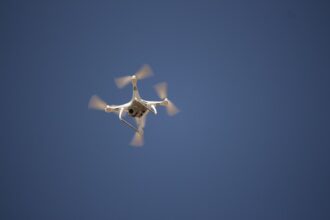
Unmanned Underwater Vehicles (UUVs) and Unmanned Surface Vessels (USVs) are revolutionizing submarine detection. They can operate in hazardous environments, extend sensor coverage tirelessly, and act as mobile nodes in a distributed sensor network. These are your tireless scouts, capable of venturing where manned platforms cannot, or where it would be too risky.
Autonomous UUV Swarms: The Coordinated Hunt
The concept of deploying swarms of UUVs, coordinated by artificial intelligence, offers a powerful new approach to searching vast areas. These swarms can act independently or cooperatively, triangulating targets and sharing data in real-time. Imagine a school of fish, but instead of a unified biological drive, they are a network of intelligent agents hunting a single, elusive prey.
UUVs for Sonar and MAD Deployment
UUVs are increasingly equipped with advanced sonar arrays and MAD sensors, allowing for persistent, low-signature surveillance in areas of interest.
Satellite Surveillance: The Eye in the Sky
Satellites equipped with various sensors can provide wide-area surveillance and intelligence gathering. While direct submarine detection from orbit is challenging, satellites can detect surface activity, identify patterns, and provide environmental data that aids in acoustic detection.
Optical and Radar Satellites
Optical satellites can detect periscopes, antennas, or wakes. Radar satellites can penetrate cloud cover and detect surface anomalies.
Oceanographic Satellites: Understanding the Environment
Satellites that measure sea surface temperature, currents, and salinity can provide crucial environmental data that affects how sound propagates underwater, thus improving sonar performance.
Submarine detection methods have evolved significantly over the years, incorporating advanced technologies to enhance maritime security. For a deeper understanding of the various techniques employed in this field, you can explore a related article that discusses the latest innovations and challenges in submarine detection. This resource provides valuable insights into how nations are adapting to the complexities of underwater warfare. To read more, visit this article for an in-depth analysis.
Data Fusion and Artificial Intelligence: The Brains Behind the Operation
| Detection Method | Description | Advantages | Limitations | Typical Range |
|---|---|---|---|---|
| Passive Sonar | Listening for sounds emitted by submarines, such as engine noise or propeller cavitation. | Stealthy, does not reveal own position; effective in quiet environments. | Limited by ambient noise; less effective against quiet submarines. | Several kilometers to tens of kilometers |
| Active Sonar | Emitting sound pulses and listening for echoes reflected from submarine hulls. | Can detect quiet submarines; provides range and bearing information. | Reveals own position; limited by water conditions and noise. | Up to tens of kilometers |
| Magnetic Anomaly Detection (MAD) | Detecting disturbances in Earth’s magnetic field caused by large metal objects like submarines. | Effective at close range; useful for final localization. | Short detection range; affected by geomagnetic noise. | Up to a few hundred meters |
| Infrared Detection | Detecting heat signatures from submarine exhaust or hull. | Can detect surfaced or snorkeling submarines; passive method. | Limited to surface or near-surface detection; affected by weather and sea state. | Up to a few kilometers |
| Radar | Detecting surfaced submarines or periscopes using radio waves. | Effective for surfaced or near-surface targets; provides precise location. | Cannot detect submerged submarines; limited by sea clutter. | Up to tens of kilometers |
| Sonobuoys | Deployable sonar sensors dropped from aircraft or ships to detect submarines acoustically. | Extend detection range; can be networked for better coverage. | Limited battery life; vulnerable to countermeasures. | Several kilometers |
| Underwater Drones (UUVs) | Autonomous vehicles equipped with sonar and sensors to detect submarines. | Can operate covertly; extend detection coverage. | Limited endurance; complex technology. | Variable, typically several kilometers |
The sheer volume of data generated by modern detection systems is immense. The ability to process, analyze, and interpret this data is where the real advantage lies. This is where the human element is augmented, not replaced, by the power of computation.
The Challenge of Information Overload
You are bombarded with data from dozens of sensors, each generating streams of information. Without intelligent processing, this data can become an indecipherable cacophony, drowning out the subtle signal you seek.
Sensor Data Integration: Weaving the Tapestry
Data fusion involves combining information from multiple sensors and platforms to create a more complete and accurate picture of the underwater environment. This is like taking individual puzzle pieces and assembling them into a coherent image.
Machine Learning and Deep Learning: The Intelligent Analyst
Artificial intelligence, particularly machine learning and deep learning algorithms, are being used to identify patterns, classify contacts, and predict submarine behavior.
Automated Target Recognition (ATR): The Digital Guardian
ATR algorithms can be trained to recognize the acoustic signatures of specific submarine classes, significantly reducing the workload for human operators and speeding up the detection process. Think of a highly trained security guard who can instantly identify known individuals from a crowd.
Predictive Analysis: Anticipating the Move
AI can also be used to predict where a submarine might go based on its previous movements, environmental factors, and known operational patterns. This allows you to proactively position your assets for interception.
Cyber-Enabled Warfare: A New Frontier
While not a detection method in itself, the awareness and defense against cyber threats are crucial. A sophisticated adversary might attempt to disrupt your sensor networks, spoof data, or introduce anomalies to confuse your systems. You must ensure the integrity of your own detection architecture.
The Future of Submarine Detection: Constant Evolution
The arms race in submarine warfare is a perpetual cycle of innovation and counter-innovation. What is cutting-edge today will be standard tomorrow, and obsolete the day after. You must remain at the forefront of this evolution, constantly seeking new ways to gain the advantage.
Quantum Sensing: The Next Leap
Emerging technologies like quantum sensing hold the potential to revolutionize submarine detection. Quantum magnetometers, for instance, offer unprecedented sensitivity, potentially allowing for the detection of submarines at much greater ranges and depths. This is akin to moving from a magnifying glass to a microscope, revealing details previously invisible.
Bio-Acoustic Detection: Listening to Nature’s Clues
Researchers are exploring how marine life responds to submarine activity, potentially using biological sounds as indicators. While still in its nascent stages, this approach offers a unique, passive method of indirect detection.
Integrated Networked Systems: The Seamless Web
The future lies in highly integrated and networked systems where all sensors, platforms, and analytical tools communicate seamlessly. This creates a truly distributed and resilient detection capability, where the whole is far greater than the sum of its parts. You are building a nervous system for the ocean, capable of reacting with speed and precision.
The Human Factor: The Unwavering Commander
Despite the advancements in technology, the human element remains critical. Your tactical acumen, your ability to interpret incomplete information, and your decisive leadership are the ultimate arbiters of success. Technology is your tool, but you are the hand that wields it. The ocean is a vast and enigmatic place, and the submarine, its phantom inhabitant, is a constant challenge. By understanding and mastering these advanced submarine detection methods, you equip yourself with the knowledge and the capability to bring that phantom into the light.
WATCH NOW▶️ Submarine detection technology history
FAQs
What are the common methods used for submarine detection?
Common methods for submarine detection include sonar (both active and passive), magnetic anomaly detection (MAD), radar, infrared sensors, and satellite surveillance. Sonar is the most widely used technique, relying on sound waves to detect underwater objects.
How does active sonar differ from passive sonar in submarine detection?
Active sonar emits sound pulses and listens for echoes reflected from submarines, providing precise location data. Passive sonar, on the other hand, listens for sounds produced by submarines, such as engine noise or propeller cavitation, without emitting any signals, making it stealthier but sometimes less precise.
What role does magnetic anomaly detection (MAD) play in finding submarines?
MAD detects minute disturbances in the Earth’s magnetic field caused by the metal hull of a submarine. It is typically used by aircraft flying low over the ocean and is effective at close ranges, complementing sonar and other detection methods.
Can satellites be used to detect submarines?
Yes, satellites can assist in submarine detection by monitoring ocean surface conditions, detecting wakes or disturbances caused by submarines, and using infrared sensors to identify heat signatures. However, satellite detection is generally less direct and used in conjunction with other methods.
What challenges exist in detecting modern submarines?
Modern submarines are designed to be extremely quiet and have advanced stealth technologies, making them difficult to detect. Factors such as ocean noise, water temperature layers, and the vastness of the ocean also complicate detection efforts, requiring sophisticated and multi-faceted approaches.