Electronic warfare (EW) has emerged as a critical component of contemporary military operations. As armed forces worldwide increasingly depend on electronic systems for communications, navigation, and targeting, the ability to counter enemy electronic capabilities has become essential for mission success. Electronic warfare countermeasures encompass three primary functions: detecting enemy electronic activities, disrupting hostile electronic systems, and protecting friendly electronic assets.
These capabilities include jamming techniques that interfere with enemy communications and radar systems, spoofing methods that provide false information to adversary sensors, and signal processing technologies that enhance the identification and analysis of electronic threats. Modern military forces face diverse electronic threats ranging from communication intercepts and GPS jamming to cyber attacks on command and control systems. The proliferation of commercial off-the-shelf technology has made sophisticated electronic warfare capabilities accessible to both state and non-state actors, expanding the threat landscape significantly.
Effective electronic warfare countermeasures require integration across multiple domains, combining ground-based, airborne, and space-based assets. These systems must operate in increasingly congested electromagnetic environments while maintaining the functionality of friendly electronic systems. The development and deployment of such countermeasures represents a fundamental aspect of modern military preparedness and operational security.
Key Takeaways
- Advanced electronic warfare countermeasures combine jamming, spoofing, and signal processing to protect military assets.
- Understanding vulnerabilities in electronic systems is crucial for effective threat mitigation.
- Integration of cyber warfare with electronic warfare enhances defense capabilities against complex attacks.
- Specialized countermeasures are developed for UAVs, naval, and airborne platforms to address unique operational challenges.
- Future trends focus on evolving technologies and adaptive tactics to maintain superiority in electronic warfare environments.
Understanding Electronic Warfare Threats and Vulnerabilities
The landscape of electronic warfare is fraught with diverse threats that can compromise military operations. Adversaries increasingly utilize sophisticated technologies to exploit vulnerabilities in communication and navigation systems. These threats can range from simple jamming techniques that disrupt signals to more complex cyber-attacks that infiltrate and manipulate critical infrastructure.
Understanding these threats is paramount for developing effective countermeasures. Moreover, vulnerabilities within military systems can arise from various sources, including outdated technology, insufficient training, and lack of awareness regarding potential electronic threats. As militaries around the world continue to modernize their capabilities, they must also address these vulnerabilities to ensure resilience against electronic warfare tactics.
A comprehensive understanding of both the threats and vulnerabilities is essential for formulating effective strategies that safeguard military operations in an increasingly electronic battlefield.
Electronic Warfare Countermeasures: Jamming and Spoofing

Jamming and spoofing are two primary tactics employed in electronic warfare countermeasures. Jamming involves the deliberate transmission of signals that interfere with an enemy’s communication or radar systems, rendering them ineffective. This technique can disrupt the flow of information, create confusion among enemy forces, and provide a tactical advantage to friendly units.
The effectiveness of jamming relies on the ability to identify and target specific frequencies used by adversaries. On the other hand, spoofing involves deceiving enemy systems by sending false signals that mimic legitimate communications or radar returns. This tactic can mislead adversaries into believing they are receiving accurate information when, in fact, they are being manipulated.
By employing both jamming and spoofing techniques, military forces can create a multi-layered defense against electronic threats, enhancing their operational capabilities.
Advanced Signal Processing Techniques for Electronic Warfare
Advanced signal processing techniques play a pivotal role in enhancing the effectiveness of electronic warfare countermeasures. These techniques involve the analysis and manipulation of signals to extract valuable information or disrupt enemy communications. By employing sophisticated algorithms and machine learning models, military forces can improve their ability to detect and classify electronic signals in real-time.
One notable advancement in signal processing is the use of adaptive filtering techniques, which allow for dynamic adjustments based on changing signal environments. This adaptability enables military systems to respond effectively to evolving threats and maintain operational superiority.
As technology continues to advance, the integration of cutting-edge signal processing techniques will remain a cornerstone of effective electronic warfare countermeasures.
Cyber Warfare and Electronic Warfare Integration
| Countermeasure Tactic | Description | Primary Objective | Typical Application | Effectiveness Metric |
|---|---|---|---|---|
| Jamming | Transmission of interfering signals to disrupt enemy radar or communications | Degrade enemy sensor and communication capabilities | Radar and radio frequency disruption | Signal-to-Noise Ratio Reduction (dB) |
| Deception | Use of false signals or decoys to mislead enemy sensors | Confuse enemy targeting and tracking systems | Radar spoofing and false target generation | Target Misidentification Rate (%) |
| Chaff | Dispersion of small metallic strips to create radar reflections | Mask true target location by creating multiple false echoes | Airborne and naval defense against radar-guided missiles | Radar Cross Section Increase (m²) |
| Decoys | Deploying fake platforms or emitters to mimic real assets | Divert enemy fire and sensors from actual assets | Missile defense and reconnaissance countermeasures | Enemy Target Allocation Error (%) |
| Frequency Hopping | Rapidly changing transmission frequencies to avoid jamming | Maintain communication integrity under electronic attack | Secure military communications | Communication Link Availability (%) |
| Low Probability of Intercept (LPI) Techniques | Signal modulation methods to reduce detectability | Minimize enemy detection of friendly transmissions | Stealth communications and radar | Detection Range Reduction (km) |
The integration of cyber warfare and electronic warfare represents a significant evolution in modern military strategy. As adversaries increasingly employ cyber capabilities to disrupt critical infrastructure, the lines between traditional electronic warfare tactics and cyber operations have blurred. This convergence necessitates a holistic approach to countermeasures that encompasses both domains.
Cyber warfare can enhance electronic warfare capabilities by providing intelligence on enemy systems and vulnerabilities. Conversely, electronic warfare tactics can be employed to protect cyber assets from adversarial attacks. For instance, jamming techniques can disrupt an enemy’s ability to launch cyber-attacks while simultaneously safeguarding friendly networks from infiltration.
This integrated approach allows military forces to create a comprehensive defense strategy that addresses both electronic and cyber threats effectively.
Electronic Warfare Countermeasures in Modern Military Operations
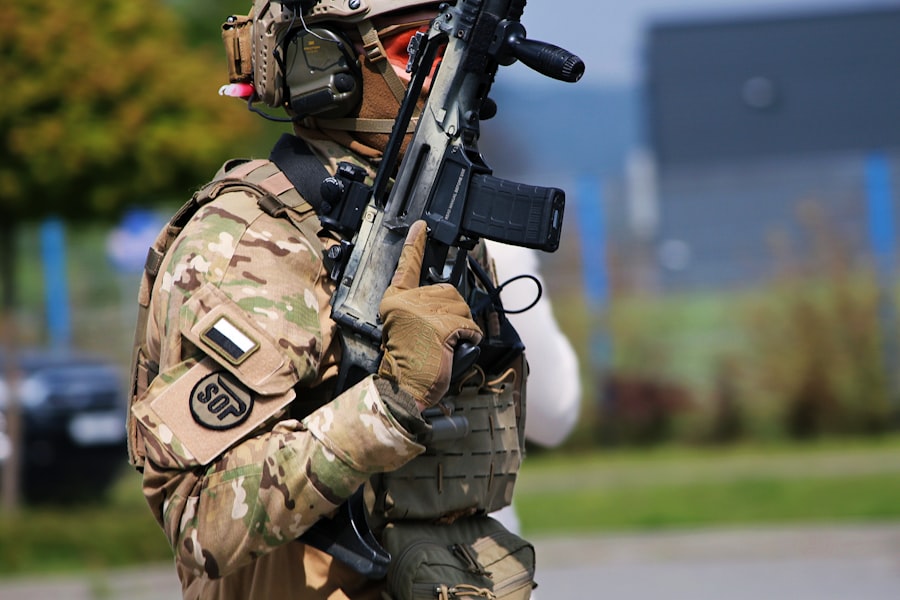
In contemporary military operations, electronic warfare countermeasures have become indispensable for achieving mission success. The reliance on advanced technology for communication, navigation, and targeting has made military forces increasingly vulnerable to electronic threats. As a result, integrating robust EW countermeasures into operational planning is essential for maintaining a tactical edge.
Modern military operations often involve joint forces from multiple branches, necessitating a coordinated approach to electronic warfare countermeasures. This collaboration ensures that all units are equipped with the necessary tools and knowledge to effectively counteract electronic threats. Furthermore, training exercises focused on EW tactics are crucial for preparing personnel to respond swiftly and effectively in real-world scenarios.
By prioritizing electronic warfare countermeasures in operational planning, military forces can enhance their resilience against adversarial tactics.
Electronic Warfare Countermeasures for Unmanned Aerial Vehicles (UAVs)
Unmanned aerial vehicles (UAVs) have revolutionized modern warfare by providing unparalleled surveillance and strike capabilities. However, their reliance on electronic systems makes them susceptible to various electronic warfare threats. As UAVs become increasingly integral to military operations, implementing effective electronic warfare countermeasures is essential for ensuring their operational success.
Countermeasures for UAVs often involve a combination of jamming and anti-jamming technologies designed to protect communication links between the UAV and its operators. Additionally, advanced navigation systems equipped with anti-spoofing capabilities can help UAVs maintain their operational integrity even in contested environments. By investing in robust electronic warfare countermeasures tailored specifically for UAVs, military forces can maximize the effectiveness of these platforms while minimizing their vulnerabilities.
Electronic Warfare Countermeasures for Naval Operations
Naval operations present unique challenges when it comes to electronic warfare countermeasures. The maritime environment is characterized by complex electromagnetic conditions that can complicate the detection and classification of enemy signals. As naval forces increasingly rely on advanced technologies for navigation and communication, they must also develop effective EW countermeasures to protect their assets.
Naval vessels often employ a range of electronic warfare systems designed to detect and neutralize threats from enemy ships and aircraft. These systems may include radar jamming capabilities, decoys that mimic legitimate signals, and advanced signal processing techniques for real-time threat assessment. Additionally, naval forces must prioritize training personnel in EW tactics to ensure they are prepared to respond effectively in dynamic maritime environments.
By integrating comprehensive electronic warfare countermeasures into naval operations, military forces can enhance their survivability and operational effectiveness at sea.
Electronic Warfare Countermeasures for Airborne Platforms
Airborne platforms are critical components of modern military operations, providing essential capabilities for reconnaissance, strike missions, and air superiority. However, these platforms are also prime targets for adversaries employing electronic warfare tactics. To mitigate these risks, implementing effective EW countermeasures is vital for ensuring the safety and success of airborne missions.
Countermeasures for airborne platforms often include advanced radar jamming systems designed to disrupt enemy targeting capabilities while enhancing the aircraft’s survivability. Additionally, stealth technologies can reduce an aircraft’s radar signature, making it more difficult for adversaries to detect and engage them effectively. Training pilots and crew members in EW tactics is equally important; they must be equipped with the knowledge and skills necessary to respond swiftly to emerging threats during missions.
By prioritizing electronic warfare countermeasures for airborne platforms, military forces can maintain air superiority in contested environments.
Future Trends in Electronic Warfare Countermeasures
As technology continues to advance at an unprecedented pace, future trends in electronic warfare countermeasures are likely to evolve significantly. One notable trend is the increasing reliance on artificial intelligence (AI) and machine learning algorithms to enhance EW capabilities. These technologies can improve threat detection accuracy, automate response strategies, and facilitate real-time decision-making in complex environments.
Additionally, the proliferation of commercial off-the-shelf (COTS) technologies presents both opportunities and challenges for electronic warfare countermeasures. While COTS solutions can provide cost-effective options for enhancing EW capabilities, they may also introduce vulnerabilities that adversaries could exploit. As such, military forces must remain vigilant in assessing emerging technologies and adapting their countermeasure strategies accordingly.
Conclusion and Recommendations for Implementing Advanced Electronic Warfare Countermeasures Tactics
In conclusion, advanced electronic warfare countermeasures tactics are essential for maintaining operational superiority in modern military operations. As adversaries continue to exploit vulnerabilities in communication and navigation systems through sophisticated electronic threats, it is imperative that military forces prioritize the development and implementation of effective EW strategies. To enhance their resilience against electronic warfare tactics, military organizations should invest in training personnel on EW principles and techniques while fostering collaboration between different branches of service.
Additionally, embracing emerging technologies such as AI and machine learning will be crucial for staying ahead of evolving threats. By adopting a proactive approach to electronic warfare countermeasures, military forces can safeguard their assets and ensure mission success in an increasingly complex battlefield environment.
In the realm of electronic warfare, understanding effective countermeasures tactics is crucial for maintaining operational superiority. A related article that delves into these strategies can be found on In The War Room, which provides insights into the evolving landscape of electronic warfare and the importance of countermeasures. For more information, you can read the article [here](https://www.inthewarroom.com/).
WATCH THIS! 🎬 The Day Speed Died: How One Jet Changed Air Combat Forever
FAQs
What are electronic warfare countermeasures?
Electronic warfare countermeasures are techniques and technologies used to detect, deceive, disrupt, or neutralize enemy electronic systems, such as radar, communication, and navigation equipment, to gain a tactical advantage in military operations.
What types of electronic warfare countermeasures exist?
There are three main types: electronic attack (jamming or spoofing enemy signals), electronic protection (defending friendly systems from enemy electronic attacks), and electronic support (gathering intelligence by intercepting enemy electronic emissions).
How do electronic countermeasures work?
Electronic countermeasures work by interfering with or manipulating the electromagnetic spectrum. This can include jamming enemy radar signals, creating false targets, encrypting communications, or using stealth technology to avoid detection.
What are common tactics used in electronic warfare countermeasures?
Common tactics include signal jamming, frequency hopping, decoy deployment, signal encryption, radar spoofing, and the use of stealth technology to reduce electronic signatures.
Why are electronic warfare countermeasures important in modern military operations?
They are crucial because modern warfare heavily relies on electronic systems for communication, navigation, and targeting. Effective countermeasures can protect forces, disrupt enemy operations, and provide a strategic advantage.
Can electronic warfare countermeasures be used in civilian applications?
While primarily military, some electronic countermeasure technologies, such as signal encryption and anti-jamming techniques, are also used in civilian sectors like aviation, maritime navigation, and secure communications.
What challenges are associated with electronic warfare countermeasures?
Challenges include rapidly evolving technology, the need for real-time response, distinguishing between friendly and enemy signals, and the risk of collateral interference with civilian electronic systems.
How do electronic countermeasures affect radar systems?
They can degrade radar performance by jamming radar signals, creating false echoes, or using stealth technology to reduce the radar cross-section of targets, making detection and tracking more difficult.
What role does signal intelligence play in electronic warfare countermeasures?
Signal intelligence (SIGINT) involves intercepting and analyzing enemy electronic emissions to identify threats, develop countermeasures, and gain situational awareness in electronic warfare.
Are electronic warfare countermeasures legal under international law?
Electronic warfare is generally permitted under international law during armed conflict, but the use of certain countermeasures must comply with rules that protect civilian infrastructure and avoid unnecessary harm.