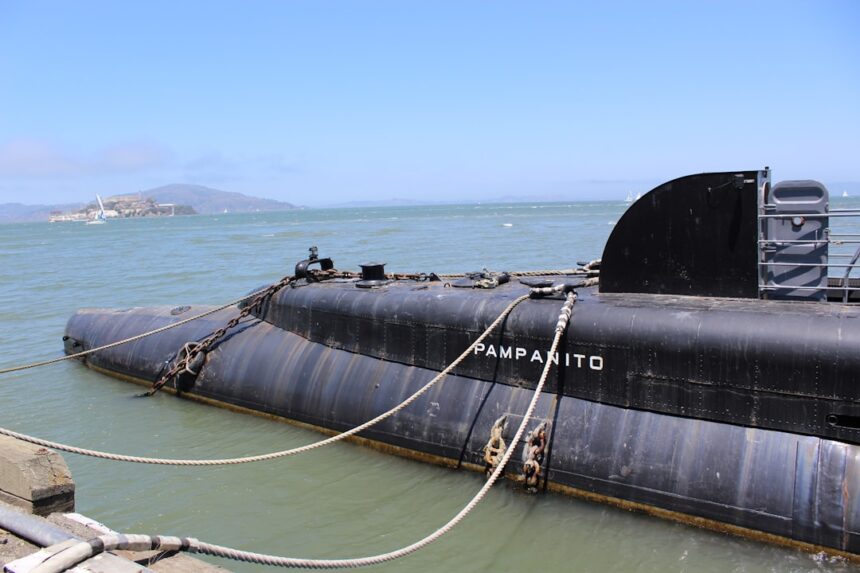
Nuclear submarines, often described as silent hunters of the deep, represent the pinnacle of naval engineering and strategic deterrence. Their patrols are among the most closely guarded secrets of any nation possessing them, embodying a complex interplay of technology, doctrine, and geopolitical strategy. This article aims to shed light on the clandestine world of nuclear submarine patrols, dissecting their purpose, operational methodologies, and the intricate challenges involved in their execution.
Deterrence: The Ultimate Mission
Nuclear submarine patrols primarily serve as a critical component of a nation’s strategic nuclear deterrent. These vessels, equipped with submarine-launched ballistic missiles (SLBMs), act as an invisible, survivable second-strike capability. In the event of a first-strike attack against a nation’s land-based nuclear arsenal, these submarines can retaliate, ensuring unacceptable consequences for any aggressor. This concept of Mutually Assured Destruction (MAD) is largely predicated on the undetectable nature of these submerged guardians, providing a credible and robust retaliatory option.
Power Projection and Sea Control
Beyond deterrence, nuclear attack submarines (SSNs) conduct patrols for power projection and sea control. Unlike their ballistic missile counterparts, SSNs are designed for hunting other submarines and surface vessels, intelligence gathering, and supporting special operations. Their ability to operate independently for extended periods in any ocean makes them invaluable assets for monitoring maritime choke points, tracking adversary fleets, and collecting vital intelligence in hostile waters. This role is crucial in maintaining a nation’s influence far beyond its territorial waters.
Intelligence Gathering and Surveillance
A less publicized but equally vital aspect of nuclear submarine patrols is intelligence gathering. Submarines, particularly SSNs, are equipped with sophisticated sonar arrays and electronic warfare systems capable of detecting, identifying, and tracking a wide range of maritime activity. They can discreetly approach coastlines or naval bases to collect signals intelligence (SIGINT) and imagery intelligence (IMINT), providing a unique and often unparalleled perspective on adversary capabilities and intentions. This “eyes and ears” capability beneath the waves offers a significant strategic advantage, acting as a persistent, covert sensor platform.
Recent discussions surrounding nuclear submarine patrol secrets have gained traction, particularly in light of the strategic implications for national security. For a deeper understanding of the complexities involved in submarine operations and the geopolitical landscape, you can read a related article on this topic at In The War Room. This resource provides valuable insights into the challenges and considerations faced by naval forces in maintaining the secrecy and effectiveness of their underwater capabilities.
The Anatomy of a Covert Mission
Pre-Patrol Preparations: Months in the Making
The commencement of a nuclear submarine patrol is preceded by months, if not years, of meticulous planning and preparation. This phase involves extensive intelligence analysis to identify potential threats, assess operational areas, and define mission objectives. Engineers conduct exhaustive checks of all submarine systems, from the reactor and propulsion to combat and life support. Crew members undergo rigorous training and simulations to ensure proficiency in every aspect of their roles, understanding that the success of the mission and their very survival depend on collective expertise and discipline. Every bolt, every circuit, every protocol is scrutinized to eliminate any foreseeable point of failure in an environment where failure is not an option.
The Art of Stealth: Remaining Undetected
The primary challenge and paramount objective of any nuclear submarine patrol is to remain undetected. This involves a multi-faceted approach to stealth.
Acoustic Signature Reduction
Modern nuclear submarines are engineered to be exceptionally quiet. This is achieved through a combination of design features such as anechoic coatings that absorb sonar pulses, advanced quieting technologies for machinery and propulsion systems, and careful operational procedures to minimize noise. The aim is to blend into the natural ambient noise of the ocean, making them a ghost in the vastness of the deep. Naval architects and acoustic engineers work tirelessly to reduce every decibel emitted, treating the submarine as a finely tuned instrument of silence.
Magnetic and Thermal Signatures
Beyond acoustics, submarines also possess magnetic and thermal signatures. Magnetic signature reduction involves demagnetization and degaussing coils to minimize the vessel’s magnetic field, making it harder for magnetic anomaly detectors (MAD) to pinpoint. Thermal signatures, primarily from the reactor and exhausted cooling water, are carefully managed and dispersed to minimize detection by infrared sensors or satellite surveillance. These efforts are akin to masking a beacon in the dark, ensuring no tell-tale signs betray the submarine’s presence.
Operational Maneuvers and Depth Control
Submarines employ specific operational maneuvers and intricate depth control techniques to evade detection. They leverage oceanographic features such as thermoclines – layers of water with different temperatures that can reflect or refract sonar waves – to create acoustic shadows. Operating at varying depths and speeds, often at slow “silent speeds,” helps them avoid detection by surface anti-submarine warfare (ASW) assets and satellite surveillance. The ocean itself becomes an ally, offering natural camouflage to the discerning submarine commander.
Life Beneath the Waves: The Psychological Toll
Life aboard a nuclear submarine is characterized by extreme isolation and confinement. Crews can spend months away from sunlight, fresh air, and communication with the outside world. This unique environment places immense psychological demands on personnel. Strict routines, recreational facilities, and mental health support programs are essential to maintain morale and operational effectiveness. The resilience of the crew is as critical to mission success as the technological prowess of the vessel itself. They operate as a self-contained ecosystem, where the well-being of each member impacts the entire community.
Technological Marvels and Their Operational Impact
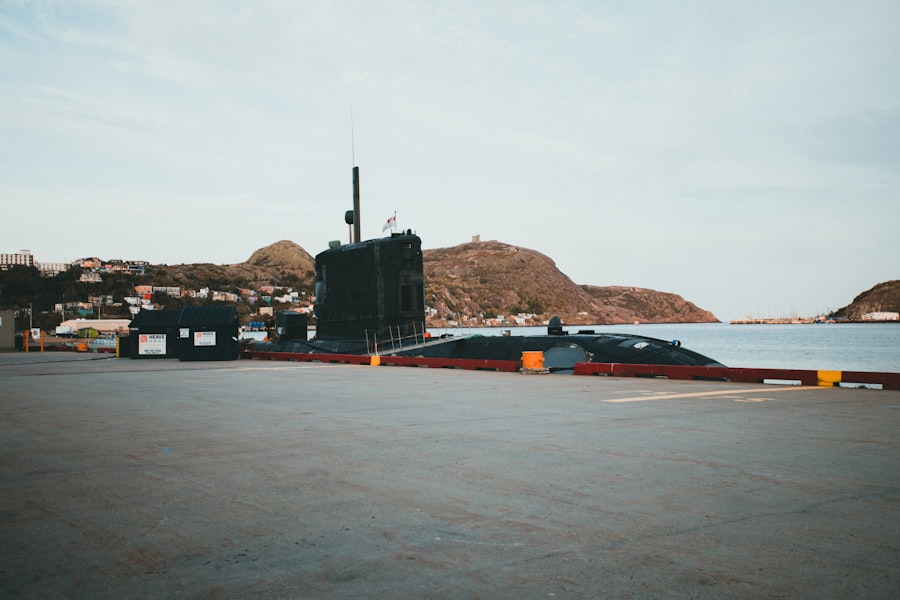
Sonar Systems: The Eyes and Ears of the Deep
Modern nuclear submarines are equipped with highly advanced sonar systems, serving as their primary sensory organs in the dark ocean. These include passive sonar, which listens for sounds emitted by other vessels, and active sonar, which emits sound pulses and analyzes the echoes.
Passive Sonar Arrays
Passive sonar is critical for silent operations, allowing the submarine to detect and track targets without revealing its own position. Large hull-mounted arrays, towed arrays extending miles behind the submarine, and flank arrays provide a vast listening capability, capable of picking up faint acoustic signatures from hundreds of miles away. Interpreting these faint whispers of the ocean requires highly trained sonar operators, akin to virtuosos discerning individual instruments in a complex symphony.
Active Sonar Capabilities
Active sonar is typically used more sparingly, as its emissions can betray the submarine’s presence. However, it provides precise targeting information in certain scenarios, such as when engaging at close ranges or in noisy environments where passive detection is challenging. The decision to “ping” is a high-stakes gamble, requiring careful tactical consideration.
Communication Challenges in the Underwater Domain
Communication with a submerged submarine is an inherently difficult task. Standard radio waves cannot penetrate water effectively.
Very Low Frequency (VLF) and Extremely Low Frequency (ELF)
Submarines use Very Low Frequency (VLF) and Extremely Low Frequency (ELF) transmissions for receiving limited, one-way messages from command centers. These signals can penetrate seawater to considerable depths, but their low bandwidth means they transmit data very slowly, often just a few characters per minute. VLF requires long shore-based antennas stretching for miles, making them vulnerable and easily identifiable. ELF, while penetrating deeper, offers even lower data rates. These systems are analogous to sending a message bottle across an ocean, slow but eventually arriving.
Satellite Communications while Surfaced or at Periscope Depth
For higher bandwidth communication, submarines must ascend to periscope depth or surface. At periscope depth, they can deploy antennas to connect with satellites, allowing for two-way communication, secure data transfer, and even limited video conferencing. However, surfacing or raising a mast increases the risk of detection, a calculable vulnerability that commanders must weigh carefully against the urgency of the communication.
Weapons Systems: Precision and Power
The effectiveness of nuclear submarine patrols is intrinsically linked to their formidable weapons systems.
Torpedoes
All nuclear submarines carry a complement of torpedoes, primarily for anti-submarine warfare (ASW) and anti-surface warfare (ASuW). Modern torpedoes are advanced, wire-guided, and acoustic-homing munitions capable of neutralizing even highly sophisticated threats. They are the close-quarters combat tools of the underwater battleground.
Cruise Missiles
Many SSNs are also equipped with vertically launched cruise missiles, such as the Tomahawk, allowing them to engage land targets from hundreds of miles offshore, providing a powerful conventional strike option. This capability extends the submarine’s reach and versatility, making it a multi-role platform for both conventional and special operations.
Ballistic Missiles (SSBNs only)
Ballistic missile submarines (SSBNs) carry SLBMs, the ultimate expression of strategic deterrence. These missiles house multiple independently targetable reentry vehicles (MIRVs), each carrying a nuclear warhead, capable of striking targets thousands of miles away. The launch sequence for an SLBM is an intricate and highly classified procedure, representing the absolute last resort in national defense.
The Global Chessboard: Naval Rivalry and Future Challenges
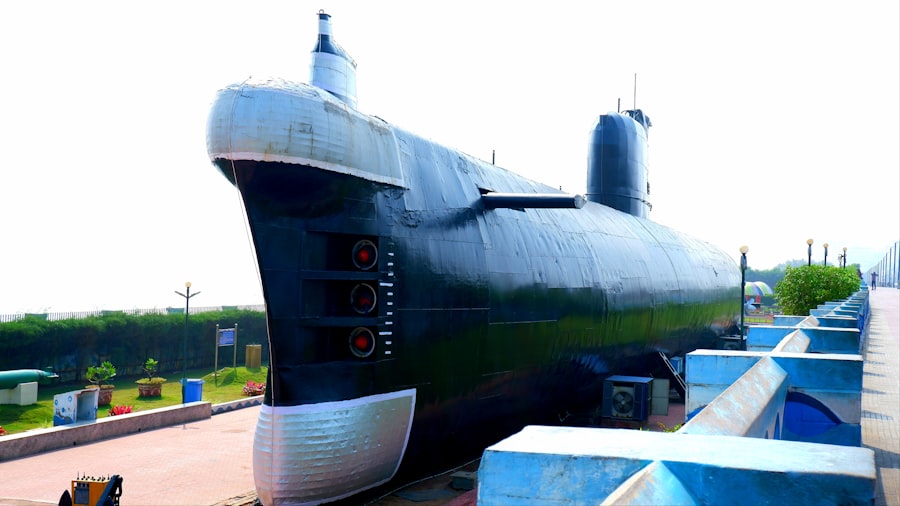
Shifting Geopolitical Landscapes
The landscape of nuclear submarine patrols is continually shaped by evolving geopolitical dynamics. As new naval powers emerge and existing ones modernize their fleets, the strategic calculations surrounding these patrols become more complex. The proliferation of advanced ASW technologies, including unmanned underwater vehicles (UUVs) and sophisticated airborne sensors, poses new challenges for maintaining submarine stealth.
The Rise of Unmanned Underwater Vehicles (UUVs)
UUVs represent a burgeoning field in naval warfare, offering both opportunities and threats to submarine operations. They can be deployed for reconnaissance, mine countermeasures, and even acting as decoys or distributed sensor networks. While UUVs can augment submarine capabilities, they also represent a potential future threat for detecting and tracking conventional and nuclear submarines. The ocean floor, once an impenetrable fortress, is becoming more transparent.
Environmental Considerations and Arctic Operations
As climate change opens up new passages in the Arctic, this region is emerging as a critical arena for submarine operations. The unique environmental conditions – ice cover, shallow waters, and unpredictable weather – present novel challenges for navigation and stealth. Nuclear submarines are uniquely suited for long-duration under-ice operations, making them key players in asserting sovereignty and projecting power in this strategically significant yet ecologically fragile domain. The melting ice caps are unmasking new battlegrounds for silent warfare.
In conclusion, nuclear submarine patrols remain a cornerstone of national security for multiple global powers. Their missions, cloaked in secrecy and executed by highly skilled crews, embody a intricate blend of human ingenuity and technological prowess. From the silent hunt for adversaries to the constant vigil of strategic deterrence, these operations are a testament to the enduring importance of naval power in shaping the global order. They are the unseen forces that maintain a fragile peace, patrolling the depths as silent sentinels, forever ready to respond.
FAQs
What is the primary purpose of nuclear submarine patrols?
Nuclear submarine patrols are primarily conducted to maintain a strategic deterrent by ensuring a continuous at-sea presence of nuclear-armed submarines. This capability helps prevent potential adversaries from launching a surprise nuclear attack.
How do nuclear submarines remain undetected during patrols?
Nuclear submarines use advanced stealth technology, including sound-dampening materials and quiet propulsion systems, to minimize noise. They also operate in deep and remote ocean areas, making detection by enemy forces extremely difficult.
What kind of communication methods are used during nuclear submarine patrols?
Nuclear submarines use secure, low-frequency radio waves and satellite communications to maintain contact with command centers. These methods are designed to be low-profile to avoid detection and maintain operational secrecy.
How long can a nuclear submarine stay on patrol without resurfacing?
Nuclear submarines can remain submerged for several months at a time, limited mainly by food supplies and crew endurance rather than fuel, as their nuclear reactors provide virtually unlimited power.
Are the details of nuclear submarine patrol routes publicly available?
No, the specific routes and operational details of nuclear submarine patrols are classified to protect national security and maintain the effectiveness of the deterrent strategy.