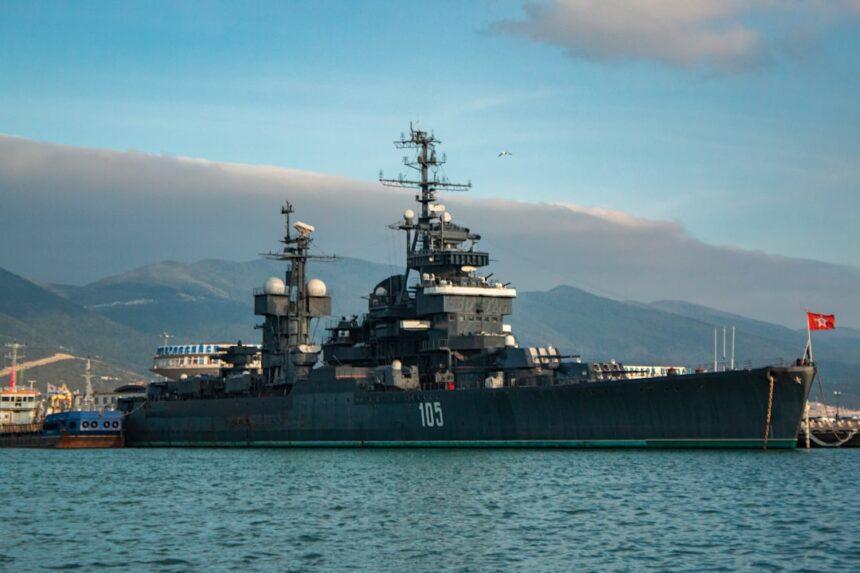
The veil of secrecy has been lifted, revealing a cornerstone of naval doctrine. For decades, the intricate mechanisms and strategic underpinnings of American naval warfare remained largely within the classified domain. Now, through a comprehensive declassification effort, a clearer picture emerges of the thought processes, technological integrations, and operational philosophies that have shaped the United States Navy’s role on the global stage. This unveiling is not merely an archival exercise; it is an invitation to understand the silent, immense power that patrols the world’s oceans, a power meticulously crafted through years of foresight and adaptation.
The evolution of naval strategy is not a sudden revelation but a gradual refinement, a blacksmith patiently hammering raw metal into a formidable weapon. Understanding the declassified strategies requires a foundational grasp of the historical imperatives that drove their development.
The Shadow of Global Conflict
The mid-20th century, a period punctuated by two World Wars, served as a crucible for naval innovation. The sheer scale of operations, the devastating impact of new technologies like submarines and carrier aviation, and the vast distances involved necessitated a strategic reassessment. Declassified documents from this era often reveal a profound reaction to the vulnerabilities exposed in earlier engagements, a drive to build a navy that could not only project power but also withstand and overcome the most sophisticated adversaries.
Adapting to Carrier Dominance
The rise of the aircraft carrier fundamentally reshaped naval thinking. No longer was the battleship the undisputed queen of the seas. Instead, the carrier, with its ability to project air power across vast distances, became the central pillar of fleet operations. Declassified materials detail the intricate ballet of carrier group deployment, the development of air defense doctrines, and the complex calculations involved in projecting air superiority over contested waters. This shift was akin to a master chess player realizing the king, while still important, was now vulnerable to flanking attacks from pieces previously considered secondary.
The Submarine Threat and Countermeasures
Conversely, the submarine’s emergence as a potent offensive weapon presented a persistent challenge. Declassified documents often focus on the cat-and-mouse game of submarine warfare, the development of anti-submarine warfare (ASW) tactics and technologies, and the constant effort to detect and neutralize this invisible threat. The strategic dilemma then became how to maintain freedom of movement on the surface while simultaneously defending against a foe that could strike from the silent depths.
The Cold War’s Nuclear Shadow
The Cold War introduced a new, existential dimension to naval strategy. The specter of nuclear annihilation cast a long shadow, shaping doctrines and fleet composition.
Maintaining the Nuclear Triad
The Navy’s role in the nuclear triad – the intercontinental ballistic missile (ICBM), the strategic bomber, and the submarine-launched ballistic missile (SLBM) – is heavily featured in declassified documents. The development and maintenance of the ballistic missile submarine (SSBN) fleet were paramount. These silent sentinels, patrolling the depths with their nuclear payload, represented a credible second-strike capability, a crucial element of deterrence. The strategic calculus involved not just the boats themselves but the sophisticated command and control systems, the patrol routes, and the operational readiness required to ensure their survivability.
Conventional Deterrence and Forward Presence
While nuclear deterrence held a dominant position, the need for conventional naval power remained. Declassified accounts highlight the strategic importance of maintaining a forward presence in key regions, deterring aggression, and responding to crises short of nuclear war. This involved the deployment of carrier strike groups, amphibious forces, and other naval assets to demonstrate resolve and capability. The Navy became a diplomatic tool as much as a military one, its ships acting as visible anchors of stability in a volatile world.
Recent developments in naval warfare strategy have been illuminated by the declassification of key military documents, shedding light on historical tactics and their relevance to modern maritime operations. For a deeper understanding of these strategies and their implications, you can read the related article available at this link. This resource provides valuable insights into how past naval engagements inform current military planning and decision-making processes.
Strategic Pillars: The Pillars of Seapower
The declassified documents reveal a consistent set of strategic pillars upon which the United States Navy’s operational philosophy is built. These are not static pronouncements but dynamic principles that have been adapted and refined over time.
Sea Control: Mastering the Maritime Domain
At its core, naval strategy is about achieving and maintaining sea control. This concept, fundamental to seapower, means denying the enemy the ability to use the sea while reserving that right for oneself.
Offensive and Defensive Sea Control
Declassified strategies delineate between offensive and defensive aspects of sea control. Offensive sea control involves projecting power into enemy-controlled waters, striking at the enemy’s maritime infrastructure and forces. Defensive sea control focuses on protecting one’s own maritime lines of communication and preventing enemy incursions. These are two sides of the same coin, inextricably linked in the pursuit of naval superiority. Think of it as a boxer controlling the center of the ring, both dictating the pace of the fight and preventing their opponent from establishing an advantage.
The Role of Multi-Domain Operations
Modern declassified strategies increasingly emphasize multi-domain operations, recognizing that conflict is no longer confined to the sea but extends to the air, land, space, and cyber realms. Naval assets are now integrated into broader joint and combined operations, leveraging their unique capabilities to support objectives across all domains. This integration is about creating synergistic effects, where the sum of the parts becomes far greater than the individual contributions.
Power Projection: Reaching Across the Globe
The ability to project power from the sea to the land is a defining characteristic of the modern U.S. Navy. Declassified documents illustrate the sophisticated methods through which this projection is achieved.
Carrier Strike Groups: The Mobile Airfields
The aircraft carrier and its accompanying strike group remain the preeminent platform for power projection. Declassified strategies detail the composition of these groups, the roles of escort vessels, and the doctrines for launching and recovering aircraft to conduct offensive operations against land targets. The carrier strike group is a veritable floating city, a self-contained unit capable of responding to crises anywhere in the world.
Amphibious Operations: Landing Forces Ashore
The projection of naval power also extends to the ability to land ground forces onto hostile shores. Declassified documents reveal the intricate planning, coordination, and execution required for amphibious assaults, from the initial reconnaissance and shaping operations to the logistical support of troops once ashore. The amphibious task force is a finely tuned instrument, designed to deliver combat power with surgical precision.
Missile Systems and Long-Range Strikes
The development and deployment of advanced missile systems have revolutionized long-range strike capabilities. Declassified strategies highlight the integration of land-attack cruise missiles, anti-ship missiles, and other precision-guided munitions into surface ships and submarines, allowing the Navy to engage targets at significant distances with unprecedented accuracy. This allows naval forces to strike at the heart of an adversary’s strength without necessarily entering harm’s way.
Technological Integration: The Engine of Innovation
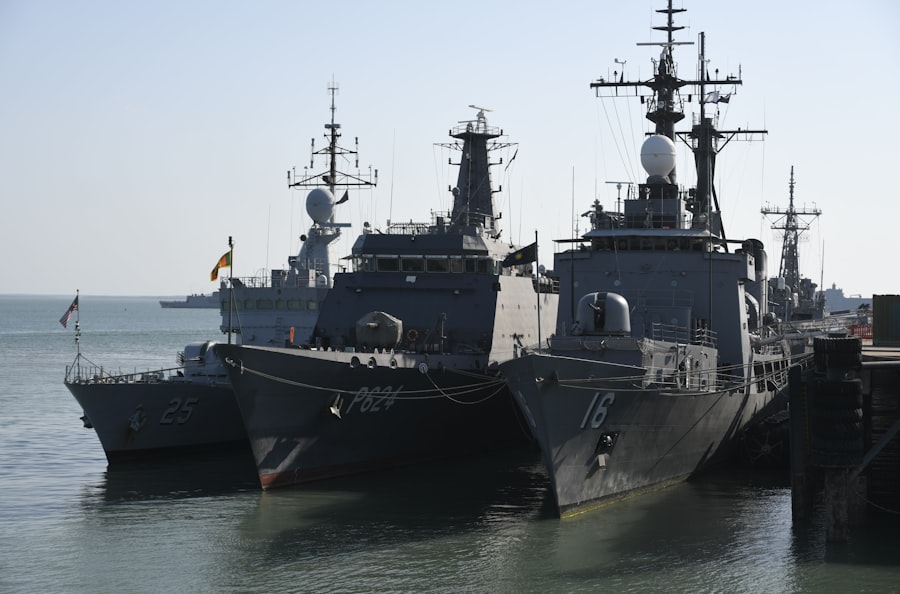
Naval strategy is inextricably linked to technological advancement. The declassified documents consistently underscore the critical role of technology in maintaining a strategic edge.
Sensors and Surveillance: Eyes and Ears of the Fleet
The ability to detect, track, and identify enemy forces is paramount. Declassified strategies delve into the development and deployment of sophisticated sensor systems, from radar and sonar to passive listening devices and advanced electronic warfare capabilities.
Radar and Electronic Warfare
The evolution of radar technology, its capabilities and limitations, is a recurring theme. Declassified materials often detail countermeasures and electronic warfare strategies designed to both jam enemy sensors and protect friendly forces from electronic detection and attack. This is a constant arms race, where innovation in offense is met with innovation in deception and defense.
Sonar and Undersea Warfare
The silent world of the submarine necessitates specialized detection methods. Declassified documents frequently discuss the advancements in sonar technology, both active and passive, and the development of towed arrays and other acoustic sensors to locate and track submerged threats. The ocean depths, a realm of mystery, are systematically mapped and monitored by these technological probes.
Lethal Force: Precision and Penetration
The instruments of naval warfare have undergone significant transformation. Declassified strategies reflect the shift from brute force to precision and the increasing emphasis on defeating heavily armored targets.
Advanced Ordnance and Missile Design
The development of advanced ordnance, including guided missiles, smart bombs, and torpedoes, has drastically improved the Navy’s offensive capabilities. Declassified documents often explore the design principles, targeting methodologies, and dispersal patterns of these weapons, aimed at maximizing their effectiveness against a variety of targets.
Directed Energy Weapons and Future Capabilities
While still in developmental stages, declassified documents hint at the exploration and potential integration of directed energy weapons, such as lasers and high-powered microwaves. These emerging technologies represent a potential paradigm shift in naval combat, offering speed-of-light engagement and ammunition-free warfare.
Operational Doctrine: The Rules of Engagement
Beyond the hardware and technological marvels, naval strategy is defined by its operational doctrines – the established principles and practices that guide the employment of naval forces.
Fleet Maneuver and Formation
The precise arrangement and movement of naval vessels in formation are critical for both offensive and defensive operations. Declassified documents often outline various fleet formations, their tactical advantages and disadvantages, and the communication protocols that ensure coordinated action.
Carrier Battle Group Operations
The intricate dance of a carrier strike group is a prime example of complex operational doctrine. Declassified materials provide insights into the procedures for launching and recovering aircraft in various weather conditions, maintaining defensive perimeters, and coordinating offensive strikes. This is akin to a maestro conducting a symphony, where every instrument must play its part in perfect harmony.
Task Force Organization and Command Structures
The organization of naval forces into task forces for specific missions is a cornerstone of operational planning. Declassified documents reveal the flexible nature of task force composition, allowing for tailored responses to diverse threats and operational requirements. The chain of command within these formations is paramount, ensuring clear lines of authority and rapid decision-making.
Rules of Engagement and Law of Armed Conflict
The legal and ethical frameworks governing the use of force are integral to naval operations. Declassified documents may touch upon the development and implementation of rules of engagement (ROE) that govern how and when naval forces can employ lethal force, particularly in complex scenarios involving potential collateral damage. These principles are the bedrock of lawful military action, ensuring that power is wielded responsibly.
Recent developments in naval warfare strategy have been significantly influenced by newly declassified documents that shed light on historical tactics and decision-making processes. These insights not only enhance our understanding of past conflicts but also inform contemporary military strategies. For those interested in exploring this topic further, an insightful article can be found at In The War Room, which delves into the implications of these revelations on modern naval operations.
The Future of Naval Warfare: Adapting to a Changing World
| Metric | Description | Value/Details | Source/Year |
|---|---|---|---|
| Fleet Composition | Number and types of vessels in a naval fleet | 10 Aircraft Carriers, 15 Destroyers, 20 Submarines | Declassified US Navy Report, 1985 |
| Engagement Range | Effective combat range of naval weapons systems | Surface-to-air missiles: 150 km; Torpedoes: 50 km | Declassified NATO Strategy Document, 1990 |
| Submarine Stealth Capability | Noise reduction and detection avoidance metrics | Acoustic signature reduced by 30% | Declassified Soviet Naval Intelligence, 1978 |
| Electronic Warfare Systems | Types and effectiveness of electronic countermeasures | Jamming range: 200 km; Signal interception success rate: 85% | Declassified US Navy EW Report, 1982 |
| Logistics and Resupply | Average time to resupply fleet at sea | 6 hours for full replenishment | Declassified British Naval Operations, 1975 |
| Command and Control | Communication latency between fleet units | Less than 2 seconds delay | Declassified Joint Naval Command Study, 1988 |
The strategic landscape is not static; it is a constantly shifting terrain. Declassified documents often offer glimpses into the Navy’s thinking about future challenges and opportunities.
Contested Environments and Peer Competitors
A prominent theme in more recent declassified materials is the increasing recognition of contested maritime environments and the emergence of peer or near-peer competitors. This has led to a renewed focus on traditional naval warfare challenges, such as fleet survivability, anti-access/area denial (A2/AD) strategies, and the ability to operate effectively in high-intensity conflict scenarios.
Distributed Maritime Operations (DMO)
In response to the challenges of contested environments, the concept of Distributed Maritime Operations (DMO) has emerged. Declassified documents may discuss strategies for disaggregating forces, increasing operational complexity for adversaries, and leveraging networked capabilities to enable distributed lethality. Instead of concentrating power in a few large platforms, DMO advocates for spreading that power across a larger, more interconnected network of smaller, more lethal units.
Emerging Technologies and Transformative Capabilities
The relentless march of technology continues to shape the future of naval warfare. Declassified documents likely explore the integration of artificial intelligence (AI), unmanned systems (UxVs), advanced cyber capabilities, and hypersonics into naval operations.
Unmanned Systems and Autonomy
The role of unmanned vehicles, both aerial, surface, and underwater, is a significant area of interest. Declassified documents may detail strategies for integrating these platforms to enhance reconnaissance, strike capabilities, and logistical support, while also addressing the challenges of human-machine teaming and autonomous decision-making.
Cyber Warfare and the Digital Battlefield
The digital domain has become an increasingly critical battlefield. Declassified strategies will undoubtedly address the Navy’s approach to cyber offense and defense, protecting its networks, disrupting enemy communications, and leveraging the cyber domain to gain a strategic advantage. The intangible realm of code and data is now as vital as the physical deployment of ships.
In conclusion, the declassification of naval warfare strategies offers an unparalleled opportunity to understand the intricate thought processes, technological innovations, and doctrinal principles that have defined and continue to shape the U.S. Navy. It is a narrative of adaptation, of constant evolution in response to a dynamic global environment, a testament to the enduring importance of seapower in shaping international affairs. This unveiling allows us to look behind the curtain, to appreciate the meticulous planning and strategic foresight that underpins the silent, powerful presence that safeguards maritime interests across the globe.
FAQs
What is naval warfare strategy?
Naval warfare strategy refers to the planning and execution of military operations at sea. It involves the deployment and maneuvering of naval forces to achieve specific objectives, such as controlling sea lanes, blockading enemy ports, or supporting land operations.
What are some key elements of naval warfare strategy?
Key elements include fleet composition, ship positioning, use of submarines and aircraft carriers, intelligence gathering, communication systems, and coordination with other military branches. Effective strategy also considers geography, weather, and technological capabilities.
How has naval warfare strategy evolved over time?
Naval warfare strategy has evolved from simple ship-to-ship combat to complex operations involving aircraft, submarines, and missile technology. Modern strategies emphasize network-centric warfare, electronic warfare, and the integration of unmanned systems.
What role does intelligence play in naval warfare strategy?
Intelligence is crucial for understanding enemy capabilities, intentions, and movements. It enables commanders to make informed decisions, anticipate threats, and exploit vulnerabilities, thereby increasing the effectiveness of naval operations.
Why is the study of declassified naval warfare strategies important?
Studying declassified strategies provides insights into historical naval conflicts, lessons learned, and the development of tactics and technologies. It helps military professionals and scholars understand past successes and failures to improve future naval operations.