The Cold War, an ideological battle waged for over four decades, often conjures images of nuclear stalemate, proxy conflicts, and the iron curtain. However, beneath this visible layer of international relations lay a labyrinthine world of clandestine operations, secret alliances, and pervasive espionage, shaping the conflict in ways often unacknowledged in mainstream historical narratives. This article delves into the hidden history of the Cold War, exposing the intricate web of deception and collaboration that defined this pivotal period. Readers are invited to look beyond the popular narratives and explore the shadowy underbelly where the true gears of power often turned.
Imagine a vast chessboard, where the pieces are not just nations, but a myriad of intelligence agencies, double agents, and clandestine organizations, each moving with calculated precision, often unseen by the public eye. This intricate dance of shadows and light defined the Cold War’s hidden history.
The immediate aftermath of World War II did not usher in an era of peace but rather a profound ideological chasm. The United States and its Western allies, champions of democratic capitalism, found themselves fundamentally opposed to the Soviet Union’s state-controlled communism. This ideological schism rapidly formalized into a “shadow war,” characterized by intelligence gathering and subversion rather than direct military confrontation.
Operation Paperclip and the Recruitment of German Scientists
One of the earliest and most morally complex examples of this shadow war was Operation Paperclip. As World War II drew to a close, both the Western Allies and the Soviet Union raced to secure German scientific and technological expertise.
- Strategic Imperative: The U.S. Joint Intelligence Objectives Agency (JIOA) initiated Operation Paperclip to recruit scientists, engineers, and technicians from Nazi Germany for government service. The primary motivation was to prevent these individuals from falling into Soviet hands and to leverage their knowledge for American technological advancements, particularly in rocketry and aerospace.
- Ethical Compromises: The operation involved a significant ethical dilemma. Many recruited scientists, such as Wernher von Braun, had been associated with the Nazi regime and its atrocities, including the use of slave labor in rocket production. The perceived national security benefits often overshadowed these moral concerns, demonstrating a pragmatic ruthlessness born of Cold War exigencies.
The Venona Project and Soviet Infiltration
Simultaneously, the Soviet Union was engaged in its own extensive espionage efforts. The Venona Project, a highly classified U.S. counterintelligence program, revealed the extent of Soviet espionage within the American government during and immediately after World War II.
- Decryption Breakthroughs: From 1943 to 1980, the U.S. Army’s Signal Intelligence Service (later the National Security Agency) decoded a vast number of Soviet intelligence cables. These decryptions uncovered the identities of numerous Soviet agents and sources operating within the U.S. government, including figures involved in the Manhattan Project.
- Impact on McCarthyism: While Venona’s existence remained a closely guarded secret for decades, its insights, albeit indirectly, fueled anxieties about communist infiltration and contributed to the climate of suspicion during the McCarthy era. The project provided hard evidence of Soviet penetration, adding a factual basis to some of the era’s fears, even if those fears were often exaggerated and misdirected.
The hidden history of the Cold War reveals numerous untold stories and covert operations that shaped global politics during this tense period. For a deeper exploration of these lesser-known events, you can read the article on the intricate espionage activities and secret alliances that defined the era. To learn more, visit this article.
Covert Operations and Regime Change: The CIA’s Global Reach
As the Cold War matured, the Central Intelligence Agency (CIA), established in 1947, evolved into a formidable instrument of U.S. foreign policy. Its mandate extended beyond intelligence gathering to include covert operations aimed at influencing political outcomes in strategically important nations. These operations often involved significant risk, both to the agents involved and to the long-term stability of the targeted nations.
The Iranian Coup of 1953 (Operation Ajax)
Perhaps one of the most prominent examples of CIA intervention was the 1953 coup in Iran.
- Nationalization of Oil: Iranian Prime Minister Mohammad Mosaddegh had nationalized the Anglo-Iranian Oil Company, a move that threatened British and American economic interests and raised fears of Soviet influence.
- CIA and MI6 Collaboration: The CIA, in conjunction with the British MI6, orchestrated a coup d’état to overthrow Mosaddegh and reinstall Shah Mohammad Reza Pahlavi. The operation involved propaganda, bribery, and the manipulation of local political factions. This intervention set a contentious precedent for future U.S. involvement in the region and contributed to long-standing anti-American sentiment. The echoes of this intervention continue to resonate in contemporary U.S.-Iran relations, demonstrating how a single act of covert intervention can cast a long shadow across decades.
The Guatemalan Coup of 1954 (Operation PBSUCCESS)
Another significant operation occurred in Guatemala in 1954.
- Land Reform and United Fruit Company: Guatemala’s democratically elected President Jacobo Árbenz Guzmán initiated land reforms that challenged the interests of the powerful United Fruit Company, a U.S. corporation with significant ties to American political figures.
- Propaganda and Military Support: The CIA, under Operation PBSUCCESS, launched a sophisticated propaganda campaign, disseminated anti-Árbenz materials, and provided financial and military support to a rebel force led by Colonel Carlos Castillo Armas. Árbenz was ultimately overthrown, leading to decades of instability and authoritarian rule in Guatemala. The coup exemplifies the Cold War’s brutal logic: perceived threats to American economic interests, even when driven by domestic reform, could trigger significant covert intervention.
The Berlin Tunnel: A Tapestry of Deception and Wiretaps
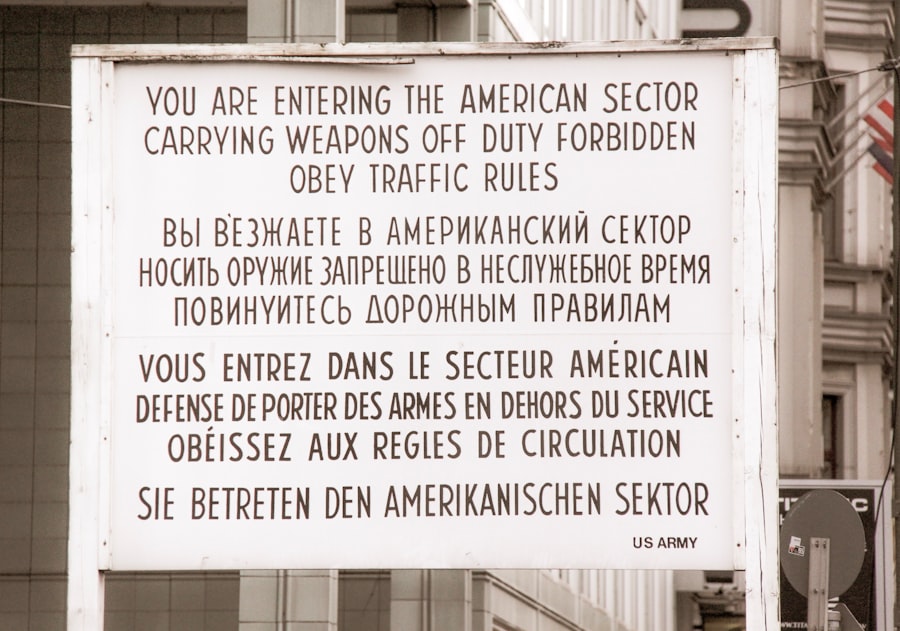
Berlin, a city physically divided and symbolically charged, became a primary battleground for espionage. The notorious Berlin Tunnel, a joint operation between the CIA and MI6, stands as a testament to the audacious nature of Cold War intelligence gathering.
Operation Gold / Stopwatch
The Berlin Tunnel, known as Operation Gold to the Americans and Operation Stopwatch to the British, was a multi-year effort to tap into Soviet military communication lines in East Berlin.
- Construction and Secrecy: Beginning in 1953, engineers and intelligence operatives constructed a tunnel over 450 meters long beneath the Soviet sector of Berlin. The clandestine operation required immense secrecy, careful engineering to avoid detection, and the disposal of tons of excavated earth.
- Intelligence Harvest: For nearly a year, the tunnel provided invaluable intelligence, intercepting thousands of conversations and telex messages from Soviet, East German, and Polish military headquarters. This intelligence offered a rare glimpse into the inner workings of the Eastern Bloc’s military infrastructure.
- Early Betrayal: Unbeknownst to the Western agencies, the tunnel’s existence had been betrayed by George Blake, a highly placed Soviet mole within MI6, even before construction began. The Soviets allowed the operation to continue for strategic reasons: to identify the communication lines being tapped and to feed disinformation to the West. This monumental deception highlights the complex interplay of human frailty and strategic calculation that defined Cold War espionage. The tunnel, initially a symbol of Western ingenuity, became a monument to Soviet counter-intelligence prowess.
Defections and Double Agents: The Human Cost of the Cold War
The Cold War was not merely a clash of titans; it was a deeply human conflict fought by individuals whose loyalties were constantly tested. The stories of defectors and double agents offer a poignant insight into the personal sacrifices and profound moral dilemmas inherent in this hidden war.
Kim Philby and the Cambridge Five
The “Cambridge Five” remains one of the most infamous espionage rings in history. Among them, Kim Philby stands out as a quintessential example of a highly placed double agent.
- Ideological Commitment: Philby, along with Donald Maclean, Guy Burgess, Anthony Blunt, and John Cairncross, were British intelligence officers who, driven by communist ideology, secretly worked for the Soviet Union from the 1930s until their exposures in the 1950s and 60s.
- Deep Penetration: Philby’s career with MI6 saw him rise to significant positions, including head of counter-espionage for the Iberian Peninsula and liaison officer to the CIA. From these vantage points, he passed on vast quantities of highly sensitive Western intelligence to Moscow, compromising numerous operations and endangering countless agents. His actions were like a constant, silent leak in a critical pipeline, allowing vital information to drain away unnoticed for years. His eventual defection to the Soviet Union in 1963 was a major blow to Western intelligence and a stark reminder of the depth of Soviet penetration.
The Oleg Gordievsky Affair
Conversely, Oleg Gordievsky represents a pivotal defector from the Soviet side.
- KGB Colonel and Western Asset: Gordievsky, a high-ranking KGB colonel, was recruited by MI6 in the 1970s. For over a decade, he provided invaluable intelligence to the West, offering crucial insights into Soviet intentions and capabilities, particularly concerning nuclear war planning. His information helped Western leaders understand the true nature of Soviet fears, potentially averting miscalculations during moments of heightened tension.
- Dramatic Extraction: In 1985, after coming under suspicion, Gordievsky was dramatically exfiltrated from the Soviet Union in a daring operation orchestrated by MI6. His defection and subsequent revelations were instrumental in shaping Western understanding of the Soviet Union in the latter years of the Cold War. His story is a testament to the courage of individuals who chose to act on their convictions, even at immense personal risk.
The hidden history of the Cold War reveals many intriguing aspects that often go unnoticed in mainstream narratives. For those interested in exploring this topic further, a fascinating article can be found at In the War Room, which delves into the lesser-known events and strategies that shaped this tense period. By examining these hidden elements, we can gain a deeper understanding of the geopolitical landscape that defined the 20th century.
Technological Warfare and the Space Race: Intelligence from the Skies
| Aspect | Description | Significance | Time Period |
|---|---|---|---|
| Operation Gladio | Secret NATO “stay-behind” armies in Europe prepared to resist Soviet invasion and influence | Influenced European politics and covert operations, often linked to false flag events | 1950s–1990s |
| U-2 Spy Plane Incidents | Covert reconnaissance flights over Soviet territory to gather intelligence | Heightened tensions after the 1960 U-2 incident where pilot Francis Gary Powers was shot down | 1956–1960 |
| Project Azorian | Secret CIA mission to recover a sunken Soviet submarine from the Pacific Ocean | Demonstrated advanced underwater recovery technology and intelligence gathering | 1974 |
| Berlin Tunnel (Operation Gold) | Joint CIA and British operation to tap Soviet communication lines in East Berlin | Provided valuable intelligence but was compromised by a Soviet mole | 1955–1956 |
| MKUltra | Secret CIA program researching mind control and chemical interrogation techniques | Raised ethical concerns and revealed covert experimentation on unwitting subjects | 1953–1973 |
| Venona Project | US effort to decrypt Soviet intelligence communications | Exposed Soviet espionage networks in the US and UK | 1943–1980s (declassified later) |
The Cold War spurred an unprecedented technological arms race, extending far beyond conventional weaponry to include sophisticated surveillance technologies. The “Space Race,” often presented as a competition for prestige, was also a desperate struggle for intelligence dominance.
U-2 Spy Plane and the Gary Powers Incident
High-altitude reconnaissance aircraft played a critical role in intelligence gathering. The U-2 spy plane, developed by Lockheed’s Skunk Works for the CIA, revolutionized aerial reconnaissance.
- Unmatched Capabilities: The U-2, flying at altitudes exceeding 70,000 feet, was initially considered invulnerable to Soviet MiGs and surface-to-air missiles. It provided photographic intelligence of unparalleled detail, revealing Soviet military installations, missile sites, and nuclear programs. For years, it was the West’s eye in the sky, piercing the opaque veil of the Iron Curtain.
- The 1960 Shootdown: In May 1960, a U-2 piloted by Francis Gary Powers was shot down over Soviet territory. The incident exposed the clandestine nature of American intelligence operations, leading to a major international crisis and the cancellation of a crucial superpower summit. Powers’ survival and capture, along with the intact wreckage of the U-2, were a significant propaganda victory for the Soviets and a diplomatic embarrassment for the United States.
Satellite Surveillance: The Ultimate Vantage Point
The space race, often framed as a competition for human exploration, simultaneously facilitated the development of satellite surveillance systems, fundamentally transforming intelligence gathering.
- Corona Program: The Corona program, initiated in the late 1950s, was the first successful series of photoreconnaissance satellites operated by the United States. These satellites, initially known as “Keyhole” satellites, provided high-resolution imagery of Soviet territory, filling critical intelligence gaps that neither U-2 nor other aerial reconnaissance methods could access. The successful deployment of these satellites was like gaining a permanent, unblinking eye in the heavens.
- Game Changer: Satellite intelligence offered a comprehensive, repeatable, and less risky alternative to manned aerial reconnaissance. It provided crucial data for arms control negotiations, verified compliance with treaties, and became an indispensable tool for strategic assessment throughout the remainder of the Cold War and beyond. The evolution of satellite imagery moved the invisible hand of intelligence gathering from terrestrial shadows to the vast expanse of space.
In conclusion, the hidden history of the Cold War is a narrative far richer and more complex than often portrayed. It is a story of audacious gambles, profound ethical quandaries, and the tireless efforts of countless individuals, both celebrated and anonymous, who waged a secret war beneath the surface of official diplomacy. By understanding these covert operations, secret alliances, and the pervasive nature of espionage, readers can gain a more nuanced appreciation of the forces that shaped the latter half of the 20th century and continue to influence our world today. The Cold War, in its hidden dimensions, serves as a powerful reminder that history is not merely a chronicle of events, but a tapestry woven with threads of secrecy, deception, and the relentless pursuit of ideological dominance.
FAQs
What was the Cold War?
The Cold War was a period of geopolitical tension between the United States and the Soviet Union, along with their respective allies, that lasted from roughly 1947 to 1991. It was characterized by political, military, and ideological rivalry without direct large-scale fighting between the two superpowers.
What does the “hidden history” of the Cold War refer to?
The “hidden history” of the Cold War refers to lesser-known events, covert operations, secret negotiations, espionage activities, and behind-the-scenes diplomacy that were not widely publicized or understood during the time. This includes intelligence missions, proxy wars, and classified government actions.
What were some key covert operations during the Cold War?
Key covert operations included CIA-led coups in countries like Iran (1953) and Guatemala (1954), Soviet espionage activities, the U-2 spy plane missions, and secret support for proxy wars in Korea, Vietnam, and Afghanistan. These operations often aimed to influence political outcomes without direct military confrontation.
How did espionage impact the Cold War?
Espionage played a critical role in gathering intelligence, influencing political decisions, and maintaining a balance of power. Both the CIA and the KGB conducted extensive spying activities, including infiltrating governments, stealing technological secrets, and monitoring military developments.
What led to the end of the Cold War?
The Cold War ended due to a combination of factors including economic pressures on the Soviet Union, political reforms under Mikhail Gorbachev such as glasnost and perestroika, improved diplomatic relations, arms reduction agreements, and the eventual dissolution of the Soviet Union in 1991.