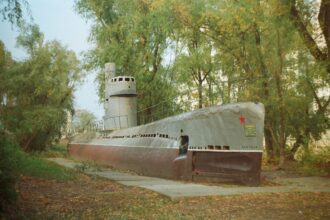
The chilling depths of the Pacific Ocean became a stage for a clandestine drama in the 1970s, a high-stakes chess match played out in the silent, crushing embrace of the abyss. At the heart of this strategic gambit lay Project Azorian, a monumental and audacious undertaking by the Central Intelligence Agency (CIA) to recover a lost Soviet submarine. This was no ordinary salvage operation; it was an intricate tapestry woven with cutting-edge technology, immense secrecy, and the ever-present specter of the Cold War. For the United States, retrieving the K-129, a Golf II-class ballistic missile submarine that sank in 1968, was akin to prying open a locked chest containing vital secrets of its adversary.
The United States had, for years, been actively engaged in intelligence gathering against the Soviet Union. The discovery of the K-129’s wreckage presented an unprecedented opportunity to gain firsthand knowledge of Soviet submarine technology, its operational capabilities, and its strategic doctrine. The sinking itself was a stark reminder of the inherent dangers of naval warfare, even without direct conflict, and the K-129’s demise off the coast of Hawaii added a geopolitical layer to the tragedy.
The Unforeseen Discovery
The initial detection of the K-129’s resting place was not a result of direct American reconnaissance but rather an intriguing twist of fate. During routine naval patrols in the Pacific, American sonar systems picked up unusual acoustic signatures that, upon further analysis, suggested the presence of a submerged object of significant size and unusual characteristics. This whisper from the deep, initially a mere anomaly, soon became the focal point of intense intelligence scrutiny. The possibility that it was a Soviet submarine, sunk and potentially holding sensitive intelligence, ignited a firestorm of covert planning.
The Strategic Imperative: Why the K-129 Mattered
The K-129 was not just any submarine; it was a potent symbol of Soviet naval power. Its Golf II class was equipped with ballistic missiles, representing a significant threat to the United States during the Cold War. The potential for the Soviets to develop countermeasures, understand American radar capabilities, or even to recover their own lost technology if the US did not act decisively, presented a stark strategic dilemma. For the CIA, recovering the submarine was like gaining a front-row seat to the Soviet military’s inner workings. It was an opportunity to see their engineering prowess, their operational procedures, and perhaps even the disposition of their nuclear arsenal after the sinking. The knowledge gleaned from such a recovery could dramatically shift the balance of power in the ongoing ideological struggle.
The CIA’s Project Azorian, which aimed to recover a sunken Soviet submarine from the depths of the Pacific Ocean, highlights the lengths to which intelligence agencies will go to gather critical information. For a deeper understanding of the mission’s objectives and its implications for Cold War espionage, you can read a related article that delves into the intricacies of this covert operation. For more information, visit this article.
The Unveiling of Project Azorian: A Monumental Undertaking
Project Azorian was conceived as a multi-year, multi-billion dollar endeavor that would push the boundaries of engineering and logistics. The sheer scale of the operation demanded an unprecedented level of secrecy, as any leak could jeopardize the mission and potentially escalate tensions between the superpowers. The CIA understood that this was a high-wire act, where a single misstep could send the entire operation, and perhaps even global stability, plummeting into the abyss.
The Scale of the Challenge: Depth and Pressure
The K-129 lay at a staggering depth of approximately 16,000 feet, a realm where sunlight is an alien concept and the crushing pressure is almost unimaginable. Recovering an object of this size from such depths was, at the time, a feat bordering on the impossible. The engineering challenges were immense, requiring the development of specialized equipment capable of withstanding these extreme conditions. It was like trying to lift a mountain from the bottom of the ocean floor, with the added complication of the crushing forces trying to deform every component.
The Technological Innovation: Building the Glomar Explorer
To tackle this monumental task, the CIA commissioned the design and construction of a purpose-built vessel that would serve as the linchpin of the operation. This vessel, the Glomar Explorer, was a marvel of engineering, designed to be a floating factory and a dexterous manipulator of the deep sea. Its most striking feature was its massive moon pool, an opening in the center of the ship that allowed specialized equipment to be lowered directly into the ocean. This was the ship’s beating heart, providing a stable platform from which the delicate dance with the K-129 could begin.
The “Catcher’s Mitt”: The Submersible Capture Vehicle
Central to the Glomar Explorer‘s capabilities was its innovative capture system, often referred to metaphorically as a “giant mechanical claw” or a “catcher’s mitt.” This sophisticated device, known as the “capture vehicle,” was designed to latch onto the submarine. It was a complex piece of engineering that had to be maneuvered with pinpoint accuracy in the pitch-black depths, guided by sophisticated sonar and acoustic positioning systems. The success of the entire project hinged on the precise and successful deployment of this vehicle.
The Deception: A Cover Story for a Global Spectacle
Maintaining absolute secrecy was paramount to Project Azorian’s success. The CIA recognized that a genuine salvage operation of this magnitude would inevitably draw international attention, particularly from the Soviets. Therefore, a cunning and elaborate cover story was devised to mask the true nature of the Glomar Explorer‘s activities. This deception was a crucial element, acting as a smokescreen for the clandestine operation unfolding beneath the waves.
The “Deep Sea Mining” Facade
The official explanation for the Glomar Explorer‘s presence in the Pacific was a venture into deep-sea mining, a legitimate and growing area of industrial research at the time. The vessel was presented as a state-of-the-art facility for exploring and extracting valuable minerals from the ocean floor. This narrative was carefully crafted and disseminated through various channels, aiming to deflect suspicion and explain away the unusual activities associated with the Glomar Explorer. The public and the international community were fed a story of commercial enterprise, unaware of the true strategic objective.
The Role of the Public Relations Machine
The CIA employed a sophisticated public relations strategy to bolster the mining cover story. Press releases were issued, carefully worded to emphasize the scientific and economic aspects of the operation. Journalists were sometimes offered limited, controlled access to the Glomar Explorer during its less critical phases, allowing them to observe activities consistent with deep-sea mining. This carefully managed transparency was itself a form of obfuscation, creating a veneer of legitimacy that masked the secret mission.
The Soviet Watchers: A Constant Threat
Even with the elaborate cover story, the CIA was acutely aware that the Soviets would be monitoring their activities. Soviet intelligence agencies were known for their extensive surveillance capabilities, and the disappearance of the K-129 would undoubtedly have triggered a heightened sense of vigilance. The American team had to operate under the assumption that at any moment, their true intentions could be discovered. It was a constant game of cat and mouse, played out on a global scale, with the fate of strategic superiority hanging in the balance.
The Operation: A Delicate Dance with the Abyss
The actual recovery operation was a testament to human ingenuity and perseverance. It involved a series of complex maneuvers, each requiring meticulous planning and execution. The vastness of the ocean and the extreme pressure created a hostile environment, where a single error could have catastrophic consequences. This was not a brute-force endeavor; it was a ballet of precision, performed in an arena of immense danger.
Lowering the Beast: The Glomar Explorer in Action
The Glomar Explorer would position itself precisely over the K-129’s wreckage. Then, the massive capture vehicle, suspended by a kilometers-long cable, would be meticulously lowered into the crushing darkness. Guided by an array of sensors and skilled operators in the control room, the vehicle had to navigate the treacherous terrain of the ocean floor. The process of engagement was akin to threading a needle in a hurricane, demanding unwavering focus and extraordinary technical proficiency.
The Art of the Snag: Securing the Prize
The critical moment was when the capture vehicle, with its specially designed jaws, would attempt to “snag” the submarine. This was not a simple grab; it involved carefully aligning the vehicle with the K-129’s structure, ensuring a secure grip without causing undue damage. The weight and fragility of the submarine, combined with the immense forces at play, made this a nail-biting phase of the operation. Each minute spent in this delicate maneuver was a testament to the nerves of steel possessed by the crew.
The Ascent: A Slow and Perilous Journey
Once secured, the arduous process of lifting the K-129 began. The capture vehicle, now laden with a Soviet submarine weighing thousands of tons, would slowly ascend through the water column. This ascent was not a swift victory but a controlled, protracted journey. The sheer weight and the potential for unforeseen problems meant that every foot gained was a hard-won battle against the ocean’s embrace. The cable system had to be constantly monitored, and contingency plans were always at the forefront of the crew’s minds. This was the longest walk home in history, a silent ascent from the ocean’s maw.
The Mid-Operation Setback: A Partial Success, A Lingering Mystery
During one of the attempts to recover the K-129, a critical structural failure occurred. The capture vehicle, despite its robust design, was unable to secure the entire submarine. A portion of the K-129, including its missile section, broke free and sank back to the ocean floor. This was a bitter pill to swallow; a partial success that left the most valuable intelligence tantalizingly out of reach. The Americans had managed to retrieve a significant portion of the submarine, but the true prize, the complete blueprint of Soviet nuclear capabilities, remained partly in the murky depths.
The CIA’s Project Azorian aimed to recover a sunken Soviet submarine from the depths of the Pacific Ocean, showcasing the lengths to which the agency would go during the Cold War. This ambitious mission not only highlighted the technological advancements of the time but also reflected the intense rivalry between the United States and the Soviet Union. For a deeper understanding of the strategic implications and the operational challenges faced during this covert operation, you can read more in this insightful article about the mission’s objectives and outcomes at this link.
The Aftermath and Legacy: Secrets Unearthed and Questions Remaining
| Metric | Details |
|---|---|
| Mission Name | Project Azorian |
| Objective | Recovery of a sunken Soviet submarine (K-129) |
| Date | 1974 |
| Location | North Pacific Ocean |
| Depth of Submarine | Approximately 16,500 feet (5,000 meters) |
| Recovery Vessel | Hughes Glomar Explorer |
| Operation Cost | Estimated hundreds of millions (exact figures classified) |
| Outcome | Partial recovery of submarine sections |
| Significance | Advanced deep-sea recovery technology and intelligence gathering |
While Project Azorian was not an unqualified success, it did yield significant intelligence gains. The recovered sections of the K-129 provided invaluable insights into Soviet submarine technology, operational procedures, and the overall state of their naval forces. The operation also stands as a testament to the United States’ capabilities in conducting complex, clandestine missions during the Cold War. However, the partial recovery left lingering questions and a sense of what might have been.
The Intelligence Harvest: A Peek Behind the Iron Curtain
The salvaged parts of the K-129 were subjected to intense analysis by American intelligence agencies. The recovered electronics, guidance systems, and structural components offered a direct look into Soviet engineering and manufacturing capabilities. It was like deciphering an alien language, word by word, revealing the secrets of their technological advancements. This intelligence played a role in shaping American defense strategies and understanding the evolving Soviet military threat.
A New Understanding of Soviet Naval Power
The recovered materials provided a concrete understanding of Soviet submarine design philosophy, their approach to missile systems, and their operational methodologies. This was not just theoretical knowledge gained from intercepted communications; it was tangible evidence, allowing American analysts to assess the effectiveness of Soviet technology and predict future developments. The information gleaned helped bridge the gap in understanding between the two superpowers, providing a crucial edge in the ongoing arms race.
The Cost of Secrecy: Financial and Human
Project Azorian was an extraordinarily expensive undertaking, with estimates of its cost running into hundreds of millions of dollars. The development of the Glomar Explorer and the specialized equipment, along with the extensive operational expenses, represented a significant investment by the US government. Beyond the financial outlay, there was the immense human effort and dedication required from the hundreds of individuals involved, all operating under the shroud of extreme secrecy, often for years at a time.
The Lingering Ethical Debates
While the intelligence gained was undoubtedly valuable, Project Azorian also raised ethical questions about the extent to which governments should go in their pursuit of intelligence. The clandestine nature of the operation, the enormous financial resources dedicated to it, and the potential for escalating Cold War tensions all contributed to ongoing debates about the morality and justification of such covert actions. The operation served as a stark reminder of the shadowy world of espionage and the difficult choices faced by national leaders during times of ideological conflict.
The Enduring Mystery: What Lies Beneath?
Even with the partial recovery, the full fate of the K-129 and the secrets it held remain an enduring mystery. The portion of the submarine that broke free continued to rest in the abyss, a silent sentinel of a bygone era. Project Azorian, while a remarkable achievement, also served as a poignant reminder of the vast and still largely unexplored depths of the ocean, and the secrets that may forever remain hidden beneath its crushing weight.
WARNING: The $800 Million Mechanical Failure That Almost Started WWIII
FAQs
What was the primary objective of the CIA’s Project Azorian?
The primary objective of Project Azorian was to recover a sunken Soviet submarine, K-129, from the Pacific Ocean floor during the Cold War, in order to obtain intelligence materials and technology.
When did Project Azorian take place?
Project Azorian was conducted in the early 1970s, with the recovery operation occurring in 1974.
How did the CIA plan to recover the submarine?
The CIA used a specially designed deep-sea recovery ship called the Hughes Glomar Explorer, which was built under the guise of a commercial mining operation to secretly lift the submarine from the ocean floor.
Was Project Azorian successful in recovering the submarine?
Project Azorian partially succeeded; the CIA was able to recover a portion of the submarine, but much of it broke apart during the lift, limiting the amount of intelligence material retrieved.
Why was Project Azorian kept secret for so long?
The mission was highly classified to avoid diplomatic tensions with the Soviet Union and to protect the advanced technology and methods used in the deep-sea recovery operation. The project was publicly acknowledged only decades later.