The Cold War was a period of intense geopolitical rivalry, a long game played not with tanks and artillery, but with espionage, technological innovation, and the constant hum of suspicion. In this high-stakes chess match, even the deepest oceans were not beyond the reach of competing powers. When the United States embarked on its audacious undertaking, the Glomar Explorer mission, the Soviet Union watched with a keen and calculating gaze.
Unveiling Project Azorian
The Glomar Explorer mission, codenamed Project Azorian, was a clandestine operation undertaken by the Central Intelligence Agency (CIA) of the United States. Its primary objective, revealed much later, was to salvage a sunken Soviet submarine, K-129, from the abyssal depths of the Pacific Ocean. The K-129, lost in 1968, carried a significant payload of ballistic missiles and potentially, highly sensitive intelligence. The recovery of such a vessel presented the US with an unparalleled opportunity to gain crucial insights into Soviet naval capabilities, missile technology, and cryptographic secrets. The sheer audacity of the mission, attempting to pluck a massive object from over 16,000 feet of water, speaks volumes about the technological ambition that fueled the Cold War arms race. From the Soviet perspective, this was not just a retrieval; it was a potential violation of their sovereign territory, a raid on their deepest secrets.
The Technological Marvel: Glomar Explorer
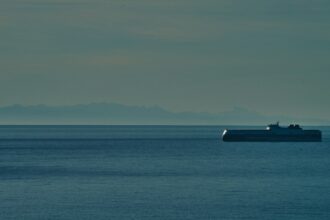
The success of Project Azorian hinged entirely on the development of a specialized ship, the Glomar Explorer. This vessel was a marvel of engineering, designed to operate as a floating factory capable of lifting immense weights from extreme depths. Equipped with a massive, centrally located moon pool – an opening in the hull allowing direct access to the sea – and a towering derrick, the Glomar Explorer was capable of deploying a complex capture vehicle, the “Halibut,” designed to grapple the submarine. The ship was ostensibly owned by a front company, Global Marine Inc., and operated under the guise of deep-sea mining research, a clever veil for its true purpose. The Soviets, however, possessed a sophisticated intelligence apparatus that was constantly sifting through the ether for any anomalies, any whispers of unusual activity, and the Glomar Explorer, with its unique design and unusual operational patterns, was bound to attract their attention.
The Stakes of the Deep
The potential intelligence coup for the United States was immense. Recovering the K-129 offered a treasure trove of information. The submarine’s missile systems, its operational manuals, its codebooks – all could provide a critical edge in the ongoing strategic balance. For the Soviets, the loss of the K-129 was a wound, but the salvage of its secrets by a rival would be a catastrophic blow. Imagine a gardener discovering not only that their prize-winning rose bush had been dug up, but that its most vital root system had been meticulously extracted. The implications for future security would be profound. The Soviet Union, a nation that prided itself on its technological prowess and its ability to protect its interests, could not afford to be caught unaware.
The Soviet reaction to the Glomar Explorer mission, which aimed to recover a sunken Soviet submarine, was marked by a mix of skepticism and concern over U.S. capabilities in underwater exploration. This covert operation not only highlighted the technological advancements of the United States during the Cold War but also intensified the existing tensions between the two superpowers. For a more in-depth analysis of the geopolitical implications and the subsequent responses from the Soviet Union, you can read the related article at In The War Room.
Soviet Intelligence and the Whispers of Suspicion
The Eyes and Ears of the KGB
The Committee for State Security (KGB) was the Soviet Union’s formidable intelligence agency, a vast network of informants, analysts, and operatives that spanned the globe. Its mandate was to protect the Soviet state, to uncover threats, and to gather intelligence on potential adversaries. The Glomar Explorer mission, with its covert nature and immense scale, would have been a significant anomaly that would have undoubtedly piqued the KGB’s interest. Information flowed into KGB headquarters like rivers feeding into a vast ocean, and any unusual currents in that ocean, especially those originating from the United States in sensitive military areas, would have been carefully scrutinized.
Anomalies in the Pacific
The sheer scale of the Glomar Explorer’s operations, its prolonged presence in a specific area of the Pacific, and the specialized nature of its equipment would have been difficult to conceal completely. While the US employed elaborate deception tactics, the Soviets possessed their own sophisticated methods for detecting unusual maritime activity. This included satellite surveillance, signals intelligence (SIGINT), and human intelligence (HUMINT) networks. Any deviations from typical shipping patterns or the deployment of unconventional naval assets would have been flagged. The “mining research” cover story, while plausible on the surface, would likely have been subjected to intense scrutiny by a Soviet intelligence apparatus trained to look for the cracks in such narratives. The whispers of unusual activity would have begun to circulate, like the first ripples on a calm surface.
The Weight of Deduction
Even without direct confirmation, the Soviet Union was skilled at deductive reasoning. They understood the motivations and capabilities of their adversary. The US had a vested interest in learning more about Soviet naval technology, particularly their submarine forces, which formed a crucial part of their nuclear deterrent. The loss of a submarine of the K-129’s class would naturally have prompted questions. When coupled with the unusual activity detected, the logical conclusion for Soviet intelligence would have been that the Americans were attempting a recovery. The absence of an overt explanation from the US, a deliberate silence, only served to amplify these suspicions. It was like observing a hunter meticulously stalking a known prey animal, the silence around their intentions making their presence all the more ominous.
The Dance of Deception and Countermeasures

The Veil of Secrecy
The United States went to extraordinary lengths to maintain the secrecy of Project Azorian. The front company, the carefully crafted cover story, and the compartmentalization of information were all designed to keep the mission hidden. However, in the shadowy world of Cold War espionage, absolute secrecy is often an illusion. The Soviets, masters of counterintelligence, were adept at peeling back layers of deception. They understood that even the most well-constructed facade could splinter under persistent pressure. The very efforts to hide the mission, paradoxically, might have made it more conspicuous in the eyes of a watchful adversary.
The Submarine and the Spy Plane
Soviet naval intelligence actively monitored US naval movements in the Pacific. While the Glomar Explorer was an unusual vessel, the Soviets also employed their own submarines to observe and gather intelligence on US naval exercises and deployments. It is plausible that Soviet submarines were in the vicinity during the Glomar Explorer’s operations, attempting to gather clues. Furthermore, reconnaissance aircraft, both land-based and carrier-borne, would have been tasked with observing any unusual maritime activity. The skies and seas became a chessboard where each move was observed and analyzed.
The Disinformation Campaign
While the US aimed to keep its operations secret, the Soviets, upon suspecting a recovery attempt, might have considered various countermeasures. These could have included disinformation campaigns designed to mislead the US about what information they had actually recovered, or even attempts to interfere with the salvage operation itself. However, the remoteness of the location and the technical complexities of the mission would have made direct interference a risky proposition. Instead, their focus would likely have been on maximizing their understanding of the US operation and its potential outcomes. The Soviets were like a skilled poker player, observing their opponent’s tells and betting accordingly.
The Aftermath: Revelations and Lingering Questions

Unveiling the Truth Decades Later
The true nature of Project Azorian remained a closely guarded secret for nearly three decades. It was only in the late 1990s that much of the mission’s details began to emerge, largely through declassified US government documents and investigative journalism. This delayed revelation highlights the success of the US in maintaining operational security, but also the inherent difficulties in completely obscuring such a massive undertaking. For the Soviet Union, by the time the full story emerged, the strategic landscape had changed dramatically, but the initial concern and effort to uncover the truth would have been very real.
Soviet Assessments and Counter-Intelligence Successes
While specific Soviet internal documents detailing their precise response to Project Azorian are not widely available, it is reasonable to assume that the KGB and Soviet military intelligence would have conducted thorough post-operation analyses. They would have sought to understand the extent of the US success, the intelligence gained, and any vulnerabilities exposed in their own operations. The fact that the mission was not widely publicized by the Soviets at the time suggests they either did not have definitive proof or decided that publicizing it would be more detrimental than remaining silent. Their counter-intelligence efforts, even if unsuccessful in preventing the salvage, would have been focused on mitigating the damage and learning from the experience.
The Lingering Shadow of Espionage
The Glomar Explorer mission serves as a stark reminder of the pervasive nature of espionage during the Cold War. The oceans, once considered vast and impenetrable, became another arena for competition. The technological leaps made in pursuit of such clandestine operations, while driven by military objectives, often had broader implications for scientific exploration and maritime technology. The Soviet response, though veiled in secrecy, was a testament to their vigilance and their commitment to protecting their national interests, even from the deepest, darkest corners of the world. The entire affair was a testament to the long shadow cast by the Cold War, a shadow that stretched even to the seabed.
The Legacy of the Deep
Project Azorian and the Soviet response to it underscore the complex interplay of technology, intelligence, and geopolitical strategy that defined the Cold War. The mission’s success, at least in part, provided the United States with valuable intelligence, while the Soviet Union’s awareness and countermeasures demonstrated their sophisticated intelligence capabilities. The lingering questions and the gradual declassification of information continue to illuminate this fascinating chapter of history. The story of the Glomar Explorer and the Soviet reaction is not just about a sunken submarine; it is a microcosm of the broader struggle for technological and strategic superiority that played out across the globe, and even beneath the waves. The silence of the deep held secrets, and both superpowers were determined to unlock them, or prevent their adversary from doing so.
WARNING: The $800 Million Mechanical Failure That Almost Started WWIII
FAQs
What was the Glomar Explorer mission?
The Glomar Explorer was a ship built by the United States in the 1970s for a secret mission called Project Azorian. Its goal was to recover a sunken Soviet submarine, K-129, from the Pacific Ocean floor.
How did the Soviet Union react to the Glomar Explorer mission?
The Soviet Union was suspicious and concerned about the Glomar Explorer’s activities. They viewed the mission as a potential espionage operation aimed at retrieving sensitive military technology and intelligence from the sunken submarine.
Did the Soviet Union take any actions against the Glomar Explorer?
While the Soviets monitored the Glomar Explorer closely, there were no direct confrontations or attacks. They increased surveillance and naval patrols in the area to keep track of the ship’s movements.
Was the Glomar Explorer mission successful despite Soviet concerns?
The mission was partially successful. The Glomar Explorer managed to recover a portion of the submarine from the ocean floor, but much of the operation remained secret, and the full extent of the recovery is still not publicly known.
What impact did the Glomar Explorer mission have on US-Soviet relations?
The mission heightened tensions during the Cold War, as it underscored the intense espionage and intelligence-gathering efforts between the two superpowers. However, it did not lead to any direct diplomatic crisis or conflict.