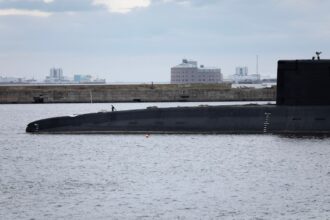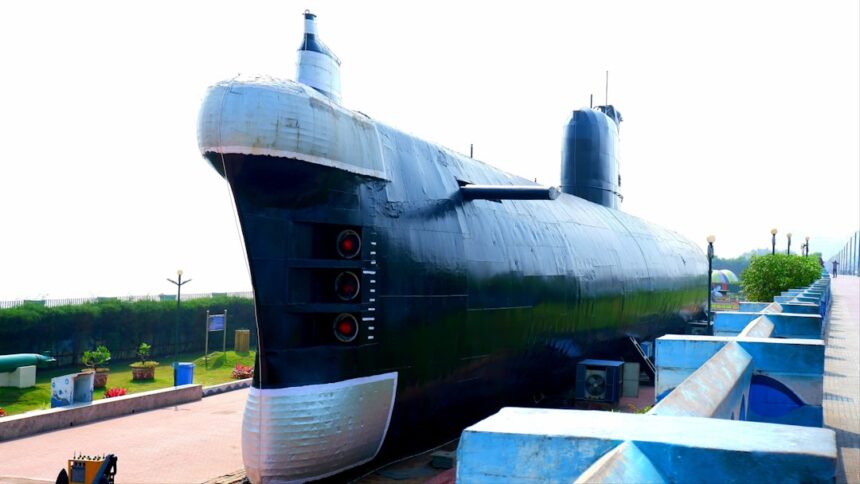
The Cold War, a period of geopolitical tension that spanned decades, witnessed a relentless and often covert struggle between the United States and the Soviet Union. This era was characterized by an arms race, ideological clashes, and a pervasive atmosphere of suspicion. Beneath the waves of the world’s oceans, this struggle took on a particularly dangerous dimension with the widespread deployment of nuclear-armed submarines. One such vessel, the Soviet Golf II-class submarine K-129, met a catastrophic end in 1968, sinking to the crushing depths of the Pacific Ocean. Its subsequent discovery and the audacious, ultimately clandestine, attempt to recover it by the United States marked a pivotal moment in Cold War intelligence operations, pushing the boundaries of deep-sea salvage to unprecedented levels.
The disappearance of the K-129 remains an event steeped in conjecture and conflicting accounts. On February 24, 1968, the submarine departed from its homeport at Petropavlovsk-Kamchatskiy on a routine patrol in the north central Pacific. It carried three R-21 (SS-N-5 Sark) nuclear missiles, each armed with a megaton-class warhead, and was crewed by 98 men. Its mission was a deterrent patrol, a silent sentinel in the vast expanse of the ocean.
Unexplained Silence and Growing Concern
Weeks turned into a month, and the K-129 failed to report in or return to port as expected. The Soviet Pacific Fleet initiated an extensive search operation, deploying aircraft and surface vessels across a wide area. Despite their considerable efforts, no trace of the submarine or its crew was found. The silence from the deep was absolute, a palpable void that spoke volumes of a grave misfortune.
Theories of the Catastrophe
Numerous theories have been put forth to explain the K-129’s demise. These range from the plausible to the speculative, reflecting the scarcity of definitive evidence.
Internal Explosion
One prominent theory suggests an internal explosion, possibly caused by a hydrogen buildup from battery malfunctions or an accidental ignition of missile fuel. The Golf II-class submarines, while robust, were not immune to such hazards.
Collision with a U.S. Submarine
Another, more controversial theory, posits a collision with a U.S. Navy submarine. This hypothesis gained traction due to various circumstantial accounts and the inherent risks of submerged operations in contested waters. However, no credible evidence has ever substantiated this claim.
Mechanical Failure
Pure mechanical failure, perhaps a catastrophic breach of the hull, an issue with its propulsion system, or a diving plane malfunction, also remains a possibility. The unforgiving pressures of the deep ocean expose any structural weakness with lethal efficiency.
The recovery of the K-129 submarine, which lies at a depth of 16,500 feet in the Pacific Ocean, has been a subject of intrigue and exploration. This operation not only highlights the technological advancements in deep-sea recovery but also sheds light on the historical significance of the submarine itself. For a deeper understanding of the complexities involved in such underwater missions, you can read a related article that discusses the challenges and methodologies of deep-sea recovery efforts at this link: K-129 Submarine Recovery Insights.
Project Azorian: The Genesis of an Audacious Plan
The K-129’s disappearance did not go unnoticed by the United States. Through their sophisticated network of hydrophones, primarily the Sound Surveillance System (SOSUS), American intelligence analysts detected an anomalous acoustic event in the North Pacific on March 8, 1968. This event, characterized by a sudden, intense implosion, provided a crucial clue to the submarine’s fate and location.
Pinpointing the Debris Field
Utilizing advanced triangulation techniques and painstakingly analyzing the SOSUS data, the U.S. Navy was able to narrow down the probable impact zone. Over the next few months, a covert search operation, employing the research submarine USS Mizar, systematically surveyed the designated area. In August 1968, Mizar located the wreck of the K-129 lying at a staggering depth of approximately 16,500 feet (5,000 meters).
The Strategic Value of the Wreckage
The discovery of the K-129 presented the United States with an unparalleled intelligence gathering opportunity. Recovering portions of the submarine, particularly its nuclear missiles, cipher machines, and codebooks, would provide invaluable insights into Soviet naval capabilities and their nuclear deterrent strategy. The intelligence potential was immense, a veritable treasure trove for Cold War planners.
The Glomar Explorer: A Ship Built for Secrets
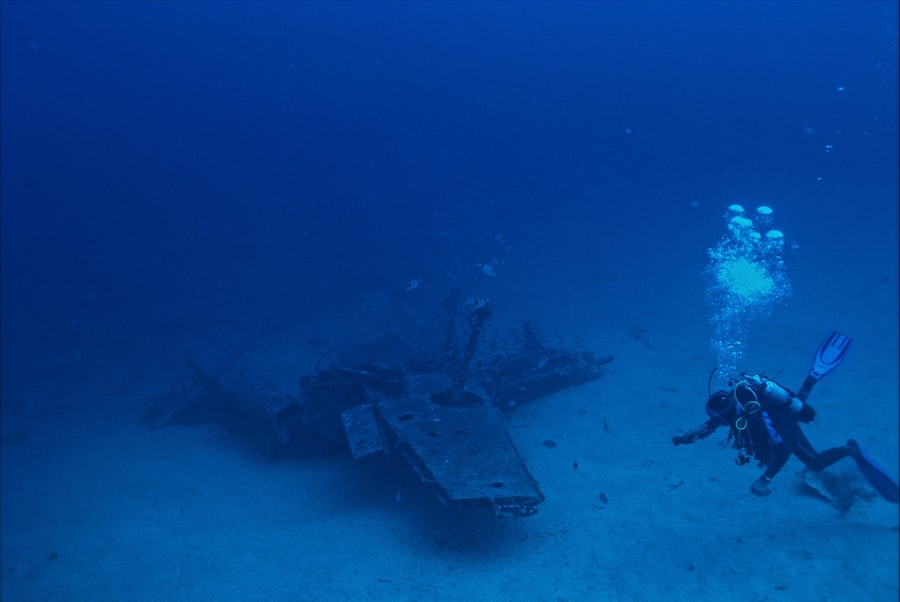
The audacious plan to recover the K-129, codenamed Project Azorian, required a vessel of unprecedented capabilities. The Central Intelligence Agency (CIA) initiated the construction of a highly specialized deep-sea salvage ship, the Hughes Glomar Explorer. This ship was a marvel of engineering, a testament to American ingenuity and clandestine ambition.
Unique Engineering and Design
The Glomar Explorer was no ordinary research vessel. Its design was a masterclass in obfuscation and advanced engineering. Equipped with a massive “moon pool” in its center, a large opening in the hull that allowed for equipment to be lowered into the sea, it also featured a colossal mechanical claw, aptly nicknamed “Clementine,” designed to grasp and lift sections of the submarine.
The “Mining” Cover Story
To conceal its true purpose, the Glomar Explorer was publicly presented as a deep-sea mining vessel, ostensibly exploring new methods for extracting manganese nodules from the ocean floor. This cover story, while elaborate, was ultimately a thin veil over a far more complex and sensitive mission.
Secrecy and Deception
The entire project was shrouded in absolute secrecy, a testament to the potential ramifications if the Soviet Union discovered the true nature of the operation. Code names, compartmentalized information, and elaborate cover stories were employed at every stage, creating a complex web of deception to protect this high-stakes endeavor.
The Recovery Attempt: Pushing the Limits of Depth
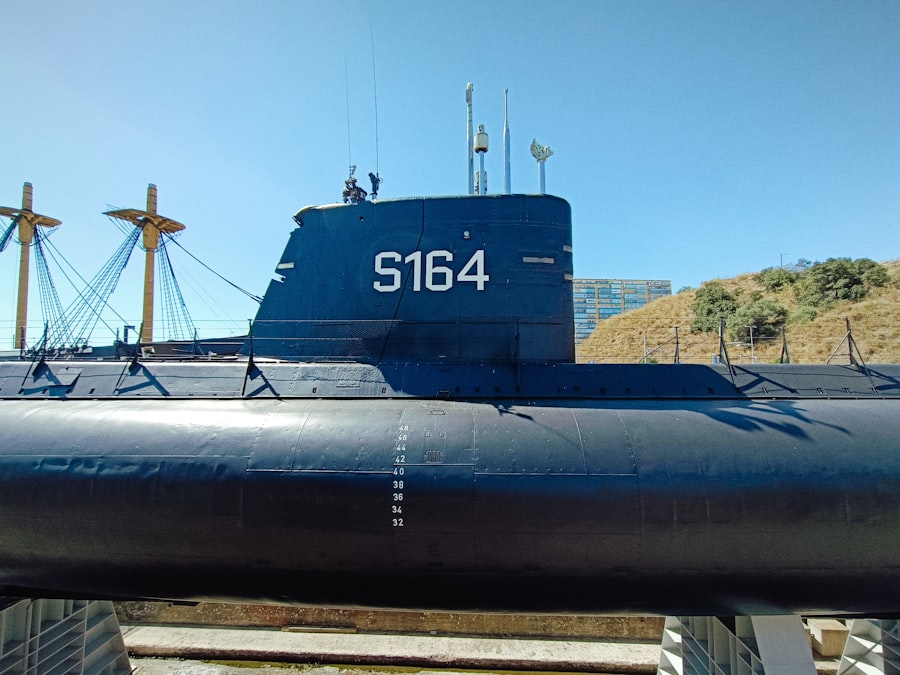
In the summer of 1974, the Hughes Glomar Explorer embarked on its clandestine mission. The recovery attempt itself was an extraordinary feat of engineering and operational skill, pushing the boundaries of what was thought possible in deep-sea salvage.
The Grasp of Clementine
The colossal “Clementine” claw was lowered to the ocean floor, guided by sophisticated sonar and cameras. It methodically searched for the sections of the K-129 identified as containing the most valuable intelligence assets. The pressure at such depths is immense, capable of crushing even the strongest materials, making precision and resilience paramount.
Structural Integrity Challenges
The K-129 itself was in a highly degraded state. The immense pressure had torn the submarine into several large sections. Recovering a significant portion intact presented a monumental challenge, as the structural integrity of the wreck was compromised. The delicate balance between applying enough force to grasp the sections and not completely disintegrating them was a constant concern.
Partial Success and an Unforeseen Mishap
During the recovery operation, the mission encountered a significant setback. As a large section of the K-129, estimated to be about 38 feet long, was being lifted through the water column, the “Clementine” claw experienced a mechanical failure. A significant portion of the recovered wreckage broke away and plunged back to the ocean floor, taking with it the most valuable sections, including a reported two nuclear missiles and critical cryptographic equipment.
The Recovery of a Segment
Despite the setback, the Glomar Explorer did manage to recover a smaller segment of the K-129, estimated to be around 40 feet long, which contained the remains of six Soviet submariners, two nuclear-tipped torpedoes, and other valuable equipment. The recovery of human remains proved to be a somber success, offering some closure to the families of the lost crew.
The recovery of the K-129 submarine, which lies at a staggering depth of 16,500 feet in the Pacific Ocean, has been a topic of significant interest in naval history. This operation not only highlights the challenges of deep-sea recovery but also sheds light on the technological advancements made in underwater exploration. For a deeper understanding of the complexities involved in such missions, you can read more about it in this insightful article on naval operations.
The Aftermath and Enduring Legacy
| Metric | Value | Unit | Description |
|---|---|---|---|
| Submarine Name | K-129 | – | Soviet Golf II-class ballistic missile submarine |
| Recovery Depth | 16,500 | feet | Depth at which the submarine was recovered |
| Recovery Depth | 5,029 | meters | Equivalent depth in meters |
| Operation Name | Project Azorian | – | US operation to recover the submarine |
| Year of Recovery | 1974 | – | Year when the recovery operation took place |
| Recovery Vessel | Hughes Glomar Explorer | – | Ship used for the recovery operation |
News of Project Azorian eventually leaked to the public in 1975, sparking a firestorm of media attention and international intrigue. The CIA’s audacious operation, while undoubtedly a feat of engineering, also ignited a debate about intelligence gathering ethics and the limits of clandestine activity.
Intelligence Gains and Propaganda
While the full extent of the intelligence gathered remains classified, it is believed that the recovered segment provided valuable insights into Soviet nuclear torpedo design and general submarine construction. The intelligence yielded was undoubtedly significant, though perhaps not as comprehensive as initially hoped due to the loss of the larger section.
The Soviet Reaction and Diplomacy
The Soviet Union, while aware of unusual American naval activity in the area, remained publicly silent on the matter for years, likely to avoid acknowledging the vulnerability of their submarines and the success of American intelligence. The affair highlighted the delicate balance of Cold War diplomacy and the intricate dance of espionage.
The Depth Record and Technological Advancements
Project Azorian firmly established a new record for deep-sea salvage, demonstrating the capability to recover large objects from extreme depths. The engineering innovations developed for the Glomar Explorer revolutionized deep-ocean technology, paving the way for future advancements in underwater exploration and resource recovery. Metaphorically, the Glomar Explorer lifted a corner of the iron curtain that concealed Soviet naval secrets, offering a glimpse into their capabilities from the murky depths. The sheer audacity of the attempt, a testament to human ingenuity and the relentless pursuit of information during a period of intense global rivalry, stands as a monument to the Cold War’s hidden battles.
WARNING: The $800 Million Mechanical Failure That Almost Started WWIII
FAQs
What was the K-129 submarine?
The K-129 was a Soviet Golf II-class ballistic missile submarine that sank in the Pacific Ocean in 1968.
At what depth was the K-129 submarine located?
The K-129 submarine was located at a depth of approximately 16,500 feet (about 5,030 meters) on the ocean floor.
Why was the recovery of the K-129 submarine significant?
The recovery was significant because it involved retrieving sensitive Soviet military technology and intelligence during the Cold War, which was a major technical and strategic challenge.
What methods were used to recover the K-129 submarine?
The U.S. used a secretive and complex operation called Project Azorian, which involved a specially designed ship, the Hughes Glomar Explorer, equipped to lift the submarine from the deep ocean floor.
Was the entire K-129 submarine successfully recovered?
No, only a portion of the submarine was recovered during the operation; the full recovery was not achieved due to technical difficulties at such extreme depths.