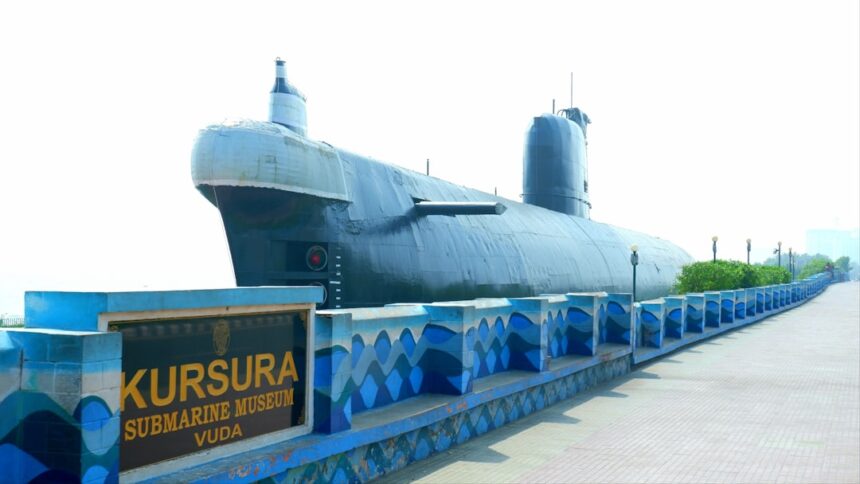
The frigid depths of the Pacific Ocean guard a multitude of secrets, none perhaps as enduringly enigmatic as the fate of the Soviet K-129. This article delves into the perplexing loss of the Project 629A (Golf II Class) ballistic missile submarine, a tragedy that unfolded in March 1968 and sparked one of the Cold War’s most ambitious and controversial covert operations. The K-129’s disappearance was not merely a maritime disaster; it was a geopolitical incident, a clash of intelligence agencies, and a testament to the immense power and perilous nature of nuclear-armed submarines.
To comprehend the significance of the K-129’s vanishing act, one must first understand its role within the Soviet Navy’s strategic arsenal during the height of the Cold War. The late 1960s were a period of intense ideological and military competition between the United States and the Soviet Union. Nuclear deterrence formed the bedrock of international security, and ballistic missile submarines (SSBNs) were considered the ultimate guarantors of a retaliatory strike, offering a virtually undetectable second-strike capability.
The Golf II Class: A Strategic Deterrent
The K-129 belonged to the Project 629A, or Golf II Class, of diesel-electric submarines. These vessels, though not as advanced as their nuclear-powered counterparts, were nevertheless formidable platforms designed to carry and launch nuclear-tipped ballistic missiles. Specifically, the K-129 was armed with three R-21 (SS-N-5 Sark) liquid-fueled ballistic missiles, each equipped with a 1-megaton nuclear warhead. These missiles had a range sufficient to strike targets on the western coast of the United States from patrol areas in the central Pacific.
The presence of such a weapon system in the vastness of the Pacific was a constant source of concern for Western intelligence agencies. The K-129’s patrol patterns were meticulously tracked, and its movements were a key indicator of Soviet strategic intentions. This inherent strategic value imbued its eventual disappearance with far greater weight than that of a routine maritime accident.
Routine Patrol, Unforeseen Disaster
The K-129 departed its home port of Rybachiy on Kamchatka Peninsula on February 24, 1968, embarking on a routine patrol mission in the vicinity of Hawaii, roughly 1,500 miles northwest of Oahu. The crew, comprising 98 officers and sailors, were seasoned professionals. The mission was standard procedure: maintain a covert presence, be ready to launch if ordered, and remain undetected.
Contact with the submarine was lost in early March. The last communication from the K-129 came on March 8, when it failed to report its position as scheduled. This silence, initially attributed to technical difficulties or radio outages, quickly escalated to alarm as days turned into weeks without any sign of the vessel or its crew. The Soviet Navy initiated extensive search operations, deploying ships and aircraft across its predicted patrol area, but found no trace. The vastness of the Pacific, a liquid desert, swallowed the submarine whole.
The mysterious fate of the Soviet submarine K-129 has intrigued historians and military enthusiasts alike, particularly regarding its crew list and the events leading to its sinking in 1968. For those interested in delving deeper into this topic, a related article can be found at this link, which explores the circumstances surrounding the submarine’s mission and the implications of its loss during the Cold War.
The World Reacts: Speculation and Silence
The disappearance of a nuclear-armed submarine is not merely an internal naval issue; it is an international incident with profound implications. The lack of information emanating from Soviet authorities fueled a maelstrom of speculation, both public and private.
Soviet Secrecy and Public Silence
True to its Cold War-era operational doctrine, the Soviet Union maintained a wall of secrecy around the K-129’s disappearance. No public announcement was made, and official inquiries were met with stonewalling. This silence, a hallmark of Soviet-era governance, only served to heighten international concern and curiosity. The absence of information from the Soviet side meant that the world, particularly Western intelligence agencies, was left to piece together the puzzle with limited, often circumstantial, evidence.
The Soviet Navy’s internal investigation, shrouded in secrecy, concluded that the K-129 had likely suffered a catastrophic internal explosion, possibly due to a hydrogen gas buildup from faulty battery charging, or a malfunction in its missile tubes. However, without a wreck to examine, these remained educated guesses.
Western Intelligence: A Silent Vigil
While the Soviets remained publicly silent, Western intelligence agencies, particularly those of the United States, were keenly aware of the K-129’s disappearance. The U.S. Navy’s Sound Surveillance System (SOSUS) network, a vast array of hydrophones strategically placed on the ocean floor, had detected an anomalous acoustic event in the North Pacific on March 8, 1968, at 10:14:26 GMT. This event, characterized by a distinct explosive signature, was initially of unknown origin.
The intelligence community, linking this acoustic anomaly to the missing K-129, quickly shifted its focus. The data provided by SOSUS, a technological marvel for its time, became the leading clue in a high-stakes maritime mystery. The challenge, however, was to pinpoint the exact location of the wreck in an area spanning thousands of square miles. The ocean, a formidable adversary, was doing its best to preserve its secrets.
The Genesis of Project Azorian: A Covert Endeavor
The confirmation that a Soviet nuclear-armed submarine had been lost, potentially with its missiles intact, presented the United States with an unprecedented opportunity and a daunting challenge. The possibility of recovering Soviet nuclear technology, particularly their ballistic missiles and associated codes, was too significant to ignore. This realization led to the conception of one of the Cold War’s most audacious covert operations: Project Azorian.
The Decision to Recover
The decision to attempt to recover the K-129 was not taken lightly. The risks were immense: detection by the Soviets, a potential international incident, and the sheer technical difficulty of retrieving a submarine from over 16,000 feet of water. However, the potential intelligence gains were equally enormous. Recovering the submarine would provide insights into Soviet submarine construction, missile technology, nuclear warhead design, and cryptographic systems.
President Richard Nixon, upon being briefed on the feasibility of the operation, gave the green light. The Central Intelligence Agency (CIA) was tasked with the operational execution, leveraging its ability to operate with a degree of plausible deniability that the military could not. This was to be a clandestine endeavor of epic proportions.
Glomar Explorer: A Ship of Deception
To achieve the impossible, a suitable vessel was needed – one capable of operating in extreme depths and with a cover story robust enough to deflect suspicion. Thus, the Hughes Glomar Explorer was born. Built by the wealthy and eccentric industrialist Howard Hughes, the ship was ostensibly designed for deep-sea mining of manganese nodules. This elaborate cover story, complete with a public relations campaign, was crucial to the success of Project Azorian.
The Glomar Explorer was a marvel of engineering, incorporating cutting-edge technology for deep-ocean recovery. Its massive central moon pool and retractable “capture vehicle,” nicknamed Clementine, were designed to grapple with and lift segments of the sunken submarine. The ship itself was a carefully constructed illusion, a testament to the ingenuity and resourcefulness employed in the shadowy world of Cold War espionage.
The Operation Unfurls: A Dance of Secrecy and Discovery
The actual recovery operation, conducted in the summer of 1974, was a tense and nerve-wracking affair. The Glomar Explorer, under the watchful eyes of both curious onlookers and suspicious Soviet intelligence assets, slowly made its way to the designated recovery site.
The Challenge of the Abyss
The K-129 lay at a depth of approximately 16,500 feet (5,000 meters), an environment of crushing pressure, perpetual darkness, and near-freezing temperatures. Retrieving a large, several-hundred-ton object from such depths was an unprecedented engineering feat. The “claw” of the Glomar Explorer, guided by sonar and remote cameras, had to precisely grapple with the fragile remains of the submarine.
The operation was fraught with peril. The immense stresses on the recovery equipment meant that failures were always a possibility. Indeed, during the lifting phase, a significant portion of the submarine broke away from the claw, plunging back into the abyss. This setback meant that only a fraction of the K-129, specifically its forward bow section, was successfully recovered.
Unveiling Secrets: The Recovered Section
Despite the partial recovery, the portion of the K-129 that was brought to the surface yielded invaluable intelligence. Within the recovered section, intelligence analysts found two nuclear-tipped torpedoes, cryptographic equipment, and numerous documents. The torpedoes provided significant insights into Soviet warhead design and fusing mechanisms. The cryptographic machines and documents, while perhaps not yielding immediate breakthroughs, offered a window into Soviet communication protocols and operational procedures.
The recovered section also contained the bodies of six Soviet submariners. These individuals, lost in the depths for over six years, were given a respectful burial at sea by the crew of the Glomar Explorer, with full military honors. This act, while deeply symbolic, served as a poignant reminder of the human cost of the Cold War’s silent battles.
The mysterious fate of the Soviet submarine K-129 has intrigued historians and military enthusiasts alike, particularly regarding the crew list and the events surrounding its sinking in 1968. For those interested in delving deeper into this enigmatic incident, a related article provides valuable insights into the submarine’s mission and the subsequent recovery efforts. You can explore more about this fascinating topic by visiting this article, which sheds light on the complexities of Cold War naval operations and the impact of K-129’s loss on Soviet maritime strategy.
The Aftermath: Revelation, Implications, and Lingering Questions
| Name | Rank | Position | Age | Service Years |
|---|---|---|---|---|
| Captain First Rank Igor Britanov | Captain 1st Rank | Commanding Officer | 38 | 15 |
| Lieutenant Commander Vasily Arkhipov | Lieutenant Commander | Second-in-Command | 42 | 18 |
| Senior Lieutenant Yuri Ivanov | Senior Lieutenant | Navigation Officer | 29 | 7 |
| Petty Officer Alexei Petrov | Petty Officer | Sonar Technician | 25 | 5 |
| Chief Engineer Nikolai Sokolov | Captain Lieutenant | Chief Engineer | 40 | 17 |
Project Azorian remained a closely guarded secret for many years. However, the sheer scale of the operation and the growing rumors eventually led to its exposure, sparking controversy and revealing the lengths to which both superpowers would go in their quest for intelligence supremacy.
The Leak and Public Outcry
In 1975, a leak to the Los Angeles Times exposed the true purpose of the Glomar Explorer. The revelation ignited a firestorm of public debate and international scrutiny. The Soviet Union, while publicly denouncing the operation as a violation of international law and a desecration of their fallen sailors, was undoubtedly infuriated by the brazen infiltration of their secrets.
The public debate in the United States centered on the ethics of such a covert operation, the cost involved, and its potential impact on international relations. While some lauded it as a brilliant intelligence coup, others criticized it as an unnecessary provocation. The Glomar Explorer became a symbol of Cold War daring, but also of its inherent tensions and moral ambiguities.
The Official Position and Enduring Mysteries
The official U.S. government position regarding the K-129’s cause of sinking has remained somewhat ambiguous. While initial intelligence assessments attributed the loss to an internal explosion, possibly related to a battery malfunction or a missile fuel leak, no definitive conclusion has ever been publicly released. The Soviets too, never provided a definitive explanation, further fueling speculation.
Several theories persist to this day. Some suggest a collision with a U.S. submarine, despite U.S. denials and the lack of evidence supporting such a claim. Others point to a structural failure due to deep diving or an external event like a rogue wave. However, without access to the full wreckage, or a more transparent account from the involved nations, the precise cause of the K-129’s demise remains an enduring mystery, a blank page in the official history books.
The Legacy of the Lost Crew
The K-129 and its lost crew represent more than just a Cold War intelligence coup or a maritime disaster. They symbolize the human element caught within the immense machinery of global conflict. Ninety-eight lives were extinguished in the cold, dark depths, leaving behind families and unanswered questions. The submariners, performing their duties in the shadows, became unwitting pawns in a geopolitical chess match.
Their story serves as a stark reminder of the inherent dangers of military service, especially in the clandestine world of submarine warfare. While Project Azorian revealed some of the K-129’s secrets, the ultimate fate of its crew and the full story of its last moments remain partially obscured, forever etched into the silent testament of the deep ocean. The K-129, a silent guardian turned silent victim, continues to haunt the annals of Cold War history.
WARNING: The $800 Million Mechanical Failure That Almost Started WWIII
FAQs
What was the Soviet submarine K-129?
The Soviet submarine K-129 was a Golf II-class ballistic missile submarine of the Soviet Navy that sank in the Pacific Ocean in 1968 under mysterious circumstances.
How many crew members were on board the K-129?
The K-129 typically had a crew complement of around 80 to 90 personnel, including officers, enlisted sailors, and technical specialists.
Is there an official crew list available for the K-129?
Official crew lists for the K-129 are limited and not fully public due to the secretive nature of Soviet military records, but some partial lists have been compiled from declassified documents and survivor accounts.
What happened to the crew of the K-129?
The entire crew of the K-129 was lost when the submarine sank in 1968. The exact cause of the sinking remains uncertain, and no survivors were reported.
Has the K-129 wreck been recovered or investigated?
The United States conducted a secret recovery operation called Project Azorian in the 1970s to recover parts of the K-129 from the ocean floor, but the full wreck has never been publicly recovered or fully investigated.