The Central Intelligence Agency’s (CIA) historical interactions with prominent figures and their assets often evoke the image of a grand, intricate chess game played on the global stage. Among the most enigmatic and deeply woven threads in this tapestry of clandestine operations is the purported recruitment of Howard Hughes, the eccentric billionaire, aviator, filmmaker, and industrialist. This article delves into the complex relationship between Hughes and the CIA, examining the evidence, motivations, and consequences of this alleged alliance. It’s a story less about heroics and more about the often-blurred lines between state interests, individual eccentricities, and the relentless pursuit of intelligence.
Howard Hughes was not merely a wealthy man; he was a phenomenon. His empire spanned aviation, entertainment, real estate, and manufacturing, providing him with unparalleled access, resources, and influence. These very traits, which made him a legend in his own right, also rendered him an irresistible gravitational pull for intelligence agencies, particularly during the Cold War.
A Man of Vast Influence and Resources
Born into immense wealth, Hughes parlayed his inheritance into a diversified conglomerate. His aviation companies, Hughes Aircraft and Trans World Airlines (TWA), were at the forefront of technological innovation and international travel. His film studio, RKO Pictures, gave him a platform in popular culture. These holdings provided not just financial power, but also a network of personnel, logistical capabilities, and technical expertise that few private citizens could rival. Imagine, if you will, the intelligence value of a man who owned an airline that crisscrossed the globe, a film studio that could be a front for countless operations, and an aircraft manufacturing company pushing the boundaries of stealth and surveillance technology. He was a walking, talking intelligence asset, even if he never consciously chose to be one.
The Cold War Context
The period following World War II saw the rapid escalation of the Cold War, a geopolitical struggle characterized by ideological conflict, proxy wars, and an intense intelligence race. The United States, through its newly formed CIA, desperately sought any advantage against the Soviet Union. In this climate, a figure like Hughes, with his intimate knowledge of cutting-edge technology, his ability to finance grand projects, and his potential to influence global narratives, was an invaluable potential asset. The CIA, in its early, formative years, was aggressive in its pursuit of novel avenues for intelligence gathering and covert operations. The very air was thick with paranoia and the perceived need for every available resource to counter the communist threat.
Hughes’s Patriotic Inclinations and Anticommunist Stance
Despite his reclusive nature and growing eccentricities, Hughes was known to harbor strong patriotic sentiments and an ardent anticommunist stance. These personal beliefs made him a potentially willing collaborator for the CIA. He saw himself as a contributor to American exceptionalism, and the notion of aiding his country against its adversaries would likely have appealed to his sense of national duty. This shared ideological ground would have been a significant leverage point for any intelligence agency seeking his cooperation. It was a common currency of that era, an intellectual and emotional framework that many powerful individuals shared with their government.
In exploring the intriguing relationship between the CIA and Howard Hughes, readers may find it beneficial to delve into a related article that discusses the broader implications of intelligence agencies’ involvement with influential figures in American history. This article provides insights into the methods and motivations behind such recruitment efforts, shedding light on the complex interplay between power, secrecy, and innovation. For more information, you can read the article at In the War Room.
Operation AZORIAN: The Public Face of Covert Collaboration
While much of the CIA’s alleged dealings with Hughes remain shrouded in secrecy and speculation, Operation AZORIAN (often referred to as Project Azorian or the Glomar Explorer Project) stands as the most compelling public evidence of a direct, high-level collaboration between the recluse billionaire and the intelligence agency. This operation, a bold and technologically audacious attempt to recover a sunken Soviet submarine, cemented Hughes’s legacy as a clandestine partner.
The K-129 Incident
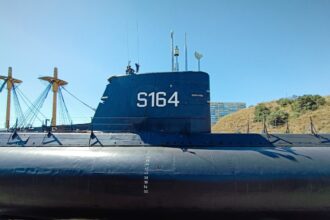
In 1968, the Soviet Golf II-class submarine K-129, carrying three nuclear missiles, sank in the Pacific Ocean, approximately 1,560 miles northwest of Oahu. The strategic importance of recovering this submarine – its nuclear technology, its codes, and its operational procedures – was immense for U.S. intelligence. It was a treasure trove of information, a submerged time capsule of Soviet military secrets. The intelligence community saw this as a golden opportunity to gain an unprecedented insight into Soviet naval capabilities. The stakes, as one can imagine, were astronomically high.
The Glomar Explorer and its Cover Story
Having located the K-129 at a depth of nearly three miles, the CIA embarked on an unprecedented retrieval mission. They needed a cover story that was plausible enough to mask the true purpose of such a massive and technologically advanced undertaking. This is where Hughes, or more precisely, his reputation and resources, entered the picture as a crucial piece of the puzzle.
The cover story was ingenious yet simple: Hughes was funding the construction of a deep-sea mining ship, the Hughes Glomar Explorer, to extract manganese nodules from the ocean floor. This endeavor, while ambitious, aligned perfectly with Hughes’s known pioneering spirit and his inclination toward grand, technologically challenging projects. The vessel itself was a marvel of engineering, equipped with a massive crane and a sophisticated “capture vehicle” designed to lift heavy objects from extreme depths. The construction of the Glomar Explorer and its associated facilities required immense capital and technical expertise, resources that Hughes’s empire could readily provide, or at least appear to provide. He served as a convenient and entirely believable smokescreen, a veritable cloak woven from his own eccentric public image.
Hughes’s Role in Providing Plausible Deniability
Hughes’s primary value in Operation AZORIAN was his ability to provide plausible deniability for the U.S. government. Should the mission fail, or worse, be discovered by the Soviets, the narrative could be spun that it was a private, commercial venture gone awry, rather than a CIA operation. This distance insulated the United States from direct public confrontation and potential international fallout. His name, associated with such a daring private enterprise, gave credibility to the deception, offering a convenient scapegoat or a deflection point. He was, in essence, the perfect human shield for a deep-sea espionage mission. His reputation for embarking on colossal, even quixotic ventures gave the cover story a ring of truth that few other individuals could have provided.
Motives and Methods of Recruitment
To understand the mechanics of Hughes’s alleged recruitment, one must examine the motivations driving both the CIA and Hughes himself, as well as the methods employed by the agency. This was not a simple job interview; it was a complex dance between powerful entities.
CIA’s Need for Assets
The CIA, especially in its early days, operated with a broad mandate and an insatiable appetite for intelligence. Hughes represented a unique confluence of desirable assets: immense financial resources, technological expertise, global reach, and a strong anti-communist ideology. His wealth meant that the CIA could potentially leverage his projects without direct congressional oversight or budgetary constraints for certain elements, acting as a discreet financial conduit. Furthermore, his private corporations offered inherent cloaks for operations, blurring the lines between commercial enterprise and covert activity. For an agency constantly seeking an edge, individuals like Hughes were like gold mines, waiting to be tapped.
Hughes’s Personal Ambitions and Patriotism
While financially self-sufficient, Hughes was not immune to influence. His personal ambitions often revolved around large-scale, innovative projects that pushed technological boundaries. The prospect of being involved in a project of national importance, particularly one involving cutting-edge technology and geopolitical intrigue, might have greatly appealed to his adventurous spirit and his desire to leave a lasting mark. His deeply ingrained patriotism and anticommunist sentiments would have further motivated his cooperation. He might have seen such collaboration as a direct continuation of his efforts during World War II, where his aircraft designs contributed to the war effort. For a man who sought to control his environment, the idea of having a hand in controlling the global strategic balance would have been immensely appealing.
Leveraging Existing Relationships and Intermediaries
The CIA likely approached Hughes through trusted intermediaries or individuals within his sprawling organization who already had existing connections to the intelligence community or government circles. Given Hughes’s reclusive nature, direct communication with him was notoriously difficult. Therefore, cultivating relationships with his inner circle, particularly his key executives and lawyers, would have been crucial. These intermediaries would have served as the conduits for communication, negotiation, and the relaying of information, carefully managing the flow to and from the eccentric billionaire. This was a sophisticated operation, a game of whispers and indirect solicitations, rather than a direct frontal assault. The agency would have carefully mapped his circle of trust, identifying potential entry points like surgical strikes.
The Allure of Secrecy and Power
For a man who increasingly guarded his privacy and cultivated an aura of mystery, the allure of being privy to top-secret operations, of operating in the shadows of power, might have been a subtle but potent draw. The idea of being an unseen hand, a silent partner in grand geopolitical maneuvers, could have resonated with his reclusive and controlling tendencies. It offered a unique form of power, one detached from public scrutiny but intimately tied to national security. He was already a king in his own world; this offered him a chance to be a kingmaker in a different, more shadowy realm.
The Consequences and Legacy of the Partnership
The alleged recruitment of Howard Hughes and particularly Operation AZORIAN left a lasting impact, both on Hughes himself and on the public perception of CIA covert operations. It’s a story with threads that continue to unravel even today, influencing how we view the intersection of private enterprise and state security.
Limited Success of Operation AZORIAN
Despite the monumental effort and expense, Operation AZORIAN was only partially successful. While the Glomar Explorer managed to retrieve a portion of the K-129, including some valuable intelligence, the main section of the submarine, along with its nuclear missiles, slipped from the claws of the recovery apparatus and sank back to the ocean floor. This partial success highlighted the immense challenges of deep-sea recovery and the inherent risks of such ambitious covert operations. It was a testament to human ingenuity, but also a stark reminder of the ocean’s formidable power. The ocean proved a more tenacious keeper of secrets than either the Soviets or the Americans.
Exposure and the “Glomar Response”
The partial success of AZORIAN was overshadowed by its eventual exposure in the media in 1975. Investigative journalists, following persistent rumors and leaks, uncovered the true purpose of the Hughes Glomar Explorer. This exposure forced the U.S. government to confront the undeniable evidence. In response, the CIA developed what became known as the “Glomar Response” – a refusal to confirm or deny the existence of classified information, often stating “we can neither confirm nor deny…” a phrase that has since become synonymous with government secrecy. This response, born from the Hughes saga, became a powerful tool for controlling information, a bureaucratic shield against transparency. It became a byword for official stonewalling, a semantic fortress against public inquiry.
Impact on Hughes’s Public Image and Final Years
The public revelation of his involvement in Operation AZORIAN further cemented Hughes’s image as a mysterious and enigmatic figure. While some saw him as a patriot, others viewed him with skepticism, questioning the extent of his involvement and the nature of his relationship with intelligence agencies. This new layer of intrigue undoubtedly contributed to the myth surrounding him in his final, increasingly reclusive years. As he retreated further into his private world, the whispers of his clandestine government connections only served to deepen the shadows surrounding his public persona. He had already been a legend; now he was a legend with a secret, a ghost in the machine of national security.
In exploring the intriguing relationship between the CIA and Howard Hughes, one can gain further insights by reading a related article that delves into the broader implications of intelligence agencies recruiting private sector figures. This article not only highlights the complexities of such partnerships but also examines the historical context in which they occurred. For a deeper understanding, you can check out this related article that sheds light on the intricate dynamics of espionage and business during the Cold War era.
Ethical Considerations and Historical Parallels
| Metric | Details |
|---|---|
| Recruitment Period | 1950s to early 1960s |
| Primary Objective | Gather intelligence on Soviet activities and influence |
| Method of Recruitment | Indirect approach through intermediaries and psychological influence |
| Key CIA Operatives Involved | Unknown; operations were highly classified |
| Howard Hughes’ Role | Unwitting asset providing access to sensitive information and technology |
| Type of Intelligence Gathered | Technological developments, aerospace advancements, and political insights |
| Impact on CIA Operations | Enhanced understanding of Soviet aerospace capabilities |
| Duration of Collaboration | Approximately a decade |
The story of the CIA’s alleged recruitment of Howard Hughes raises profound ethical questions about the intersection of private wealth, technological advancement, and national security. It also offers historical parallels to similar situations where powerful individuals or corporations become entangled with state intelligence.
The Morality of Covert Operations
The use of a private citizen and his corporations as a front for a highly sensitive covert operation like AZORIAN sparks debate about the morality and legality of such actions. Does the end (national security) justify the means (deception, exploitation of a private citizen’s resources)? These questions are particularly salient when considering the potential for abuse of power and the erosion of transparency in a democratic society. The ethical compass of intelligence gathering is rarely fixed north, often oscillating in the turbulent currents of realpolitik.
The Blurring of Public and Private Spheres
Hughes’s story exemplifies the blurring of lines between the public and private spheres, where the resources of a private fortune are harnessed for government objectives. This raises concerns about accountability, oversight, and the potential for undue influence or coercion. When the lines become so nebulous, discerning where private interest ends and public service begins becomes a formidable task, a Gordian knot of intertwined loyalties. The very fabric of a democratic society relies on clear distinctions between private enterprise and government functions; such blurring can weaken that fabric.
Precedents and Future Implications
The alleged collaboration with Hughes established a precedent for leveraging private sector assets for intelligence purposes. This model has been replicated in various forms throughout history, where corporations and individuals, sometimes willingly, sometimes unknowingly, contribute to national security agendas. Understanding the Hughes case can provide valuable insights into contemporary issues surrounding public-private partnerships in intelligence, cybersecurity, and technological development. It serves as a historical blueprint, a cautionary tale, and perhaps even an instruction manual for how powerful entities can be discreetly harnessed for national objectives. The shadow it cast continues to lengthen, influencing the clandestine architecture of our modern world.
The Enduring Mystery and Legacy
Despite journalistic investigations, declassified documents, and historical analyses, the full extent of Howard Hughes’s collaboration with the CIA, and indeed, his motivations, remain shrouded in a fog of speculation and rumor. He was a man who lived and died in the shadows he himself created, and his association with the world of intelligence only deepened those shadows.
The Myth and the Man
Hughes’s life was a tapestry woven with threads of ambition, genius, pathology, and paranoia. His alleged involvement with the CIA only adds another layer to this complex portrait. Was he a patriotic collaborator, a dupe, or a man whose immense power made him an irresistible magnet for intelligence agencies? The answer likely lies in a combination of these elements, reflecting the nuanced and often contradictory nature of human experience. He was a chameleon, capable of blending into the backdrop of his own colossal legend, making it difficult to discern the real man from the myriad personas.
The Continuing Debate
Historians, intelligence analysts, and biographers continue to debate the specifics of Hughes’s relationship with the CIA. The lack of definitive, irrefutable documentation leaves ample room for interpretation and conjecture. This ongoing debate ensures that the story of Howard Hughes and his alleged recruitment by the CIA remains a captivating and enduring chapter in the annals of cold war espionage, a testament to the persistent allure of hidden truths and untold stories. It is a puzzle missing a few critical pieces, destined to be reassembled and reinterpreted by each successive generation of curious minds, a ghost whispering tales from the secretive corridors of power. The very ambiguity of his involvement is, in itself, a testament to the effectiveness of the veil of secrecy under which intelligence operations often thrive.
WARNING: The $800 Million Mechanical Failure That Almost Started WWIII
FAQs
Who was Howard Hughes and why was he significant?
Howard Hughes was a prominent American business magnate, aviator, engineer, film director, and philanthropist known for his contributions to aviation, Hollywood, and various industries during the 20th century.
What role did the CIA play in recruiting Howard Hughes?
The CIA reportedly sought to recruit Howard Hughes due to his extensive resources, technological expertise, and influence, aiming to leverage his capabilities for intelligence and national security purposes during the Cold War era.
How did the CIA approach Howard Hughes for recruitment?
The CIA used covert methods and intermediaries to establish contact with Hughes, attempting to gain his cooperation by appealing to his patriotism and interest in advancing American technological and strategic advantages.
Did Howard Hughes agree to work with the CIA?
While there are accounts suggesting Hughes had some level of interaction with the CIA, the extent of his cooperation remains a subject of historical investigation and debate, with no definitive public confirmation of full collaboration.
What impact did the CIA’s recruitment efforts have on Howard Hughes’ activities?
The CIA’s interest in Hughes influenced certain aspects of his business and aviation projects, potentially aligning some of his innovations with U.S. intelligence objectives, although the full impact is not entirely documented in public records.