The Pacific Ocean, a vast and enigmatic expanse, holds within its depths countless stories, both triumphs and tragedies. Among these, the tale of the Soviet K-129 submarine stands as a stark reminder of Cold War tensions and the enduring mysteries of the deep sea. Its sinking in 1968, and the subsequent attempts to recover parts of it, offer a fascinating glimpse into a clandestine world of superpower rivalry and technological ambition. This article will delve into the known facts surrounding the K-129 incident, examining its sinking, the covert recovery operation, and the enduring legacy of this sunken vessel.
The Cold War, a period of geopolitical tension between the United States and the Soviet Union, cast a long shadow across the latter half of the 20th century. This ideological struggle manifested not only in proxy wars and an arms race but also in a silent, deadly game of cat and mouse beneath the waves. Submarines, stealthy leviathans armed with nuclear capabilities, became crucial assets in this underwater theater.
The Strategic Importance of Submarines
- Deterrence: Submarines, particularly those carrying ballistic missiles (SSBNs), served as a vital component of both superpowers’ nuclear deterrent. Their ability to remain undetected for extended periods made them a credible “second strike” capability, ensuring retaliation even after a first strike.
- Intelligence Gathering: Attack submarines (SSNs) were employed for intelligence gathering missions, shadowing enemy fleets, eavesdropping on communications, and monitoring strategic installations. This subsurface surveillance provided critical insights into opposing military capabilities and intentions.
- Projection of Power: The presence of submarines in international waters demonstrated a nation’s reach and influence, projecting power far beyond its territorial boundaries.
The Soviet Pacific Fleet’s Role
The Soviet Pacific Fleet was a formidable force, and its submarine arm played a crucial role in projecting Soviet power into the Pacific theater. These submarines, often operating far from their home ports, were tasked with patrolling vast oceanic areas, posing a constant threat to Western interests. The K-129, an Echo II-class conventional submarine, was one such vessel, though its mission profile was distinct from the SSBNs.
The K-129 submarine, a Soviet submarine that sank in the Pacific Ocean in 1968, has been the subject of extensive research and exploration over the years. For those interested in learning more about the coordinates of the K-129 wreck and the historical context surrounding its loss, a related article can be found at In the War Room. This resource provides insights into the submarine’s mission, the circumstances of its sinking, and the subsequent efforts to locate and recover its remains.
The Unexplained Demise: The Sinking of K-129
On March 8, 1968, the K-129, operating in the central North Pacific, vanished. Its disappearance was a significant event, shrouded in secrecy and speculation. The exact cause of its sinking remains a subject of debate, with various theories put forth by both sides of the Cold War divide.
The K-129’s Last Known Activities
- Patrol Mission: The K-129 was on a routine patrol mission, one of several such deployments for this class of submarine. Its operational area was well within international waters, yet deep within an area of significant Cold War interest.
- Loss of Contact: Soviet naval authorities lost contact with the submarine within its operational zone. Extensive search efforts by the Soviet Union proved futile, failing to locate any wreckage or survivors.
- Crew Complement: The submarine carried a crew of 98 men, all of whom perished in the incident. Their families were left with little information, and the Soviet government, seeking to maintain secrecy, offered only vague explanations.
Competing Theories of the Sinking
The ambiguity surrounding the K-129’s loss fostered a breeding ground for various theories, each with its proponents and detractors.
- Internal Explosion: One prominent theory suggests an internal explosion, possibly from a hydrogen build-up in the battery well or a torpedo malfunction. This hypothesis aligns with potential structural weaknesses or operational mishaps that could occur on a complex naval vessel.
- Collision with a US Submarine: Another, more contentious theory, posits a collision with a US submarine. Naval historians and former intelligence officials have debated the plausibility of such an incident, with some claiming evidence of a close encounter between the K-129 and a US Navy vessel, possibly the USS Swordfish. However, the US Navy has consistently denied any involvement.
- Design Flaw/Mechanical Failure: Less dramatic but equally plausible explanations include a catastrophic mechanical failure, such as a sudden loss of buoyancy control or a structural integrity breach, leading to an uncontrolled descent.
- Weather Conditions: While less likely to be the sole cause, severe weather conditions could have contributed to an already precarious situation, exacerbating any existing vulnerabilities.
Operation Azorian (Project Azorian): The Covert Recovery Attempt
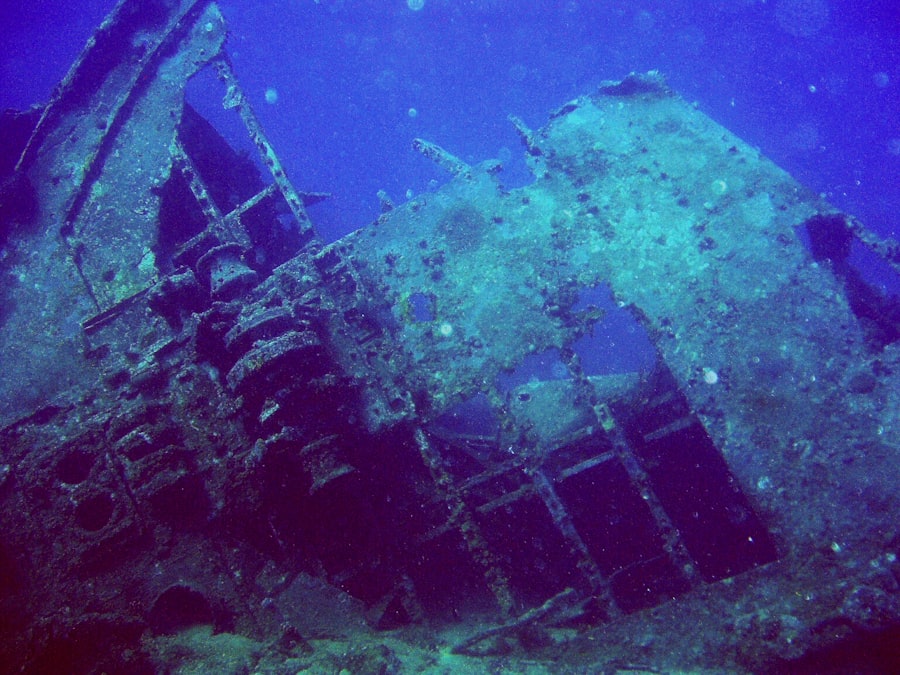
The sinking of the K-129, with its three nuclear-tipped ballistic missiles and a nuclear torpedo, presented an irresistible intelligence opportunity for the United States. The prospect of recovering Soviet nuclear technology and cryptographic information spurred one of the most ambitious and audacious covert operations in history: Operation Azorian.
The Genesis of the Operation
- Intelligence Gathering: US intelligence agencies, specifically the Central Intelligence Agency (CIA), quickly deduced the K-129’s likely resting place through an ingenious and highly secretive acoustic monitoring program known as SOSUS (Sound Surveillance System). This network of hydrophones, strategically placed on the ocean floor, had detected a distinct acoustic signature indicative of a catastrophic implosion in the vicinity of the submarine’s disappearance.
- The Lomonosov Ridge Discovery: Further analysis of SOSUS data, combined with classified satellite imagery and oceanographic surveys, allowed for a narrowing down of the search area. Eventually, the wreck was located at a depth of approximately 16,000 feet (4,900 meters) on the western flank of the Lomonosov Ridge, approximately 1,560 nautical miles northwest of Hawaii.
- The Intelligence Prize: The lure of recovering advanced Soviet technology, including their nuclear warhead design, cryptographic equipment, and potentially a “code book” detailing their communication protocols, was immense. This information would provide an invaluable advantage in the Cold War.
The Glomar Explorer and the Clementine
To undertake such an unprecedented deep-sea recovery, a specialized vessel was required, one capable of operating in extreme depths and lifting a massive object. The solution came in the form of the Hughes Glomar Explorer, a purpose-built ship commissioned by the CIA and ostensibly designed for deep-sea mining.
- The Glomar Explorer’s Design: The Glomar Explorer was a marvel of engineering, featuring a massive internal moon pool and a sophisticated heavy-lift system. Its design allowed it to covertly deploy and retrieve a massive “capture vehicle” or “claw,” dubbed Clementine, which was designed to grapple and lift sections of the submarine.
- The Cover Story: To maintain plausible deniability and conceal the true purpose of the mission, a elaborate cover story was concocted, claiming the Glomar Explorer was engaged in manganese nodule mining, a burgeoning industry at the time. This allowed for the ship’s construction and operations to proceed without raising undue suspicion.
- The Technical Challenges: The engineering challenges were formidable. Lifting a submarine of that size and weight from such depths, in an isolated location, required groundbreaking technological innovation and a precise understanding of deep-ocean mechanics. The risk of the submarine breaking apart during recovery was significant.
The Partial Recovery and Its Aftermath
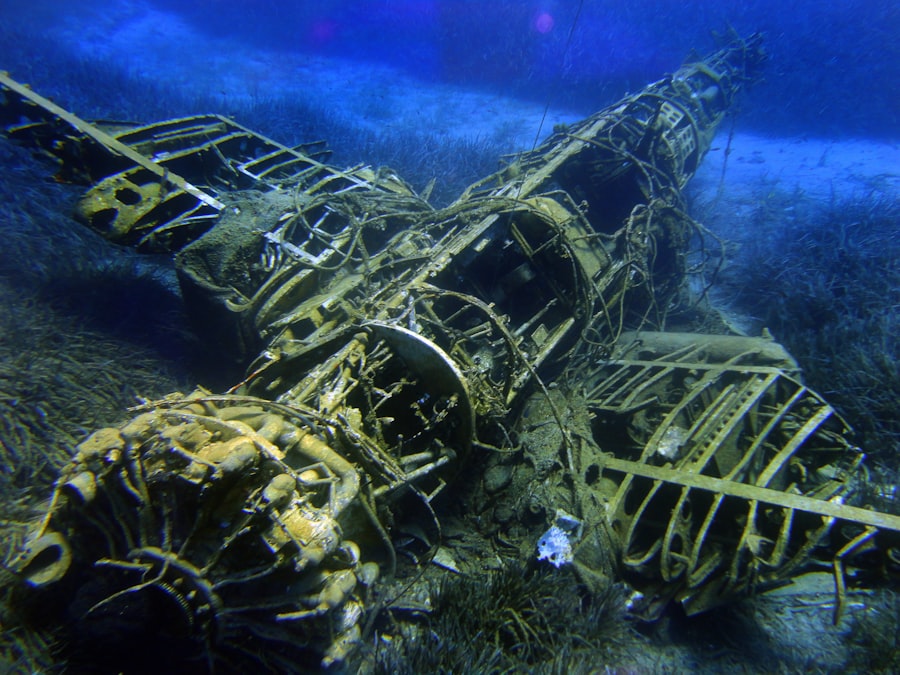
In the summer of 1974, the Glomar Explorer successfully maneuvered over the K-129 wreck and commenced operations. The mission, however, did not proceed entirely as planned, and only a portion of the submarine was recovered.
The Recovery Attempt
- The Clementine’s Descent: The Clementine, a gigantic mechanical grappling device, was painstakingly lowered to the ocean floor. Its task was to enclose sections of the submarine and lift them to the surface.
- Structural Failure: During the recovery attempt, a significant portion of the K-129, including the midsection containing the missile tubes, broke away from the Clementine due to structural weaknesses exacerbated by the immense stresses of the lift. This left a crucial part of the intelligence prize at the bottom of the ocean.
- Recovered Sections: Despite the partial failure, a significant segment of the submarine’s bow section, containing two nuclear torpedoes, cryptographic equipment, and the remains of six Soviet sailors, was successfully brought to the surface and into the Glomar Explorer’s moon pool.
The Unveiling and the Cold War Repercussions
The operation, while highly classified, eventually came to light through media leaks, leading to a public outcry and international diplomatic tensions.
- Media Exposure: In 1975, a series of articles in the Los Angeles Times and other publications exposed Operation Azorian, revealing the true purpose of the Glomar Explorer and the clandestine recovery efforts. This created a significant embarrassment for the US government.
- Soviet Reaction: The Soviet Union vehemently condemned the operation as an act of espionage and a violation of international law. While Moscow initially downplayed the operation, the revelations led to heightened tensions and accusations of infringement on Soviet sovereignty.
- The Human Element: The recovery of the six Soviet sailors’ remains presented a unique diplomatic opportunity. In a gesture of humanitarianism, the US secretly filmed the burial at sea ceremony, complete with military honors, and later provided the footage to the Soviet Union. This act, while still steeped in Cold War secrecy, offered a degree of closure to the families of the lost sailors.
The K-129 submarine wreck, located in the depths of the Pacific Ocean, has been a subject of intrigue for historians and naval enthusiasts alike. Recent explorations have shed light on its coordinates and the mysteries surrounding its sinking. For those interested in delving deeper into the details of this fascinating topic, a related article can be found at this link, which provides further insights into the events leading up to the submarine’s tragic fate.
The Enduring Legacy: Mysteries and Moral Dilemmas
| Metric | Data |
|---|---|
| Submarine Name | K-129 |
| Type | Golf II-class ballistic missile submarine |
| Country | Soviet Union |
| Date of Sinking | March 8, 1968 |
| Location | Pacific Ocean |
| Coordinates (approximate) | 35° 12′ N, 179° 10′ E |
| Depth of Wreck | Approximately 16,500 feet (5,030 meters) |
| Recovery Operation | Project Azorian (1974) |
| Recovered Items | Partial section of the submarine, cryptographic materials |
The K-129 incident and Operation Azorian remain subjects of fascination and scrutiny, offering valuable insights into the Cold War, deep-sea technology, and the ethical considerations of intelligence gathering.
Unanswered Questions
Despite the passage of decades, several key questions surrounding the K-129 incident persist.
- The Precise Cause of Sinking: Was it truly an internal explosion, a collision, or another catastrophic event? The US, while possessing valuable intelligence from the recovered sections, has maintained secrecy regarding its findings, leading to continued speculation. The remains of the submarine, though partially recovered, do not definitively point to one theory over another without further classified information.
- The Extent of Intelligence Gained: How much valuable intelligence was truly gleaned from the recovered sections? While the presence of nuclear torpedoes and cryptographic equipment is confirmed, the full impact of this intelligence on US military and strategic planning remains classified. The extent to which this information contributed to the US’s understanding of Soviet naval capabilities is a crucial but unanswered question for public knowledge.
- Other Potential Recoveries: Were there other, unconfirmed attempts at recovery from the K-129, or even from other sunken Soviet vessels, that remain secret to this day? History is often littered with untold operations, and given the high stakes, further attempts are not beyond imagination.
Ethical and Legal Considerations
Operation Azorian raised profound ethical and legal questions, prompting discussions that continue to resonate in international law and intelligence circles.
- Sovereignty and Salvage Law: The legality of recovering a foreign military vessel from international waters without the consent of the flag state remains a contentious issue. While the K-129 lay in international waters, its status as a state-owned military vessel complicates traditional salvage law.
- The Boundaries of Espionage: At what point does intelligence gathering cross the line into aggressive or provocative acts? The sheer scale and audacity of Operation Azorian pushed the boundaries of Cold War espionage to unprecedented levels.
- Transparency vs. Secrecy: The inherent tension between government secrecy, necessary for national security, and the public’s right to information was starkly highlighted by the media leaks surrounding Azorian. This ongoing debate about when and how governments should disclose sensitive operations continues to shape public discourse.
Conclusion: A Sunken Relic of a Bygone Era
The K-129 submarine, now lying in fractured segments across the abyssal plain, is more than just a wreck; it is a submerged monument to the Cold War, a testament to technological prowess, and a stark reminder of the human cost of geopolitical rivalry. Its story, partially revealed through the audacious efforts of Operation Azorian, represents a fascinating intersection of naval history, intelligence operations, and deep-sea exploration.
As readers, we are invited to ponder the secrets still held by the ocean, the ethical complexities of international relations, and the enduring human quest for knowledge, even when that knowledge is buried beneath miles of water. The K-129, a silent guardian of secrets, continues to whisper its story from the depths, a poignant echo of a bygone era when the world held its breath beneath a shadowed, nuclear sky. Its Pacific coordinates mark not just a physical location, but a point in history where the lines between peace and conflict, discovery and deception, were precariously drawn.
WARNING: The $800 Million Mechanical Failure That Almost Started WWIII
FAQs
What is the K-129 submarine?
The K-129 was a Soviet Golf II-class ballistic missile submarine that sank in the Pacific Ocean in 1968 under mysterious circumstances.
Where was the K-129 submarine wreck located?
The wreck of the K-129 submarine was located in the North Pacific Ocean, approximately 1,560 nautical miles northwest of Hawaii, at a depth of about 16,500 feet (5,000 meters).
How was the location of the K-129 submarine wreck discovered?
The location of the K-129 wreck was discovered by the U.S. Navy using underwater surveillance and reconnaissance technology, including the use of the deep-sea submersible and the CIA’s Project Azorian in the early 1970s.
What was the significance of the K-129 submarine wreck?
The K-129 submarine wreck was significant because it contained Soviet nuclear missiles and cryptographic materials, making it a focal point of Cold War intelligence efforts and underwater recovery operations by the United States.
Is the exact coordinate of the K-129 submarine wreck publicly available?
The exact coordinates of the K-129 submarine wreck have been kept classified or only partially disclosed due to national security concerns, but general location information in the North Pacific Ocean is known from declassified sources.