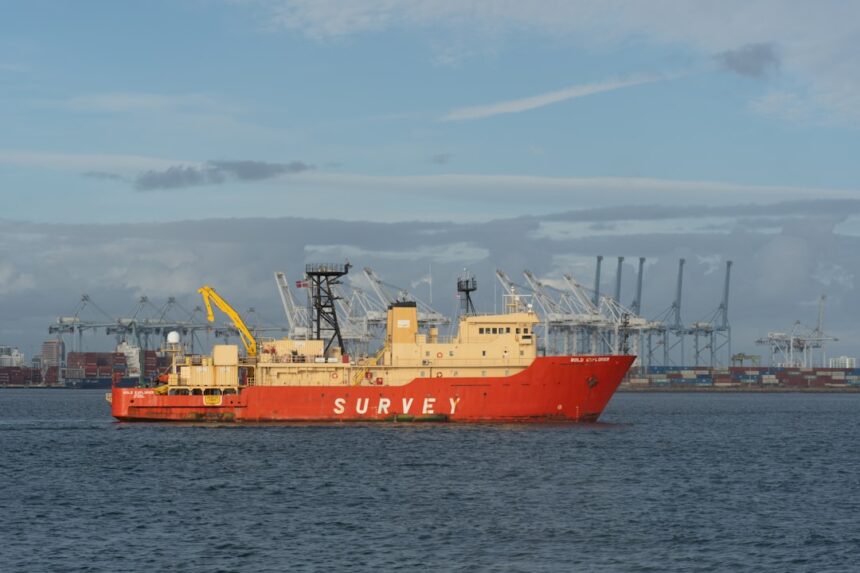
The depths of the ocean, a realm of crushing pressure and eternal darkness, hold within their embrace not only the wrecks of history but also secrets that governments, particularly intelligence agencies, might seek to recover. While the popular imagination often conjures images of clandestine naval operations or fantastical government plots, the reality of deep-sea salvage related to intelligence gathering is a more grounded, albeit profoundly complex and technologically demanding, endeavor. This exploration delves into the nature and perceived scope of CIA deep-sea salvage operations, examining the technical challenges, historical context, and the persistent public fascination with these hidden endeavors.
The vastness of the world’s oceans, covering over 70% of the Earth’s surface, represents a colossal and largely uncharted territory. This immensity offers a natural sanctuary for clandestine activities and a repository for lost assets, be they downed aircraft, sunken vessels carrying sensitive cargo, or even technological components that have fallen into the wrong hands. For an intelligence agency like the Central Intelligence Agency (CIA), these depths are not merely a physical space but a potential theater of operations where crucial information or strategic material might be found.
Strategic Assets Lost and Found
Throughout history, military and civilian aircraft, submarines, and ships have met their end at sea, often carrying classified technology, intelligence-gathering equipment, or personnel who possessed vital knowledge. The recovery of these assets can provide invaluable insights into an adversary’s capabilities, technological advancements, or operational strategies. Imagine a downed reconnaissance drone, its secrets locked within its flight recorders, representing a trove of intelligence that could dramatically shift strategic calculations.
Reconnaissance and Surveillance Platforms
The loss of advanced reconnaissance and surveillance platforms, such as spy planes or unmanned aerial vehicles (UAVs) designed for deep-sea monitoring, presents a critical vulnerability. Their recovery is paramount to prevent potential adversaries from acquiring sensitive technologies or understanding the extent of Western surveillance capabilities. The data contained within their systems, if salvaged and analyzed, could illuminate enemy intentions or confirm threat assessments.
Subsurface Operations and Submarine Incidents
Submarine incidents, whether accidental or due to hostile action, are particularly sensitive. The recovery of a sunken submarine, even a non-hostile one, can yield information about its operational capabilities, electronic warfare systems, and communication protocols. Should a submarine involved in intelligence gathering be lost, the stakes for its recovery are immeasurably higher. The wreckage itself can become a puzzle piece in understanding a complex geopolitical landscape.
The Burden of Secrecy: Why Salvage Becomes Classified
The very nature of intelligence gathering necessitates secrecy. Deep-sea salvage operations directly linked to national security are, by definition, classified. The public disclosure of such operations could compromise ongoing intelligence efforts, reveal technological capabilities, or even provoke international incidents. Therefore, any government involvement in recovering objects from the deep sea for intelligence purposes would be conducted under a veil of extreme discretion.
National Security Implications
The primary driver for classified deep-sea salvage is the protection of national security interests. The recovery of sensitive materials or technologies could provide a decisive advantage in intelligence gathering or defense planning. Conversely, the failure to recover such assets could leave vulnerabilities exploitable by adversaries. The strategic imperative often outweighs the desire for transparency, particularly when dealing with matters of state security.
Diplomatic Sensitivity and International Relations
Salvaging objects from international waters or the territorial waters of other nations carries significant diplomatic ramifications. Unauthorized salvage operations could lead to disputes, accusations of espionage, or even international condemnation. Therefore, such operations, when undertaken by intelligence agencies, are likely to be carefully planned with meticulous attention to legal and diplomatic frameworks, if not conducted in a manner designed to avoid detection altogether.
The history of CIA deep sea salvage operations is a fascinating topic that reveals the intersection of espionage and maritime exploration. For those interested in delving deeper into this subject, a related article can be found at In the War Room, which explores various covert operations and their implications on national security. This resource provides valuable insights into the strategic importance of underwater missions and the technological advancements that have shaped these endeavors over the years.
The Technological Gauntlet: Overcoming the Deep
Operating in the deep sea is akin to venturing into an alien environment. The immense pressure, frigid temperatures, corrosive saltwater, and perpetual darkness present formidable challenges that require highly specialized equipment and expertise. For intelligence agencies, the need to overcome these obstacles to retrieve specific assets elevates the technological stakes considerably.
Pressure and Depth: The Crushing Embrace
The deeper one descends, the more the ocean asserts its immense power. At depths of several thousand meters, the pressure is measured in hundreds of atmospheres, capable of crushing most conventional underwater vehicles. Any salvage operation must contend with this unforgiving environment, requiring robust, pressure-resistant vehicles and equipment.
Unmanned Underwater Vehicles (UUVs) and Remotely Operated Vehicles (ROVs)
Modern deep-sea salvage relies heavily on autonomous and remotely operated vehicles. UUVs, capable of independent navigation and data collection, and ROVs, tethered to a surface vessel and controlled by human operators, are the workhorses of deep-sea exploration and recovery. These machines are equipped with high-definition cameras, sonar systems, manipulators, and sampling devices.
Advanced Imaging and Sonar Capabilities
To locate and identify submerged objects in the vastness of the ocean, advanced imaging and sonar technologies are indispensable. Side-scan sonar can map the seabed, while multi-beam sonar provides detailed topographical information. High-resolution cameras, often integrated into ROVs, are crucial for visual confirmation and detailed inspection of potential recovery targets.
Robotic Manipulators and Precision Tooling
Once a target is identified, robotic manipulators with delicate precision are necessary to secure and extract it. These robotic arms, equipped with specialized grippers and tools, must be capable of intricate maneuvers to avoid damaging sensitive artifacts or materials. The ability to perform complex tasks at extreme depths is a testament to engineering innovation.
Communication and Navigation in the Abyss
Maintaining reliable communication and precise navigation in the deep sea is a significant hurdle. Radio waves, the backbone of surface communication, are quickly attenuated by water. This necessitates alternative methods for transmitting data and commands to submerged assets and for pinpointing their exact location.
Acoustic Communication Systems
Acoustic communication systems, utilizing sound waves, are the primary means of transmitting data between surface vessels and underwater vehicles in the deep sea. However, these systems have limitations in terms of bandwidth and speed, often requiring careful data compression and efficient transmission protocols. It’s like trying to have a whispered conversation across a vast stadium, relying on echoes and subtle cues.
Inertial Navigation Systems (INS) and Doppler Velocity Logs (DVLs)
Accurate navigation underwater is achieved through a combination of inertial navigation systems (INS), which track movement from a known starting point, and Doppler velocity logs (DVLs), which measure velocity relative to the seabed. These systems, often integrated with acoustic positioning systems, allow salvage teams to maintain precise control over their submerged assets.
Historical Echoes: The Phantom of the Deep
While concrete, publicly acknowledged CIA salvage operations are rare due to their classified nature, historical incidents and public speculation provide a framework for understanding the potential scope of such activities. The recovery of downed aircraft carrying sensitive materials, or the investigation of unexplained maritime phenomena, have often fueled rumors and theories about covert government involvement in deep-sea salvage.
The Palomares Incident and Beyond
One of the most well-documented instances of a government agency undertaking a complex salvage operation with potential national security implications was the Palomares incident in 1966. Following a mid-air collision, a U.S. Air Force B-52 bomber carrying nuclear weapons crashed near Palomares, Spain. While not directly a CIA operation, the scale of the effort to recover the damaged nuclear devices and contaminated soil, involving numerous government agencies and advanced equipment, demonstrated the state’s capacity and commitment to recovering critical assets from challenging environments.
Recovery of Lost Nuclear Materials
The Palomares incident highlighted the extreme lengths governments will go to prevent proliferation or environmental contamination when nuclear materials are involved. The successful recovery of the nuclear weapons signaled a commitment to containment and security, even at the cost of significant resources and complex logistical challenges.
The Role of Intelligence in Operational Planning
Intelligence gathering played a crucial role in the Palomares operation, from understanding the potential impact of the crash to mapping the debris field. Similarly, in any classified salvage operation, intelligence would be the silent architect, guiding the efforts and defining the objectives.
Unexplained Maritime Incidents and Speculation
The ocean floor is a repository of countless mysteries, and unexplained maritime incidents, from lost submarines to downed aircraft with unclear circumstances surrounding their demise, often lead to public speculation about covert intelligence operations. While the majority of such incidents have rational explanations, the allure of secrecy surrounding intelligence agencies fuels theories of clandestine salvage.
The Search for Lost Submarines of Interest
The loss of submarines, particularly those with advanced technological capabilities or during periods of heightened geopolitical tension, can spark intense speculation about potential recovery efforts by intelligence agencies. The perceived strategic value of such vessels often leads to theories of covert ops.
Theories surrounding UFOs and Extraterrestrial Technology
While firmly in the realm of conspiracy theory, some narratives suggest that deep-sea salvage operations are undertaken to recover alleged crashed extraterrestrial spacecraft or alien technology. Such theories, lacking credible evidence, often arise from the inherent mystery of the deep ocean and the opaque nature of intelligence work.
The Shadow Players: CIA and the Art of Subsurface Recovery
The CIA’s mandate is to gather, analyze, and disseminate national security information from around the world. This mission, by its very nature, necessitates operating in the shadows, employing a diverse range of capabilities. While the direct public assertion of CIA deep-sea salvage operations is virtually nonexistent, the agency’s established methods of covert intelligence gathering strongly suggest their involvement in such endeavors when strategically beneficial.
Discreet Access and Advanced Technologies
The CIA’s success hinges on its ability to access information and assets discreetly, often circumventing traditional military or governmental channels. This implies a proficiency not only in human intelligence but also in leveraging advanced technological solutions, including those suited for the challenging underwater environment.
Contracted Expertise and Proprietary Assets
It is highly probable that the CIA, rather than operating its own fleet of specialized salvage vessels, would contract with private companies possessing the requisite deep-sea technology and expertise. This approach allows for plausible deniability and leverages existing industry capabilities. These contractors become the silent hands carrying out the mission.
Leveraging Advanced Surveillance and Reconnaissance Platforms
The CIA’s existing infrastructure for surveillance and reconnaissance could be adapted for deep-sea operations. This might involve utilizing or developing specialized unmanned vehicles equipped with sophisticated sensors and retrieval mechanisms, often integrated with broader intelligence networks.
Missions of Intelligence Value
The types of objects or information that might warrant a CIA-led deep-sea salvage operation are directly linked to its core mission: understanding threats, anticipating adversary actions, and acquiring critical technological or strategic intelligence.
Recovering Sensitive Electronic Equipment and Data
The primary objective would likely be the recovery of electronic devices, data storage media, or communication equipment that could reveal enemy plans, capabilities, or operational methods. Imagine a lost signal intelligence platform, its captured signals a potential goldmine.
Assessing Adversary Technological Capabilities
Salvaging downed enemy aircraft, reconnaissance drones, or other technological assets could provide invaluable insights into their military-industrial complex, their pursuit of advanced technologies, and their potential threat vectors. It’s like dismantling an enemy’s engine to understand its power and potential weaknesses.
The history of CIA deep sea salvage operations is a fascinating topic that reveals the agency’s covert activities beyond traditional espionage. For those interested in exploring this intriguing aspect of intelligence work, a related article provides valuable insights into the various missions undertaken by the CIA in underwater recovery efforts. You can read more about these operations and their implications by visiting this detailed article that delves into the complexities and challenges faced by the agency in its pursuit of submerged assets.
The Perpetual Enigma: Public Perception and the Future
| Year | Operation Name | Location | Objective | Outcome | Depth Reached (meters) |
|---|---|---|---|---|---|
| 1974 | Project Azorian | Pacific Ocean, near Hawaii | Salvage Soviet submarine K-129 | Partial recovery of submarine sections | 5,200 |
| 1968 | Operation Jennifer | Pacific Ocean | Recover sunken Soviet submarine | Successful recovery of parts | 5,200 |
| 1950s | Project Azorian precursor missions | Various deep sea locations | Test deep sea salvage technology | Development of deep sea recovery methods | Up to 3,000 |
| 1980s | Classified deep sea operations | Undisclosed | Intelligence gathering and salvage | Unknown | Unknown |
The deep sea remains one of the last unexplored frontiers on Earth, a fitting backdrop for the persistent public fascination with covert government operations. While the specifics of CIA deep-sea salvage remain shrouded in secrecy, the underlying principles of intelligence gathering, technological advancement, and the strategic importance of underwater assets paint a picture of a complex and ongoing endeavor.
The Ethics of Secrecy and Transparency
The inherent secrecy surrounding intelligence operations raises perennial questions about transparency and accountability. While national security demands a degree of discretion, the public’s right to know, particularly concerning impactful government actions, remains a critical debate.
Balancing National Security with Public Interest
The challenge lies in striking a delicate balance between protecting vital national security interests and informing the public about significant government activities. This is particularly relevant when dealing with potentially dangerous or controversial operations, even those conducted in the remote depths of the ocean.
The Role of Whistleblowers and Investigative Journalism
In the absence of official disclosures, whistleblowers and investigative journalists often play a crucial role in shedding light on covert government operations. Their efforts, though fraught with risk, can bring to light activities that might otherwise remain hidden forever.
The Evolving Landscape of Deep-Sea Technology
As technology continues to advance, the capabilities for deep-sea exploration and salvage will undoubtedly expand. This will likely lead to new opportunities for intelligence agencies to pursue assets of strategic importance, further deepening the enigma of their subsurface operations.
AI and Autonomy in Underwater Operations
The increasing integration of artificial intelligence (AI) and enhanced autonomy in underwater vehicles will revolutionize salvage operations. These systems can perform complex tasks with greater efficiency and resilience, reducing the need for constant human oversight and operating in conditions where human presence is impossible.
New Frontiers and Emerging Technologies
The ongoing exploration of the deep sea continues to reveal new geological formations, biological wonders, and potential strategic resources. This evolving landscape will undoubtedly present new challenges and opportunities for intelligence agencies conducting subsurface operations, pushing the boundaries of what is technologically and strategically feasible. The ocean depths, with their immense pressure and eternal darkness, will continue to be a canvas for covert endeavors, where the unseen plays a critical role in shaping the unseen geopolitical landscape.
WARNING: The $800 Million Mechanical Failure That Almost Started WWIII
FAQs
What is the history of CIA deep sea salvage operations?
The CIA’s deep sea salvage operations began during the Cold War, primarily aimed at recovering sunken Soviet submarines, espionage equipment, and other sensitive materials from the ocean floor. These operations involved advanced technology and covert missions to gather intelligence and maintain strategic advantages.
What was the most famous CIA deep sea salvage operation?
One of the most famous operations was Project Azorian in the early 1970s, where the CIA attempted to recover a sunken Soviet submarine, K-129, from the Pacific Ocean. The operation involved the specially designed ship Hughes Glomar Explorer and remains one of the most ambitious deep sea salvage efforts in history.
What technologies were used in CIA deep sea salvage missions?
The CIA employed cutting-edge technologies such as remotely operated vehicles (ROVs), specialized deep-sea submersibles, advanced sonar systems, and custom-built salvage ships like the Hughes Glomar Explorer to locate and recover objects from great ocean depths.
Were CIA deep sea salvage operations successful?
Some operations achieved partial success, such as recovering portions of sunken submarines and equipment, while others faced significant challenges due to the extreme depths and technical difficulties. Project Azorian, for example, recovered only part of the submarine, but still provided valuable intelligence.
Are CIA deep sea salvage operations still conducted today?
While specific details remain classified, it is believed that the CIA and other intelligence agencies continue to conduct deep sea salvage and reconnaissance missions using modern technology to gather intelligence and monitor underwater activities of foreign powers.