The silent depths of the Pacific Ocean hold many secrets, and among the most profound is the story of Soviet submarine K-129. This diesel-electric attack submarine, a product of the Soviet Union’s ambitious Cold War naval program, vanished from the face of the Earth on March 11, 1968, taking with it all 98 souls aboard. Its disappearance was not merely the loss of a vessel; it was the vanishing of a ghost from the operational theater, a sudden void in the maritime landscape that sparked intense speculation and a clandestine race against time. Understanding K-129’s fate requires delving into the geopolitical climate of the era, the technical capabilities of its time, and the extraordinary efforts undertaken to uncover its watery grave.
The late 1960s were a period of heightened tension between the United States and the Soviet Union, a global chess match played out across multiple fronts. The arms race was in full swing, with both superpowers pouring vast resources into developing ever more sophisticated military hardware. Submarines, with their ability to operate undetected beneath the waves, were particularly valued assets. They served as strategic deterrents, intelligence gatherers, and potential first-strike weapons. K-129, a Project 641 (Foxtrot-class) submarine, was a formidable instrument in this silent war, designed for prolonged patrols and the potent threat of its torpedo armament.
Project 641: The Foxtrot-Class Submarine
The Foxtrot-class submarines were the workhorses of the Soviet Navy during this era. These diesel-electric vessels were large, capable of operating for extended periods submerged, although dependent on snorkeling for battery recharges. They were armed with a significant number of torpedoes, making them a serious threat to surface fleets and other submarines. K-129, commissioned in 1960, was part of a generation of Soviet submarines designed to project power far from its home waters, particularly into the vast expanse of the Pacific.
Strategic Significance in the Pacific
The Pacific Ocean was a crucial theater of operations for both the US and the Soviet Union. US naval bases dotted the region, and naval movements were constantly monitored. Soviet submarines, like K-129, were tasked with shadowing American carriers, gathering electronic intelligence on US naval communications, and maintaining a powerful presence to deter perceived aggression. K-129’s patrol area, off the coast of Hawaii, placed it in close proximity to vital US military installations and strategic sea lanes. Its mission, though classified, was undoubtedly of high importance to Soviet naval strategy. The submarine’s disappearance, therefore, represented not just a loss of materiel, but a significant intelligence setback and a potential security breach.
The mysterious disappearance of the Soviet submarine K-129 in 1968 has intrigued historians and military enthusiasts alike, leading to numerous investigations and theories about its fate. For those interested in exploring this enigmatic event further, a related article can be found at In the War Room, which delves into the details surrounding the submarine’s last known mission and the subsequent search efforts that followed its loss.
The Fateful Patrol: Tracing the Last Known Movements
The timeline of K-129’s final days is pieced together from fragmented radio intercepts and the operational logs of other Soviet vessels. It departed from its homeport of Vladivostok on February 24, 1968, embarking on what would be its last voyage. The submarine was last heard from on March 8, approximately 1,500 nautical miles northwest of Hawaii. After this communication, silence descended, a silence that would soon become deafening to those tasked with its whereabouts.
Radio Silence and Growing Concern
Soviet naval command likely initiated routine contact procedures expected of a submarine on patrol. When these attempts failed to elicit a response, a state of unease would have begun to creep in. In the highly structured world of military operations, a lack of communication from a vessel at sea, especially one on a sensitive mission, is a flashing red siren. Initial theories likely ranged from mechanical failure due to rough seas to more alarming possibilities of enemy action.
The Search Area and Initial Scrutiny
The Soviet Navy launched an extensive search operation in the presumed vicinity of K-129’s last known position. This search, however, was hampered by the vastness of the Pacific and the limited tracking capabilities of the time. The Soviets were also acutely aware that any overt search might draw unwanted attention from their adversary, the United States, and potentially reveal the extent of their monitoring capabilities. This created a delicate balancing act, where the urgency of finding their lost submarine was tempered by the need for operational secrecy.
Whispers in the Ocean: The Discovery of a Wreckage
While the Soviets searched their own waters and monitored shipping lanes, the United States, alerted by seismic activity and a breakdown in communication protocols, also began its own covert pursuit. It was the Americans who, through the sophisticated capabilities of their intelligence-gathering network, eventually located the resting place of K-129. This discovery set in motion one of the most audacious and technically challenging salvage operations in history.
Listening to the Earth’s Groans: Seismic Detection
The US Navy maintained a global network of underwater listening stations, designed to detect the subtle tremors of naval activity. On March 11, 1968, these stations registered a significant seismic event in the Pacific Ocean, consistent with the implosion of a submarine. This event provided a crucial directional clue, guiding the initial stages of the US search effort. It was as if the ocean floor itself had sighed, revealing a secret it had held captive.
The Trail of Breadcrumbs: Intelligence Gathering
Beyond seismic data, US intelligence agencies employed a multi-pronged approach. Airborne reconnaissance, signal intelligence, and the analysis of Soviet naval movements all contributed to narrowing down the search area. Information gleaned from defectors, intercepted communications, and the general understanding of Soviet naval operations allowed the US to anticipate K-129’s patrol routes and potential operational areas. The intelligence community was like a patient detective, sifting through every available clue, no matter how small, to reconstruct the events leading to the disappearance.
Project AZORIAN: A Secret Salvage Saga
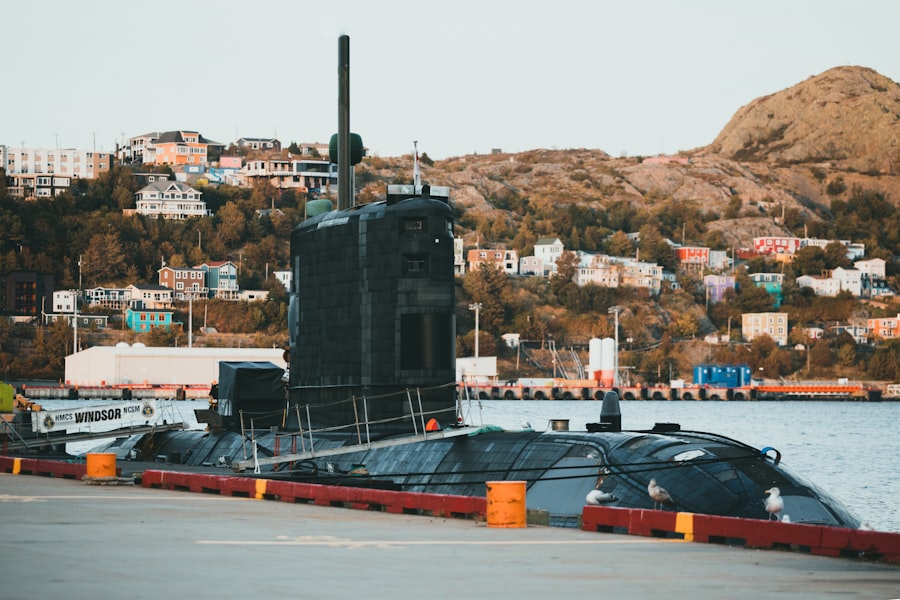
The discovery that K-129 had sunk, and where it had sunk, opened the door to an unprecedented operation: Project AZORIAN. Concealed under the guise of a deep-sea mining operation by the Hughes Glomar Explorer, this clandestine mission aimed to raise the massive Soviet submarine from a depth of over 16,000 feet. The sheer audacity of the undertaking mirrored the high stakes of the Cold War itself, a gamble fought on the seabed rather than in the skies.
The Unlikely Cover: Deep Sea Mining
The public face of Project AZORIAN was that of the Summa Corporation, a subsidiary of Howard Hughes’s industrial empire, supposedly exploring for manganese nodules on the ocean floor. The massive vessel, the Glomar Explorer, was purpose-built for this endeavor, its enormous size and sophisticated equipment masking its true intent. This ingenious diversion was a crucial element in keeping the operation secret from both the Soviet Union and the American public.
Facing the Abyss: The Technical Challenge
Raising a submarine from such extreme depths presented a monumental engineering challenge. The immense pressure at 16,000 feet would crush any conventional sub. Project AZORIAN devised a complex system involving a massive submersible cradle designed to capture the submarine and lift it to the surface. The precision required was astonishing; a miscalculation of even a small degree could have resulted in the loss of the submarine and the failure of the entire mission. It was a battle of human ingenuity against the unforgiving forces of nature.
The Triumphant, Yet Incomplete, Ascent
In the summer of 1974, after years of meticulous planning and execution, the Glomar Explorer successfully raised a portion of K-129 from the ocean floor. The recovered section contained the submarine’s forward torpedo room, which bore witness to the likely cause of the disaster. While a significant achievement, the lifting process was not without its difficulties, and the entire submarine could not be brought to the surface.
The mysterious disappearance of the Soviet submarine K-129 in 1968 remains one of the most intriguing events of the Cold War era, capturing the attention of historians and military enthusiasts alike. For those interested in delving deeper into this enigmatic incident, a related article can be found that explores the various theories surrounding the submarine’s fate and the subsequent recovery efforts. You can read more about it in this insightful piece on the War Room, which sheds light on the complexities of underwater operations during that tense period in history.
The Lingering Questions: Unraveling the Mystery
| Metric | Details |
|---|---|
| Submarine Name | K-129 |
| Type | Golf II-class ballistic missile submarine |
| Disappearance Date | March 8, 1968 |
| Last Known Location | North Pacific Ocean, approximately 1,560 nautical miles northwest of Hawaii |
| Number of Crew | 98 |
| Mission | Routine patrol with ballistic missiles onboard |
| Cause of Disappearance | Unknown; suspected sinking due to accident or malfunction |
| Recovery Operation | Project Azorian (1974) by CIA to recover parts of the submarine |
| Recovered Items | Partial sections of the submarine including cryptographic materials and missile components |
| Significance | Cold War intelligence and technological espionage |
Despite the recovery of a part of K-129, the exact cause of its sinking remains shrouded in a degree of mystery. However, the evidence recovered has provided crucial insights into the submarine’s final moments. The ongoing analysis of the recovered materials continues to contribute to our understanding of Soviet submarine capabilities and the inherent dangers of naval operations in the Cold War era.
The Torpedo Room: A Glimpse into Disaster
The recovered bow section of K-129 revealed significant damage to the torpedo tubes. Evidence pointed to the possibility of a catastrophic accident involving a missile or torpedo on board. A leak within a missile tube or a malfunctioning torpedo could have led to a chain reaction, causing the submarine to rapidly flood and sink. The implication is that the disaster was internal, a tragic accident rather than an act of war.
The Aftermath: A Cold War Secret Kept
The success of Project AZORIAN was a closely guarded secret for decades. The US government successfully deflected Soviet inquiries and maintained the ruse of a commercial mining operation. The recovery of K-129 provided invaluable intelligence about Soviet naval technology and operational procedures. This information played a significant role in shaping US naval strategy and counter-intelligence efforts during the remainder of the Cold War. The fate of K-129, like so many other Cold War secrets, remained submerged beneath the waves and hidden within the annals of classified documents, a silent testament to the lengths to which nations would go in their pursuit of advantage. However, the story of K-129 serves as a potent reminder that beneath the grand narratives of geopolitical power, lie the individual tragedies and the enduring mysteries of those who served and perished in the silent depths.
WARNING: The $800 Million Mechanical Failure That Almost Started WWIII
FAQs
What was the Soviet submarine K-129?
The Soviet submarine K-129 was a Golf II-class ballistic missile submarine of the Soviet Navy, launched in the early 1960s and equipped with nuclear missiles.
When and where did the K-129 disappear?
K-129 disappeared in March 1968 in the Pacific Ocean, northwest of Hawaii, during a routine patrol mission.
What caused the disappearance of K-129?
The exact cause of K-129’s disappearance remains uncertain, but it is believed to have sunk due to an accident or malfunction, possibly involving a missile launch or onboard explosion.
How did the United States respond to the disappearance of K-129?
The United States conducted a secret recovery operation called Project Azorian, using the specially designed ship Hughes Glomar Explorer to attempt to recover parts of the sunken submarine from the ocean floor.
What was the significance of the K-129 disappearance during the Cold War?
The disappearance of K-129 heightened Cold War tensions, as it involved nuclear weapons and intelligence gathering, and the subsequent U.S. recovery efforts highlighted the strategic importance of submarine technology and underwater espionage.