The ocean floor, a realm of crushing pressures and eternal darkness, cradles a history far stranger than any fiction. Among its submerged secrets lies the tale of the Glomar Explorer, a vessel commissioned by a reclusive billionaire, Howard Hughes, for a mission that stretched the boundaries of technological possibility and sparked a firestorm of controversy. This is not a simple story of retrieval; it is a complex tapestry woven with threads of Cold War espionage, corporate ambition, and the enigmatic desires of one of the 20th century’s most famous figures.
Beneath the vast, inscrutable expanse of the Pacific Ocean, a ghost of the Cold War lay in wait. The Soviet submarine K-129, a Golf II-class ballistic missile submarine, had met its end in March 1968, sinking to a depth of approximately 16,000 feet. Its demise was not just a loss of materiel; it was a potential embarrassment and a treasure trove of intelligence for the United States. The K-129 carried nuclear ballistic missiles, and more importantly, its advanced Soviet technology, if recovered, could offer invaluable insights into Soviet naval capabilities. The United States intelligence community, a meticulous fisherman in the deep currents of global politics, saw an opportunity to cast a very long net.
The Intelligence Imperative
The sinking of the K-129 presented a dual imperative for the United States. Firstly, there was the paramount concern of preventing the Soviet Union from recovering its own lost submarine and any sensitive materials it may have contained. The potential for propaganda or a technological advantage, however slim, was a risk too great to ignore. Secondly, and perhaps more enticingly, was the prospect of salvaging the submarine itself. The intelligence that could be gleaned from its systems, its armament, and its codebooks would be a windfall, a diplomatic and military coup without firing a single shot. Imagine a scientist dissecting a rare specimen to understand its very essence; this was the intelligence community’s version of such a profound discovery.
The Seed of a Controversial Collaboration
The sheer technical challenge of recovering a submarine from such an extreme depth was monumental. Conventional salvage methods were utterly inadequate. It required a vessel capable of precise positioning, massive lifting power, and a revolutionary retrieval system. The U.S. Navy, while possessing significant resources, found itself facing a technological chasm. This is where Howard Hughes, a man whose wealth was as boundless as his eccentricities, entered the picture, not as a patriot driven by national duty, but as a businessman with a unique set of resources and an insatiable curiosity.
The Glomar Explorer, a vessel shrouded in mystery and intrigue, was famously associated with Howard Hughes and his covert operations during the Cold War, particularly in the recovery of a sunken Soviet submarine. For those interested in exploring more about the clandestine activities surrounding this enigmatic ship, a related article can be found at In the War Room, which delves into the broader implications of Hughes’ ventures and the secretive nature of government operations during that era.
The Enigmatic Patron: Howard Hughes and the Summa Corporation
Howard Hughes, a name synonymous with aviation pioneering, Hollywood glamour, and ultimately, reclusive obsession, was a titan of American industry. His vast conglomerate, the Summa Corporation, spanned a diverse range of businesses, including aviation, hotels, and shipbuilding. Hughes was known for his ambitious, often audacious, projects, and his willingness to invest immense sums of money into endeavors that captured his imagination, regardless of immediate profit. The K-129 recovery mission, cloaked in secrecy, would become one of his most extraordinary and costly undertakings.
Hughes’s Deep-Sea Fascination
While the precise motivations of Hughes remain somewhat shrouded in the mists of his later life, his fascination with marine engineering and deep-sea exploration is well-documented. He had previously invested in projects related to underwater vehicles and had expressed an interest in the potential of ocean resources. The opportunity to sponsor a mission of such unprecedented scale, pushing the very limits of what was technologically achievable, likely appealed to his pioneering spirit and his desire to leave an indelible mark on history. It was a challenge that resonated with his own audacious spirit, a grand experiment in the world’s largest laboratory.
The Summa Corporation’s Role
The Summa Corporation, under Hughes’s direction, was contracted by the CIA to build and operate the vessel that would undertake the audacious salvage. This presented a fascinating intersection of private enterprise and clandestine government operations. The CIA, recognizing the insurmountable technological hurdles, found in Hughes and his company a capable and willing partner, albeit one with their own unique demands and operational styles. The arrangement was a carefully constructed facade, designed to shield the true nature of the mission from public scrutiny.
Building a Leviathan: The Glomar Explorer
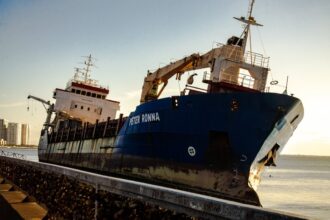
The core of the operation was the construction of a vessel specifically designed for the task: the Hughes Glomar Explorer. This was no ordinary ship. It was a purpose-built marvel of engineering, a floating behemoth engineered to conquer the crushing pressures of the deep. Its construction was a closely guarded secret, its true capabilities deliberately obscured. The vessel was a testament to ingenuity, a steel behemoth forged in the crucible of ambition and necessity.
The Technical Marvel: Design and Operation of the Glomar Explorer
The Glomar Explorer was more than just a ship; it was a symphony of complex engineering, a testament to human ingenuity bent on achieving the seemingly impossible. Its design was revolutionary, addressing the unique challenges posed by recovering a massive object from sixteen thousand feet of water. The vessel was a product of relentless innovation, where every bolt and every beam served a specific, critical purpose.
The Gigantic Mining Claw: The Capture Vehicle
At the heart of the Glomar Explorer’s operation was its unparalleled asset: the “capture vehicle,” a colossal submersible grappling device affectionately nicknamed “Clementine.” This massive claw, weighing hundreds of tons, was designed to descend to the ocean floor, surround the K-129, and securely latch onto its hull. The precision required for its deployment and operation was akin to performing microsurgery on a celestial body, demanding unwavering accuracy in an unforgiving environment.
Designing for the Abyss
The design of Clementine was a feat of extreme engineering. It had to be strong enough to withstand the immense pressure at such depths, yet nimble enough to maneuver around the submarine. The materials used, the hydraulic systems, and the guidance mechanisms were all at the cutting edge of technological development. Every component was meticulously engineered to perform under unimaginable duress.
The Delicate Dance of Retrieval
Once Clementine had secured the K-129, the Glomar Explorer’s unique lifting system came into play. The ship itself possessed a massive, retractable lifting frame that could be lowered into the water. Clementine, with the submarine clamped firmly in its grasp, would then dock with this frame, allowing the entire assembly to be slowly and carefully raised to the surface. This process was a slow, agonizing ascent, each inch gained a victory against the relentless pull of gravity and the crushing weight of the ocean.
The Ship’s Ingenious Design
Beyond the capture vehicle, the Glomar Explorer itself possessed a host of innovative features. Its semi-submersible design allowed it to achieve exceptional stability, a crucial factor when operating above a deep-sea target. It also featured a large moon pool, an opening in the hull through which the capture vehicle and its payload could be deployed and recovered without exposing the ship to the full force of the open ocean. This was the ship’s beating heart, its gateway to the abyss.
Stability in the Storm
The Glomar Explorer’s semi-submersible hull was a radical departure from conventional ship design. This configuration plunged much of the ship’s structure below the waterline, providing a significantly more stable platform, even in rough seas. This stability was not a luxury; it was a fundamental requirement for the precise maneuvering of the capture vehicle at extreme depths.
The Moon Pool: A Portal to the Deep
The moon pool was a crucial element of the Glomar Explorer’s design. This large opening in the ship’s deck allowed the capture vehicle to be lowered and raised while remaining within the protected environment of the hull. This mitigated the impact of surface weather and provided a secure and controlled environment for one of the most delicate operations imaginable.
Mission Accomplished? The Retrieval and Its Aftermath
In the summer of 1974, after years of planning, construction, and testing, the Glomar Explorer set sail for the designated recovery site. The mission, known as Project Azorian, was a masterclass in clandestine operations. The world watched, unaware of the drama unfolding thousands of feet below the waves. The culmination of this monumental effort was a moment of triumph, yet the full story of what was actually achieved remains a subject of debate and speculation.
The First Attempt: A Partial Success
The initial retrieval attempt in July 1974 was marred by a critical equipment failure as the K-129 neared the surface. The capture vehicle, having brilliantly performed its task of securing the submarine, tragically broke apart under the strain, causing a significant portion of the K-129 to fall back into the ocean. This was a gut-wrenching moment, a near miss that highlighted the unforgiving nature of the deep sea. Imagine a sculptor whose masterpiece crumbles just as it’s lifted from the clay.
The Frustration of the Deep
The failure of the capture vehicle was a devastating blow, a stark reminder of the immense technical challenges involved. The immense pressure at depth had exerted its toll, and the sheer force required for the lift proved too much for the delicate balance of the system in its initial configuration. This was a setback that tested the resolve of all involved.
The Second Attempt: The Mystery of the Cargo
Undeterred, and with modifications to the equipment, the Glomar Explorer returned to the site in August 1974. This second attempt, shrouded in even greater secrecy, was reported to have been successful in bringing a portion of the K-129 to the surface. However, the true extent of the recovery, and what exactly was salvaged, has remained a subject of intense speculation and debate. The official narrative stated that the forward section of the submarine was recovered, including its missile bay.
What Was Truly Recovered?
The exact contents of the recovered section are a matter of historical conjecture. While the U.S. government maintained that the primary objective – salvaging sensitive equipment and intelligence – was met, independent researchers and former intelligence operatives have voiced doubts, suggesting that the recovered section may have been less substantial than officially reported, or that certain highly prized components were lost in the initial failure. The silence surrounding these details has only fueled the intrigue.
The Cover-Up and the Glomar Revelations
The existence of Project Azorian and the Glomar Explorer’s role remained a closely guarded secret for years. The U.S. government, through the CIA, had operated under the assumption that the mission’s success would be kept entirely under wraps. However, in 1975, the story began to unravel when The Los Angeles Times, investigating a cryptic government contract awarded to Hughes’s company, published a series of articles by investigative journalist Robert Toth, exposing the existence of Project Azorian and the Glomar Explorer. This was the moment the meticulously constructed veil of secrecy was torn asunder.
The Power of Investigative Journalism
The investigative prowess of Robert Toth and The Los Angeles Times was instrumental in bringing the story of Project Azorian into the public domain. Their persistent digging, their refusal to accept official stonewalling, cracked open a window into the clandestine world of Cold War salvage operations. It was a stark reminder of the vital role of a free press in holding power accountable.
The Public’s Fascination
Once the news broke, the public’s imagination was captured by the daring feat and the intriguing mystery. The Glomar Explorer, once a ghost ship, became a symbol of audacious ambition and the hidden depths of international intrigue. The untold story was finally beginning to be whispered, then spoken, then shouted.
The Glomar Explorer, a vessel shrouded in mystery and intrigue, was famously associated with Howard Hughes and his covert operations during the Cold War. This remarkable ship was not only a marvel of engineering but also a key player in the CIA’s attempts to recover a sunken Soviet submarine. For those interested in delving deeper into the fascinating world of espionage and the secrets of the sea, a related article can be found at this link, which explores the broader implications of such clandestine missions.
The Legacy of the Glomar Explorer: Technological Advancements and Lingering Questions
| Metric | Details |
|---|---|
| Vessel Name | Glomar Explorer |
| Cover Story | Howard Hughes Deep-Sea Mining Project |
| Purpose of Cover Story | To conceal the true mission of recovering a sunken Soviet submarine |
| Year Launched | 1974 |
| True Mission | Project Azorian – CIA operation to recover Soviet submarine K-129 |
| Length of Vessel | 168 meters (551 feet) |
| Displacement | 21,000 tons |
| Unique Feature | Large mechanical claw for deep-sea recovery |
| Cost of Construction | Approximately 350 million (1970s USD) |
| Outcome | Partial recovery of submarine; mission partially successful |
The Glomar Explorer and Project Azorian left an indelible mark on the world of engineering and intelligence gathering. The technological innovations developed for the mission pushed the boundaries of deep-sea salvage, laying the groundwork for future underwater operations. However, the mission’s legacy is also defined by the enduring questions it leaves unanswered, a testament to the complexities of power, secrecy, and the pursuit of knowledge in the unforgiving abyss.
A Leap Forward in Subsea Technology
The development of the Glomar Explorer and its associated technologies, particularly the capture vehicle and the advanced lifting systems, represented a significant leap forward in deep-sea salvage capabilities. These innovations, born out of necessity and ambition, found applications in subsequent projects, some of which remain classified to this day. It was a crucible of innovation that forged new tools for exploring and interacting with the deepest parts of our planet.
Paving the Way for Future Operations
The lessons learned from Project Azorian influenced the design and operation of future deep-sea salvage vessels and remotely operated vehicles (ROVs). The success, however partial, demonstrated the feasibility of recovering large objects from extreme depths, opening up new possibilities for scientific research, resource exploration, and even historical recovery. It was a stepping stone into a new era of underwater exploration.
The Unanswered Questions: A Cipher in the Deep
Despite the official accounts, the true extent of the K-129‘s recovery and the specific intelligence gained remain subjects of debate. The possibility that crucial components, particularly the missile guidance systems, were either not recovered or were lost in the initial retrieval failure, continues to fuel speculation. The ocean floor, much like the secrets it holds, can be a frustratingly opaque medium.
The Enigma of the Codebooks and Warheads
The most tantalizing unanswered questions revolve around the fate of the submarine’s codebooks and its nuclear warheads. Were they recovered? If so, what was their impact on intelligence assessments? The absence of definitive answers has allowed theories to flourish, painting a picture of a mission that may have yielded less than what was initially hoped, or perhaps something far more significant that remains deliberately hidden.
Hughes’s Final Gambit: A Legacy of Ambiguity
For Howard Hughes, the Glomar Explorer represented a colossal undertaking, a final testament to his larger-than-life persona. While the mission may not have been a resounding public success in terms of absolute retrieval, it undeniably cemented his place in the annals of audacious projects. His involvement, though driven by complex personal motivations, ultimately served a crucial national security interest, albeit one conducted far from the public eye. His legacy, much like the deep sea itself, is a blend of clarity and profound ambiguity.
The Glomar Explorer Today: A Silent Witness
The Glomar Explorer, a vessel that once played a pivotal role in a clandestine international drama, now rests in relative obscurity. Its remarkable history, however, continues to fascinate and intrigue, serving as a reminder of the extraordinary efforts undertaken in the pursuit of knowledge and national security. The ship itself has become a silent witness to a chapter of history that, while partially revealed, still holds many secrets within its watery embrace.
A Shadow in the Shipyards
After its service for Project Azorian, the Glomar Explorer underwent various periods of operation, including deep-sea mining research and other classified missions. However, its distinctive design and its association with a high-profile, covert operation meant it was never truly a vessel of everyday commerce. It existed in a different sphere, a world of specialized tasks and hidden purposes.
The Shifting Fortunes of a Unique Vessel
The ship’s life after Azorian was a fluctuating one, reflecting the changing priorities of various organizations and government agencies. Its unique capabilities made it valuable for specific, often specialized, tasks, but its specialized nature also limited its wider applicability. It was a tool honed for a singular purpose, and its post-mission life was a testament to that legacy.
The Enduring Allure of the Untold
The story of the Glomar Explorer and Howard Hughes remains a captivating blend of technological marvel, geopolitical intrigue, and the enduring human drive to explore the unknown. It is a narrative that continues to inspire books, documentaries, and speculative theories, a testament to the enduring power of a story that is, even now, not entirely told. The ocean floor, the ultimate repository of secrets, continues to whisper tales of the Glomar Explorer, a vessel that dared to reach into the deepest darkness.
WARNING: The $800 Million Mechanical Failure That Almost Started WWIII
FAQs
What was the Glomar Explorer?
The Glomar Explorer was a deep-sea drilling ship built in the early 1970s by the CIA and Howard Hughes’ company to recover a sunken Soviet submarine from the ocean floor.
Why was Howard Hughes associated with the Glomar Explorer?
Howard Hughes’ company was used as a cover story to conceal the true purpose of the Glomar Explorer, making it appear as a commercial mining vessel rather than a covert intelligence operation.
What was the main mission of the Glomar Explorer?
The primary mission of the Glomar Explorer was to secretly recover parts of a sunken Soviet submarine, K-129, from the Pacific Ocean during the Cold War.
How did the cover story involving Howard Hughes help the operation?
The cover story involving Howard Hughes helped maintain secrecy by providing a plausible explanation for the ship’s unusual design and activities, reducing suspicion from other nations and the public.
Is the Glomar Explorer still in use today?
No, the Glomar Explorer was eventually retired and scrapped. Its mission remains one of the most famous examples of Cold War espionage and covert operations.