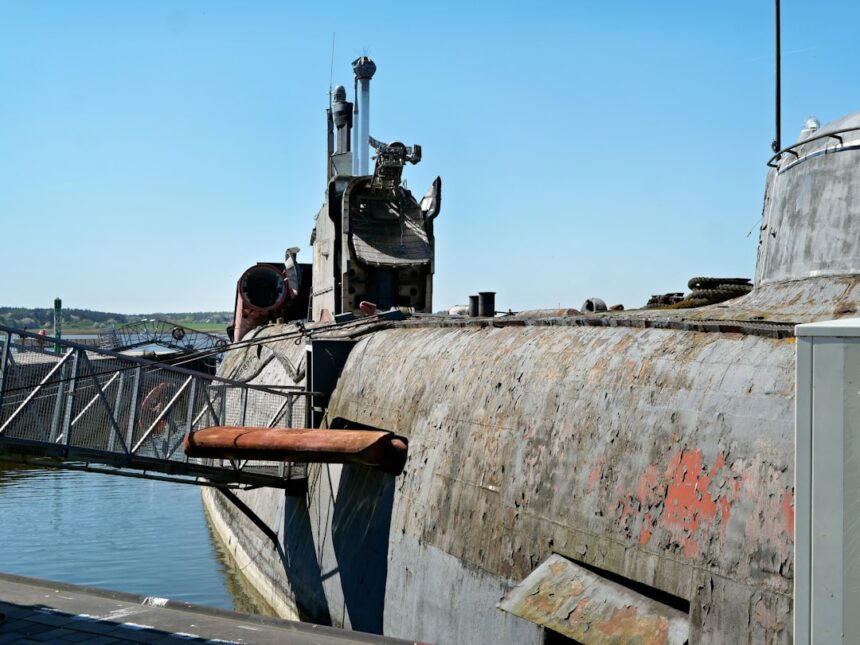
The Cold War, a period marked by intense ideological and geopolitical rivalry, saw both the United States and the Soviet Union push the boundaries of technological innovation and covert operations. Among the most audacious and clandestine endeavors of this era was Project Azorian, a complex and largely unknown mission to recover a Soviet submarine, K-129, from the depths of the Pacific Ocean. This audacious undertaking, shrouded in secrecy for decades, stands as a testament to the Cold War’s espionage, technological daring, and political maneuvering.
The story begins with the K-129, a Soviet Golf-II class ballistic missile submarine. Commissioned in 1959, these submarines were a crucial component of the Soviet Union’s strategic nuclear deterrent, armed with three R-21 nuclear-tipped ballistic missiles. Their mission was to patrol designated areas, prepared to launch their dangerous cargo if ordered.
The Submarine and its Mission
The K-129 was a diesel-electric submarine, somewhat less advanced than its American nuclear counterparts, but still a formidable weapon system. Its primary armament consisted of three R-21 submarine-launched ballistic missiles (SLBMs), each carrying a nuclear warhead. These missiles had a range of approximately 1,400 kilometers (870 miles), allowing the K-129 to target portions of the United States from its patrol areas in the Pacific.
The Disappearance
On February 24, 1968, the K-129 departed its homeport at Petropavlovsk-Kamchatsky on what was intended to be a routine patrol. Its destination was a patrol area northwest of Hawaii. Communications with the submarine ceased abruptly on March 8, 1968. Despite extensive efforts by the Soviet Navy, including a search of an area some 1,500,000 square kilometers (580,000 square miles), no trace of the K-129 or its 98 crew members was found. The Soviet Union publicly declared the submarine lost in May 1968.
Speculations on the Cause
The exact cause of the K-129’s sinking remains a subject of speculation and debate. Several theories have been proposed:
- Internal Explosion: This is the most widely accepted theory. It suggests a catastrophic explosion, possibly from a hydrogen build-up in the battery compartments or an accidental ignition of missile fuel. The nature of the debris ultimately recovered supports this possibility.
- Collision: Another theory posits a collision with a U.S. Navy submarine. While evidence for this has been heavily scrutinized and largely refuted by U.S. officials, the possibility of a “blind” encounter in the vastness of the ocean fueled such speculation during the Cold War.
- Mechanical Failure: A critical failure of the submarine’s pressure hull at extreme depths could have led to implosion. However, the evidence points more towards an internal event.
The recovery mission of the Soviet submarine K-129, which sank in 1968, remains one of the most intriguing episodes of Cold War history. For a deeper dive into the complexities and challenges faced during this covert operation, you can read a related article that explores the strategic implications and the technological innovations employed in the mission. To learn more, visit this article.
The Discovery: A Whisper in the Deep
While the Soviet Union mourned its lost submarine and its crew, the United States was, unbeknownst to them, piecing together the submarine’s final moments. The highly classified SOSUS (Sound Surveillance System) network, a series of underwater hydrophone arrays developed by the U.S. Navy to detect Soviet submarines, played a pivotal role in this intelligence coup.
The SOSUS Network
SOSUS was a marvel of passive sonar technology. Deployed across the world’s oceans, these hydrophones listened for the distinctive acoustic signatures of submarines. The data collected was meticulously analyzed, acting as an unseen sentinel guarding the maritime frontiers.
Detecting the Implosion
On March 8, 1968, SOSUS stations in the North Pacific registered a powerful, singular acoustic event. This “signature” was consistent with the implosion of a large submarine, occurring at a depth far beyond its crush depth. Analysts at the U.S. Naval Oceanographic Office, utilizing sophisticated triangulation techniques, narrowed down the potential location of the K-129 to a specific area in the Pacific. This was the first, faint echo of the submarine’s demise.
Pinpointing the Debris
The initial SOSUS data provided a wide search area. To pinpoint the exact location of the K-129, the U.S. Navy deployed the USS Halibut (SSN-587), a nuclear-powered attack submarine extensively modified for deep-ocean surveillance and photography. Equipped with advanced side-scan sonar and remotely operated vehicles (ROVs), the Halibut systematically scoured the ocean floor. Over several months, it meticulously photographed thousands of square nautical miles of seafloor, a painstaking “needle in a haystack” search for the K-129’s remains. Finally, in August 1968, after 90 days of searching, the Halibut located the shattered hull of the K-129 at a depth of approximately 4,900 meters (16,000 feet) northwest of Hawaii. The submarine lay in three large pieces, a stark testament to the violence of its end.
Project Azorian: The Grand Endeavor
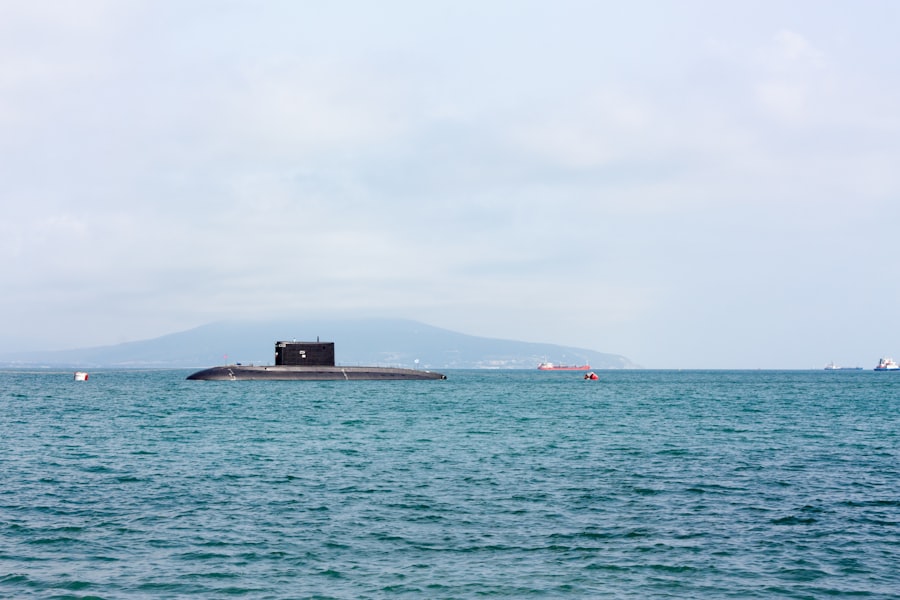
The discovery of the K-129 presented an unprecedented opportunity for the United States to gain invaluable intelligence on Soviet submarine technology, particularly its ballistic missiles and their associated cryptographic materials. The potential strategic advantage was immense, outweighing the immense technical and financial challenges of attempting a recovery at such extreme depths.
The Political Impetus
The allure of acquiring a Soviet nuclear ballistic missile and its secret codes was irresistible to U.S. intelligence agencies. The Cold War was characterized by an insatiable hunger for information about the adversary’s capabilities. Recovering K-129, and specifically its nuclear payload and secure communications equipment, presented a chance to peer directly into the Soviet Union’s strategic command and control systems, a veritable goldmine of intelligence.
The Technological Challenge
Recovering a large, heavy object from nearly 5 kilometers beneath the ocean surface was an engineering feat of astounding proportions, pushing the boundaries of existing deep-sea salvage technology. No such operation had ever been attempted. The task required the development of entirely new tools and techniques.
The “Glomar Explorer”
To maintain maximum secrecy, the CIA conceived an ingenious cover story: a deep-sea mining operation. Howard Hughes, the eccentric billionaire, was enlisted to provide the facade. A specially designed ship, the MV Hughes Glomar Explorer, was constructed in secret. This colossal vessel, exceeding 600 feet in length, was a marvel of engineering. It featured a huge internal “moon pool” through which the recovery apparatus would be lowered and raised. At the heart of the system was a massive “claw” – a mechanical grappling device designed to envelop and lift sections of the submarine. This apparatus was a direct response to the unique challenges of the abyssal plain.
The Recovery Attempt
In the summer of 1974, the Glomar Explorer deployed to the recovery site. Under the guise of manganese nodule mining, the ship began its clandestine operation. The “claw” was painstakingly lowered, a journey of several hours to reach the ocean floor. The attempt proved incredibly difficult. The K-129’s hull, fractured and weakened, presented a significant challenge for the claw to secure a grip. After weeks of agonizing effort, a portion of the submarine, estimated to be about 38 feet long and weighing approximately 300,000 pounds, was successfully raised.
Unveiling the Secrets, and the Controversy
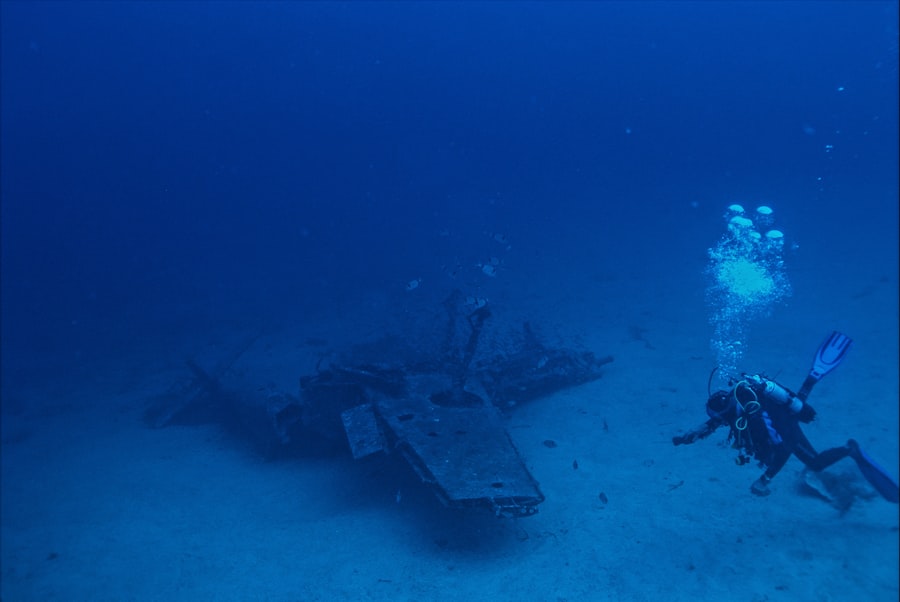
The recovered section of the K-129 offered valuable insights, but the full extent of the intelligence gathered remains largely classified. However, the mission’s astonishing nature would not remain a secret forever.
The Recovered Contents
The recovered section of the K-129 yielded several significant finds. Among them were two nuclear-tipped torpedoes, providing valuable information on Soviet conventional submarine weaponry. Crucially, the bodies of six Soviet submariners were also recovered. These men were given a dignified burial at sea with full military honors, a gesture that, when revealed, highlighted the complex moral dimensions of the mission. The recovery also yielded various technical documents and equipment, which likely included cryptographic materials, offering a rare glimpse into Soviet naval communication practices.
The Public Unveiling
Despite the elaborate efforts to maintain secrecy, whispers of Project Azorian began to emerge. In early 1975, the Los Angeles Times published an article alluding to the Glomar Explorer’s true purpose. The story quickly gained traction, and by March 1975, the CIA was forced to acknowledge the existence of the recovery attempt, though they provided minimal details. The public revelation sparked considerable debate regarding the ethics of such an operation, the immense cost, and the potential implications for international relations. This unintentional leak was a significant blow to intelligence operations, demonstrating the fragility of even the most elaborate cloaks of secrecy.
The Aftermath and Legacy
The partial recovery of the K-129 was a significant intelligence coup, although the full scope of its success is still debated. While the highly sought-after R-21 ballistic missiles were not successfully recovered, the intelligence gleaned from the recovered components and the deep-sea engineering achievements were undeniably valuable. The mission demonstrated the extraordinary lengths to which both superpowers were willing to go to gain an advantage in the shadow war. It also showcased the daring innovation of American clandestine operations.
The recovery mission of the Soviet submarine K-129, which sank in 1968, remains one of the most intriguing operations of the Cold War era. This covert endeavor, conducted by the United States under the guise of a deep-sea mining project, aimed to retrieve crucial intelligence and technology from the sunken vessel. For those interested in exploring the complexities of this mission further, a related article offers an in-depth analysis of the operation and its implications for U.S.-Soviet relations. You can read more about it in this detailed article.
The Enduring Mystery and its Lessons
| Metric | Details |
|---|---|
| Submarine Name | K-129 |
| Country | Soviet Union |
| Incident Date | March 8, 1968 |
| Location of Sinking | North Pacific Ocean, approximately 1,560 nautical miles northwest of Hawaii |
| Depth of Wreck | Approximately 16,500 feet (5,030 meters) |
| Recovery Mission Name | Project Azorian (also known as Project Jennifer) |
| Recovery Vessel | Glomar Explorer |
| Mission Duration | 1974 (several months) |
| Recovered Items | Partial section of the submarine, including cryptographic materials and nuclear missiles |
| Mission Outcome | Partial recovery; full submarine not retrieved due to mechanical failure |
| Significance | One of the most ambitious and secretive Cold War underwater recovery operations |
Even decades later, Project Azorian continues to captivate historians and intelligence enthusiasts. It stands as a powerful symbol of the Cold War’s ingenuity, its moral ambiguities, and the relentless pursuit of information that characterized the era.
Unanswered Questions
Despite the public disclosures and declassified documents, several aspects of the K-129’s sinking and Project Azorian remain shrouded in mystery. The precise cause of the submarine’s demise, particularly the sequence of events leading to the internal explosion, is still debated. The full extent of the intelligence gained from the recovered debris, including any cryptographic materials or sensitive technical documents, remains classified. The narrative of the collision with a U.S. submarine, while largely debunked by officials, continues to resurface in various forms, a testament to the enduring power of conspiracy theories in the absence of complete transparency.
A Cold War Metaphor
Project Azorian can be seen as a powerful metaphor for the Cold War itself. It was an elaborate game of chess played out across the global stage, with each move meticulously planned and shrouded in secrecy. The K-129, a metal leviathan silently patrolling the depths, represents the looming threat of nuclear annihilation. The Glomar Explorer, a technological marvel born of necessity and innovation, symbolizes the relentless drive for technological superiority and intelligence gathering. The vastness of the ocean, the stage for this drama, reflects the immense scale and complexity of the ideological conflict. The recovered fragments of the K-129, brought back from the abyss, are akin to fragments of truth, painstakingly extracted from a deep and dangerous reality.
Continued Relevance
The lessons of Project Azorian extend beyond the confines of the Cold War. It underscores the challenges and ethical considerations inherent in deep-sea salvage, intelligence gathering, and the delicate balance between national security and public transparency. In an era of increasing technological capability and geopolitical competition, the story of the K-129 and Project Azorian serves as a potent reminder of the enduring human capacity for ingenuity, daring, and the persistent pursuit of secrets hidden in the deepest corners of our world. It highlights that the silent battles fought below the waves can be as strategically significant, and as ethically complex, as those fought on land or in the air.
WARNING: The $800 Million Mechanical Failure That Almost Started WWIII
FAQs
What was the Soviet submarine K-129?
The Soviet submarine K-129 was a Golf II-class ballistic missile submarine of the Soviet Navy that sank in the Pacific Ocean in March 1968 under mysterious circumstances.
What happened during the K-129 recovery mission?
The K-129 recovery mission, known as Project Azorian, was a secret CIA operation in 1974 to recover the sunken Soviet submarine from the ocean floor using the specially designed ship Hughes Glomar Explorer.
Why was the K-129 submarine recovery mission important?
The mission was important because the U.S. aimed to retrieve Soviet military technology, cryptographic materials, and intelligence from the submarine to gain an advantage during the Cold War.
Was the K-129 recovery mission successful?
The mission was partially successful; the Hughes Glomar Explorer managed to recover a portion of the submarine, but much of it broke apart during the lift, limiting the amount of material recovered.
What was the public reaction to the K-129 recovery mission?
The mission remained classified for many years, and when details were eventually leaked, it sparked significant public and media interest due to its secretive nature and Cold War intrigue.