The ocean, a vast and enigmatic expanse, holds countless secrets within its depths. Among these, the sinking of the Soviet submarine K-129 in March 1968 remains one of the most enduring and perplexing mysteries of the Cold War. This article delves into the complex web of evidence, theories, and geopolitical implications surrounding this tragic incident, attempting to unravel the truth hidden beneath the waves.
On February 24, 1968, the Soviet Golf II-class ballistic missile submarine K-129, designated “629A” by NATO, departed its homeport in Rybachiy, Kamchatka, for its third strategic patrol in the Pacific Ocean. Her mission was to patrol a designated area approximately 3,000 miles northwest of Oahu, Hawaii, and maintain readiness to launch her three R-13 ballistic missiles if ordered. The submarine carried 98 crew members, many of whom were new to the vessel, having only recently completed training.
Submarine Specifications and Capabilities
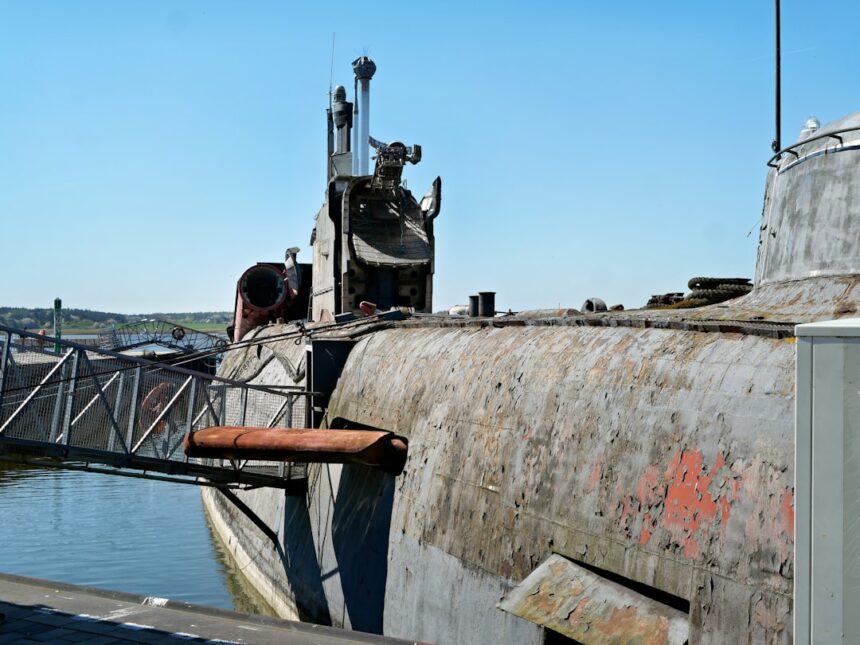
K-129 was a diesel-electric submarine, a workhorse of the Soviet submarine fleet.
- Length: Approximately 98.9 meters (324.5 feet)
- Beam: 8.2 meters (26.9 feet)
- Draft: 7.3 meters (23.9 feet)
- Displacement: 2,300 tons surfaced, 2,827 tons submerged
- Propulsion: Three diesel engines and three electric motors
- Armament: Three R-13 SLBMs in the sail, six 533mm torpedo tubes
The K-129 was considered a robust and capable vessel for its time, though its diesel-electric propulsion required frequent surfacing to recharge batteries, a vulnerability in a protracted conflict. Its ballistic missile capabilities, though rudimentary compared to later generations of SLBMs, represented a significant component of Soviet nuclear deterrence.
The Last Known Communication
Initial reports indicated that K-129 was expected to report in on March 8, 1968. This communication never occurred. Subsequent attempts by Soviet naval command to establish contact proved futile. The silence from the K-129 was not immediately alarming, as通信 glitches were not uncommon. However, as days turned into weeks, the grim realization that something catastrophic had occurred began to settle in. This enforced silence was the first ripple in a pool of uncertainty that would expand to consume decades.
The mystery surrounding the sinking of the Soviet submarine K-129 continues to intrigue historians and military enthusiasts alike. For a deeper dive into the events leading up to this enigmatic incident, you can explore a related article that discusses the various theories and implications of the K-129’s demise. This article provides valuable insights into the Cold War era and the strategic significance of underwater warfare. To read more, visit this link.
The Search and the Silent Hunters
Following the failure to contact K-129, the Soviet Union initiated an extensive and desperate search operation. This involved a large contingent of surface ships and aircraft, meticulously scouring vast swaths of the Pacific, even venturing into international waters. The search proved fruitless; the ocean guarded its secret jealously.
The American Response: Operation Sand Dollar
Unbeknownst to the Soviets, the United States Naval Intelligence had been monitoring Soviet submarine movements. As the K-129’s silence became apparent, American监听 posts, particularly those equipped with the sophisticated Sound Surveillance System (SOSUS) networks, were already collecting crucial data. SOSUS, a network of hydrophones laid on the ocean floor, was designed to detect and track Soviet submarines.
- SOSUS Detections: In late March, analysis of SOSUS data revealed a distinct acoustic event – a sudden, violent implosion – occurring on March 8, 1968, precisely in the general vicinity of K-129’s patrol area. This “fingerprint in sound” provided the first concrete evidence of a catastrophic event.
- The USS Swordfish’s Role: The nuclear attack submarine USS Swordfish (SSN-579) was instrumental in narrowing down the search area. While initially deployed for other missions, Swordfish was reportedly tasked with locating the K-129’s wreck. Although the exact extent of Swordfish’s involvement remains classified, open-source intelligence suggests it played a crucial role in providing more precise coordinates.
Armed with this newfound intelligence, the U.S. Navy launched “Operation Sand Dollar,” a highly classified endeavor to locate and photograph the wreckage of K-129. This was not merely an act of intelligence gathering; the prospect of recovering Soviet nuclear missiles and cryptographic materials was an irresistible prize in the high-stakes game of the Cold War.
Theories of Disaster: A Sea of Speculation
The precise cause of the K-129’s sinking remains a subject of intense debate, fueled by limited hard evidence and the inherent secrecy surrounding submarine operations. Over the years, numerous theories have emerged, each with its proponents and detractors.
Internal Explosion
One of the most widely accepted theories, and the one favored by the Soviet Union initially, posits an internal explosion.
- Hydrogen Gas Buildup: A common danger on diesel-electric submarines is the buildup of hydrogen gas during battery charging. A spark or electrical fault could ignite this gas, leading to a catastrophic explosion that could rupture the hull.
- Accidental Torpedo Detonation: Another possibility is the accidental detonation of a torpedo in its tube or storage area. Such an event would generate immense destructive force, likely exceeding the hull’s integrity.
- Missile Fuel Leak: While less likely given the design of the R-13 missiles, a leak of liquid missile fuel, which is highly volatile, could have been a contributing factor if exposed to an ignition source.
Proponents of the internal explosion theory often point to the sudden and violent nature of the observed acoustic event, consistent with a rapid implosion following a major internal breach.
Collision with a U.S. Submarine
This theory, widely popularized and championed by some former Soviet naval officers, alleges a collision with a U.S. submarine.
- The USS Swordfish Incident: Some accounts specifically implicate the USS Swordfish, claiming it inadvertently collided with K-129. While Swordfish did return to port with damage, U.S. officials maintain this damage was unrelated to K-129’s sinking. The U.S. Navy asserts Swordfish’s damage was sustained during a separate incident with ice.
- The Fog of War: The inherent secrecy and close proximity of Cold War submarine operations in the Pacific made such an incident plausible. However, concrete evidence to support a collision with K-129 is lacking.
- Soviet Propaganda: Some analysts suggest this theory was partly fueled by Soviet propaganda to deflect blame or sow discord.
The lack of any definitive debris indicating a collision, such as parts from a U.S. submarine, weakens this theory for many.
Failure of the Ballistic Missile System
A less common but still considered theory involves a failure of the K-129’s ballistic missile system.
- Missile Launch Malfunction: A catastrophic malfunction during a test launch, or an accidental firing, could have led to an onboard explosion. However, K-129 was not scheduled for a test launch.
- Structural Failure of Missile Silo: The missile silos themselves, under extreme pressure at depth, could have suffered a structural failure, leading to a rapid ingress of water and a subsequent implosion.
This theory finds less support because the acoustic signature observed by SOSUS was more consistent with an implosion of the entire submarine rather than a localized explosion within a missile silo.
The Glomar Explorer and Operation Azorian: A Daring Recovery
In the early 1970s, the United States embarked on one of the most audacious and covert intelligence operations in history: Project Azorian. Its aim was to salvage the sunken K-129 and recover its nuclear missiles, cryptographic materials, and other sensitive equipment. To accomplish this, the CIA secretly commissioned the construction of the Hughes Glomar Explorer, a purpose-built deep-sea mining vessel designed to cloak its true mission.
The Cover Story
The Glomar Explorer was publicly presented as a venture by eccentric billionaire Howard Hughes, ostensibly for deep-sea manganese nodule mining. This elaborate deception was meticulously maintained to prevent Soviet inference.
The Recovery Attempt
In 1974, the Glomar Explorer arrived at the wreck site, approximately 1,600 nautical miles northwest of Hawaii, resting at a depth of over 16,000 feet (4,900 meters).
- The “Clementine” Grapple: A colossal mechanical claw, dubbed “Clementine,” was lowered to the ocean floor to attempt to lift the K-129.
- Partial Recovery: The recovery was not entirely successful. During the arduous lifting process, mechanical failures caused a significant portion of the submarine, including the section containing two of the three ballistic missiles, to break away and fall back to the ocean floor.
- Recovered Materials: Despite the partial failure, the Glomar Explorer did manage to recover a section of the submarine, including two torpedoes, some cryptographic equipment, and the remains of six Soviet submariners. These remains were subsequently buried at sea with full military honors, captured on film for undeniable verification.
The details of Operation Azorian remained classified for decades, eventually leaking to the public in 1975, causing a major international incident and revealing the extraordinary lengths to which the Cold War adversaries would go.
The mystery surrounding the sinking of the Soviet submarine K-129 continues to intrigue historians and military enthusiasts alike. Many theories have emerged over the years, ranging from mechanical failure to espionage. A related article that delves deeper into the circumstances of this enigmatic event can be found at In the War Room, where experts analyze the various factors that may have contributed to the submarine’s tragic fate. This exploration not only sheds light on the K-129 incident but also highlights the broader implications for Cold War naval operations.
Unanswered Questions and Lingering Shadows
| Metric | Details |
|---|---|
| Submarine Name | K-129 |
| Type | Golf II-class ballistic missile submarine |
| Country | Soviet Union |
| Date of Sinking | March 8, 1968 |
| Location of Sinking | North Pacific Ocean, approximately 1,560 nautical miles northwest of Hawaii |
| Depth at Wreck Site | Approximately 16,500 feet (5,000 meters) |
| Number of Crew | 98 |
| Cause of Sinking | Unknown; theories include mechanical failure, collision, or internal explosion |
| Recovery Operation | Project Azorian (1974) by the CIA to recover parts of the submarine |
| Recovered Items | Partial section of the submarine including cryptographic materials and nuclear missiles |
| Significance | Cold War espionage and intelligence gathering |
Decades after its sinking, the K-129 continues to cast a long shadow, a poignant reminder of the Cold War’s perils and the sea’s enduring mysteries. While Operation Azorian provided some answers and invaluable intelligence, it did not definitively solve the puzzle of what caused the initial disaster.
The Secrecy Factor
Both the U.S. and Soviet (and later Russian) governments have maintained a high degree of secrecy surrounding the K-129 incident. This secrecy, a hallmark of Cold War geopolitical maneuvering, has only fueled speculation and conspiracy theories. The full declassification of all relevant documents by both sides would undoubtedly shed more light on the matter, but such an undertaking faces significant political and national security hurdles.
The Human Cost
Beyond the geopolitical intrigue and technological marvels, it is crucial not to forget the human cost of the K-129’s sinking. Ninety-eight Soviet sailors lost their lives in the frigid depths of the Pacific. Their families, many of whom never learned the full circumstances of their loved ones’ deaths, bore a profound burden of grief and uncertainty. The recovery of the six sailors and their dignified burial provided a degree of closure, but it was a small consolation for such a large tragedy.
Lessons Learned
The K-129 disaster served as a stark reminder of the inherent dangers of submarine operations, particularly during the hair-trigger tensions of the Cold War. It underscored the critical importance of safety protocols, robust design, and continuous training. For intelligence agencies, it highlighted the capabilities of underwater surveillance and the potential for audacious recovery operations. As technology advances and the oceans continue to be explored, the K-129 stands as a submerged monument to an era when the silent depths held secrets as vital as any on land. The unraveling of its mystery is an ongoing endeavor, a testament to humanity’s persistent quest for truth, even when buried thousands of feet beneath the waves.
STOP: The Fake Mining Ship That Almost Started WW3
FAQs
What was the Soviet submarine K-129?
The Soviet submarine K-129 was a Golf II-class ballistic missile submarine of the Soviet Navy, launched in the early 1960s and equipped with nuclear missiles.
When and where did the K-129 sink?
K-129 sank in March 1968 in the Pacific Ocean, northwest of Hawaii, at a depth of approximately 16,000 feet (about 4,900 meters).
What caused the sinking of K-129?
The exact cause of K-129’s sinking remains unknown and is considered a mystery. Various theories include mechanical failure, an internal explosion, or a collision, but no definitive conclusion has been reached.
What efforts were made to recover K-129?
The United States conducted a secretive recovery operation called Project Azorian in 1974, using the specially designed ship Hughes Glomar Explorer to attempt to salvage parts of the submarine from the ocean floor.
What is the significance of the K-129 sinking in Cold War history?
The sinking of K-129 and the subsequent U.S. recovery efforts highlighted the intense espionage and military competition between the U.S. and the Soviet Union during the Cold War, particularly in naval and nuclear capabilities.