The advent of stealth technology in military aircraft presented a profound challenge to the Soviet Union’s formidable air defense network, a system that had been meticulously crafted over decades to provide comprehensive coverage of its vast airspace. This article examines the vulnerabilities inherent in the Soviet air defense doctrine when confronted with the nascent capabilities of stealth, exploring how these “invisible” aircraft, though not entirely undetectable, could bypass or disrupt established detection and interception protocols.
Radar Dominance
The Soviet Union placed immense faith in its radar network, often described as a vast, interconnected web designed to detect and track any airborne intrusion. This system comprised a multi-layered approach, with early warning radars positioned far beyond Soviet borders and within the airspace itself, feeding data to command and control centers.
Ground-Based Radar Systems
A cornerstone of Soviet air defense was its extensive array of ground-based radars. These ranged from long-range surveillance radars capable of scanning hundreds of miles into the sky to more specialized fire-control radars that guided interceptor aircraft and surface-to-air missile (SAM) batteries. The sheer density and redundancy of these systems were intended to ensure that no aircraft could slip through unnoticed. The philosophy was that sheer coverage would compensate for any individual system’s limitations.
Airborne Early Warning and Control (AEW&C) Aircraft
While not as extensive as the ground-based network, the Soviet Union did operate AEW&C aircraft, such as the Tupolev Tu-126 Moss. These airborne platforms provided a higher vantage point, extending the radar horizon and offering improved tracking capabilities, particularly over oceanic or challenging terrain. However, their own radar signatures and operational limitations meant they were not an impenetrable shield.
Interceptor Aircraft and SAMs
Complementing the detection capabilities were the Soviet Union’s potent interceptor aircraft and extensive SAM systems. These were the teeth of the air defense network, designed to rapidly engage and destroy detected threats.
Fighter Interceptors
A significant portion of Soviet air defense relied on dedicated fighter interceptors. Aircraft like the MiG-23, MiG-25, and later the MiG-31 were designed for high speed and altitude, intended to rapidly climb to engage incoming bombers or reconnaissance aircraft. Their missile armament was also substantial.
Surface-to-Air Missile (SAM) Batteries
The Soviet Union fielded a vast arsenal of SAM systems, from tactical short-range missiles like the SA-6 Gainful to strategic long-range systems such as the SA-5 Gammon and the formidable SA-10 Grumble. These systems were deployed in layered defenses, with overlapping fields of fire intended to create an unforgiving aerial environment.
The vulnerability of Soviet air defense systems to stealth technology has been a topic of extensive analysis, particularly in the context of modern warfare. An insightful article that delves into this subject is available at this link, where it explores the historical challenges faced by Soviet defenses against advanced stealth aircraft and the implications for contemporary military strategies.
The Stealth Enigma
Stealth technology, though its full implications were not immediately apparent to all, represented a paradigm shift in aerial warfare. It was not about invisibility in the absolute sense, but rather a radical reduction in an aircraft’s detectability by radar, infrared, and other sensors.
Reduced Radar Cross-Section (RCS)
The primary characteristic of stealth aircraft is their significantly reduced radar cross-section. This is achieved through a combination of design features.
Shape and Materials
Stealth aircraft are designed with angular, faceted surfaces and blended wing-body configurations. These forms are intended to deflect radar waves away from the radar source, rather than reflecting them back. Additionally, the use of radar-absorbent materials (RAM) in the aircraft’s skin further diminishes the amount of energy that is reflected. Imagine trying to throw a ball at a perfectly smooth, angled wall; most of the balls would likely bounce off in directions other than back to you. Stealth aircraft embody this principle on a much more sophisticated level.
Internal Weapon Bays
To maintain their low-observable characteristics, stealth aircraft typically carry their weapons internally. External ordnance creates significant radar reflections, negating the benefits of stealth design. This meant that a stealth aircraft could approach its target without the tell-tale radar signature of missiles or bombs hanging beneath its wings.
Reduced Infrared Signature
Beyond radar, stealth technology also aimed to reduce an aircraft’s signature in other spectrums, particularly infrared.
Engine Exhaust Management
Jet engines are a significant source of infrared radiation. Stealth aircraft employ design features to cool and shield exhaust gases, or to mix them with ambient air, thereby lowering their thermal detectable temperature. This made them harder to detect by infrared seeking missiles or airborne infrared sensors.
Soviet Radar’s Blind Spots
Despite the Soviet Union’s impressive radar infrastructure, stealth technology exploited inherent limitations within these systems, creating significant vulnerabilities.
The Limitations of Wavelength and Frequency
Soviet radars, particularly older designs, often operated on specific, predictable wavelengths. Stealth aircraft are designed to be less detectable across a broader spectrum of radar frequencies, or to be particularly difficult to see by the specific frequencies favored by legacy systems.
Continuous Wave (CW) and Pulsed Doppler Limitations
While pulsed Doppler radars were designed to differentiate between moving targets and clutter, their effectiveness could be degraded by aircraft employing extremely low-RCS designs or by aircraft that manipulated their own Doppler signature. Continuous wave radars, often used for terminal guidance, could be susceptible to certain types of jamming or spectral analysis.
The Challenge of Low Altitude and Ground Clutter
Soviet ground-based radars, especially those designed for early warning, often faced the challenge of distinguishing low-flying aircraft from ground clutter. While sophisticated algorithms and terrain masking were employed, a stealth aircraft flying at very low altitudes, hugging the terrain, could potentially blend in with this background noise, making it significantly harder to detect and track. The radar waves, in essence, were bouncing off the ground more prominently than off the aircraft.
The Problem of Bandwidth and Resolution
The bandwidth of a radar system dictates its ability to resolve targets. This can be a critical factor in identifying small, low-RCS targets.
Narrowband vs. Broadband Detection
Many Soviet radars were primarily narrowband, meaning they were optimized for specific frequencies. Stealth aircraft, with their carefully crafted shape and materials, are designed to scatter radar energy across a wider range of frequencies, making them appear as a weaker or even nonexistent return to a narrowband radar. This is akin to trying to hear a whisper in a crowded room; the ambient noise (clutter and other signals) overwhelms the faint sound.
The Inadequacy of Traditional Tracking Algorithms
Traditional radar tracking algorithms were often designed to work with predictable target behavior and larger radar returns. Stealth aircraft, by their very nature, presented minimal and often erratic radar returns, complicating the process of maintaining a continuous track. This could lead to target loss or misidentification.
Disrupting the Soviet Air Defense Network
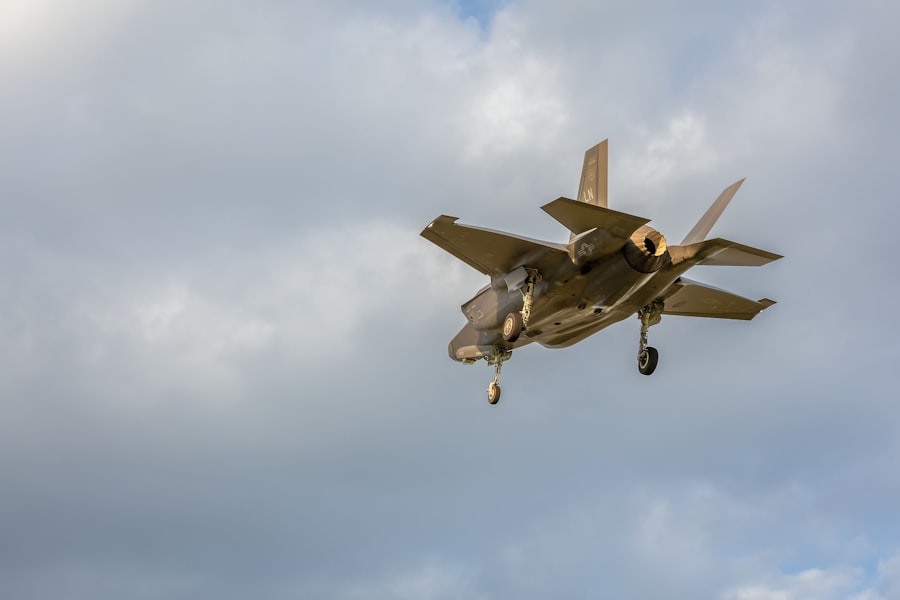
Stealth aircraft were not only designed to evade detection but also to disrupt the operational cohesion of air defense systems.
The Intelligence Gathering Advantage
The ability of stealth aircraft to penetrate contested airspace undetected offered a significant intelligence-gathering advantage.
Reconnaissance and Electronic Warfare
Before a conflict, or during its early stages, stealth reconnaissance aircraft could gather invaluable data on enemy radar placements, SAM battery locations, command and control nodes, and air defense alert postures. This information allowed for the precise targeting of these critical assets, effectively disarming the air defense network before it could fully react. Imagine a surgeon meticulously mapping out an operation before making the first incision.
Targeting Vulnerabilities
During an engagement, a stealth aircraft could act as a force multiplier, identifying and relaying the locations of key air defense assets to other friendly platforms, including non-stealth aircraft or cruise missiles. This enabled a more surgical and effective approach to disabling the enemy’s air defense capabilities, creating windows of opportunity for less survivable assets.
Psychological Impact and Operational Strain
The mere presence or suspected presence of stealth aircraft could have a significant psychological impact on air defense personnel and impose operational strains.
Uncertainty and Redundancy
The inability to reliably detect and track a perceived stealth threat would force air defense commanders to adopt more cautious and redundant operational procedures. This could involve maintaining higher alert levels, increasing radar cone coverage, or dispersing assets, all of which would consume valuable resources and potentially reduce response times. The fear of the unseen enemy would force them to dance a more defensive and less effective jig.
The “Phantom Menace” Effect
The “phantom menace” effect, where the enemy is known to be present but unidentifiable, can create immense pressure and drive up operational costs. Air defense systems might be tasked with investigating numerous false alarms or dedicating significant resources to searching for a target that is either not there or is deliberately evading detection.
The evolution of stealth technology has posed significant challenges to traditional air defense systems, particularly those developed during the Soviet era. An insightful article that delves into this topic can be found at In The War Room, where it discusses how the vulnerabilities of Soviet air defense systems have been exposed by modern stealth aircraft. This analysis highlights the ongoing implications for military strategy and the need for adaptation in response to advancements in aerial technology.
The Evolving Landscape and Soviet Responses
| Metric | Description | Value / Assessment | Notes |
|---|---|---|---|
| Radar Detection Range (Non-Stealth Aircraft) | Typical detection range of Soviet radars against conventional aircraft | 200-300 km | Varied by radar type (e.g., P-18, P-19) |
| Radar Detection Range (Stealth Aircraft) | Estimated detection range of Soviet radars against stealth aircraft | 20-50 km | Significantly reduced due to low radar cross-section |
| Surface-to-Air Missile (SAM) Engagement Range | Effective range of Soviet SAM systems (e.g., S-75, S-125) | 30-45 km | Range limited by radar tracking and guidance capabilities |
| Stealth Aircraft Radar Cross Section (RCS) | Estimated RCS of stealth aircraft compared to conventional fighters | 0.001-0.01 m² | Much lower than typical 1-10 m² for non-stealth aircraft |
| Electronic Countermeasures (ECM) Effectiveness | Capability of Soviet air defense ECM against stealth technology | Moderate to Low | Stealth reduces radar returns, limiting ECM effectiveness |
| Early Warning Radar Systems | Number and type of early warning radars deployed | Limited coverage with older VHF/UHF radars | Some VHF radars better at detecting stealth but limited in number |
| Vulnerability Assessment | Overall Soviet air defense vulnerability to stealth aircraft | High | Stealth technology significantly degraded detection and engagement |
The Soviet Union was not entirely unaware of the potential threat posed by advanced aerial technologies. Efforts were made to adapt and counter these emerging challenges, though the pace of development and the inherent challenges of stealth proved difficult to overcome.
Development of New Radar Technologies
The Soviet Union was actively involved in developing new radar technologies that could potentially counter stealth.
Bistatic and Multistatic Radar
Bistatic radar involves a separate transmitter and receiver, while multistatic systems use multiple transmitters and receivers. These systems offer advantages in detecting low-RCS targets because the target’s deflections might be captured by one of the many receivers even if it misses the primary radar. The idea is to have many eyes looking from many angles.
L-Band and Lower Frequency Radars
Research was also conducted into using lower frequency radars, such as those in the L-band. While these radars have lower resolution, they are generally less susceptible to the small, faceted surfaces of stealth aircraft that are designed to reflect higher frequency radar waves.
Improvements in Electronic Warfare (EW)
The Soviet Union possessed a sophisticated electronic warfare capability, and efforts were made to enhance it against stealth.
Advanced Jamming and Deception Techniques
Improvements were sought in jamming techniques to overwhelm or confuse stealth aircraft’s onboard sensors and communication systems. Deception techniques were also explored, aiming to trick stealth aircraft into revealing their positions or to lead them into ambushes.
Counter-Stealth Material Research
While the Soviet Union did not possess the same level of integrated stealth design and material science as the West at the time, research into radar-absorbent materials and coatings was undertaken, albeit with varying degrees of success.
Conclusion: A Paradigm Shift Realized
The advent of stealth technology, while not rendering Soviet air defense instantly obsolete, exposed significant vulnerabilities within its established doctrines and technological underpinnings. The Soviet Union’s reliance on a dense, ground-based radar network, though formidable, struggled to adapt to aircraft that could reduce their detectability to a mere whisper. The “invisible” attacker, with its reduced radar cross-section and infrared signature, could bypass established early warning and interception protocols, offering a profound advantage in intelligence gathering, target selection, and ultimately, operational success. While Soviet efforts to adapt and develop counter-stealth technologies were underway, the fundamental challenge posed by stealth represented a paradigm shift in aerial warfare, a shift that would continue to shape military aviation for decades to come. The lessons learned from this vulnerability would undoubtedly influence the development of future air defense systems, highlighting the perpetual cat-and-mouse game between offensive and defensive military technologies.

SHOCKING: How Stealth Technology Bankrupted An Empire
FAQs
What was the primary focus of Soviet air defense systems during the Cold War?
The primary focus of Soviet air defense systems during the Cold War was to detect, track, and intercept enemy aircraft and missiles, particularly those from NATO forces, using a network of radar installations, surface-to-air missiles, and interceptor aircraft.
Why were Soviet air defense systems considered vulnerable to stealth technology?
Soviet air defense systems were considered vulnerable to stealth technology because their radar and detection equipment were primarily designed to detect conventional aircraft with larger radar cross-sections. Stealth aircraft, with their reduced radar signatures, could evade detection or be detected only at much shorter ranges, reducing the effectiveness of Soviet defenses.
What types of radar did the Soviet Union use, and how did stealth aircraft affect their performance?
The Soviet Union used a variety of radar types, including early warning radars, ground-based search radars, and fire-control radars. Stealth aircraft, designed to absorb or deflect radar waves, significantly degraded the performance of these radars by minimizing the reflected signals, making it difficult for Soviet systems to accurately track or engage stealth targets.
Did the Soviet Union develop any countermeasures to address stealth technology?
Yes, the Soviet Union and later Russia invested in developing advanced radar technologies, such as low-frequency radars, passive radar systems, and improved signal processing techniques, to detect stealth aircraft. However, these countermeasures had limitations and often required integration with other sensor systems to improve detection capabilities.
How did the vulnerability to stealth technology impact Soviet military strategy?
The vulnerability to stealth technology forced the Soviet military to adapt its air defense strategy by emphasizing layered defense systems, increasing electronic warfare capabilities, and developing tactics to mitigate stealth advantages. It also influenced the development of new weapons and sensor technologies aimed at countering stealth threats.