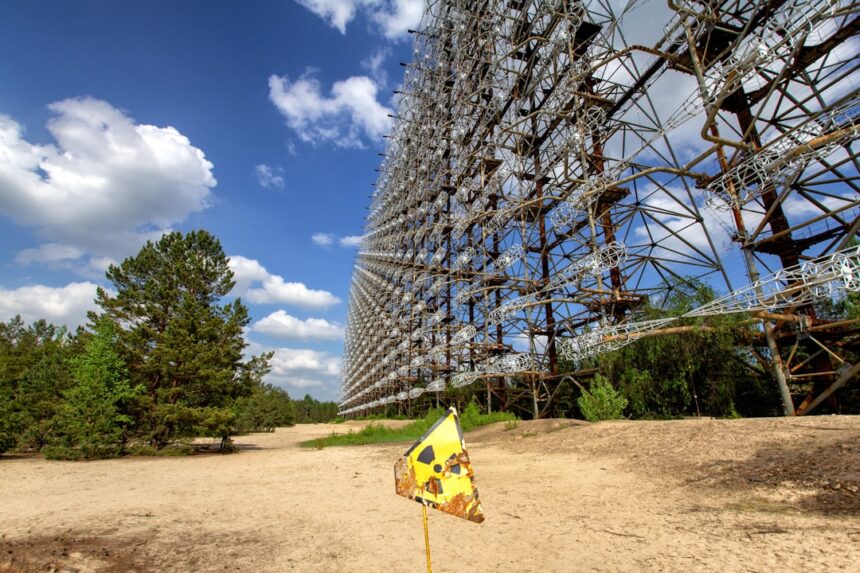
The Nebo Radar System, a family of sophisticated air surveillance and targeting radars developed by Russia, represents a significant advancement in the detection of stealth aircraft. Its design philosophy centers on overcoming the inherent weaknesses of traditional radar systems when faced with low observable (LO) targets. This article delves into the technical intricacies, operational capabilities, and strategic implications of the Nebo series, exploring how it endeavors to pierce the veil of stealth technology.
The development of stealth aircraft, particularly the American F-117 Nighthawk and later the B-2 Spirit and F-22 Raptor, presented a formidable challenge to existing air defense networks. Traditional radars, operating primarily in the X and C-bands, relied on predictable reflections to detect and track aircraft. Stealth designs, however, meticulously minimize radar cross-section (RCS) through specific shaping, radar-absorbent materials (RAM), and electronic counter-measures. This necessitated a paradigm shift in radar technology, a shift that the Nebo series embodies.
The Limitations of Conventional Radar
Conventional radar systems excel at detecting large, geometrically simple targets. Their monostatic configurations, where the transmitter and receiver are co-located, are vulnerable to stealth designs that scatter energy away from the source. High-frequency radars, while offering precise targeting, are also more susceptible to RAM, which is most effective at absorbing shorter wavelengths.
The Russian Response and Innovation
Recognizing these limitations, Russian engineers embarked on developing radars that exploited different physical principles and operational strategies. The Nebo family emerged as a direct response to the stealth threat, incorporating multi-band operations, advanced signal processing, and a networked architecture to maximize detection probability against LO targets.
The ongoing debate surrounding the effectiveness of the Nebo radar system in detecting stealth aircraft has garnered significant attention in military circles. For a deeper understanding of this topic, you can explore an insightful article that delves into the capabilities of radar technology and its implications for modern aerial warfare. To read more about this fascinating subject, visit this article.
Multi-Band Operations: A Spectrum of Detection
One of the cornerstone principles of the Nebo Radar System lies in its multi-band operational capability. Unlike single-band radars, the Nebo systems integrate components that transmit and receive across a wide spectrum of frequencies, from very high frequency (VHF) to ultra-high frequency (UHF) and sometimes even L-band. This diverse spectral coverage is crucial for challenging the efficacy of stealth designs.
The Advantage of Lower Frequencies
Stealth designs are primarily optimized to reduce their RCS at higher frequencies (X and C-bands), which are typically used by fire-control radars. However, reducing RCS effectively at lower frequencies (VHF and UHF) becomes significantly more challenging. The physical dimensions of stealth aircraft are often comparable to the wavelengths in these bands, leading to resonance effects that increase detectability.
Resonance and Rayleigh Scattering
When the radar wavelength approaches or exceeds the dimensions of an aircraft’s features (e.g., tail fins, wings), the aircraft can act as an efficient antenna, reflecting significant energy. This phenomenon, known as resonance, can negate the effects of stealth shaping and RAM. Furthermore, at very low frequencies, Rayleigh scattering may occur, where the object acts as a point scatterer, making it more visible.
Exploiting RAM Limitations
Radar-absorbent materials are broadband but not infinitely so. Their effectiveness diminishes significantly at lower frequencies. While RAM can absorb incoming radar waves at higher frequencies by converting them into heat, its ability to do so at VHF and UHF wavelengths is limited by the thickness and composition required, which would be impractical for an aircraft’s weight and aerodynamic constraints. The Nebo systems capitalize on this inherent weakness.
Bistatic and Multi-Static Configurations: A New Perspective
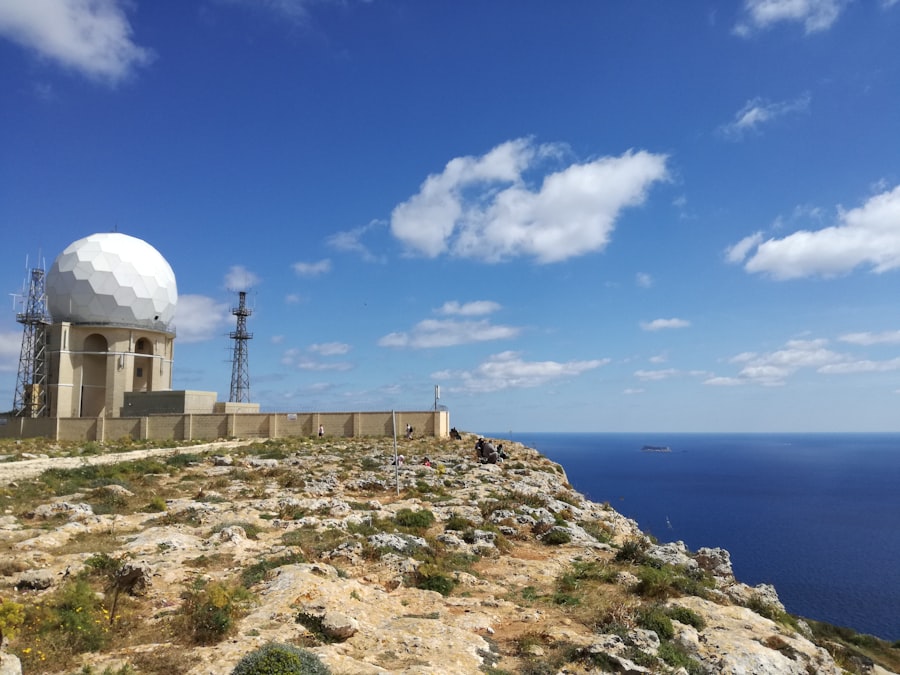
Beyond multi-band operation, the Nebo Radar System often employs bistatic or multi-static configurations, fundamentally altering the traditional radar paradigm. In a monostatic radar, the transmitter and receiver are co-located. In a bistatic system, they are separated, offering a different line of sight to the target. A multi-static system expands on this with multiple transmitters and receivers networked together.
The Principle of Bistatic Scattering
Stealth aircraft designs are optimized to scatter radar energy away from the direction of the illuminating radar. However, they cannot absorb all incident energy. Some of this energy is scattered in other directions. A bistatic radar system, with its spatially separated transmitter and receiver, is positioned to intercept this scattered energy that would otherwise be missed by a monostatic radar.
Enhanced Detection Geometry
Imagine a stealth aircraft as a polished, irregularly shaped mirror. A monostatic radar is like holding a flashlight and looking for the reflection in the same spot. A stealth aircraft is designed to angle its surfaces so that the light is reflected away from the flashlight. A bistatic system, however, places a “camera” at a different angle, allowing it to capture the light scattered in that direction, effectively looking for the “off-axis” reflections.
The Complexity of Multi-Static Networks
Multi-static systems take this concept further, employing several geographically dispersed transmitters and receivers that collaboratively monitor a given airspace. This distributed network creates a dense web of detection, making it exceedingly difficult for any stealth aircraft to avoid detection by all nodes simultaneously. The computational demands for correlating and processing data from such a network are substantial, but the Nebo systems aim to tackle this challenge.
Advanced Signal Processing and Data Fusion

The raw data collected by a multi-band, potentially multi-static Nebo system is immense and often noisy, particularly when dealing with low-RCS targets. Therefore, advanced signal processing and data fusion algorithms are paramount to extracting actionable intelligence. These processes are the nervous system of the Nebo, translating disparate signals into a coherent picture of the battlefield.
Noise Reduction and Target Discrimination
Lower-frequency radars, while better at detecting stealth, often suffer from lower resolution and higher clutter (unwanted reflections from terrain, weather, etc.). Sophisticated digital signal processing (DSP) techniques are employed to filter out this noise and enhance the signal-to-noise ratio. This allows the system to discriminate genuine aircraft targets from environmental interference.
Adaptive Beamforming
Adaptive beamforming techniques allow the Nebo to dynamically adjust its antenna patterns to focus energy and nullify interference from specific directions. This capability is critical in contested electromagnetic environments where adversaries might employ jamming.
Data Fusion from Dissimilar Sensors
The brilliance of the Nebo lies in its ability to fuse data not only from its own multi-band components but potentially from other sensor platforms as well. Imagine a picture being assembled from multiple fragmented photographs, each showing a different detail. Data fusion is the process of seamlessly stitching these fragments together to form a comprehensive and reliable image. This could include data from passive electronic intelligence (ELINT) systems, infrared search and track (IRST) systems, and even older, conventional radars.
The ongoing debate between the effectiveness of the Nebo radar system and stealth aircraft capabilities has garnered significant attention in military circles. A related article explores the advancements in radar technology and how they challenge traditional notions of stealth, providing insights into the evolving landscape of aerial warfare. For a deeper understanding of this topic, you can read more about it in this informative piece here. This discussion highlights the intricate balance between detection and evasion in modern combat scenarios.
Strategic Implications and Counter-Stealth Warfare
| Feature | Nebo Radar System | Stealth Aircraft |
|---|---|---|
| Radar Type | Multifunctional phased array radar (VHF, UHF, L-band) | Designed to minimize radar cross-section (RCS) |
| Detection Range | Up to 600 km (varies by model and frequency band) | Typically 30-100 km depending on radar and stealth features |
| Frequency Bands | VHF, UHF, L-band (low to mid frequencies) | Stealth optimized to evade higher frequency radars (X, Ku bands) |
| Detection Capability | Effective against low RCS targets due to low frequency operation | Reduced radar signature, especially against high-frequency radars |
| Tracking Accuracy | Moderate accuracy; better for early warning and target acquisition | High accuracy when detected by specialized radars or IR sensors |
| Countermeasures | Can integrate with electronic warfare and missile systems | Uses radar-absorbent materials, shaping, and electronic countermeasures |
| Operational Role | Early warning, target detection, and airspace monitoring | Penetration of defended airspace, strike missions, reconnaissance |
| Vulnerability | Can be jammed or targeted by anti-radiation missiles | Vulnerable to low-frequency radars like Nebo and IRST systems |
The existence and continuous development of systems like the Nebo have profound strategic implications, directly influencing the calculus of air supremacy and conventional deterrence. It represents a tangible effort to nullify a multi-billion dollar investment in stealth technology by Western powers.
Challenging Air Superiority
For decades, stealth aircraft have been considered a cornerstone of air superiority, allowing for deep penetration into defended airspace with reduced risk. The Nebo system, if proven effective in operational scenarios, directly challenges this assumption. It implies that even the most advanced stealth aircraft might not be as “invisible” as once thought, forcing a re-evaluation of tactics and mission planning.
Denying Sanctuary
The ability to detect, track, and potentially target stealth aircraft denies them the sanctuary they previously enjoyed. This could necessitate greater reliance on electronic warfare (EW) support, increasing the complexity and cost of stealth operations.
Deterring Aggression and Reshaping Doctrines
The very presence of advanced counter-stealth systems like the Nebo acts as a deterrent. Potential adversaries must now factor in the increased risk of detection when planning operations involving stealth assets. This can lead to a reshaping of air warfare doctrines, emphasizing a more balanced approach that does not solely rely on stealth but integrates it with other forms of air power.
Future Development and Persistent Challenges
The journey of the Nebo Radar System is far from over. Ongoing research and development are continually pushing the boundaries of radar technology, seeking to enhance its capabilities further while addressing inherent challenges.
Enhancing Low Observable Tracking
While detection is one hurdle, maintaining a continuous track on a low observable target, particularly one performing evasive maneuvers, presents another set of complexities. Future iterations of Nebo will likely focus on improving tracking algorithms, incorporating advanced predictive modeling, and increasing processing power to handle even more data in real-time.
Active and Passive Integration
The synergy between active (emitting radar waves) and passive (listening for electromagnetic emissions) sensors is an area of ongoing development. Combining the detection capabilities of Nebo with passive detection of aircraft emissions could provide a more robust and resilient tracking solution.
Countering Electronic Counter-Measures (ECM)
Stealth aircraft are often equipped with sophisticated ECM suites designed to jam or deceive radar systems. The Nebo engineers are constantly working to develop ECCM (electronic counter-countermeasures) capabilities, employing adaptive frequency hopping, nulling techniques, and advanced waveform diversity to pierce through jamming efforts.
Miniaturization and Portability
While current Nebo systems are large and relatively static, future developments may aim for greater miniaturization and portability. This would allow for more rapid deployment and relocation, enhancing survivability in a conflict. Imagine smaller, more agile radar units that can be deployed closer to the front lines, providing an even tighter net of detection.
In conclusion, the Nebo Radar System stands as a formidable testament to persistent innovation in air defense technology. It represents a strategic pivot in the arms race between stealth and counter-stealth, demonstrating that even the most advanced low observable designs face significant challenges when confronted with a multi-faceted approach to detection. As military technology continues to evolve, the Nebo class of radars will undoubtedly continue to play a pivotal role in shaping the future of air combat and strategic deterrence.

SHOCKING: How Stealth Technology Bankrupted An Empire
FAQs
What is the Nebo radar system?
The Nebo radar system is a Russian multi-band radar complex designed to detect and track stealth aircraft and other low-observable targets. It integrates several radar types operating on different frequency bands to improve detection capabilities against stealth technology.
How do stealth aircraft evade traditional radar systems?
Stealth aircraft use special design features, materials, and coatings to reduce their radar cross-section, making them less visible or invisible to traditional radar systems. They often operate at low altitudes and use electronic countermeasures to avoid detection.
Can the Nebo radar system detect stealth aircraft effectively?
Yes, the Nebo radar system is specifically designed to counter stealth technology by using multiple radar bands, including VHF and UHF frequencies, which are more effective at detecting stealth aircraft compared to higher-frequency radars.
What are the main frequency bands used by the Nebo radar system?
The Nebo radar system employs a combination of VHF (Very High Frequency), UHF (Ultra High Frequency), and higher frequency bands. This multi-band approach enhances its ability to detect and track stealth aircraft that are optimized to evade higher-frequency radars.
How does the Nebo radar system compare to other radar systems in detecting stealth aircraft?
Compared to traditional single-band radar systems, the Nebo radar’s multi-band approach provides a significant advantage in detecting stealth aircraft. Its use of lower frequency bands allows it to identify targets that might be missed by conventional radars, making it one of the more advanced systems for counter-stealth detection.