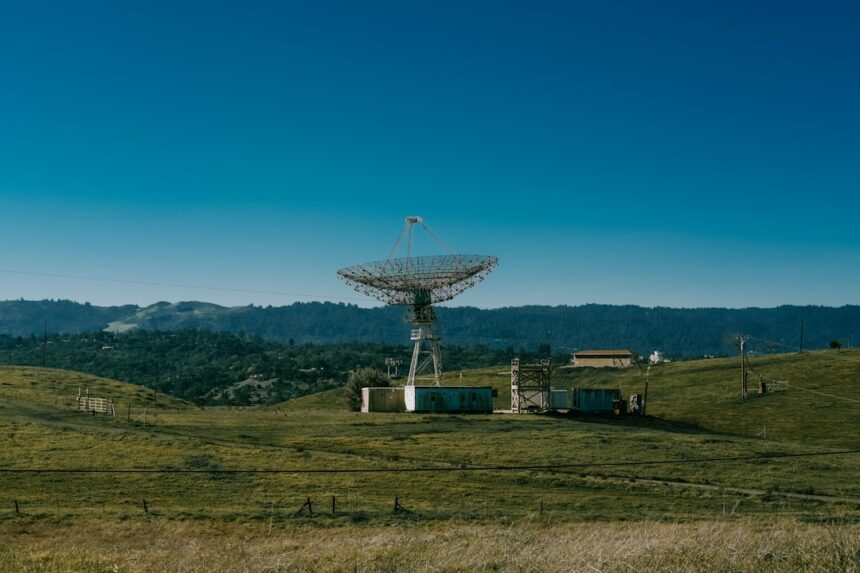
The Soviet Union, a nation defined by its technological ambitions and its geopolitical rivalry with the West, invested heavily in advanced defense systems throughout the Cold War. Among these, Over-the-Horizon (OTH) radar technology stands out as a particularly intriguing and impactful development. OTH radar offered the tantalizing promise of detecting targets far beyond the conventional line of sight, a capability that held immense strategic value in an era of intercontinental ballistic missiles and long-range bombers.
The early conceptualization and development of OTH radar within the Soviet Union were driven by a clear military imperative: to create an early warning system against potential aerial and naval threats approaching from vast distances. Traditional radar systems, constrained by the Earth’s curvature, were limited to detecting objects within line of sight, typically a few hundred kilometers at most. The advent of long-range bombers and, more critically, intercontinental ballistic missiles (ICBMs) necessitated a radical rethinking of early warning capabilities.
Theoretical Underpinnings
The fundamental principle behind OTH radar hinges on the exploitation of high-frequency (HF) radio waves. Unlike very high frequency (VHF) or ultra high frequency (UHF) waves used by conventional radar, HF waves possess a unique property: they can refract off the ionosphere, an electrically charged layer of the Earth’s atmosphere. This ionospheric reflection allows HF radio waves to travel over the horizon, effectively “bending” around the Earth’s curvature and illuminating targets thousands of kilometers away. Imagine a stone skipping across a pond; the ripples extend far beyond the initial splash, albeit with diminishing strength. Similarly, HF radio waves, when properly harnessed, can skip off the ionosphere, extending their reach.
Early Research and Development Initiatives
Soviet scientists and engineers embarked on ambitious research programs in the 1950s and 1960s to transform this theoretical concept into a tangible reality. Key institutions, often shrouded in secrecy, were tasked with unraveling the complexities of ionospheric propagation and developing the necessary high-power transmitters, sensitive receivers, and sophisticated signal processing algorithms. This undertaking was not without its challenges. The ionosphere is a dynamic and unpredictable medium, constantly affected by solar activity, time of day, and season. These variations introduce significant distortions and noise into the radar signal, making target detection and identification a considerable engineering hurdle.
The development of over-the-horizon radar technology during the Cold War played a crucial role in the Soviet Union’s military strategy, allowing for enhanced surveillance and early warning capabilities against potential threats. For a deeper understanding of this topic, you can explore a related article that discusses the implications and advancements of radar technology in military applications. To read more, visit this article.
The Duga Radar Network: A Manifestation of OTH Ambition
The most prominent and widely recognized example of the Soviet Union’s OTH radar endeavors was the Duga series of radars. These enormous installations, often featuring arrays of antennas stretching for hundreds of meters, quickly garnered international attention and earned the moniker “Russian Woodpecker” due to the distinctive, repetitive tapping sound they produced when detected by shortwave radio operators worldwide.
Technical Characteristics of the Duga Systems
The Duga-1, Duga-2, and Duga-3 systems represented different generations and deployments of this technology. While specific technical details remain classified to some extent, general characteristics can be inferred from open-source intelligence and engineering analyses. These systems typically operated in the 3-30 MHz HF band. They employed immense transmitting power, often in the tens of megawatts, to ensure sufficient signal strength after traversing thousands of kilometers and undergoing ionospheric reflection. The receiving antennas were equally impressive, vast arrays designed to capture faint echoes and discriminate them from background noise. The sheer scale of these installations, requiring massive infrastructure and power supplies, underscores the strategic importance placed on their deployment.
Operational Intent and Capabilities
The primary operational intent of the Duga radars was ballistic missile early warning. By continuously scanning large swaths of airspace over the polar regions, where many potential ICBM trajectories originated, the Soviets aimed to detect missile launches within minutes, providing vital warning time for a retaliatory strike or defensive measures. The ability to detect missile plumes or the bodies of ballistic missiles themselves at such vast ranges was a game-changer. Beyond missile detection, Duga systems also possessed the potential for detecting large aircraft formations, although their effectiveness in this role was likely less precise than for missile detection due to the smaller radar cross-section of individual aircraft.
The “Russian Woodpecker” Phenomenon
The “Russian Woodpecker” moniker arose from the strong, repetitive pulse signals emitted by the Duga radars that interfered with shortwave radio communications globally. This interference, perceived as an irritating tapping sound, was a constant reminder of the Soviet Union’s technological prowess and its willingness to assert its presence across the radio spectrum. For amateur radio enthusiasts and intelligence agencies alike, the “Woodpecker” became a tangible, albeit intrusive, symbol of the Cold War’s electronic frontier.
Challenges and Limitations of Soviet OTH Radar
Despite their ambitious design and strategic importance, Soviet OTH radar systems, particularly the Duga network, faced considerable challenges and inherent limitations that ultimately curtailed their effectiveness. These constraints highlight the complex interplay between theoretical possibility and practical implementation.
Ionospheric Variability and Its Impact
As previously mentioned, the ionosphere is not a stable mirror; it is a turbulent and ever-changing medium. Solar flares, geomagnetic storms, and diurnal and seasonal variations in ionospheric electron density profoundly affect HF radio wave propagation. These variations could lead to signal fading, anomalous refraction, and a phenomenon known as ionospheric clutter, where reflections from natural ionospheric irregularities could be mistaken for targets. Imagine trying to see a faint star through a rapidly shimmering curtain of smoke; the ionosphere presented a similar challenge to target detection. This inherent instability meant that the Duga systems could not provide continuous, reliable coverage. There were periods, sometimes for hours or even days, when the ionosphere was simply too disturbed to allow for effective radar operation.
Signal Processing and Target Discrimination
Distinguishing genuine target echoes from the vast amount of background noise and clutter generated by the ionosphere, terrestrial features, and other radio sources was a monumental signal processing challenge. The computing power available to the Soviets during the Cold War, while advanced for its time, was still limited compared to modern capabilities. Sophisticated algorithms were needed to extract meaningful information from the weak and distorted returns. The ability to precisely track multiple targets, differentiate between missile types, or even definitively confirm a launch often proved elusive. False alarms, a constant bane of early warning systems, were a significant concern.
Geographic and Environmental Constraints
The sheer size of the Duga radar installations meant they required vast, flat expanses of land, often in remote regions. The construction and maintenance of these sites represented a massive logistical undertaking, particularly given the harsh environmental conditions prevalent in many parts of the Soviet Union. Furthermore, the sensitivity of the radar systems to local electromagnetic interference meant that careful site selection was crucial, often leading to their placement far from populated areas. The cost of building and operating these behemoths was astronomical, diverting significant resources from other defense programs.
The Decline and Legacy of Soviet OTH Radar
The late 1980s and early 1990s witnessed a decline in the operational prominence of Soviet OTH radar, coinciding with a broader shift in geopolitical priorities and advances in other early warning technologies. However, their legacy extends beyond their operational lifespan.
Obsolescence and Changing Threats
The strategic landscape began to shift dramatically in the latter half of the Cold War. As ballistic missile technology advanced, with missiles becoming faster, more sophisticated, and capable of utilizing depressed trajectories that minimized their flight time and exposure to OTH radar, the effectiveness of the Duga systems began to wane. Furthermore, the development of satellite-based early warning systems, such as the US Defense Support Program (DSP) satellites, offered a more reliable and less susceptible-to-atmospheric-effects method of detecting missile launches. These satellites provided global coverage and could detect the heat signatures of missile plumes directly against the cold backdrop of space, bypassing the vagaries of the ionosphere entirely.
End of the Cold War and Decommissioning
The dissolution of the Soviet Union in 1991 marked a definitive turning point. With the end of the Cold War, the immediate threat of a full-scale intercontinental conflict diminished, and the immense financial burden of maintaining such extensive and resource-intensive systems became unsustainable. Many Duga sites, already aging and facing technological obsolescence, were gradually decommissioned. The Chernobyl disaster in 1986, which led to the evacuation of the Duga-1 site near Pripyat, also played a direct role in the abandonment of that particular installation, leaving it as an eerie monument to a bygone era.
Enduring Influence and Modern OTH Developments
Despite their operational limitations and eventual decommissioning, Soviet OTH radar systems left an indelible mark on radar technology. They proved the feasibility of detecting targets thousands of kilometers away, stimulating further research and development in this field globally. Modern OTH radar systems, developed by various nations, incorporate vastly improved signal processing capabilities, adaptive frequency management to combat ionospheric variability, and often utilize different methodologies (e.g., surface wave OTH) to achieve more robust and reliable performance. The principles explored by Soviet engineers decades ago laid crucial groundwork for these contemporary advancements, demonstrating that even technologies that ultimately fall short of their initial promise can still contribute significantly to the broader scientific and engineering landscape.
The development of over-the-horizon radar systems during the Cold War was a significant technological advancement for the Soviet Union, allowing them to detect incoming threats from great distances. This capability not only enhanced their military surveillance but also played a crucial role in the strategic balance of power between superpowers. For a deeper understanding of the implications of these radar systems, you can read more in this insightful article on the topic. To explore further, visit this link.
The Geopolitical Context and Perceptions
| Metric | Details |
|---|---|
| Radar Type | Over-the-Horizon (OTH) Radar |
| Operating Frequency | High Frequency (HF) band, typically 3-30 MHz |
| Detection Range | Up to 3,000 km (approximate) |
| Primary Purpose | Early warning and long-range surveillance |
| Deployment Era | Developed and deployed during the Cold War (1960s-1980s) |
| Key Soviet OTH Radar Systems | Duga-1 and Duga-2 (also known as the “Russian Woodpecker”) |
| Transmitter Power | Up to 10 MW peak power |
| Receiver Sensitivity | Capable of detecting low radar cross-section targets at long distances |
| Signal Propagation Method | Skywave propagation via ionosphere reflection |
| Notable Features | Large phased array antennas, continuous wave transmission |
The development and deployment of Soviet OTH radar, particularly the Duga network, were not merely a technical undertaking; they were deeply entwined with the geopolitical dynamics of the Cold War, shaping perceptions and fueling anxieties on both sides of the Iron Curtain.
A Symbol of Soviet Power and Secrecy
For the Soviet Union, the Duga radars were a proud symbol of their scientific and technological prowess. They demonstrated the nation’s capacity to develop cutting-edge defense systems and project power on a global scale. The secrecy surrounding their development and operation only added to their mystique and, arguably, their perceived effectiveness. It reinforced the image of a formidable and technologically advanced adversary.
Western Surveillance and Countermeasures
Western intelligence agencies meticulously tracked and analyzed the Duga signals, recognizing their strategic significance. The “Russian Woodpecker” spurred intensive efforts to understand its capabilities, identify its operational patterns, and develop potential countermeasures. This included developing more robust communication systems that could cope with the interference and exploring techniques to jam or degrade the radar’s performance. The very existence of the Duga systems influenced Western military planning and resource allocation, highlighting the constant arms race and technological tit-for-tat that characterized the Cold War.
Public Awareness and Cultural Impact
The “Russian Woodpecker” transcended the realm of military intelligence and penetrated public consciousness. Its distinctive sound, heard by shortwave radio enthusiasts across continents, became a source of speculation, curiosity, and sometimes, alarm. It fueled conspiracy theories and found its way into popular culture, serving as a sonic backdrop to Cold War anxieties. The public’s awareness of such a distant and powerful technological presence underlined the interconnectedness of the Cold War and the palpable tension that permeated global airwaves. The Duga’s impact wasn’t just technical; it was also psychological and cultural, a testament to the pervasive reach of Cold War technology.
In conclusion, the Soviet Union’s pursuit of Over-the-Horizon radar technology represented a monumental engineering feat and a cornerstone of its early warning capabilities during the Cold War. While ultimately superseded by more advanced systems and hampered by inherent atmospheric challenges, the Duga radars and their predecessors showcased the innovative spirit and strategic ambitions of Soviet scientists and engineers. Their legacy continues to inform modern radar development, demonstrating that even in the face of significant obstacles, the quest for technological superiority can push the boundaries of what is thought possible.

SHOCKING: How Stealth Technology Bankrupted An Empire
FAQs
What is over the horizon radar?
Over the horizon radar (OTH radar) is a type of radar system that can detect targets at very long ranges, beyond the line of sight, by bouncing radio waves off the ionosphere.
Why did the Soviet Union develop over the horizon radar?
The Soviet Union developed over the horizon radar to enhance its early warning capabilities against potential air and missile attacks, allowing detection of incoming threats at much greater distances than conventional radar.
When did the Soviet Union start working on over the horizon radar technology?
The Soviet Union began research and development on over the horizon radar technology during the Cold War, primarily in the 1960s and 1970s, as part of its strategic defense initiatives.
What were some key features of Soviet over the horizon radar systems?
Soviet OTH radar systems typically used high-frequency radio waves reflected off the ionosphere, had large antenna arrays, and were capable of long-range detection of aircraft and missile launches over thousands of kilometers.
Did the Soviet Union’s over the horizon radar systems influence global radar technology?
Yes, the Soviet Union’s advancements in over the horizon radar contributed to the global understanding and development of long-range radar systems, influencing both military and civilian radar technologies worldwide.