
Lockheed Martin’s Skunk Works, a division renowned for its groundbreaking contributions to aerospace innovation, stands as a testament to the power of concentrated, forward-thinking development. Within its specialized confines, a culture of audacious experimentation and rigorous engineering has consistently pushed the boundaries of what is technologically possible. This article delves into the history and achievements of Skunk Works, with a particular focus on its pivotal role in the inception and evolution of stealth technology, a capability that has fundamentally reshaped modern aerial warfare.
The origins of Skunk Works are rooted in the crucible of World War II innovation. Facing urgent demands for advanced aircraft, the U.S. Army Air Forces, later the U.S. Air Force, sought a unique approach to accelerate development cycles. This led to the establishment of a highly specialized and autonomous unit within Lockheed Corporation.
The Need for Speed and Secrecy
The conventional aerospace development process of the era was often characterized by lengthy timelines, bureaucratic hurdles, and a general resistance to radical departures from established designs. The escalating global conflict, however, demanded a paradigm shift. There was an imperative to compress the time from concept to deployment, a challenge that required an environment where innovation could flourish with minimal external interference. The name “Skunk Works” itself is a product of this need for discretion and a touch of unconventionality, born from a cartoon reference that captured the unit’s clandestine and sometimes peculiar operational style.
Clarence “Kelly” Johnson: The Architect of Innovation
At the helm of this nascent experimental unit was Clarence “Kelly” Johnson, a visionary engineer whose leadership and innovative spirit were instrumental in shaping Skunk Works’ enduring legacy. Johnson possessed a rare combination of technical acumen, an unwavering commitment to excellence, and an uncanny ability to foster an environment where top talent could thrive. He understood that true innovation often emerged from challenging conventional wisdom and embracing risk. Johnson’s approach was to assemble a small, dedicated team of the brightest minds, empower them with significant autonomy, and shield them from the inertia of larger organizations.
The Founding Principles of Skunk Works
The operational philosophy that defined early Skunk Works was built upon several core tenets. These included:
- Small Team Size: Keeping the team lean to facilitate rapid communication and decision-making.
- Autonomy and Trust: Granting the team the freedom to operate with minimal oversight and a high degree of trust.
- Direct Communication: Encouraging open and direct dialogue between engineers and management.
- Emphasis on Speed and Simplicity: Prioritizing swift development cycles and pragmatic, achievable solutions.
- Acceptance of Risk: Fostering a culture where calculated risks were not only tolerated but encouraged as a means of pushing boundaries.
These foundational principles, established in the early days, provided the fertile ground for Skunk Works to develop some of the most iconic and technologically advanced aircraft in history, setting the stage for their eventual foray into stealth.
The development of stealth technology by Skunk Works has been a pivotal advancement in military aviation, allowing aircraft to evade radar detection and enhance their operational capabilities. For a deeper understanding of the innovations and engineering challenges faced during this groundbreaking project, you can read a related article that explores the intricacies of stealth technology and its implications for modern warfare. For more information, visit this article.
The Dawn of Stealth: A Paradigm Shift in Aerial Warfare
The concept of stealth, the ability to avoid detection by radar and other surveillance systems, was not entirely new. However, the systematic and effective integration of stealth principles into combat aircraft represented a monumental leap forward, a transformation comparable to the invention of the airplane itself in terms of its impact on military strategy. Skunk Works played a critical role in translating theoretical concepts into tangible, operational realities.
Early Explorations of Radar Evasion
Long before the term “stealth” became commonplace, military planners recognized the vulnerability of aircraft to increasingly sophisticated radar systems. Early efforts focused on passive measures such as reducing radar reflectivity through material choices and aircraft shape. However, these approaches offered limited effectiveness against the evolving capabilities of radar. The theoretical underpinnings of active radar evasion and the design of aircraft that could actively minimize their radar cross-section began to gain traction.
The Birth of the “Have Blue” Program
The true genesis of operational stealth technology can be traced to the U.S. Air Force’s “Have Blue” program in the late 1970s. This highly classified initiative was a direct response to the perceived threat posed by advanced Soviet air defense systems. The program’s objective was to prove the feasibility of building a low-observable aircraft that could penetrate heavily defended airspace undetected. Skunk Works was tasked with leading this ambitious project.
The Challenge of Shaping for Stealth
One of the most significant challenges in developing stealth aircraft lies in their geometric design. Traditional aircraft often feature curved surfaces and sharp angles that are highly reflective to radar waves. The “Have Blue” program, and subsequently the F-117 Nighthawk, embraced a facet-based design, essentially creating a series of flat surfaces angled to deflect radar signals away from the source. This approach, while visually striking and revolutionary, presented its own set of aerodynamic complexities that had to be meticulously engineered.
Advanced Materials and Coatings
Beyond the aircraft’s shape, the materials used in its construction are crucial for stealth. Skunk Works engineers explored and developed advanced composite materials and specialized radar-absorbent coatings. These materials were designed to absorb radar energy rather than reflect it, further minimizing the aircraft’s radar signature. The development and application of these materials were as critical as the aerodynamic design in achieving the desired level of low observability.
The F-117 Nighthawk: A Stealthed Revolution
The culmination of the “Have Blue” program was the development of the F-117 Nighthawk, the world’s first operational stealth fighter. This aircraft, with its distinctive angular appearance, was a living embodiment of Skunk Works’ pioneering work. The F-117 was designed not for dogfighting, but for precision strike missions, enabling it to penetrate enemy defenses and deliver ordnance with unprecedented survivability. Its operational debut during conflicts such as the Gulf War in 1991 unequivocally demonstrated the transformative power of stealth technology on the battlefield.
Operational Impact and Doctrine
The F-117’s success had a profound impact on military doctrine. It necessitated a reevaluation of air defense strategies and tactics, forcing adversaries to consider the implications of an enemy that could operate largely unseen. The ability to achieve air superiority and conduct deep strike missions with a significantly reduced risk of interception opened up new operational possibilities and fundamentally altered the calculus of modern warfare. The F-117 was more than just an aircraft; it was a paradigm shift made manifest.
From Nighthawk to Invisible Wings: The Evolution of Stealth
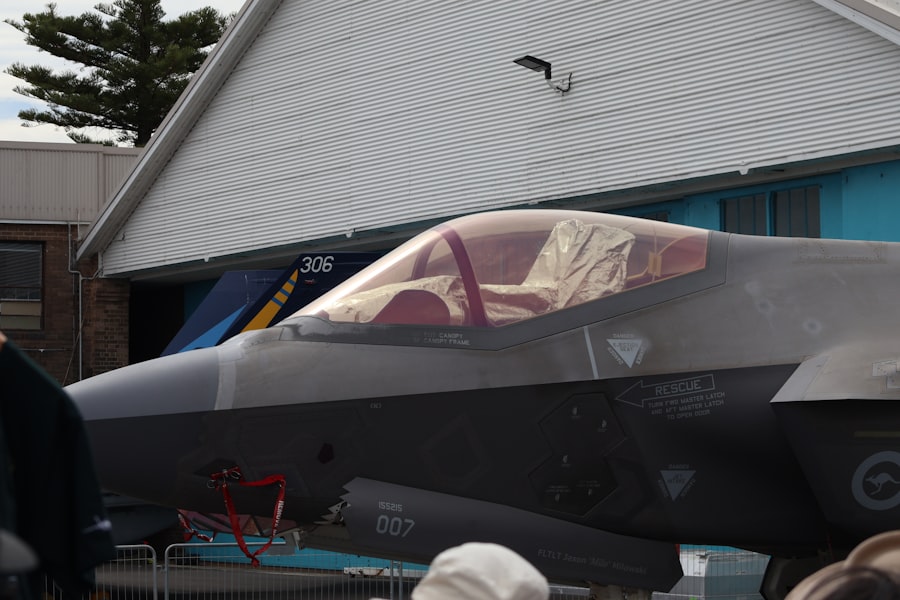
The success of the F-117 paved the way for the next generation of stealth aircraft, building upon the foundational principles established by Skunk Works. The evolution of stealth technology has been a continuous process of refinement, incorporating new insights and overcoming emerging challenges.
The B-2 Spirit: A Flying Wing of Stealth
Building on the lessons learned from the F-117, Skunk Works was instrumental in the development of the B-2 Spirit, a strategic bomber that further pushed the boundaries of stealth design. Unlike the F-117’s faceted approach, the B-2 utilizes a blended flying wing design. This unconventional configuration, devoid of a traditional tail, is inherently more aerodynamically efficient and offers a significantly reduced radar cross-section.
Aerodynamic Challenges of the Flying Wing
The flying wing design presented a unique set of aerodynamic challenges. Maintaining stability and control without conventional control surfaces required sophisticated fly-by-wire systems and advanced computational fluid dynamics. Skunk Works engineers overcame these hurdles through meticulous design and rigorous testing, demonstrating their ability to develop complex flying machines that defied conventional aerodynamic wisdom.
Advanced Radar-Absorbent Materials II
The B-2 also incorporated even more advanced radar-absorbent materials and coatings than its predecessor. These materials were designed to reduce reflection across a wider spectrum of radar frequencies, making the aircraft even more difficult to detect. The continuous innovation in materials science was a critical component in the evolution of stealth capabilities.
The F-22 Raptor: Stealth in a Fighter Role
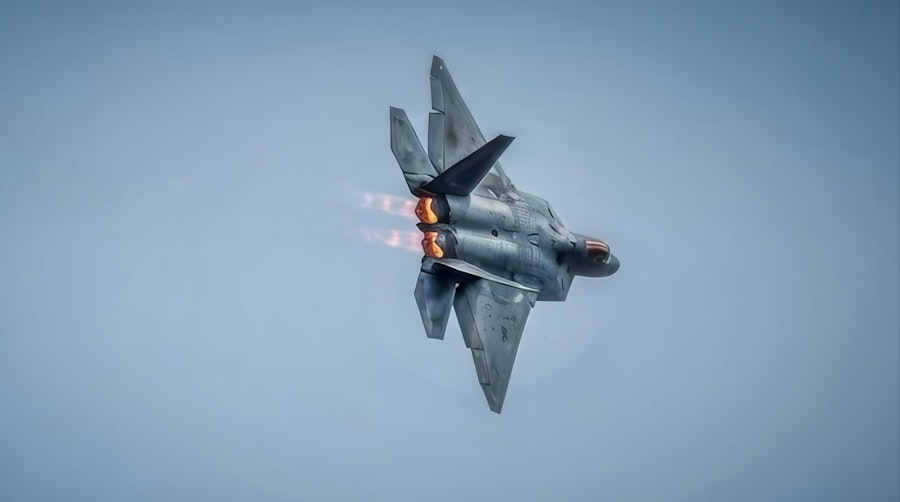
The F-22 Raptor, while not solely a Skunk Works product, benefited immensely from the foundational stealth research and development that originated from the organization. The F-22 represents the application of stealth principles to a multi-role fighter aircraft, designed for air superiority combat. Its design integrates stealth seamlessly with advanced flight performance and sensor fusion.
Integrating Stealth with Performance
A key challenge in fighter aircraft design is balancing stealth with high-performance requirements, such as maneuverability and speed. The F-22’s design achieves this balance through a combination of shaping, advanced materials, and internal weapon bays that maintain the aircraft’s low-observable characteristics even when carrying ordnance. This integration marked a significant step in creating stealth aircraft that were not just survivable but also highly capable in offensive operations.
The Arms Race of Detection and Counter-Detection
The development of stealth technology has inevitably led to a continuous arms race in the field of radar and electronic warfare. As aircraft become stealthier, adversaries invest in more sophisticated detection systems, and vice versa. Skunk Works, and the broader aerospace industry, have consistently worked to stay ahead of this curve, anticipating and addressing new threats through ongoing innovation.
The Core Philosophy: Innovation Through Agility and Secrecy
The success of Skunk Works, particularly in the realm of stealth, can be attributed to a deeply ingrained philosophy that prioritizes agility, secrecy, and a relentless pursuit of innovation. This philosophy, honed over decades, has allowed the organization to function as a highly effective incubator for cutting-edge technologies.
The “Skunk Works Mentality”
The “Skunk Works Mentality” transcends specific projects; it represents a way of thinking and operating. It is characterized by a willingness to challenge established norms, a tolerance for ambiguity in the early stages of development, and an unwavering focus on delivering exceptional results. This mentality fosters an environment where creative problem-solving thrives, and where engineers are empowered to explore unconventional solutions. It acts as a powerful engine, driving innovation forward even when faced with seemingly insurmountable technical hurdles.
The Importance of Secrecy and Controlled Environments
The highly classified nature of stealth technology development necessitated a carefully controlled environment. Skunk Works has historically operated with a high degree of autonomy, shielded from the bureaucratic processes and public scrutiny that often accompany larger defense programs. This secrecy allows for a freedom to experiment, to fail fast, and to iterate rapidly without compromising potential strategic advantages. The information embargo acts as a protective shell, allowing fragile, nascent technologies to mature before they are exposed to the harsh realities of the world.
The Art of Rapid Prototyping and Iteration
A hallmark of Skunk Works’ methodology is its emphasis on rapid prototyping and iterative development. Instead of embarking on lengthy, comprehensive design phases, the organization prioritizes building functional prototypes quickly to test and validate concepts. This allows engineers to gather real-world data and make necessary adjustments in near real-time. This agile approach is akin to a sculptor repeatedly refining a piece of clay, making small but significant changes until the desired form emerges.
The development of stealth technology by Skunk Works has been a pivotal moment in aviation history, showcasing the innovative spirit of the team behind it. Their groundbreaking work not only transformed military aircraft but also influenced various aspects of aerospace engineering. For a deeper understanding of the strategies and challenges faced during this revolutionary period, you can read more about it in this insightful article on In The War Room. This resource provides a comprehensive overview of the stealth technology evolution and its implications for modern warfare.
The Legacy and Future of Skunk Works Innovation
| Metric | Details |
|---|---|
| Project Name | Skunk Works |
| Organization | Lockheed Martin |
| Key Aircraft Developed | F-117 Nighthawk |
| Development Start Year | 1975 |
| Stealth Technology Focus | Radar cross-section reduction, infrared signature reduction, noise reduction |
| Materials Used | Radar-absorbent materials (RAM), composite materials |
| Design Techniques | Faceted surfaces, edge alignment, internal weapons bays |
| Testing Methods | Radar cross-section measurements, flight testing, computer simulations |
| Project Duration | Approximately 10 years (from concept to operational deployment) |
| Impact | Revolutionized military aviation with stealth capabilities, influenced future aircraft design |
The impact of Skunk Works on aerospace technology, and particularly on stealth development, is undeniable. Its legacy is etched in the skies through the performance of the aircraft it has helped to create. However, the organization’s influence extends beyond specific designs, shaping the very culture of innovation within the aerospace industry.
A Foundation for Future Enigmas
The foundational principles and technologies developed by Skunk Works in stealth continue to inform the design of modern military aircraft. Even as technologies evolve and new challenges emerge, the lessons learned from the F-117 and its successors remain relevant. The ongoing quest for even greater stealth capabilities, coupled with advancements in other areas like hypersonic flight and artificial intelligence, ensures that Skunk Works will continue to be at the forefront of aerospace innovation. The organization is not just a historical footnote; it is a living, breathing testament to the enduring power of human ingenuity.
Adapting to Evolving Threats and Technologies
The aerospace landscape is constantly shifting. New threats emerge, and new technological possibilities arise. Skunk Works’ continued success hinges on its ability to adapt and evolve. This means not only refining existing stealth technologies but also exploring entirely new avenues of low-observable design and counter-detection strategies. The organization’s historical track record suggests a strong capacity for embracing these changes and continuing to produce technologies that maintain a strategic advantage.
The Unseen Guardians of the Skies
The primary contribution of Skunk Works to the field of stealth technology is its unwavering commitment to pushing the boundaries of what is possible, often in the shadows. The aircraft it has helped to create are not merely machines; they are sophisticated tools that have redefined the calculus of warfare, providing unparalleled strategic advantages to those who possess them. Skunk Works, as the silent architect behind these “invisible wings,” continues to shape the future of aerial dominance, ensuring that innovation remains the ultimate weapon.

SHOCKING: How Stealth Technology Bankrupted An Empire
FAQs
What is Skunk Works?
Skunk Works is the official pseudonym for Lockheed Martin’s Advanced Development Programs (ADP), a specialized division responsible for developing innovative and classified aircraft technologies, including stealth technology.
How did Skunk Works contribute to the development of stealth technology?
Skunk Works pioneered stealth technology by designing aircraft with reduced radar cross-sections, such as the F-117 Nighthawk, using advanced materials and unique shapes to evade radar detection.
When was stealth technology first developed by Skunk Works?
Stealth technology development by Skunk Works began in the 1970s, culminating in the first operational stealth aircraft, the F-117 Nighthawk, which was publicly revealed in 1988.
What are some key innovations introduced by Skunk Works in stealth technology?
Key innovations include the use of radar-absorbent materials, faceted aircraft designs to scatter radar waves, and advanced avionics to minimize electronic emissions.
Why is Skunk Works considered important in military aviation history?
Skunk Works is important because it revolutionized military aviation by creating stealth aircraft that significantly enhanced survivability and mission effectiveness, changing the nature of aerial combat and reconnaissance.