The collapse of the Soviet Union, a geopolitical earthquake that reshaped the late 20th century, is often attributed to a complex interplay of internal and external factors. While economic stagnation, political reform movements, and nationalist uprisings undeniably played pivotal roles, the significant, yet often underappreciated, impact of advanced Western military technology, particularly stealth aircraft, on Soviet finances and strategic calculus warrants detailed examination. This article will explore how the relentless pursuit of technological parity, spurred by the perceived threat of stealth, contributed substantially to the Soviet Union’s economic unraveling, acting as a fiscal drain that the superpower ultimately could not sustain.
The Cold War was, at its heart, an arms race – a continuous, high-stakes competition to develop and deploy superior military capabilities. For decades, the Soviet Union had, through a combination of espionage and indigenous research, largely kept pace with, and in some areas even surpassed, Western military advancements. This equilibrium, however, was fundamentally disrupted by the advent of stealth technology.
The Soviet Approach to Military Development
The Soviet Union’s military-industrial complex operated with a distinct philosophy. It prioritized quantity, robustness, and ease of mass production over intricate technological sophistication. While capable of innovation, its design bureaus often focused on incremental improvements to existing platforms or the development of more straightforward, yet effective, systems. This approach allowed for the rapid deployment of vast numbers of tanks, aircraft, and missiles, creating a deterrent force based on sheer scale.
The West’s Paradigm Shift: Quality Over Quantity
Conversely, Western powers, particularly the United States, began to invest heavily in a strategy of qualitative superiority. Facing the quantitative advantage of the Warsaw Pact, they sought to develop technologies that would negate the Soviet Union’s numerical strength. This strategy was exemplified by the development of precision-guided munitions and, critically, stealth aircraft. The concept was not merely to build a better weapon, but to build one that could operate with near-impunity against existing Soviet defenses, rendering them obsolete.
Stealth technology played a crucial role in the arms race during the Cold War, significantly impacting the financial stability of the Soviet Union. As the United States advanced its stealth capabilities, the Soviet military was forced to allocate enormous resources to counter these innovations, ultimately straining their economy. For a deeper understanding of how such technological advancements contributed to the Soviet Union’s financial downfall, you can read the article on this topic at In the War Room.
The Dawn of Stealth: An Invisible Threat
The introduction of stealth technology was a game-changer. For the Soviet Union, it presented a technological hurdle of unprecedented magnitude, throwing their entire air defense paradigm into question. The very idea of an aircraft that could penetrate their sophisticated radar networks undetected was strategically terrifying.
The F-117 Nighthawk: A Manifestation of the Impossible
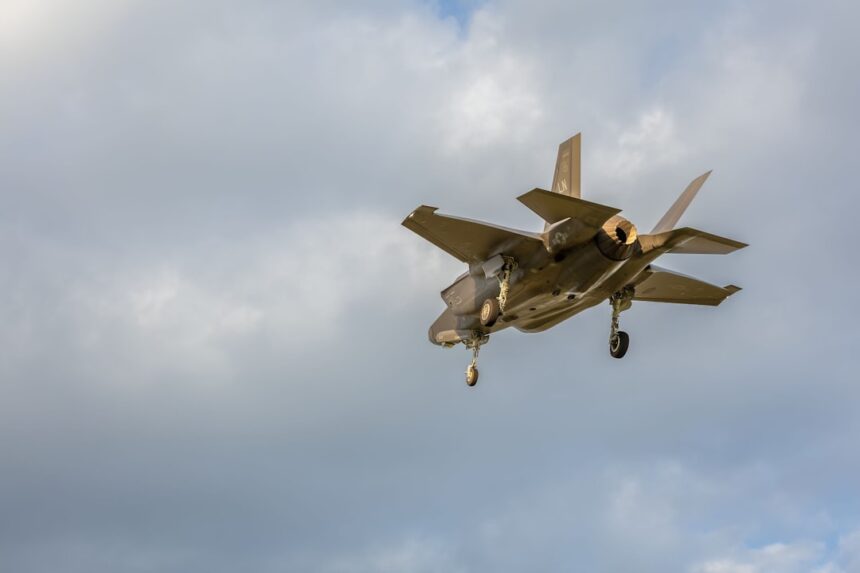
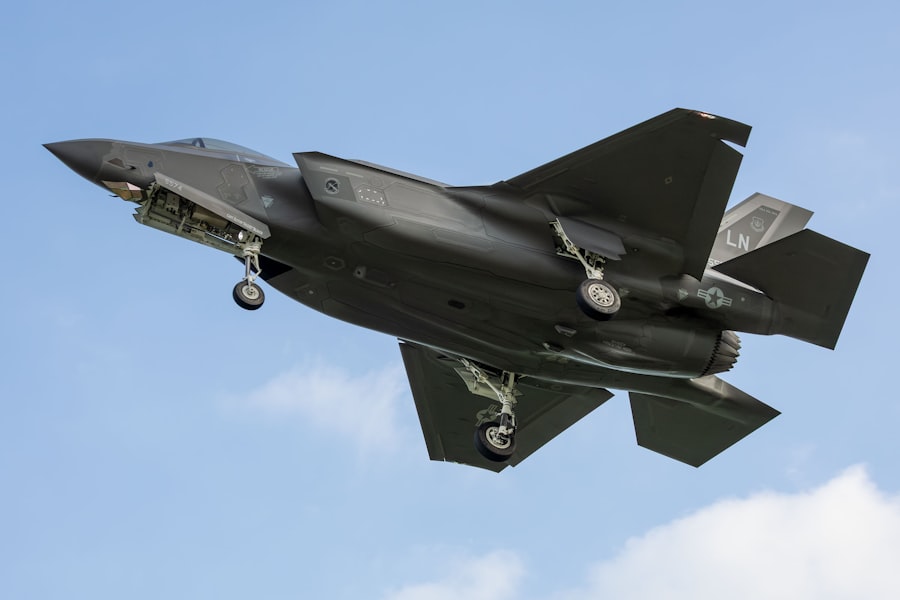
The public unveiling, and later combat deployment, of the F-117 Nighthawk marked a critical turning point. This angular, almost alien-looking aircraft, designed specifically for low observability, demonstrated unequivocally that stealth was not just a theoretical concept but a practical reality. For Soviet military planners, this presented an existential challenge. Their extensive and costly air defense system, comprising thousands of surface-to-air missile (SAM) batteries, interceptor aircraft, and radar installations, was suddenly rendered potentially ineffective against a new class of threat. Imagine, if you will, building an impregnable fortress, only to discover that your adversary possesses the ability to simply walk through the walls unseen. This was the strategic shock delivered by stealth.
The B-2 Spirit: A Strategic Nightmare
Following the F-117, the B-2 Spirit bomber emerged as an even more profound concern. The B-2, a stealthy strategic bomber capable of delivering conventional or nuclear payloads over intercontinental ranges, represented the ultimate penetration platform. Its ability to bypass Soviet early warning systems and deep air defenses at will posed a direct threat to the Soviet Union’s strategic depth and its very ability to deter nuclear attack. This was not merely a tactical problem; it was a fundamental challenge to national security doctrine.
The Economic Burden of Counter-Stealth
The Soviet Union’s response to stealth technology was predictable: a massive, often frantic, effort to develop countermeasures and replicate the technology. This endeavor, however, came at an immense and unsustainable economic cost. The Soviet planned economy, already straining under inefficiency and over-centralization, was ill-equipped to absorb such a colossal diversion of resources.
The Pursuit of Stealth Replication
Recognizing the strategic imperative, the Soviet Union initiated numerous programs aimed at developing its own stealth aircraft. These projects, often shrouded in secrecy, consumed vast resources in terms of scientific talent, research and development funding, and specialized materials. However, unlike the West, which had been developing stealth concepts for decades, the Soviets were playing catch-up, forcing them to compress timelines and take shortcuts. This often led to higher costs and unforeseen technical challenges. Consider the situation as attempting to build a high-performance sports car from scratch, with limited prior experience, while your competitor is already racing a perfected model.
Modernizing Air Defense Systems
Beyond developing their own stealth platforms, the Soviets were compelled to undertake an expensive and comprehensive modernization of their existing air defense infrastructure. This involved:
- Upgrading Radar Systems: Developing new radar technologies capable of detecting low-observable targets, such as synthetic aperture radars (SAR) and passive detection systems. This required immense investment in research, manufacturing, and deployment, at a time when resources were already dwindling.
- Developing New SAM Systems: Designing and deploying new generations of SAMs with improved guidance, speed, and range, specifically aimed at engaging stealthy intruders. This included projects such as the S-300 (NATO reporting name SA-10 Grumble) and later variants, which, while formidable, were also incredibly expensive to produce and maintain in the quantities needed to cover the vast Soviet airspace.
- Modernizing Interceptor Fighters: Equipping their air force with new interceptor aircraft, or upgrading existing ones, with better radars and infrared search and track (IRST) systems to counter stealth. The MiG-31 (NATO reporting name Foxhound), for example, was a powerful interceptor, but its development and upkeep were a significant financial drain.
This wholesale rearmament of their air defense was analogous to a homeowner who, upon discovering a new, undetectable form of burglar, feels compelled to replace every lock, window, and alarm system in their vast estate, all at once and regardless of the cost.
The Economic Consequence: A Superpower Drained
The financial strain imposed by the counter-stealth efforts, layered onto existing economic problems, proved to be a critical factor in the Soviet Union’s eventual collapse. The opportunity cost of these expenditures was enormous, diverting resources from other crucial sectors and exacerbating systemic weaknesses.
The Siphon of Research and Development Funding
The immense sums poured into stealth-related R&D siphoned off funding that could have been allocated to vital civilian sectors or other areas of military development. In a centrally planned economy already facing shortages and inefficiency, this reallocation had cascading negative effects. Investment in consumer goods, infrastructure, and even basic industrial modernization suffered, leading to widespread public dissatisfaction and a widening technological gap with the West in non-military spheres. The military-industrial complex, a ravenous beast, consumed an increasingly disproportionate share of the national budget, hindering overall economic growth.
The Ripple Effect on Civilian Economy
The emphasis on military technological parity, particularly in advanced fields like aviation and radar, meant that the brightest minds, the best engineers, and the most advanced materials were disproportionately directed towards military projects. This deprived the civilian sector of intellectual capital and industrial capacity, further stifling innovation and productivity in areas that directly impacted the lives of ordinary citizens. The pursuit of invisible aircraft came at the cost of visible improvements in the quality of life for millions of Soviet citizens.
Diminishing Returns and Exacerbated Debt
Despite the massive investment, the Soviet Union struggled to achieve parity in stealth technology. Their efforts, while yielding some progress, were often characterized by expensive dead ends and delays. The cost-effectiveness of their counter-stealth measures also remained questionable. This ongoing, high-cost struggle, coupled with falling oil prices in the 1980s and the expenses of other Cold War commitments (such as the war in Afghanistan), significantly exacerbated the Soviet Union’s national debt and budgetary deficits. It was a race they could not win, and one that was actively bleeding them dry.
The impact of stealth technology on the Soviet Union’s economy is a fascinating topic that highlights the intersection of military innovation and financial strain. As the United States advanced its stealth capabilities, the Soviet Union found itself in an arms race that it could not sustain, ultimately contributing to its economic decline. For a deeper understanding of this phenomenon, you can explore a related article that discusses the broader implications of military spending on national economies. This insightful piece can be found here.
The Strategic and Political Fallout
| Metric | Value | Explanation |
|---|---|---|
| Estimated Soviet Defense Spending Increase (1980s) | Up to 25% | In response to U.S. stealth technology advancements, the USSR increased defense spending significantly to develop countermeasures. |
| Cost of Soviet Stealth Countermeasures | Billions of Rubles | Funds allocated to research and development of radar and missile systems to detect stealth aircraft strained the Soviet economy. |
| Duration of Stealth Technology Development by U.S. | 1970s-1980s | Period during which the U.S. developed and deployed stealth aircraft like the F-117, challenging Soviet air defense systems. |
| Impact on Soviet GDP | Decline by 15-20% | Heavy military spending contributed to economic stagnation and decline in overall Soviet GDP during the 1980s. |
| Year of Soviet Union Collapse | 1991 | Economic pressures, including those from military competition with stealth technology, were factors leading to the USSR’s dissolution. |
Beyond the direct economic impact, the advent of stealth technology had profound strategic and political consequences for the Soviet Union, further contributing to its demise. It eroded confidence in their military might and fueled internal dissent.
Erosion of Deterrence Credibility
A core tenet of Soviet military doctrine was its formidable air defense network, designed to protect its heartland and nuclear deterrent. The prospect of stealth aircraft routinely penetrating this defense undermined the credibility of their deterrence capabilities. If a B-2 bomber could strike Moscow with impunity, what did that say about the security of the Soviet state? This perceived vulnerability significantly weakened their strategic position and bargaining power on the international stage.
Fueling Internal Dissent and Reform Pressure
The realization that the Soviet Union was falling behind technologically, particularly in such a critical military sphere, fueled internal discussions about the systemic inefficiencies of their command economy and the necessity for reform. Mikhail Gorbachev’s policies of Glasnost (openness) and Perestroika (restructuring) were, in part, a response to the growing recognition that the Soviet system was failing to keep pace with the West. The stark technological gap, starkly highlighted by stealth, provided powerful ammunition for those advocating for fundamental change within the Party, further weakening the political grip of the hardliners.
The Afghan War – A Secondary Drain
While not directly related to stealth, the ongoing war in Afghanistan simultaneously drained Soviet resources and manpower. This protracted conflict further strained the already overburdened Soviet budget, limiting the funds available for the expensive counter-stealth technological race. The juxtaposition of a costly, stalemated conventional war with the existential threat of an unseen enemy in the air defense domain created an impossible fiscal dilemma for the Soviet leadership.
Conclusion: A Silent, Yet Deadly, Contributor
The downfall of the Soviet Union was undoubtedly a multifaceted event, born from a confluence of factors both internal and external. However, to overlook the profound impact of advanced Western military technology, specifically stealth, would be to miss a critical piece of the puzzle. The relentless pursuit of technological parity, spurred by the perceived threat of stealth aircraft, forced the Soviet Union into an unsustainable economic arms race. This compelled them to divert vast resources into expensive and often fruitless counter-stealth initiatives, exacerbating existing economic inefficiencies, widening the technological gap in civilian sectors, and ultimately draining the lifeblood from their already ailing economy.
The F-117 and B-2 were not merely aircraft; they were instruments of economic pressure. They acted as a silent, yet deadly, economic weapon, compelling the Soviet Union to spend itself into insolvency in a desperate attempt to defend against an invisible threat. In this sense, stealth technology did not merely win a tactical advantage on the battlefield; it played a significant, albeit indirect, role in winning the Cold War by bankrupting a superpower in its bid to keep pace with an insurmountable technological challenge. The Soviet Union’s colossal military-industrial complex, once its greatest strength, became its greatest weakness when confronted with a technological paradigm shift it could not afford to ignore, nor effectively counter.

SHOCKING: How Stealth Technology Bankrupted An Empire
FAQs
What is stealth technology?
Stealth technology refers to a set of techniques used in military aircraft and other vehicles to make them less visible or detectable by radar, infrared, sonar, and other detection methods.
How did the Soviet Union attempt to develop stealth technology?
The Soviet Union invested heavily in research and development to create their own stealth aircraft and counter-stealth measures, aiming to match or surpass the capabilities of Western stealth technology during the Cold War.
Why did stealth technology contribute to the financial strain on the Soviet Union?
Developing stealth technology required significant resources, advanced materials, and cutting-edge research, which were extremely costly. The Soviet Union’s extensive spending on these programs, combined with other economic pressures, contributed to its financial difficulties.
Did the Soviet Union successfully deploy stealth aircraft?
The Soviet Union developed prototypes and experimental stealth aircraft, but they did not achieve widespread deployment or operational stealth fighters comparable to those of the United States before the Soviet Union’s collapse.
What role did stealth technology play in the broader context of the Cold War?
Stealth technology was a critical component of the arms race, symbolizing technological superiority. It pushed both the United States and the Soviet Union to invest heavily in advanced military technologies, influencing strategic planning and defense budgets during the Cold War.