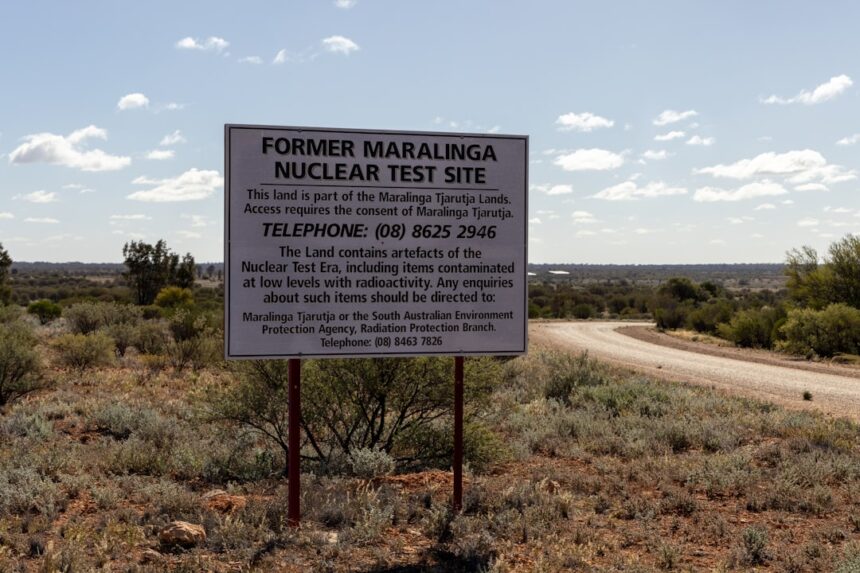
The existential dread of nuclear annihilation was a constant companion throughout the Cold War. The very devices designed to ensure peace, the nuclear deterrents, were paradoxically perceived as inherently vulnerable. This vulnerability was not a singular, static flaw but a multifaceted tapestry woven from technological innovation, strategic doctrine, and the ever-present specter of human error. To understand the perceived frailty of the nuclear deterrent is to grasp the delicate balance of terror that defined the mid-20th century, a high-wire act performed over the abyss of global destruction.
The bedrock of nuclear deterrence was the concept of mutually assured destruction (MAD). The idea was simple, yet terrifying: if one side launched a nuclear attack, the other side would possess enough retaliatory capability to inflict unacceptable damage, thus precluding a first strike. This doctrine, however, was not predicated on impregnability but rather on the certainty of retaliation. It was a grim promise whispered in the dark, a threat that was only credible if the retaliatory force could survive a first strike. This survival, this capacity to hit back, was intrinsically linked to vulnerability.
Ensuring Retaliation: The Need for Vulnerable but Survivable Assets
The logic of MAD dictated that the retaliatory force, whether it be ground-based intercontinental ballistic missiles (ICBMs), submarine-launched ballistic missiles (SLBMs), or strategic bombers, had to be vulnerable enough to be targeted by a first strike but survivable enough to launch a counterattack. This was a tightrope walk. If the retaliatory force was too well-protected, it might be perceived as an offensive weapon, an instrument of preemption, thus undermining the deterrent. Conversely, if it was too vulnerable, a first strike could neutralize it, rendering the deterrent impotent and inviting aggression. The development of hardened missile silos and submerged nuclear submarines were attempts to navigate this perilous terrain, creating assets that were difficult to destroy but not impossible.
The Illusion of Invincibility: Propaganda and the Reality of Threats
Both superpowers engaged in a propaganda war that often painted their own deterrent as invincible and the opponent’s as critically flawed or poised for existential breakdown. This was a necessary, if disingenuous, facet of deterrence. A state projecting an image of absolute security could be perceived as more aggressive, while one admitting to vulnerabilities might seem weaker. However, behind the curtain of propaganda, military planners on both sides were acutely aware of the inherent fragility of their nuclear arsenals. The constant hum of reconnaissance aircraft, the ceaseless probing of radar systems, and the sophisticated intelligence gathering all pointed to the fact that no nuclear asset was truly immune to attack.
The Cognitive Vulnerability: Fear as a Deterrent Factor
Beyond the physical hardware, a crucial element of nuclear deterrence was psychological. The very knowledge of the devastating power of nuclear weapons, and the understanding that these weapons could be delivered, was a potent deterrent. This “cognitive vulnerability” — the collective fear of annihilation — was a direct consequence of the perceived vulnerability of the deterrent itself. If nuclear weapons were seen as unusable or incapable of causing mass destruction, their deterrent effect would vanish. The vulnerability was, paradoxically, the strength.
During the Cold War, the concept of nuclear deterrent vulnerability was a critical concern for both the United States and the Soviet Union, as it shaped their military strategies and diplomatic relations. An insightful article that delves into this topic is available at In the War Room, where it explores the implications of nuclear arsenals and the precarious balance of power that defined this tense period in history. The article highlights how the fear of mutually assured destruction influenced decision-making processes and the development of various defense systems aimed at mitigating vulnerabilities.
The Technological Arms Race: A Perpetual chase of Vulnerabilities and Counter-Countermeasures
The Cold War was a relentless technological arms race, a high-stakes game of chess where each move was countered by a strategic reply. This dynamic was particularly pronounced in the realm of nuclear weapons, where advancements by one side immediately prompted efforts by the other to exploit that advancement or, more importantly, to develop countermeasures that would negate it. This obsessive pursuit of technological superiority was, in essence, a continuous effort to identify and exploit existing vulnerabilities, or to create new ones for the adversary.
The Evolution of Missile Technology: From Vulnerable to Less Vulnerable
Early ICBMs, while revolutionary, were relatively fragile. Their launch sequences were complex, and they were often housed in above-ground facilities, making them susceptible to conventional bombing or early nuclear strikes. The development of hardened silos, sunk deep underground and capable of withstanding significant blast forces, was a direct response to this vulnerability. This innovation, in turn, spurred the development of more powerful nuclear warheads, designed to penetrate these hardened defenses. The saga continued with the advent of mobile missile launchers, making it incredibly difficult to locate and target land-based missiles.
The Submarine’s Role: A Mobile Fortress of Deterrence
The ballistic missile submarine, or SSBN, emerged as a critical countermeasure against the vulnerability of land-based ICBMs. Submerged beneath the waves, these silent hunters were incredibly difficult to detect and destroy. Their mobility meant that they could operate in vast oceanic territories, their exact locations unknown to the adversary. This “launch-on-warning” capability — the ability to launch missiles while an incoming attack was still en route — cemented the submarine’s role as a survivable second-strike platform. However, even the SSBN was not immune. Advances in sonar technology, underwater surveillance, and the development of specialized anti-submarine warfare (ASW) capabilities by the opposing side constantly chipped away at this perceived invincibility.
The Development of MIRVs: Overwhelming Defenses
The Multiple Independently-targetable Reentry Vehicle (MIRV) was a technological leap that significantly impacted the perceived vulnerability of missile defenses. Instead of a single warhead per missile, MIRVs carried multiple warheads, each capable of being independently steered to a different target. This meant that a single launched missile could strike several locations, thus overwhelming any defensive system designed to intercept individual warheads. The development of MIRVs was a direct response to the increasing sophistication of anti-ballistic missile (ABM) systems, aiming to saturate and bypass these defenses.
Space-Based Surveillance and Spy Satellites: Exposing Vulnerabilities
The Cold War also saw the dawn of the space age, and with it, the development of sophisticated spy satellites. These orbiting eyes provided unprecedented intelligence, capable of monitoring missile silo construction, tracking missile deployments, and even observing troop movements. This ability to peer into the adversary’s territory exposed vulnerabilities that had previously been hidden. The development of countermeasures, such as camouflage, deception tactics, and the hardening of facilities, became paramount as potential targets were illuminated in the harsh light of orbital surveillance.
The Specter of Accidental War: Human Error and Systemic Flaws
The most insidious vulnerability in the nuclear deterrent equation was not necessarily external attack, but internal failure. The intricate systems that controlled nuclear weapons, the complex communication networks, and the human decision-making processes were all susceptible to error, malfunction, and miscalculation. The potential for accidental war was a constant, chilling concern, a loose thread that could unravel the entire fabric of deterrence.
The Illusion of Control: Fail-Safe vs. Human Intervention
While systems were designed with multiple fail-safes, the very nature of nuclear weapons demanded human oversight and ultimate decision-making authority. This introduced a critical element of human fallibility. A tired operator, a misinterpreted signal, a moment of panic – any of these could trigger a catastrophic chain of events. The infamous “red phone” hotline, established between Washington and Moscow, was a direct acknowledgment of this vulnerability, a desperate attempt to create a direct line of communication in moments of extreme crisis to prevent rash decisions based on faulty information.
False Alarms and System Malfunctions: The Perils of Digital Ghosts
Throughout the Cold War, numerous false alarms and system malfunctions occurred, bringing the world perilously close to the brink of nuclear war. These incidents, often caused by technical glitches, weather phenomena, or even stray geese flying into radar systems, underscored the fragility of the early warning systems. The chilling real-life examples such as the 1983 Soviet nuclear false alarm incident, where Lieutenant Colonel Stanislav Petrov is credited with averting a potential nuclear war by correctly identifying a system malfunction rather than an incoming missile attack, serve as stark reminders of how close the world came to disaster due to technological imperfections and human interpretation.
The “Launch on Warning” Doctrine: A Race Against Time
The “launch on warning” doctrine, employed by both superpowers, was a policy designed to ensure retaliation in the face of an overwhelming first strike. However, it also created a hair-trigger situation. In the event of perceived incoming missiles, the decision to launch a retaliatory strike had to be made within minutes. This compressed timeframe left little room for verification or calm deliberation, increasing the risk of launching a devastating counterattack based on incomplete or erroneous data. The very speed required to guarantee retaliation became a source of profound vulnerability.
The Cuban Missile Crisis: A Case Study in Escalation and De-escalation
The Cuban Missile Crisis of 1962 stands as a paramount example of nuclear deterrent vulnerability. The deployment of Soviet missiles in Cuba brought the world to the precipice of nuclear war. The crisis highlighted the delicate balance of power, the potential for miscalculation, and the immense pressure on leaders to make split-second decisions with existential consequences. The eventual de-escalation, driven by direct communication and a willingness to compromise, was a testament to the fact that even in the face of extreme tension, the ultimate vulnerability was the breakdown of communication and reason.
The Vulnerability of Command and Control: Ensuring Leadership Survivability
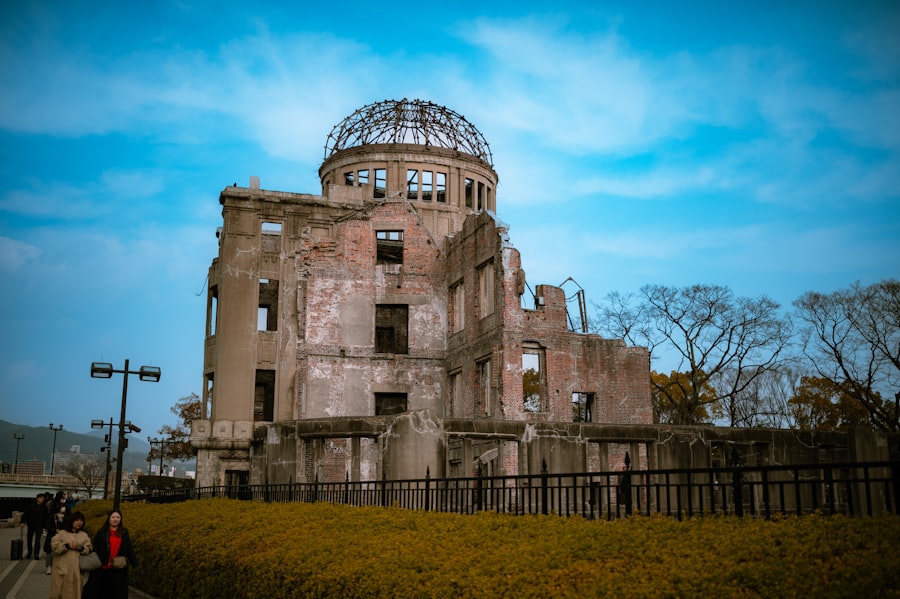
A critical cornerstone of nuclear deterrence was the ability of a nation’s leadership to survive a first strike and order a retaliatory response. The vulnerability of command and control structures was therefore a paramount concern for military planners. The disruption or incapacitation of these essential links could render a nuclear arsenal useless, even if the weapons themselves remained intact.
The Need for Dispersed and Hardened Command Centers
To mitigate the vulnerability of their leadership, both superpowers invested heavily in creating dispersed and hardened command and control centers. These underground bunkers, often deep within mountains or beneath fortified government buildings, were designed to withstand nuclear blasts and electromagnetic pulses (EMPs). The relocation of critical decision-making branches of government to these secure locations was a direct acknowledgment of the threat to centralized command.
Airborne Command Posts: Flying Fortresses of Control
Another crucial element of command and control survivability was the development of airborne command posts. Aircraft like the US Air Force’s E-4B National Airborne Operations Center were essentially flying command centers, equipped with sophisticated communication systems and survival gear. These aircraft could remain airborne for extended periods, untethered to vulnerable ground facilities, and serve as a command hub even if all ground-based leadership was incapacitated.
Communication Links: The Fragile Threads of Deterrence
The communication links that connected these command centers, airborne posts, and nuclear launch platforms were themselves vulnerable. Jamming, disruption by EMPs, or physical destruction of relay stations could sever these vital lines, potentially isolating decision-makers and preventing the execution of retaliatory orders. The development of redundant and hardened communication networks, including satellite communications, was a continuous effort to address this inherent vulnerability.
Ensuring Continuity of Government: The Ultimate Safety Net
Beyond immediate command and control, the concept of “continuity of government” (COG) played a vital role. COG plans aimed to ensure that essential government functions could continue even in the event of catastrophic loss of life. This involved identifying and preparing successors, establishing secure lines of communication between these individuals, and maintaining vital administrative capabilities. The entire COG structure was a layered defense against the ultimate vulnerability: the complete collapse of organized state authority.
During the Cold War, the concept of nuclear deterrent vulnerability was a critical concern for both superpowers, as it shaped their military strategies and international relations. An insightful article that delves into this topic can be found at In The War Room, where it explores the implications of nuclear arsenals and the delicate balance of power that defined this tense period in history. Understanding these dynamics is essential for grasping the complexities of modern security issues that continue to resonate today.
The Evolving Nature of Vulnerability: From Nuclear Monopoly to Multipolar Threats
| Metric | Description | Cold War Context | Impact on Nuclear Deterrent Vulnerability |
|---|---|---|---|
| Number of Nuclear Warheads | Total deployed strategic nuclear warheads | US and USSR amassed tens of thousands of warheads by the 1980s | Higher numbers increased second-strike capability, reducing vulnerability |
| Missile Silo Hardening | Structural reinforcement of missile silos against attack | US invested in hardened silos to protect ICBMs from first strike | Improved survivability of land-based missiles, lowering vulnerability |
| Submarine-Launched Ballistic Missiles (SLBMs) | Number of ballistic missile submarines deployed | Both superpowers deployed SSBNs to ensure second-strike capability | Enhanced deterrent by providing stealthy, survivable launch platforms |
| Early Warning Systems | Radar and satellite systems to detect incoming attacks | US and USSR developed extensive early warning networks | Reduced vulnerability by enabling timely retaliatory response |
| Command and Control Resilience | Robustness of communication and control systems | Efforts to secure and decentralize command to prevent decapitation | Lowered vulnerability by ensuring retaliation orders could be executed |
| Mutual Assured Destruction (MAD) | Strategic doctrine based on guaranteed retaliation | Core principle guiding nuclear strategy during the Cold War | Maintained deterrence by making first strike suicidal |
| Anti-Ballistic Missile (ABM) Systems | Defensive systems designed to intercept incoming missiles | Limited deployment due to ABM Treaty; US and USSR had minimal ABM coverage | Limited impact on vulnerability; widespread ABM could destabilize deterrence |
The perception of nuclear deterrent vulnerability was not static. It evolved over the course of the Cold War, shifting from the bipolar confrontation between the United States and the Soviet Union to a more complex landscape. The emergence of other nuclear powers, and later the proliferation of nuclear weapons to states with less stable regimes, introduced new dimensions to the concept of vulnerability, creating a more intricate and potentially more dangerous global security environment.
The Domino Effect: Accidental Proliferation and Rogue States
The fear of nuclear proliferation to non-state actors or “rogue states” represented a significant evolution in perceived vulnerability. Unlike the carefully calibrated deterrence between superpowers, the actions of less predictable entities posed a different kind of threat. The possibility of these actors acquiring nuclear weapons, or even fissile material to construct crude devices, introduced a new layer of uncertainty and fear. The vulnerability here was not a direct threat to existing arsenals, but the potential for these weapons to fall into hands that would not be deterred by traditional MAD logic.
Cyber Warfare and the Digital Achilles’ Heel
As the 21st century approached, the vulnerability of nuclear command and control systems to cyber warfare emerged as a new and significant concern. The increasing reliance on digital systems meant that a sophisticated cyberattack could potentially disable early warning systems, disrupt communication networks, or even manipulate launch sequences without firing a single physical shot. This “digital Achilles’ heel” represented a new frontier of vulnerability, one that was difficult to defend against with traditional military means.
The Threat of Nuclear Terrorism: Unpredictable Adversaries
The specter of nuclear terrorism, while not a direct challenge to state-level deterrence, represented a profound vulnerability for civilian populations and critical infrastructure. The possibility of terrorist groups acquiring or constructing a nuclear device, and detonating it in a major city, presented a scenario outside the framework of traditional military strategy. The vulnerability here was the potential for catastrophic damage inflicted by an actor that operated with entirely different motivations and lacked the state-level calculus of deterrence.
The Legacy of Vulnerability: Lessons for the Present and Future
The Cold War’s experience with nuclear deterrent vulnerability offers invaluable lessons. It underscores the inherent dangers of weapons of mass destruction, the importance of robust and redundant command and control systems, and the critical role of diplomacy and de-escalation in maintaining global security. The constant awareness of potential failure, the meticulous planning for worst-case scenarios, and the inherent fragility underlying the promise of mutually assured destruction serve as a powerful reminder that the path to lasting peace lies not in the perfection of destructive capacity, but in the persistent pursuit of understanding and cooperation. The vulnerabilities, so keenly felt during the Cold War, continue to cast a long shadow, reminding us that the ultimate security of our future depends on our ability to manage and ultimately transcend the destructive potential we have created.

SHOCKING: How the KGB Read Our Nuclear Codes for 18 Years
FAQs
What was the concept of nuclear deterrent during the Cold War?
Nuclear deterrent during the Cold War referred to the strategy of preventing an enemy from attacking by maintaining a credible threat of massive nuclear retaliation. Both the United States and the Soviet Union developed large arsenals of nuclear weapons to discourage each other from initiating a nuclear conflict.
Why was nuclear deterrent vulnerability a concern during the Cold War?
Nuclear deterrent vulnerability was a concern because if one side believed its nuclear forces could be destroyed in a first strike by the other, it might feel compelled to strike first or lose its deterrent capability. Ensuring survivability of nuclear forces was critical to maintaining strategic stability and preventing nuclear war.
What measures were taken to reduce nuclear deterrent vulnerability?
Several measures were implemented to reduce vulnerability, including the development of second-strike capabilities such as submarine-launched ballistic missiles (SLBMs), hardened missile silos, mobile missile launchers, and early warning systems. These ensured that a retaliatory strike could still be launched even after a surprise attack.
How did the concept of Mutually Assured Destruction (MAD) relate to deterrent vulnerability?
Mutually Assured Destruction (MAD) was based on the idea that both sides possessed enough nuclear weapons to destroy each other completely, making the cost of nuclear war unacceptable. This concept relied on the survivability of nuclear forces to guarantee a devastating retaliatory strike, thereby reducing incentives for a first strike.
Did technological advancements impact nuclear deterrent vulnerability during the Cold War?
Yes, technological advancements such as improved missile accuracy, multiple independently targetable reentry vehicles (MIRVs), and enhanced early warning systems influenced deterrent vulnerability. While some technologies increased the risk of a successful first strike, others improved the ability to detect attacks and ensured retaliatory capabilities, thus maintaining deterrence.