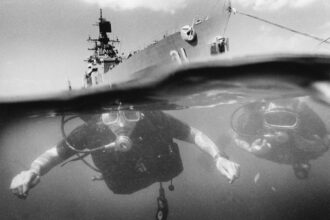
The Cold War, a period characterized by geopolitical tension and ideological confrontation between the United States and the Soviet Union, fostered an unprecedented era of clandestine operations. Among the Soviet Union’s most sophisticated and secretive endeavors were those involving its submarine fleet, not merely as an instrument of conventional warfare but as a platform for intelligence gathering. Submarine auxiliary nets, a term encompassing a spectrum of covert technologies and strategies, played a crucial role in the KGB’s relentless pursuit of strategic intelligence. This article delves into the intricate world of these “auxiliary nets,” examining their conceptualization, operational deployment, and the intelligence they sought to acquire.
The impetus for developing submarine auxiliary nets was rooted in the Soviet Union’s strategic vulnerabilities and its imperative to counterbalance the technological superiority of Western powers, particularly the United States. Following World War II, the Soviet Union faced a formidable adversary with advanced naval capabilities and a rapidly expanding global communications infrastructure.
Post-War Intelligence Imperatives
The early years of the Cold War saw the Soviet Union acutely aware of its intelligence gaps, especially concerning Western naval movements, fleet compositions, and strategic communication networks. Traditional intelligence gathering methods, such as human intelligence (HUMINT) and aerial reconnaissance, had inherent limitations. The vastness of the oceans and the increasing sophistication of anti-submarine warfare (ASW) technologies demanded innovative approaches.
The Role of the KGB and GRU
Both the Komitet Gosudarstvennoy Bezopasnosti (KGB) and the Glavnoye Razvedyvatel’noye Upravleniye (GRU) were central to the development and implementation of submarine-based intelligence operations. While the GRU focused on military intelligence, the KGB’s Fifth Directorate, specifically Department Eight, was responsible for the strategic aspects of signals intelligence (SIGINT) and electronic intelligence (ELINT) gathering. The lines between these agencies, particularly in the realm of highly classified technical projects, often blurred, necessitating close, albeit often competitive, collaboration.
Technological Foundations
The technological bedrock for submarine auxiliary nets was laid during the 1950s and 1960s. This period witnessed rapid advancements in hydroacoustics, signal processing, and miniaturized electronics. Soviet scientists and engineers, often operating under immense pressure and with virtually unlimited resources for high-priority projects, adapted existing technologies and pioneered new ones to create systems capable of operating in the harsh underwater environment. These developments were not merely incremental; they represented a fundamental shift in how intelligence could be acquired.
In recent discussions about submarine warfare and surveillance, the use of auxiliary nets for monitoring by agencies like the KGB has garnered attention. A related article that delves deeper into the implications of such technologies and their historical context can be found at In The War Room. This piece explores the strategic advantages and challenges posed by auxiliary nets in underwater operations, shedding light on their role in intelligence gathering during the Cold War era.
The Nature of Auxiliary Nets
The term “auxiliary nets” refers not to a single piece of equipment but to a multifaceted system of submerged assets designed to intercept, record, and analyze communications and other electronic emanations from adversary forces. Imagine an invisible spiderweb spun across critical maritime arteries, each strand a sensor, each node a data processor.
Cable Tapping Operations
One of the most audacious and well-documented applications of auxiliary nets was the tapping of underwater communication cables. These operations aimed to intercept classified information transmitted between crucial military installations, command centers, and allied nations.
Operation Ivy Bells
Perhaps the most famous instance was Operation Ivy Bells, though this was a US operation against the Soviets, it illustrates the type of activity the Soviets were also engaged in, and indeed, likely learned from. The Soviet equivalent would have focused on Western communication lines. The concept involved physically locating and attaching specialized recording devices to undersea cables, a feat requiring precision navigation, deep-sea diving capabilities, and sophisticated technical expertise. The intercepted data, usually in the form of encrypted voice or teletype signals, would then be retrieved periodically or transmitted covertly to surface vessels or other submarines.
Technical Challenges of Cable Tapping
The challenges associated with cable tapping were formidable. They included accurately locating cables in vast ocean expanses, operating sophisticated robotic manipulators at extreme depths, ensuring the unobtrusive attachment of tapping devices, and developing power sources that could sustain operations for extended periods without detection. Furthermore, the sheer volume of data, often encrypted, presented a significant analytical hurdle, demanding advanced cryptanalysis capabilities.
Passive Acoustic Surveillance
Another critical component of auxiliary nets involved passive acoustic surveillance, a technique designed to detect, classify, and track adversary submarines, surface ships, and even aircraft by analyzing the sounds they emit.
Hydrophone Arrays
Soviet submarines, particularly those modified for intelligence gathering (Project 677, subsequently Project 677M or “Lada” class, and some Project 667BDRM “Delta IV” class submarines were rumored to carry specialized SIGINT packages, though the specific nomenclature of “auxiliary net” was broader), were equipped with highly sensitive hydrophone arrays. These arrays, strategically placed on the hull, acted as underwater ears, capable of picking up faint acoustic signatures from hundreds of miles away. The data collected included propeller cavitation, machinery noise, and active sonar pings from other vessels.
Acoustic Signatures and Identification
Advanced signal processing techniques were employed to filter out ambient ocean noise and identify specific acoustic signatures. These signatures acted like underwater fingerprints, allowing Soviet intelligence to classify the type of vessel, estimate its speed and course, and even infer its operational status. This intelligence was crucial for understanding adversary naval deployments and predicting their movements. A change in a vessel’s acoustic signature could indicate a new mission or a technological upgrade.
Electronic and Signals Intelligence (ELINT/SIGINT)
Beyond acoustics, submarine auxiliary nets were actively engaged in ELINT and SIGINT, targeting a broad spectrum of electromagnetic emissions.
Intercepting Radar and Sonar Transmissions
Submarines fitted with specialized antennae could intercept radar emissions from surface ships and aircraft, providing insights into their surveillance capabilities and operational patterns. Similarly, active sonar transmissions from adversary ASW assets could be monitored to gauge their effectiveness and deployment strategies. This provided a real-time picture of the “electronic battlefield” underwater.
Communications Interception
Perhaps the most valuable form of ELINT/SIGINT was the interception of radio communications. While traditional radio waves travel poorly underwater, specially designed very low frequency (VLF) and extremely low frequency (ELF) antennae, often deployed as large towed arrays or buoy-mounted systems, could receive weak signals. The goal was to intercept tactical and strategic communications, including encrypted messages, revealing operational orders, troop movements, and strategic intentions. The challenges were immense due to attenuation and the need for extremely long antennae.
Operational Deployment and Key Targets
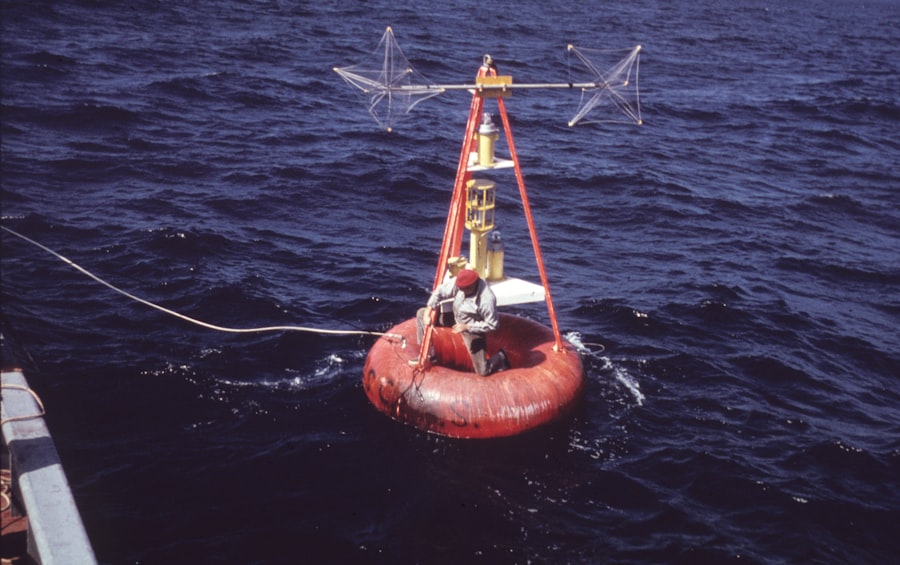
The deployment of submarine auxiliary nets was a highly secretive and carefully orchestrated affair, typically involving specialized submarine units operating in areas of strategic interest.
Strategic Maritime Chokepoints
Key operational areas included strategic maritime chokepoints, such as the GIUK (Greenland-Iceland-UK) Gap, the Strait of Gibraltar, and various passages in the North Pacific. These narrow waterways offered concentrated opportunities for monitoring adversary naval movements and intercepting communications as fleets transited. The concentration of submarine and surface ship traffic made these areas intelligence goldmines.
Adversary Naval Bases and Test Ranges
Proximity to major adversary naval bases and weapons test ranges was another prime target. By positioning intelligence-gathering submarines near these facilities, the KGB and GRU could monitor departures and arrivals, gauge the readiness of fleets, and even gather data on new weapon systems under development or testing. This was akin to planting an ear at the adversary’s front door.
Cold War Incidents and Counter-Operations
The deployment of submarine auxiliary nets often led to tense encounters and intricate counter-operations by Western navies. While specific Soviet incidents remain largely classified, the very existence of such capabilities fueled constant ASW patrols and surveillance efforts. The game was one of cat and mouse, with each side attempting to outmaneuver and outsmart the other in the silent depths. The potential for escalation was ever-present, demanding extreme caution and operational secrecy.
The K-129 Incident (USS Scorpion parallels)
While the sinking of the Soviet submarine K-129 in 1968 remains shrouded in mystery, some theories suggest it may have been involved in intelligence-gathering operations, potentially related to auxiliary nets, near US naval exercises or communication lines. Similarly, the disappearance of the USS Scorpion, a US submarine, in the same year, has also sparked speculation about intelligence-related missions. These incidents, regardless of their specific causes, underscore the inherent dangers and high stakes of underwater espionage during the Cold War.
Implications and Legacy
The use of submarine auxiliary nets by the KGB had profound implications for Cold War intelligence and left a lasting legacy on naval warfare and intelligence doctrine.
Intelligence Advantages and Disadvantages
These operations provided the Soviet Union with invaluable intelligence, offering insights into Western naval doctrine, technological advancements, and strategic intentions that would have been unattainable through other means. The ability to listen in on critical communications and track adversary movements gave the Soviet high command a more complete, albeit often fragmented, picture of the geopolitical landscape. However, the intelligence was often incomplete, subject to misinterpretation, and obtained at immense risk. The sheer volume of intercepted data also presented a significant analytical bottleneck.
Driving Technological Innovation
The need to overcome the challenges of underwater intelligence gathering spurred significant technological innovation in the Soviet Union. Developments in deep-sea robotics, silent propulsion systems, advanced sonar, and signal processing all benefited directly from these ambitious intelligence programs. The constant race to develop more effective listening devices and more stealthy submarines pushed the boundaries of engineering.
Influence on Naval Doctrine
The effectiveness of submarine auxiliary nets influenced Soviet naval doctrine, emphasizing the importance of covert intelligence gathering as an integral part of naval operations. It also forced Western navies to develop more sophisticated countermeasures, including improved anti-submarine warfare techniques, enhanced cable security, and more robust encryption protocols. The knowledge that their communications could be compromised constantly loomed over Western strategists.
Enduring Secrecy and Declassification Challenges
Many details surrounding Soviet submarine auxiliary net operations remain highly classified, even decades after the Cold War’s end. The inherent secrecy of these programs, coupled with the sensitive nature of intelligence sources and methods, makes comprehensive historical analysis challenging. The precise extent of their success and the full scope of their operational deployment may never be fully known, leaving historians and intelligence analysts to piece together fragments of information like a complex jigsaw puzzle.
In conclusion, submarine auxiliary nets represented a pinnacle of Soviet covert intelligence operations during the Cold War. These sophisticated systems of underwater sensors and interceptors allowed the KGB to penetrate the silent depths, listening to the pulse of adversary forces and intercepting crucial communications. While shrouded in secrecy and fraught with peril, these “nets” provided the Soviet Union with a vital, albeit often incomplete, window into the strategic thinking and operational movements of its adversaries, shaping the trajectory of Cold War espionage and leaving an indelible mark on the history of naval intelligence. The legacy of these operations continues to influence how modern navies approach signals intelligence and undersea warfare, a testament to the enduring ingenuity and audacity displayed in the coldest of conflicts.
FAQs
What were submarine auxiliary nets used for by the KGB?
Submarine auxiliary nets were used by the KGB as part of their underwater surveillance and monitoring systems. These nets helped detect and track foreign submarines and underwater activities near Soviet waters.
How did the KGB monitor submarine activity using these nets?
The KGB deployed submarine auxiliary nets equipped with sensors and listening devices to capture acoustic signals and movements of submarines. This allowed them to gather intelligence on foreign naval operations covertly.
Where were these submarine auxiliary nets typically installed?
These nets were usually installed in strategic maritime locations such as naval bases, chokepoints, and coastal areas where foreign submarine activity was likely. The placement aimed to maximize detection capabilities.
What technology was integrated into the submarine auxiliary nets for monitoring?
The nets incorporated hydrophones, sonar sensors, and sometimes magnetic anomaly detectors. These technologies enabled the KGB to detect underwater vessels by sound, movement, and magnetic signatures.
Did the use of submarine auxiliary nets by the KGB have any impact on Cold War naval intelligence?
Yes, the deployment of submarine auxiliary nets significantly enhanced the KGB’s ability to monitor NATO and other foreign submarine operations. This contributed to the broader intelligence efforts during the Cold War by providing early warnings and tracking capabilities.