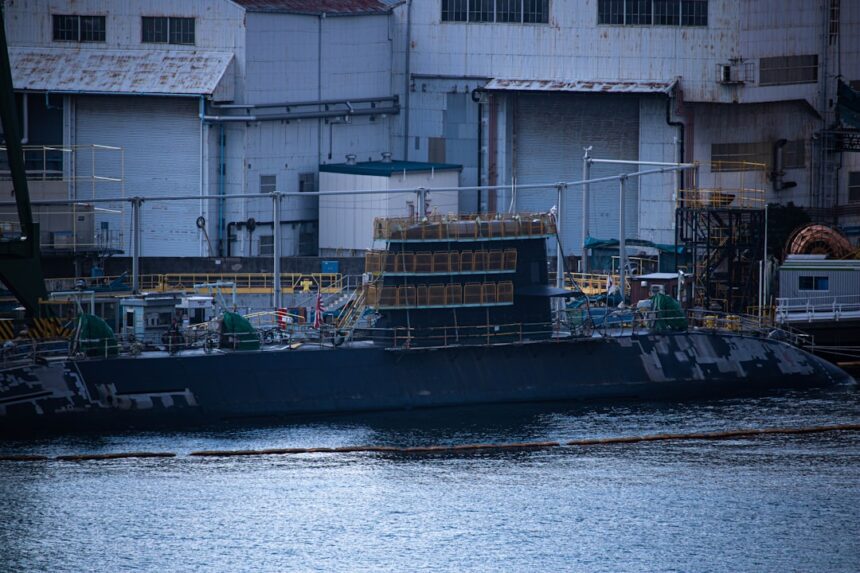
The silent hunters of the deep, the United States Navy’s submarines, are often perceived as the ultimate embodiment of stealth. For decades, their ability to operate unseen and unheard has been a cornerstone of American military dominance, a shadowy sword in the arsenal that can strike without warning. However, even the most sophisticated technologies eventually face their own internal and external pressures. This article will delve into the often-overlooked vulnerabilities inherent in the US Navy’s submarine stealth capabilities, examining the technological, operational, and strategic challenges that can expose these formidable vessels to detection.
Submarine stealth is not an absolute; it is a continuous battle against the fundamental laws of physics. Unlike an aircraft that can simply disappear into the clouds, a submarine operates within a medium – water – that is far more effective at transmitting energy, including sound and electromagnetic waves. This inherent challenge forms the bedrock of any discussion on submarine vulnerabilities.
Acoustic Signatures: The Water’s Persistent Echo
Sound travels exceptionally well through water, making acoustic detection a primary concern for submarines. While advanced quieting techniques have significantly reduced the noise generated by American submarines, the pursuit of perfect silence is an asymptotic goal.
Engine Room Rumble: The Heartbeat of the Machine
The machinery within a submarine, particularly the propulsion systems, remains a constant source of acoustic energy. While modern submarines employ advanced sound-dampening materials, vibration isolation, and sophisticated engine designs, minute vibrations and the flow of fluids through pipes and machinery can still propagate outwards. Think of it as a distant, muffled heartbeat; even a faint rhythm can be discerned by a keen ear. The complexity of these systems, with their numerous moving parts and high-pressure environments, presents an ongoing challenge in eliminating all acoustic leakage.
Hydrodynamic Noise: The Water’s Embrace
The very act of moving through water generates noise. As a submarine cuts through the ocean, water flows over its hull, creating turbulence. This hydrodynamic noise, while often masked by ambient ocean sounds, can become a tell-tale signature, especially at higher speeds or in specific flow conditions. The shape of the hull, the smoothness of its surface, and the design of control surfaces all contribute to this acoustic footprint. Even a slight imperfection or an unforeseen change in water density can alter the expected flow patterns and create anomalous sounds.
Sonar Interactions: The Unseen Probes
The most direct threat to acoustic stealth comes from active sonar systems. These systems emit sound pulses and listen for the echoes that return from objects in the environment. Against an active sonar strike, a submarine’s stealth is significantly compromised. While submarines are designed to minimize their sonar reflection (known as a “target strength”), they cannot make themselves entirely invisible to this form of detection. The strength of the sonar pulse, the frequency used, and the sophistication of the receiving system all play a role in the likelihood of detection.
Non-Acoustic Signatures: Beyond the Sound Barrier
While acoustics have historically been the primary focus of submarine detection, the development of other sensing technologies has expanded the ways in which submarines can be potentially identified.
Magnetic Anomalies: The Invisible Wake
Submarines, being large metallic objects, generate subtle magnetic field distortions. These anomalies can be detected by specialized sensors, often deployed from aircraft or other vessels. While the Earth’s own magnetic field is powerful, submarines create localized variations that, under the right conditions and with sensitive enough equipment, can be triangulated. Think of it as leaving a faint, invisible fingerprint on the magnetic fabric of the ocean. The effectiveness of this detection method depends on factors such as the depth of the submarine, its orientation, and the sensitivity of the magnetic anomaly detectors.
Wake Signatures: The Disturbed Surface
When a submarine operates near the surface, it can create visible or measurable disturbances in the water, such as a “periscope wake” or disturbed wave patterns from its propulsion. Even at depth, certain types of submerged operation can leave subtle traces. Advanced radar and optical sensors can sometimes detect these surface anomalies, hinting at the presence of an underwater vessel. The speed of the submarine and the sea state are critical factors in the visibility of these wakes.
Thermal Signatures: The Ocean’s Heat Distribution
Submarines generate heat from their internal machinery and crew. While the ocean is a vast heat sink, these localized thermal differences can, under specific circumstances and with specialized infrared sensors, be detected. This is particularly true if the submarine is operating at relatively shallow depths or if there is a significant temperature difference between the submarine’s internal environment and the surrounding water. This “warm glow” can be seen as a beacon against the cool backdrop of the deep.
Recent discussions surrounding the vulnerabilities of US Navy submarines have highlighted significant concerns regarding their stealth capabilities. An insightful article that delves into these issues can be found at In the War Room, where experts analyze the technological advancements and potential threats that could compromise the effectiveness of submarine operations. This examination is crucial for understanding how emerging technologies and adversarial strategies may impact the future of naval warfare.
The Human Element: Operational and Tactical Vulnerabilities
Technology, however advanced, is only as effective as the humans who operate it and the strategies employed. The human element introduces a layer of complexity and potential for error that can undermine even the most robust stealth capabilities.
Human Error and Fatigue: The Toll of Vigilance
Submarine operations are characterized by prolonged periods of intense vigilance, cramped conditions, and significant physical and psychological strain. Maintaining absolute stealth requires meticulous attention to detail, constant monitoring of sensor data, and adherence to strict operating procedures. Fatigue, complacency, or simple human error can lead to breaches in acoustic discipline, improper operation of equipment, or misinterpretation of sensor readings. A single lapse in concentration, like a momentarily forgotten valve left unsealed, can be the difference between invisibility and detection.
Intelligence and Foreknowledge: The Adversary’s Advantage
The effectiveness of stealth is significantly diminished by an adversary possessing detailed intelligence about a submarine’s intended operating areas or mission profile. If an enemy knows where to look and what to look for, their chances of detection increase dramatically. This can include satellite imagery of submarine bases, signals intelligence (SIGINT) intercepting communications, or human intelligence providing insights into operational plans. Knowing the general neighborhood where the fox is hunting makes it much easier to set the trap.
The “Cat and Mouse” Game: Evolving Detection Methods
The history of submarine warfare is a constant arms race between stealth technology and detection capabilities. As submarines become quieter, detection systems become more sophisticated. The development of new sensors, improved signal processing algorithms, and the deployment of networked sensor arrays can create a more pervasive and potent detection environment. This ongoing evolution means that what is considered stealthy today may be detectable tomorrow. It is a perpetual dance, with each side striving to gain the upper hand.
Technological Limitations: The “Black Box” Isn’t Entirely Opaque

Despite the immense investment in advanced technology, inherent limitations persist, offering potential avenues for detection.
Sonar Countermeasures: The Echo’s Deception
While submarines are designed to minimize their sonar signature, the development of sonar countermeasures aims to further obscure their presence. This can include deployable decoys that mimic a submarine’s acoustic signature, or active jamming systems that disrupt enemy sonar. However, the effectiveness of these countermeasures is not absolute. Sophisticated adversaries can learn to distinguish between real submarines and decoys, or develop methods to overcome jamming. The deceptive veil can sometimes be torn aside.
Electronic Warfare’s Evolving Reach: Detecting the Unseen Signal
Even submarines that are designed to operate with minimal electronic emissions are not entirely invisible to electronic warfare (EW) systems. While they strive to be silent, the necessity of certain communication or navigation systems, however brief and low-power, can still present an opportunity for detection. Furthermore, advances in passive electronic intelligence gathering can detect the faint electromagnetic traces that even deeply submerged vessels might inadvertently emit. It is akin to detecting the static electricity a distant object might generate.
Sensor Limitations: The Limits of Perception
All detection systems have inherent limitations in terms of range, sensitivity, and the types of signatures they can effectively detect. Adverse environmental conditions, such as high sea states, dense thermoclines, or significant ambient noise, can degrade the performance of sonar and other sensors. This means that even with advanced technology, there are windows of opportunity for submarines to operate undetected. However, these limitations can also be exploited by adversaries who understand the specific vulnerabilities of certain detection platforms.
Strategic and Geopolitical Vulnerabilities: The Wider Chessboard

Submarine stealth is not deployed in a vacuum. Strategic decisions, geopolitical realities, and the actions of potential adversaries all contribute to the environment in which these vessels operate, creating vulnerabilities that extend beyond technological considerations.
Operational Tempo and Deployment Patterns: Predictability’s Peril
The frequency and predictable patterns of submarine deployments can provide adversaries with valuable intelligence. If a particular class of submarine is consistently operating in a specific region or during certain geopolitical events, it allows adversaries to concentrate their detection efforts in those areas. The “always on” nature of global naval power projection, while strategically necessary, can also create predictable footprints. The diligent observer can learn the rhythms of the hunter.
Interoperability Challenges and Networked Warfare: The Single Point of Failure
As naval warfare becomes increasingly reliant on networked systems and shared intelligence, the vulnerabilities of interconnectedness become a concern. A compromise in one part of the network could potentially expose the location or operational status of submarines. Furthermore, challenges in achieving seamless interoperability between different naval platforms and allied forces could create blind spots or gaps in coordinated detection efforts, potentially leaving submarines exposed. A chain is only as strong as its weakest link, and in a networked world, that weakness can be anywhere.
The Rising Tide of Anti-Submarine Warfare Capabilities: A Growing Threat Landscape
Several nations are making significant investments in developing and enhancing their anti-submarine warfare (ASW) capabilities. This includes the deployment of advanced sonar systems, unmanned underwater vehicles (UUVs) for persistent surveillance, and improved maritime patrol aircraft. The proliferation of these capabilities, even by nations not traditionally considered peer competitors, presents a growing and evolving threat landscape for US submarines. The deep blue sea is becoming a more crowded and scrutinized domain.
Recent discussions surrounding the stealth vulnerabilities of US Navy submarines have highlighted the importance of addressing potential weaknesses in underwater operations. An insightful article on this topic can be found at In The War Room, which explores various factors that could compromise the stealth capabilities of these vital assets. As advancements in sonar technology and anti-submarine warfare continue to evolve, understanding these vulnerabilities becomes crucial for maintaining naval superiority.
Conclusion: The Enduring Challenge of Underwater Opacity
| Vulnerability | Description | Impact | Mitigation Strategies |
|---|---|---|---|
| Acoustic Signature | Noise generated by machinery and propellers that can be detected by sonar. | Increased risk of detection by enemy sonar systems. | Use of anechoic coatings, quiet propulsion systems, and sound isolation techniques. |
| Magnetic Anomaly | Disturbance in Earth’s magnetic field caused by the submarine’s metal hull. | Detection by magnetic anomaly detectors (MAD) on aircraft and ships. | Deperming (demagnetization) procedures and use of non-magnetic materials. |
| Thermal Signature | Heat emitted from the submarine’s hull and exhaust systems. | Detection by infrared sensors and thermal imaging. | Thermal insulation and heat dissipation management. |
| Communication Emissions | Radio and sonar signals emitted during communication or active sonar use. | Risk of location triangulation by adversaries. | Use of low probability of intercept (LPI) communication and passive sonar techniques. |
| Periscope and Mast Exposure | Visual and radar detection when periscopes or masts are raised above water. | Potential visual or radar detection by enemy forces. | Minimized exposure time and use of low-profile, radar-absorbent materials. |
The United States Navy’s submarine force remains a formidable asset, its stealth capabilities a testament to decades of innovation and investment. However, to dismiss the vulnerabilities of these silent hunters would be to ignore the persistent challenges inherent in operating a large, complex, and often noisy machine within the ocean’s embrace. From the fundamental physics of sound propagation to the complexities of human operation, from the relentless evolution of detection technologies to the strategic chessboard of global geopolitics, vulnerabilities persist. The mastery of underwater stealth is a perpetual pursuit, a constant effort to outmaneuver the inevitable forces that seek to reveal the unseen. The future of submarine warfare will undoubtedly be shaped by the ongoing struggle to minimize these vulnerabilities and maintain the advantage of the deep.
FAQs
What are the primary stealth features of US Navy submarines?
US Navy submarines utilize advanced hull designs, sound-dampening materials, and quiet propulsion systems to minimize noise and avoid detection. They also employ anechoic coatings and specialized sonar-absorbent tiles to reduce their acoustic signature.
What vulnerabilities can compromise the stealth of US Navy submarines?
Vulnerabilities include noise generated by onboard machinery, propeller cavitation, and hydrodynamic flow noise. Additionally, detection by advanced sonar systems, magnetic anomaly detectors, and satellite surveillance can compromise stealth.
How do environmental factors affect submarine stealth?
Environmental conditions such as water temperature, salinity, and ocean currents can influence sound propagation underwater, potentially making submarines more detectable. Variations in the ocean’s acoustic layers can either mask or reveal a submarine’s presence.
What technologies are used to detect US Navy submarines despite their stealth capabilities?
Detection technologies include active and passive sonar arrays, magnetic anomaly detectors, underwater drones, and satellite-based sensors. Advances in signal processing and networked sensor systems also enhance the ability to locate stealth submarines.
How does the US Navy address and mitigate submarine stealth vulnerabilities?
The Navy continuously upgrades submarine designs, incorporates quieter propulsion technologies, and improves acoustic coatings. It also invests in crew training, operational tactics, and counter-detection measures to reduce the risk of detection and enhance survivability.