The Democratic People’s Republic of Korea (DPRK), commonly known as North Korea, forged a distinct military strategy during the Cold War, shaped by its unique geopolitical position, ideological imperatives, and the ever-present threat of external intervention. This strategy, often characterized by its emphasis on self-reliance and the preemptive striking of adversaries, evolved significantly from the Korean War’s aftermath through to the collapse of the Soviet Union. Understanding this period is crucial for grasping the foundational principles that continue to inform North Korea’s military posture today. The DPRK’s approach was not static, but rather a dynamic response to the shifting sands of global power, regional alliances, and its own internal political landscape.
North Korea’s military strategy during the Cold War was inextricably linked to the Juche ideology, a political philosophy developed by Kim Il-sung. Juche, often translated as “self-reliance,” became the guiding star for all aspects of statecraft, including military affairs.
The Self-Reliant Army (Chosŏn Inmin’gun)
Central to Juche’s military application was the concept of the “self-reliant army.” This principle dictated that North Korea must be able to defend itself without depending on external powers for its fundamental security. While the DPRK received significant military aid from the Soviet Union and China at various points, the ideological emphasis remained on an indigenous capacity for warfare. This translated into significant investments in domestic arms production, even if the technology was often reverse-engineered or based on foreign designs. The goal was to minimize vulnerabilities associated with reliance on foreign supply chains and political patronage. Readers might consider this analogous to building a fortress where the stone for the walls and the weapons for its defense are all locally sourced, even if the initial blueprints for some of those weapons came from outside.
People’s War and Asymmetric Warfare
North Korean military doctrine also heavily embraced the concept of “People’s War,” drawing inspiration from Mao Zedong’s revolutionary theories. This doctrine envisioned a war waged by the entire population, where conventional military forces would be supplemented by highly organized guerrilla units and a mobilized civilian populace. The emphasis was on protracted conflict and wearing down a technologically superior adversary through attrition.
For example, the extensive network of underground tunnels and fortifications across North Korea, established during this period, exemplifies the “People’s War” mentality. These were designed to shelter troops, store equipment, and facilitate surprise attacks, reflecting a strategy of making the country an impregnable fortress that could absorb immense conventional attacks. This approach also naturally led to an embrace of asymmetric warfare tactics – leveraging unconventional means to counter an opponent’s conventional superiority.
North Korean military strategy during the Cold War was heavily influenced by the geopolitical tensions of the era, as the nation sought to establish itself as a formidable power in East Asia. For a deeper understanding of this topic, you can explore the article titled “North Korea’s Military Strategy: A Cold War Legacy” which discusses the historical context and strategic decisions made by North Korea during this tumultuous period. To read more, visit this link.
The Post-Korean War Rebuilding and Modernization
Following the devastations of the Korean War, North Korea embarked on an ambitious program of military rebuilding and modernization. The initial phase was heavily dependent on Soviet and Chinese assistance, but later efforts stressed indigenous development.
Soviet and Chinese Military Aid
In the immediate aftermath of the armistice, the Soviet Union and China provided substantial military hardware, technical expertise, and training to North Korea. This aid allowed the DPRK to rapidly rebuild its infantry divisions, artillery forces, and nascent air force. Both communist giants saw a strong North Korea as a crucial buffer against American influence in Northeast Asia. The inflow of tanks, aircraft, and advanced weaponry significantly enhanced North Korea’s conventional capabilities. Think of it as a significant blood transfusion after a major injury, giving the military a new lease on life and renewed strength.
Development of Indigenous Arms Industry
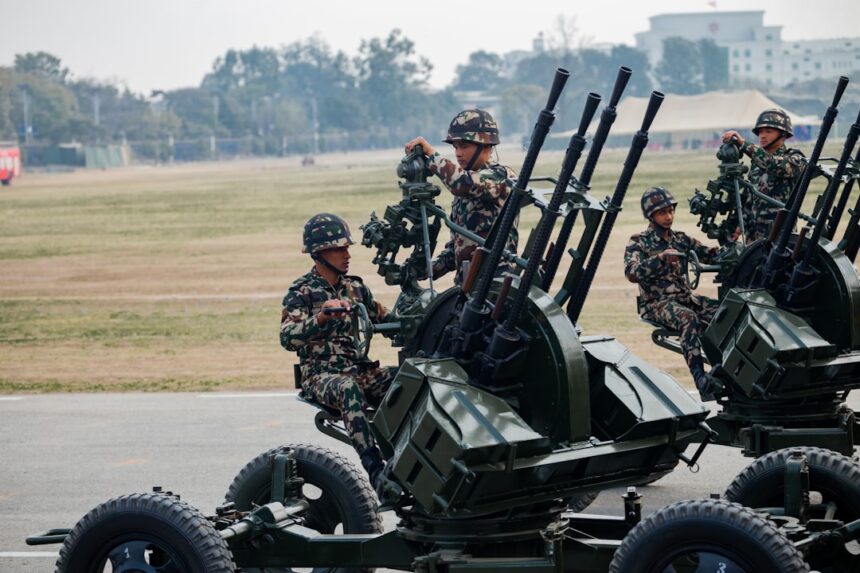
Despite the external support, North Korea consistently strived for self-sufficiency in arms production. From the late 1950s onwards, the DPRK established a robust defense industry capable of manufacturing small arms, artillery pieces, and even some armored vehicles. This drive was fueled by Juche ideology and a desire to avoid being held hostage by its allies during times of geopolitical tension. While often utilizing reverse-engineered foreign designs, North Korea demonstrated a remarkable ability to adapt and produce military equipment tailored to its specific needs and terrain. This was a critical step in translating the rhetoric of self-reliance into tangible military capabilities.
The Strategy of Preemption and Surprise
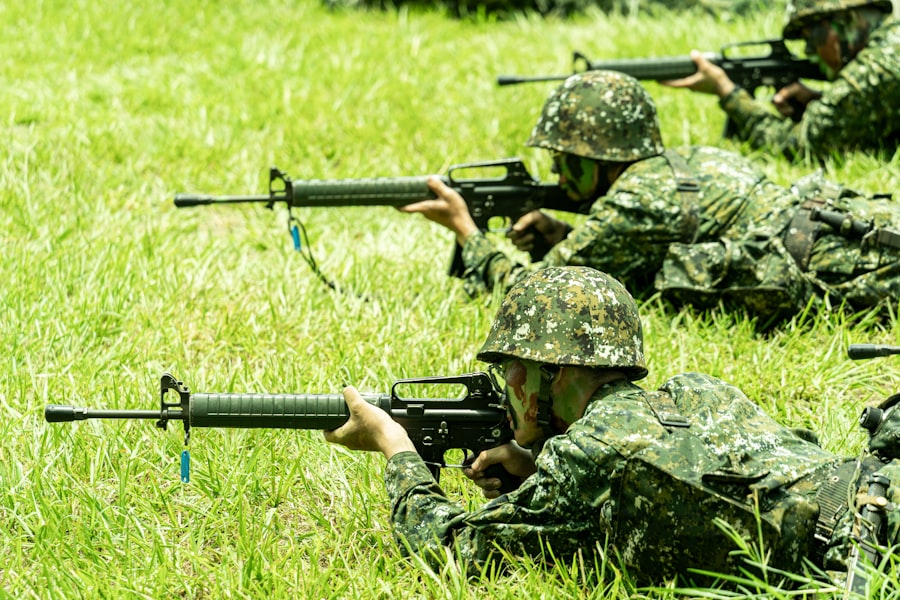
A cornerstone of North Korean military strategy during the Cold War was the principle of preemption and the emphasis on surprise. This proactive stance reflected a deep-seated fear of invasion and a belief that a decisive, early blow could alter the course of any conflict.
The “Bolt from the Blue” Scenario
North Korean strategists often envisioned a “bolt from the blue” scenario, wherein a surprise attack, often by special operations forces, would launch a full-scale offensive against the South. The aim was to achieve a rapid victory before the United States could fully deploy its forces or mobilize its allies. This strategy placed a high premium on intelligence gathering, infiltration capabilities, and the swift execution of complex maneuvers. The numerous tunnels discovered beneath the DMZ serve as stark physical reminders of this ambition to bypass conventional defenses and achieve strategic surprise.
Special Operations Forces (SOF) Emphasis
North Korea dedicated extraordinary resources to its special operations forces (SOF) during the Cold War. These elite units were designed for deep penetration missions, sabotage, assassination, and the disruption of enemy command and control structures. Their training was rigorous, and their operational reach extended far beyond North Korea’s borders, as evidenced by numerous infiltration attempts into South Korea. One could view these forces as finely honed surgical instruments, intended to inflict maximum damage and disorganization behind enemy lines, paving the way for a conventional offensive. The emphasis on SOF reflected a recognition that conventional superiority might be difficult to achieve, but asymmetric advantages could be exploited.
Deterrence through Fear and Conventional Muscle
While preemption was a key offensive doctrine, North Korea also sought to deter potential adversaries through a combination of fear and the display of conventional military might.
Forward Deployment and Artillery Dominance
North Korea strategically deployed a significant portion of its conventional forces, particularly its artillery, close to the Demilitarized Zone (DMZ). This forward deployment served multiple purposes: it allowed for rapid offensive operations, provided immediate defensive capabilities, and presented an ongoing threat to the South Korean capital, Seoul. The sheer volume of artillery pieces, including long-range guns capable of reaching Seoul, was intended to instill a sense of apprehension and deter any thoughts of a preemptive strike by the ROK-US forces. This can be likened to a clenched fist, perpetually poised to strike, sending a clear message of potential devastation.
Psychological Warfare (PsyOps) and Provocations
Psychological warfare, or PsyOps, was another crucial element of North Korea’s deterrence strategy. The regime consistently engaged in propaganda, threats, and provocative actions – such as naval incursions, attempted assassinations, and commando raids – designed to unnerve its adversaries and project an image of unwavering resolve and unpredictable aggression. These actions, while often localized, served to maintain a high level of tension and remind the international community of North Korea’s capacity for disruptive behavior. This was a form of psychological conditioning, aiming to keep opponents off balance and hesitant to act definitively against the DPRK.
North Korean military strategy during the Cold War was heavily influenced by the geopolitical tensions of the era, as the nation sought to establish itself as a formidable power in East Asia. An insightful article that delves into this topic can be found at In the War Room, where it explores how North Korea’s military developments were shaped by its relationships with both the Soviet Union and China, as well as its adversarial stance towards the United States and South Korea. This historical context is crucial for understanding the current dynamics of the Korean Peninsula and the ongoing military posturing in the region.
Adapting to the Shifting Geopolitical Landscape
| Aspect | Description | Cold War Period Focus | Strategic Objective |
|---|---|---|---|
| Military Doctrine | Juche-based self-reliance emphasizing asymmetric warfare | Development of guerrilla tactics and conventional forces | Defend regime and deter US/UN forces |
| Force Composition | Large standing army with emphasis on infantry | Over 1 million active personnel by late Cold War | Mass mobilization and overwhelming manpower |
| Conventional Weapons | Artillery, tanks, and small arms primarily Soviet and Chinese origin | Focus on artillery positioned near DMZ | Attrition warfare to inflict heavy casualties |
| Special Forces | Elite units trained for infiltration and sabotage | Expansion of special operations forces in 1970s-80s | Disrupt enemy command and control |
| Missile Development | Early development of short-range ballistic missiles | Initiated in late 1970s and 1980s | Enhance strike capability against South Korea and US bases |
| Naval Strategy | Coastal defense and limited blue-water capabilities | Focus on submarines and small patrol craft | Protect coastline and disrupt enemy supply lines |
| Air Force | Limited air power with aging Soviet aircraft | Emphasis on air defense and ground support | Maintain airspace control near borders |
| Psychological Warfare | Propaganda and infiltration to undermine South Korean morale | Continuous throughout Cold War | Destabilize enemy society and military cohesion |
North Korea’s military strategy was not immune to the profound shifts in the global geopolitical landscape during the Cold War. The Sino-Soviet split and the eventual collapse of the Soviet Union presented significant challenges and forced adaptations.
Balancing Between Moscow and Beijing
The Sino-Soviet split, which intensified in the 1960s, presented both challenges and opportunities for North Korea. On one hand, it allowed the DPRK to play off the two communist giants against each other, securing aid from both while maintaining a degree of independence. On the other hand, it complicated military planning and reduced the reliability of a unified alliance response in the event of conflict. North Korea adeptly navigated this delicate balance, often siding with whichever power offered the most immediate benefits, while always careful not to alienate either completely. This was a high-wire act, where the DPRK had to maintain its position between two powerful, sometimes quarreling, benefactors.
The Impact of Soviet Decline
The decline of the Soviet Union in the 1980s and its eventual collapse in 1991 had immense ramifications for North Korea’s military strategy. The flow of cheap military hardware and fuel, critical for maintaining North Korea’s large conventional forces, dwindled significantly. This necessitated a renewed emphasis on self-reliance in the face of dwindling foreign support and forced reevaluations of its long-term strategic viability. The collapse of its primary patron was akin to a vital artery being severed, leading to a period of severe economic and military contraction, and forcing a recalibration of military aspirations. This period marked a transition towards a more domestically focused, and increasingly unconventional, approach to security.
In conclusion, North Korea’s military strategy during the Cold War was a complex tapestry woven from ideological tenets, geopolitical realities, and pragmatic adaptations. From the foundational principles of Juche and People’s War to the emphasis on preemption, special operations, and conventional deterrence, the DPRK meticulously crafted a military posture designed to ensure its survival against perceived threats. The challenges posed by its regional adversaries and the shifting dynamics of its communist benefactors forced continuous evolution. Understanding this period offers invaluable insight into the origins of North Korea’s enduring strategic calculus and its relentless pursuit of military capabilities, a pursuit that continues to shape regional and global security discussions today.
FAQs
What was the primary focus of North Korean military strategy during the Cold War?
North Korean military strategy during the Cold War primarily focused on maintaining a strong defensive posture while preparing for potential offensive operations against South Korea and its allies. The strategy emphasized asymmetric warfare, including guerrilla tactics, large conventional forces, and the development of nuclear capabilities to deter external threats.
How did the Cold War influence North Korea’s military development?
The Cold War significantly influenced North Korea’s military development by driving the regime to build a self-reliant and heavily militarized state. North Korea received support from the Soviet Union and China, which helped it develop conventional forces, artillery, and missile technology. The ongoing rivalry between the US-led Western bloc and the Eastern bloc heightened North Korea’s focus on military readiness and deterrence.
What role did ideology play in North Korea’s military strategy during the Cold War?
Ideology played a central role in North Korea’s military strategy during the Cold War. The Juche ideology of self-reliance shaped the military’s emphasis on independence from foreign powers, while the regime’s commitment to communism and reunification of the Korean Peninsula under its control justified maintaining a large and aggressive military force.
Did North Korea engage in any significant military conflicts during the Cold War?
Yes, the most significant military conflict involving North Korea during the Cold War was the Korean War (1950-1953). Although the war ended in an armistice rather than a peace treaty, it solidified the division of Korea and entrenched North Korea’s military-first approach. After the war, North Korea continued to prepare for potential future conflicts with South Korea and its allies.
How did North Korea’s Cold War military strategy impact regional security in East Asia?
North Korea’s Cold War military strategy contributed to ongoing tensions and instability in East Asia. Its large conventional forces, aggressive rhetoric, and pursuit of nuclear weapons created a persistent security dilemma for South Korea, Japan, and the United States. This led to a continuous military buildup and alliance strengthening among these countries to counter the North Korean threat.